
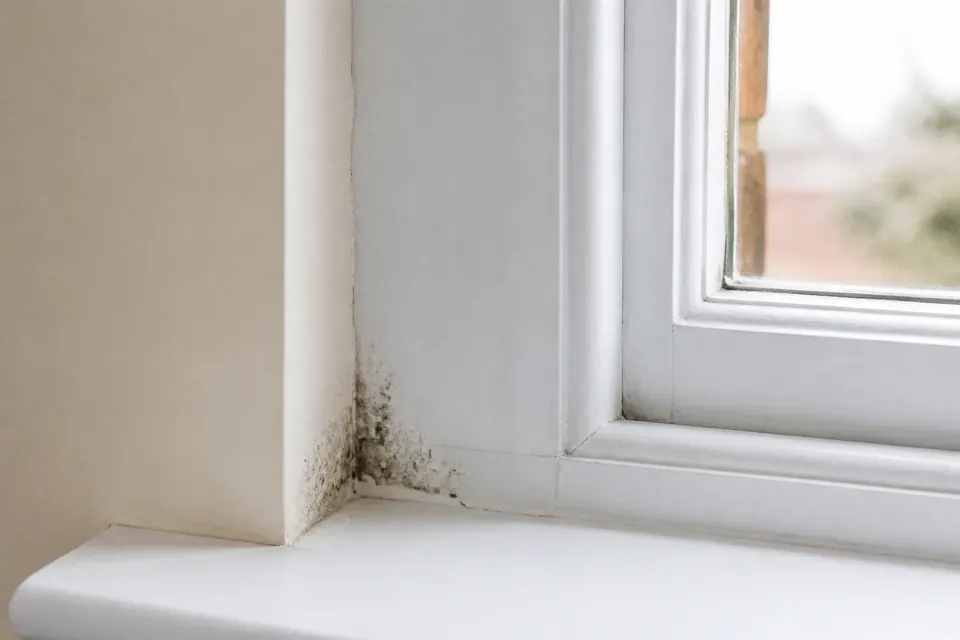
A recess beside a window
Show the relationship of the reveal and alcove return. They may have different finishes, and moisture near the opening does not establish the condition behind shelving.
DULWICH / ALCOVES AND RECESSES
A narrow opening can hide both the extent and the material.
For an affected Dulwich alcove, start with the view already available and explain what prevents a fuller inspection. A recess may have a back wall, side returns and fitted shelving with different finishes. Keep visible marks separate from suspected hidden areas before discussing access and treatment.
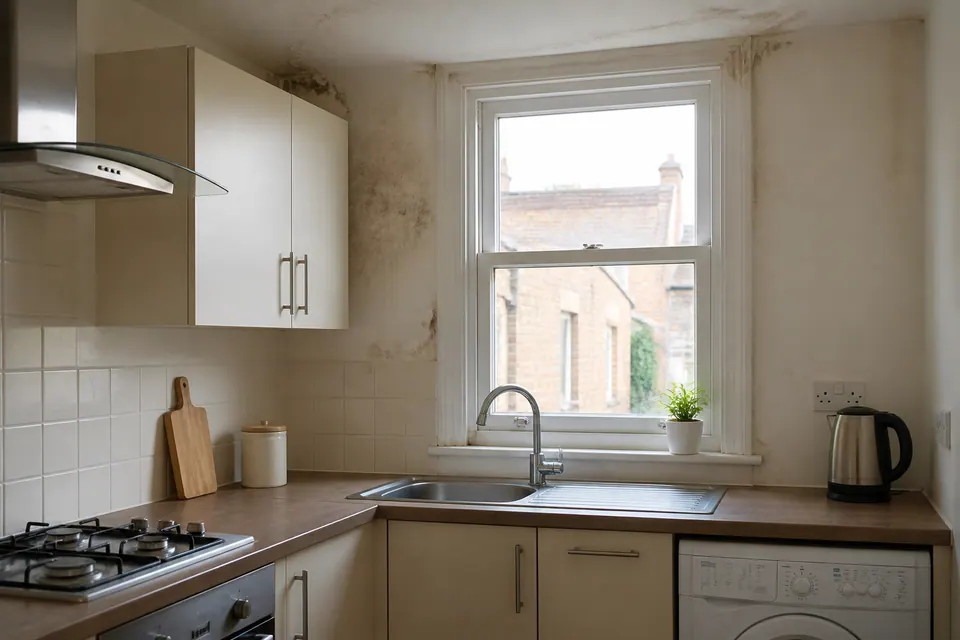
Available view · material · access boundary
01 / LOCATE THE ISSUE
Use the room setting to explain the alcove, then identify its individual faces and access limits. Avoid treating the opening as proof of full inspection.
Show the relationship of the reveal and alcove return. They may have different finishes, and moisture near the opening does not establish the condition behind shelving.
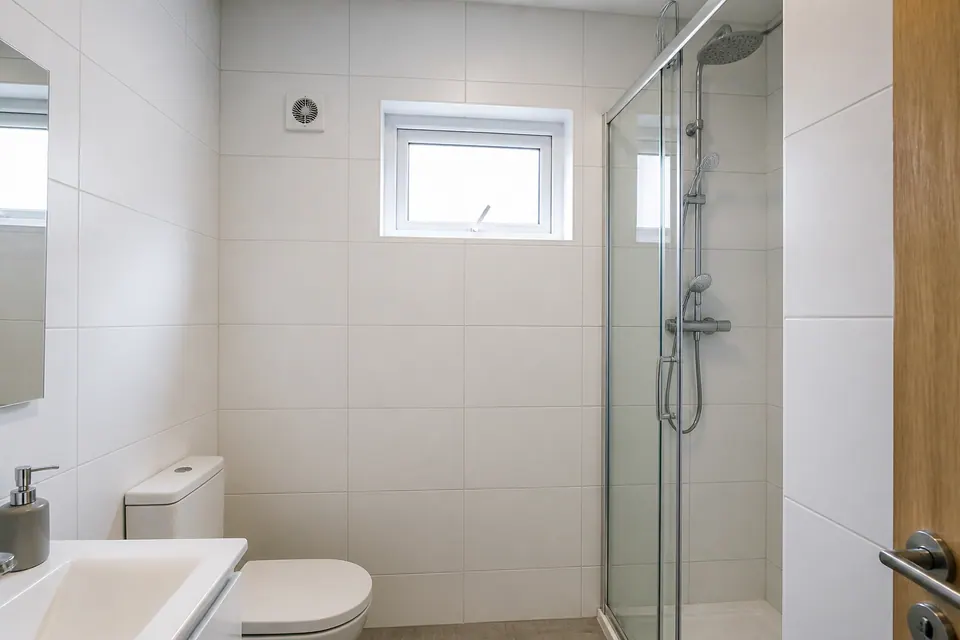
Describe the coating, joints and any fixed fittings separately. A narrow wet-use area may require a different material decision from an intact painted back wall.
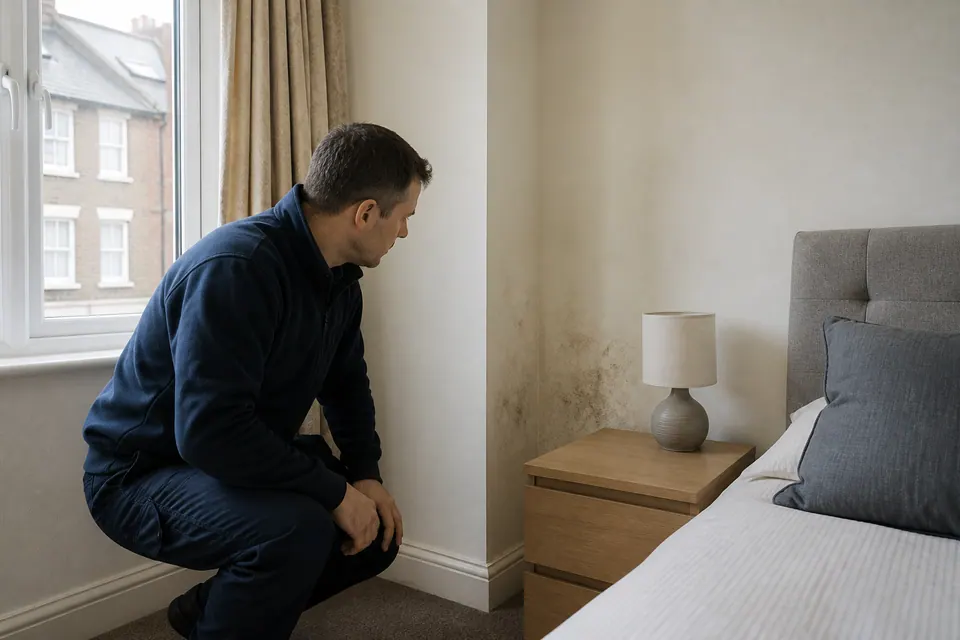
Show the available opening and furniture layout. Do not dismantle a cupboard or shift heavy items to enlarge the enquiry view.
Identify which surfaces are accessible without moving equipment. Hidden backing and pipework concerns need separate descriptions.
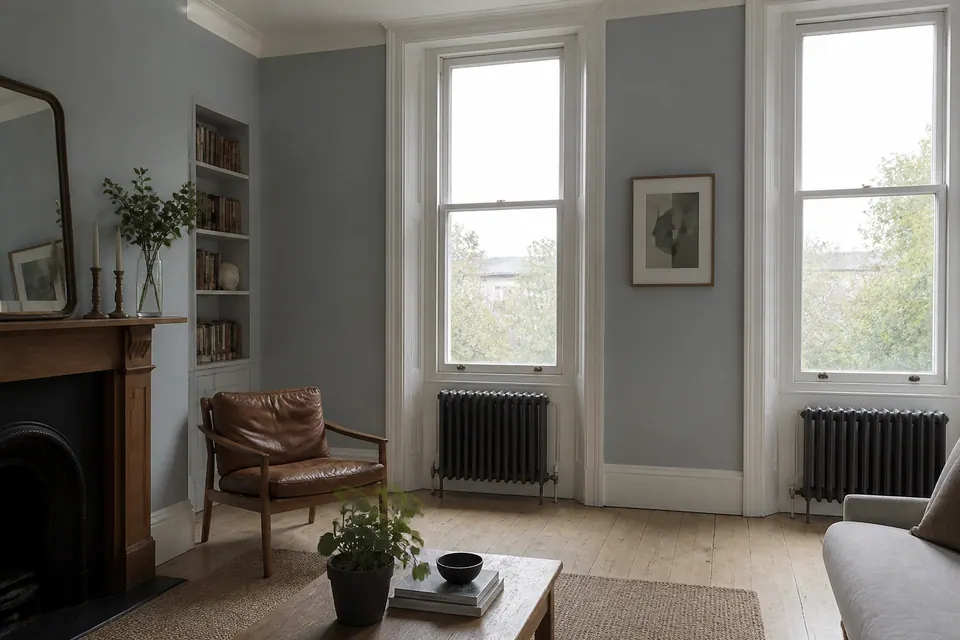
Include shelving, cabinet faces and the marked wall. Contents and joinery are not automatically part of a wall-treatment quotation.
Take a safe view and describe the finish. Restricted height or reach may affect assessment; do not climb onto shelves.
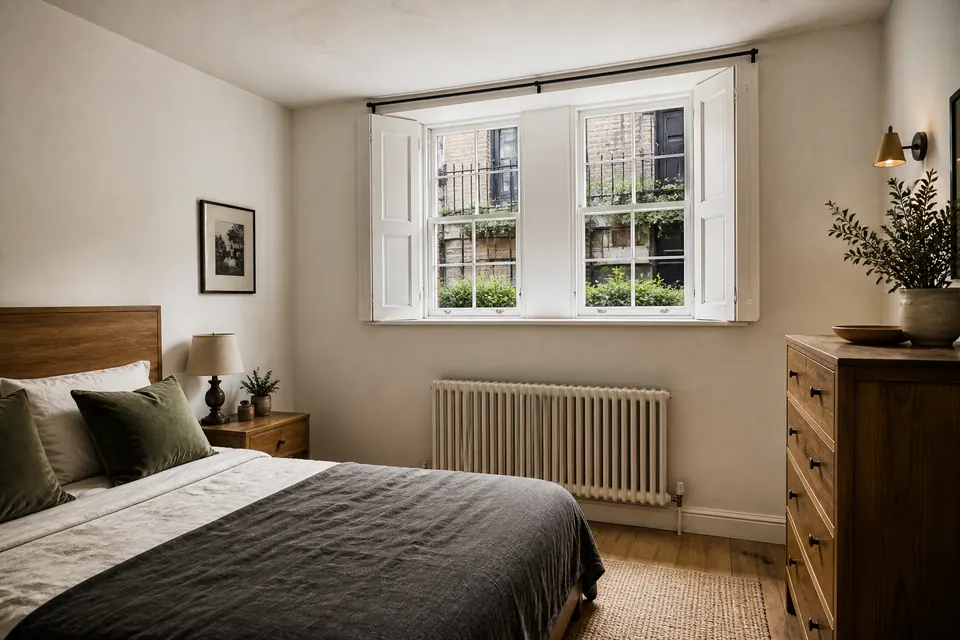
Keep the visible wall, fitted panels and stored belongings distinct. A smell does not establish the extent of growth behind them.
Describe only what is observed. Hidden growth should not be confirmed or ruled out from a partial view.
Dulwich / ACCESS & PEOPLE
Describe its finish and dimensions without extending the estimate into hidden returns or backing.
Identify what prevents inspection and whether another arrangement is needed for access. Do not make unplanned removal part of preparation.
Mention any separate visible change and seek handling guidance. The wall scope does not automatically include stored items.
Supply the available view and arrange appropriate permissions. Do not dismantle fittings to demonstrate the problem or assign repair responsibility.
Provide known fitting and water history. Clarify what earlier work actually reached within the alcove.
Separate wall treatment from access work and reinstatement. Agree what is needed before assuming the whole recess can be included.
Dulwich / PERIOD-ROOM FINISHES
A reachable edge is not an inspection of the whole alcove.
Include the shape of the recess and identify shelves, cabinets or other fixed objects that block the view. Describe marks on the back and side walls individually where visible. If the material behind a fitting is unknown, retain that limit in the enquiry. Further access or opening-up may need its own arrangement before the full treatment scope can be established.
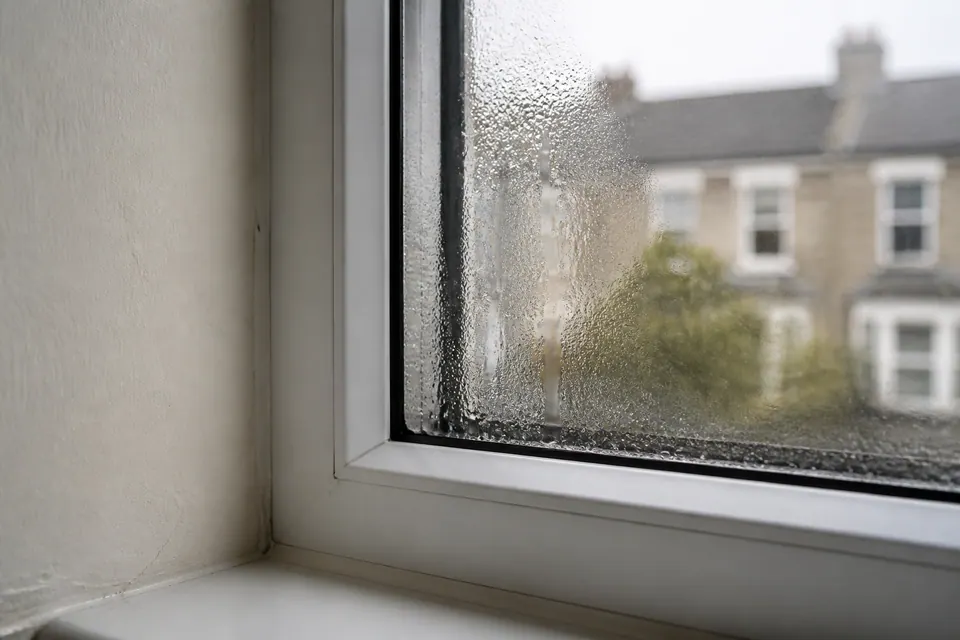
04 / WHEN IT COMES BACK
Identify whether it was accessible during the earlier work. A newly exposed strip should not automatically be described as recurrence on treated material.
Retain the previous scope and any access changes. Report current condition and known water history without assuming the enclosure itself is the sole cause.
Use back wall and side-return references consistently so different parts of the recess are not confused.
05 / A CONTROLLED APPROACH
Identify visible faces, finishes and inspection limits. Decide whether more access is needed for a responsible scope.
Clarify contents and any separate fitting movement. Do not open panels or remove shelves without an agreed plan.
Carry out the named work on assessed material. Newly exposed damage or extent requires discussion.
Explain what was treated and what remained inaccessible or needs another scope. Keep repair and reinstatement separate.
A visit to the recess does not establish that every concealed face was inspected or treated.
Name each face and obstruction.
Treat suitable accessible material within the confirmed boundary.
Keep hidden areas and separate repairs explicit.
The stages are illustrative rather than customer evidence. Continuing moisture can permit later growth.
06 / QUOTATION, NOT GUESSWORK
For Dulwich recess enquiries, show the opening, visible faces and fixed obstacles. Small suitable accessible areas may be quoted from photographs; concealed extent, recurrence or damage can require assessment or specialist quotation.
Read the main treatment scope ↗| Reported condition | Quotation route | Limit to identify |
|---|---|---|
| A suitable clearly accessible face | Photographs may support quotation | The actual visible extent |
| Partly obscured or recurring areas | Assessment of access and condition | What was hidden or previously reached |
| Damage or complex concealed concern | Specialist quotation where appropriate | Any proposed separate investigation |
Confirm who provides any agreed opening-up or movement. A surface quote does not automatically include removing and replacing fitted joinery.
07 / SEPARATE THE QUESTIONS
The assessment needs the visible material and known history as well as the shape of the space.
| Visible position | Possible context | What remains to clarify |
|---|---|---|
| Marks on a window-side return | Moisture near the opening or wall | Actual water observations and material boundary |
| Spots within a bathroom recess | Repeated wetting and restricted drying | The affected finish and ordinary use |
| A back wall changed after a leak | Water exposure or material deterioration | Confirmed repair status and accessible extent |
| A patch returning behind fixed shelves | A continuing condition in the recess | Earlier work and what was actually reached |
Removing fittings, investigating concealed material and reinstating joinery require separate agreement where needed. Suitable surface treatment should not silently become an opening-up or contents-handling service.
A partial opening cannot establish the condition of the entire recess.
| Question | Mould | Damp / moisture |
|---|---|---|
| What is described? | Fungal growth on a visible affected face | Excess moisture relevant to the material or recess |
| Useful evidence | The visible finish and inspection limit | Known water events and observed wetness |
| Why separate them? | A hidden face may not have been assessed | Persistent moisture may require further investigation |
| Next decision | Practical access to suitable treatment areas | Any separately planned investigation or repair |
08 / ROOM-BY-ROOM CONTEXT
Identify the material and wet-use context. The recessed shape does not make every finish equally suitable.
Show fixed storage and the available approach without dismantling it for the enquiry.
Keep appliance, unit and wall questions distinct. Hidden backing remains unconfirmed.
Describe shelves and contents separately from the affected wall. Their handling is not assumed included.
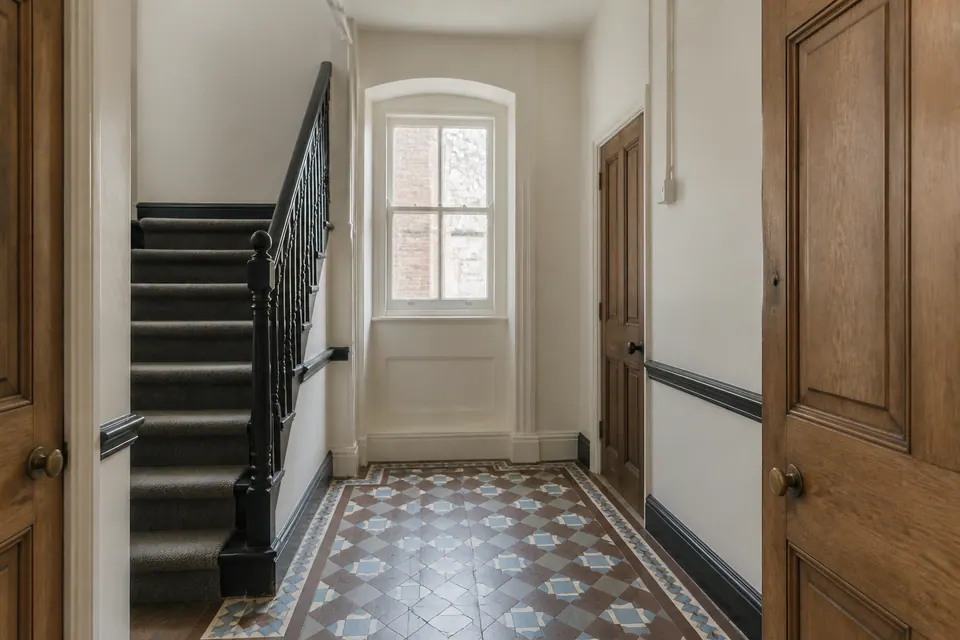
Clarify who controls the space and fittings before proposing work there.
Report level and known water history without inferring a damp mechanism from enclosure or position.
09 / DIRECT ANSWERS
The image can start the enquiry, but uncertain extent or reach may require assessment. Do not present the whole alcove as visible if only one edge is shown.
Do not cover evidence as preparation. Decoration does not replace assessment of growth or concealed limits.
No. The geometry is relevant context but does not identify why moisture persists at that location.
Not necessarily. Material and extent behind it remain unconfirmed until appropriately assessed. Any access work should be agreed separately.
Ask for handling and preparation guidance first, especially if items appear affected. Avoid clearing them merely to improve a photograph.
Identify its actual materials. Joints, seals and coatings may require different decisions despite similar shape.
Label the finishes separately and show the junction. Window repair should not be assumed within wall treatment.
No such work should be inferred. Access, removal and reinstatement need their own explicit arrangement.
Dulwich / PLAN THE APPOINTMENT
Send the Dulwich postcode, opening view and fixed-fitting details. Confirm availability after the practical access question is understood.
Mention any separately arranged joinery or opening-up work without assuming it is included in the treatment attendance.
Load the area map.
Dulwich / BEFORE BOOKING
A clear inspection limit is useful information, not an incomplete enquiry.
No unplanned removal is needed. Show the available opening and explain the obstruction first.
Give the visible dimensions and mark the rest as unconfirmed rather than presenting an inspected total.
No. Report odour separately from visible growth and seek assessment of the actual condition.
Only reliable material information should be used. Identify differences and uncertainty separately.
Not automatically. Removal, access work and reinstatement require explicit agreement.
Ask for preparation and handling guidance, particularly where items appear affected.
Follow applicable instructions for the agreed method rather than assuming the end of attendance settles contents use.
The visible opening may hide extent, damage or restricted reach that cannot be responsibly quoted as a simple patch.
Report the newly exposed condition and clarify whether the scope needs revision before treating it as included.
START AT THE OPENING YOU HAVE
Send the postcode, available view and fixed-fitting information. Ask what access is needed before the suitable treatment boundary can be agreed.
The room illustrations do not document a customer alcove opening-up or treatment.
