
An intact marked area
Show sound coating beside the patch so the assessment is not based on an isolated close-up.
PECKHAM / CEILING FINISH CONDITION
Loose paint changes the question from appearance to material condition.
If a Peckham ceiling has both spotting and lifting paint, show those observations separately. Do not scrape it for a clearer photograph. A suitable intact finish may be assessed for treatment, while a deteriorated layer or damaged backing can need a different scope before decoration is considered.
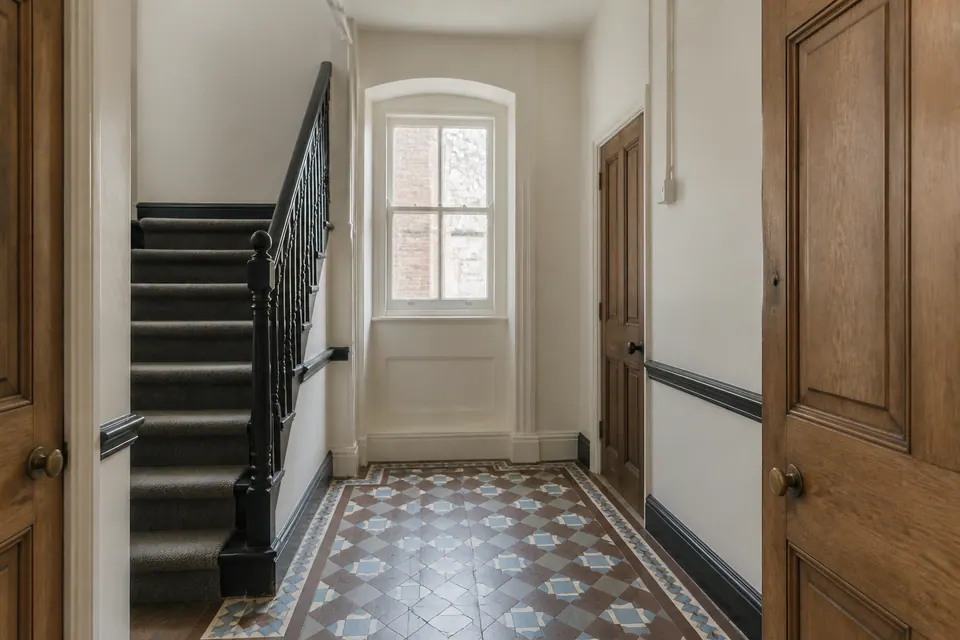
Visible condition · known history · suitability
Peckham / ACCESS & PEOPLE
Show sound coating beside the patch so the assessment is not based on an isolated close-up.
Describe deterioration without removing it. The appropriate next step may differ from treatment of a stable finish.
Provide what was actually done and when. Repainting alone is not confirmation of completed moisture repair.
Take safe photographs and use the appropriate booking arrangement. Do not disturb material to prove the issue or allocate responsibility.
Share known water, repair and decoration dates separately. The condition now should not be inferred from a past invoice alone.
Ask what needs assessment before cosmetic reinstatement. Keep suitable growth treatment and damaged-material work distinct.
02 / LOCATE THE ISSUE
Use the room setting to describe the material and history. A damaged coating should not be treated as a routine cleaning surface without assessment.
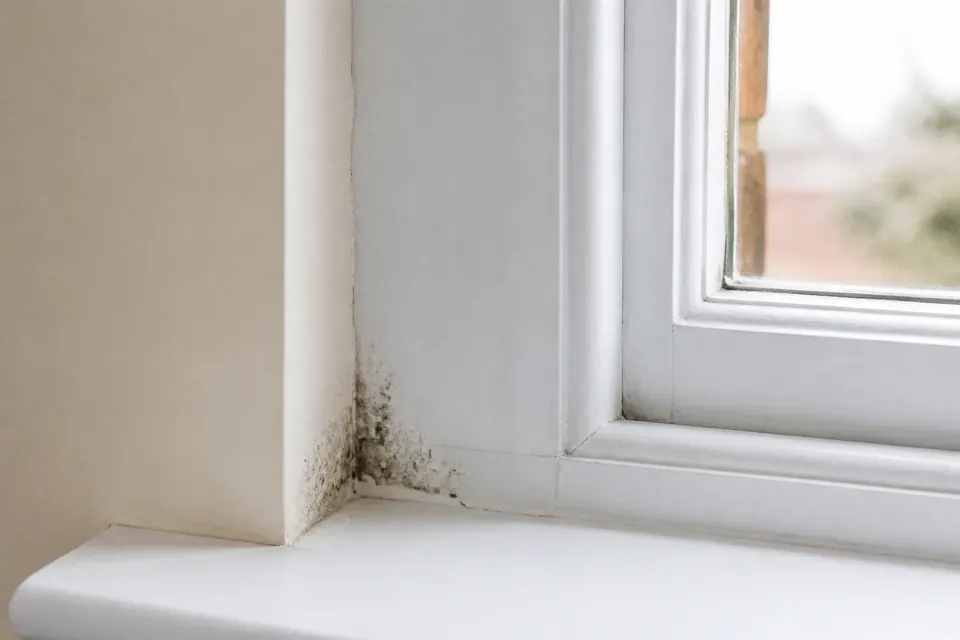
Show the relationship to the reveal and frame. Similar colour on adjoining finishes does not establish the same condition or moisture explanation.
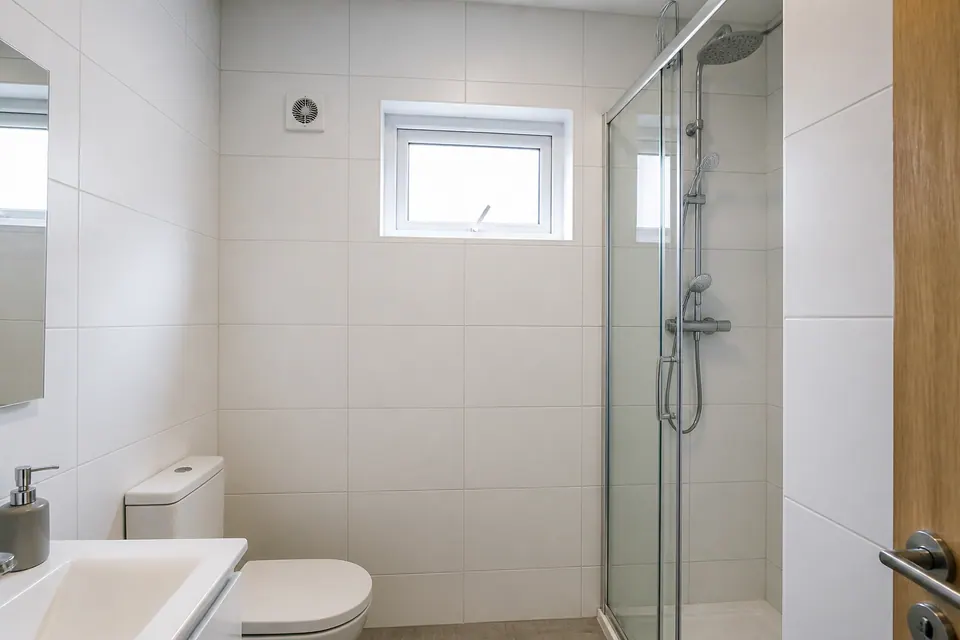
Describe whether loose coating extends beyond the visible spots. Repeated wetting may be relevant, but the finish condition needs its own assessment.
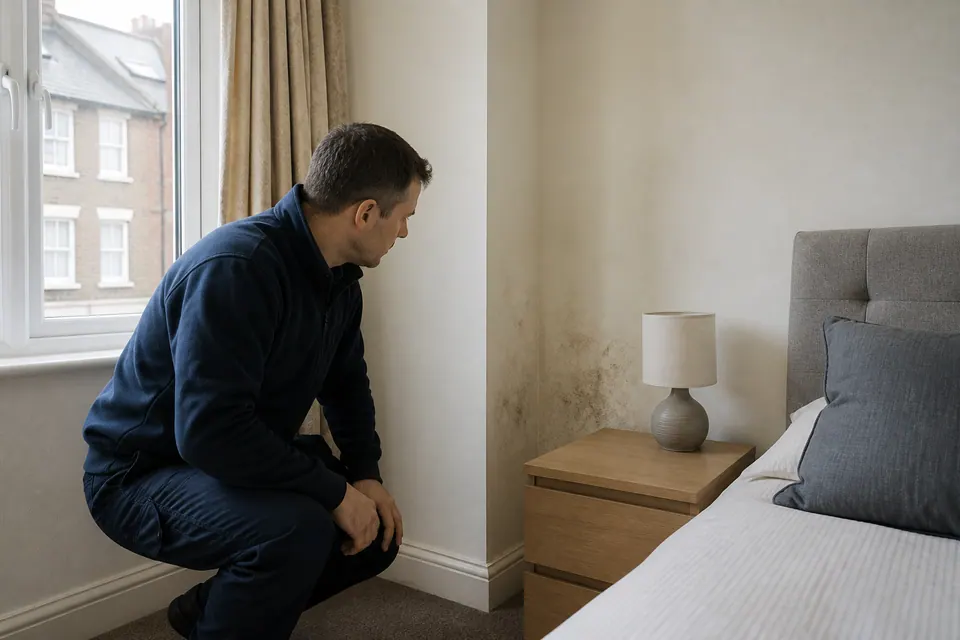
Take a safe view including the furniture below. Do not use the bed as a platform or move items into falling or loose material for a closer image.
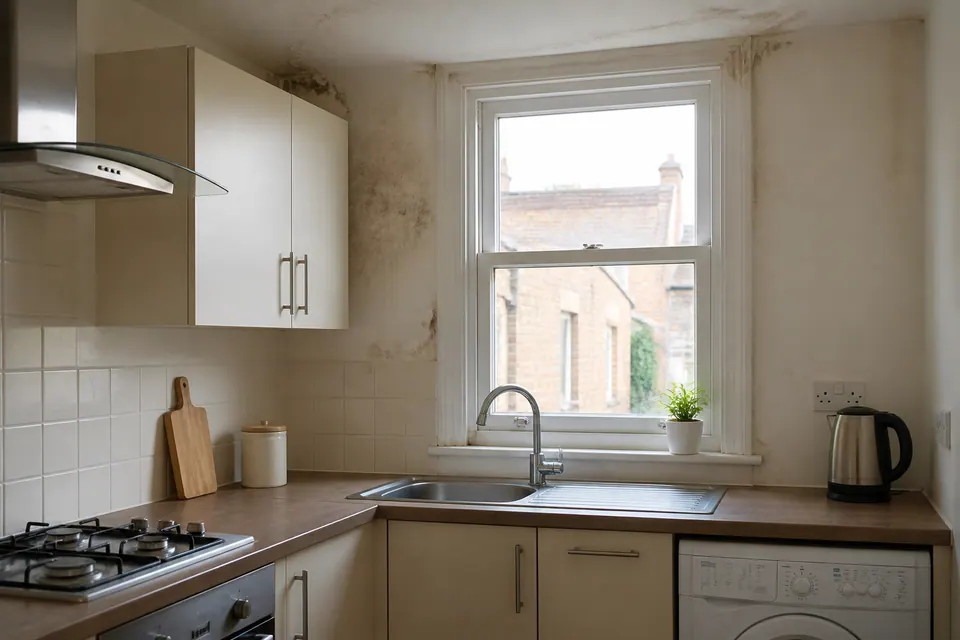
Keep a confirmed leak history separate from cooking observations. Report repair status and current deterioration without declaring the material ready for repainting.
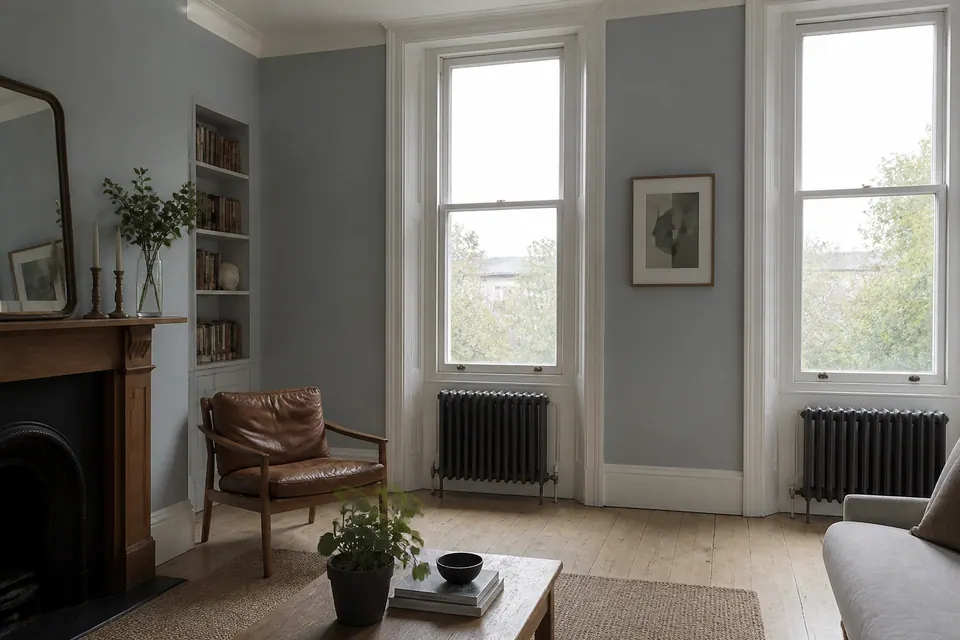
Show the affected section in relation to the room. Decorative appearance alone does not establish whether the coating is sound.
Describe what is visible without pressing, scraping or opening the surface. Unsound material may require specialist attention beyond growth removal.

Identify fixed storage or boxing that limits the view. Do not remove panels to establish the full extent for an initial enquiry.
Growth, staining and failed coating are different observations. None should be used as a substitute for assessing the actual material.
03 / SEPARATE THE QUESTIONS
A changed finish can raise moisture questions without proving either the cause or the appropriate repair.
| Visible condition | Possible context | Information to provide |
|---|---|---|
| Marked coating near an opening | Moisture around the reveal or ceiling edge | Where water is actually seen |
| Bathroom spotting with flaking paint | Repeated wetting or coating deterioration | Whether failure extends beyond the spots |
| Bubbling after a confirmed leak | Water exposure or remaining damage | Repair status and current material condition |
| Marks through a newer paint layer | Residual staining or a continuing condition | What preceded the repaint |
Stripping failed layers, repairing backing and redecorating are separate work unless expressly agreed. A mould-treatment quotation should not imply that damaged ceiling material will be reinstated.
The appearance of the paint does not reveal the whole condition beneath it.
| Assessment point | Mould | Damp / moisture |
|---|---|---|
| Meaning | Fungal growth affecting the exposed finish | Excess moisture involving the ceiling material |
| Useful evidence | Visible extent and present coating condition | Known water events and repair information |
| Why separate them? | Growth removal may leave damaged material | Moisture may need attention before cosmetic work |
| Next decision | Suitability for accessible treatment | Separate investigation or repair requirements |
Peckham / BEHIND EVERYDAY STORAGE
A close-up of spots can hide a failed coating around them.
Include a wider ceiling view and describe flaking, bubbling or other deterioration already visible. If water damage is known, give the event and repair status rather than assuming the ceiling has dried. The enquiry should establish whether suitable surface treatment is appropriate and what repair or reinstatement remains separate. You do not need to disturb the finish to provide useful evidence.
05 / QUOTATION, NOT GUESSWORK
For Peckham ceiling enquiries, include loose paint and any visible damage in the images, not only the spotting. Small suitable accessible surfaces may use photographic quotes; recurring, damaged or complex damp concerns can need assessment or specialist quotation.
Check the main service scope ↗| Reported condition | Quotation route | Evidence needed |
|---|---|---|
| A limited patch on suitable intact coating | Photographs may support quotation | Extent and adjoining sound finish |
| Recurring marks or uncertain condition | Assessment before defining work | Earlier treatment and decoration history |
| Failed material or complex moisture issue | Specialist quotation where necessary | Visible deterioration and repair status |
Confirm inclusions before arranging a decorator. A surface-treatment price should not be interpreted as complete ceiling restoration.
06 / DIRECT ANSWERS
The condition must be explained first. Small suitable accessible areas may be quoted from photos, but damage can require assessment or specialist quotation.
Do not disturb the finish to prepare an enquiry. Ask what assessment and separately agreed work are appropriate.
No. Provide known events and current observations. A failed coating does not establish the present moisture source by itself.
No such stages should be assumed. The proposed scope and any separate repair sequence need explicit agreement.
Show the layout and obtain preparation guidance. Do not assume either that all items must move or that no precautions are needed.
Only if expressly agreed as separate work. Treatment of suitable growth does not automatically reinstate paint.
Identify it as another finish with its own dimensions and condition. A continuous edge does not establish one method.
Any replacement or opening-up requires a separately defined scope. It should not be inferred from mould removal.
07 / A CONTROLLED APPROACH
Assess visible growth alongside coating stability and known water history. Identify any material needing another scope.
Clarify access and furnishings below the ceiling. Do not scrape or open the finish without an explicit plan.
Carry out the agreed method on assessed accessible material. Damage should not trigger unplanned reinstatement.
Explain stains, failed coating and any repair decisions separately from the growth addressed.
A treatment visit is not a promise of a fully restored ceiling finish.
Record marks and coating deterioration distinctly.
Treat suitable accessible material as named.
Identify what still needs repair or assessment.
The stages are illustrative, not customer restoration evidence. Continuing moisture may permit growth to return.
08 / ROOM-BY-ROOM CONTEXT
Keep repeated wetting observations separate from paint failure. Both are useful to describe.
Show the furniture below and take images safely. Do not improvise a platform to inspect the finish.
Provide confirmed water events independently of ordinary cooking use. Current damage still needs assessment.
Identify the affected section and any previous decorative work without assuming the cause.
Confirm the relevant access and work arrangement. A common-area repair is not automatically included.
State location and known events rather than assigning a damp mechanism from the level.
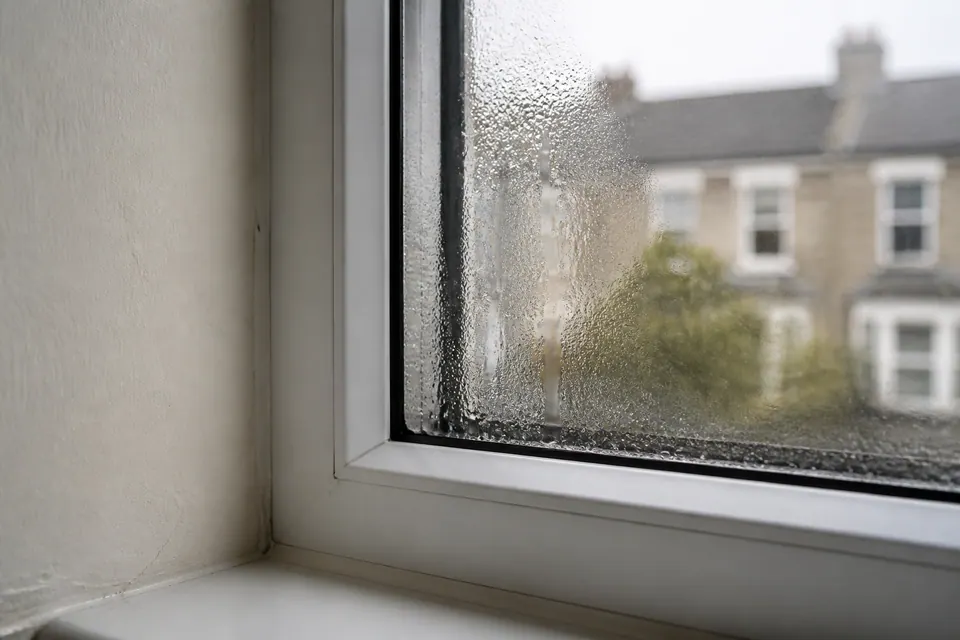
09 / WHEN IT COMES BACK
Keep the dates of repair, treatment and repainting separate. Describe whether current changes are spotting, staining or new coating failure rather than using one label for all three.
Report known water events after the work without assuming an active leak from appearance alone. The present material needs its own review.
Use the same room feature and floor-level viewpoint. Do not scrape the finish to recreate an earlier condition.
Peckham / PLAN THE APPOINTMENT
Send the Peckham postcode with safe photographs and known water history. Confirm availability after material condition and practical access have been discussed.
If a separate ceiling repair is proposed, identify it explicitly rather than assuming treatment includes its preparation or completion.
The map provides area context for the enquiry.
Peckham / BEFORE BOOKING
The material condition should be clear before a cosmetic plan is made.
No. Show what is safely visible and describe the deterioration without disturbing it.
It is a condition to report, not proof of the current moisture state or source. Include known history.
Yes, material deterioration or complex damp can change the quotation route from a suitable small-area photo enquiry.
Only if explicitly agreed. Do not infer removal of failed layers from a surface-treatment description.
Decoration is separate unless expressly included in the agreement.
Show the layout and ask for preparation instructions. Avoid unplanned movement or disturbance of the finish.
Follow guidance for the agreed work and circumstances, not a generic assumption based on attendance ending.
Keep water incidents, repair, treatment and decoration dates distinct so the current condition can be understood.
Identify spotting, remaining staining and renewed coating failure separately, with safe dated images where available.
SHOW THE COATING AS WELL AS THE MARKS
Send the postcode, safe photographs and confirmed water or repair history. Ask what is suitable for treatment and what needs another material decision.
The interior illustrations do not document customer ceiling repair or decorative restoration.
