
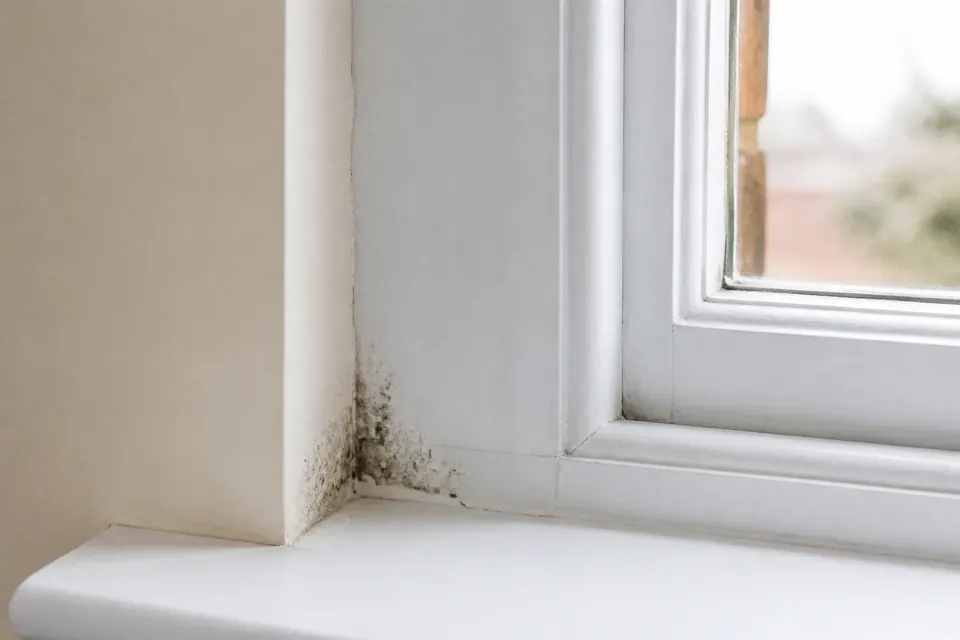
Window areas
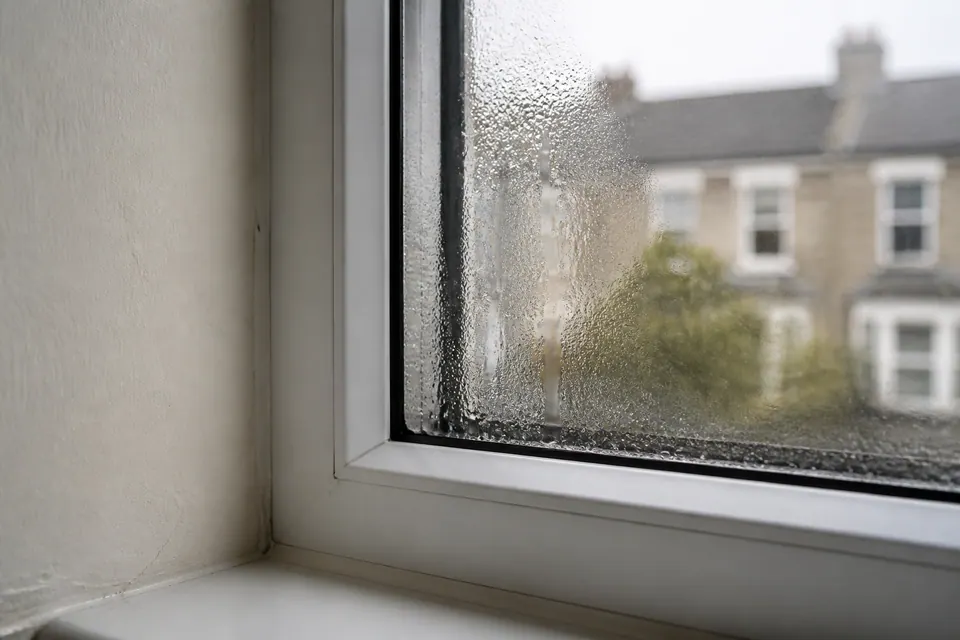
Identify which window and which side carries the mark. Water observed at one opening should not be reported as a fact about all openings.
CROYDON / MORE THAN ONE ROOM
One changing room does not tell the whole story of the home.
When conditions differ between rooms in a Croydon property, keep the enquiry organised by location. Show each affected surface and describe known changes in that room. Similar marks may still involve different finishes, access and moisture questions, while an unaffected room should not be treated as proof of a cause elsewhere.
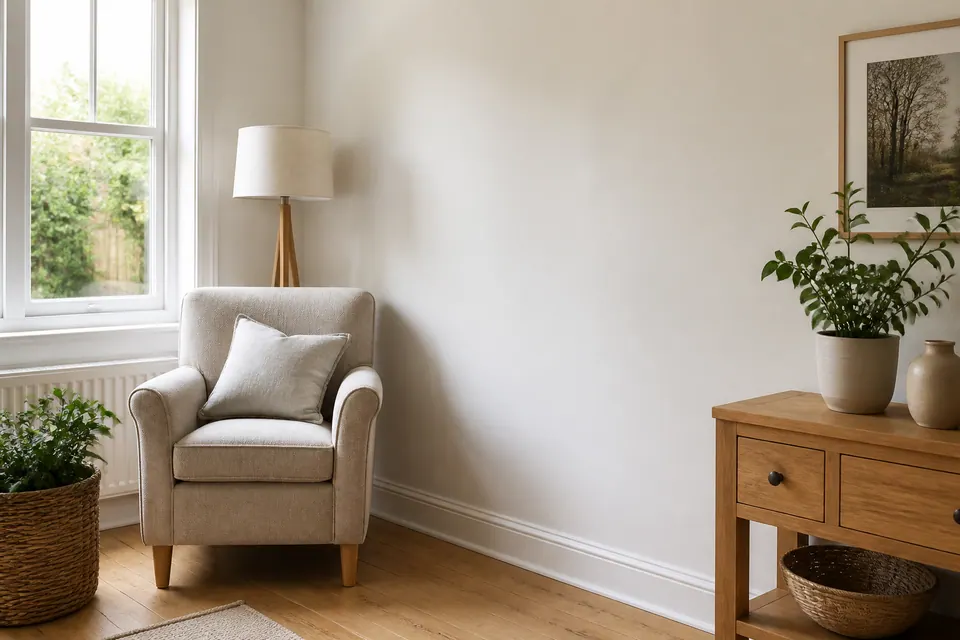
Room · material · history · access
01 / LOCATE THE ISSUE
Choose the location that matches each photograph and avoid transferring details from another room.
Identify which window and which side carries the mark. Water observed at one opening should not be reported as a fact about all openings.
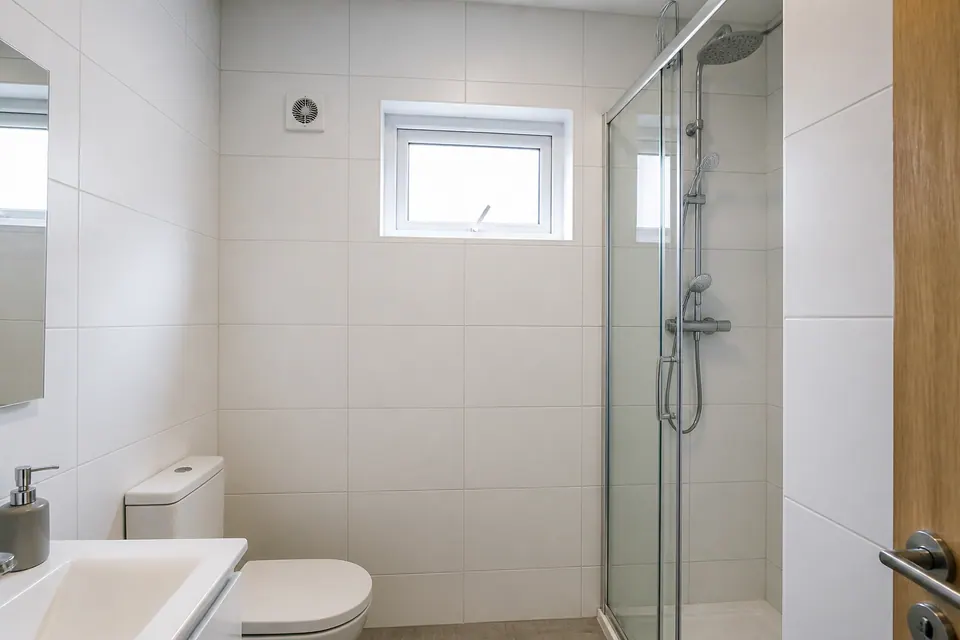
Name paint, grout or seals individually and describe the actual condition seen in that bathroom.
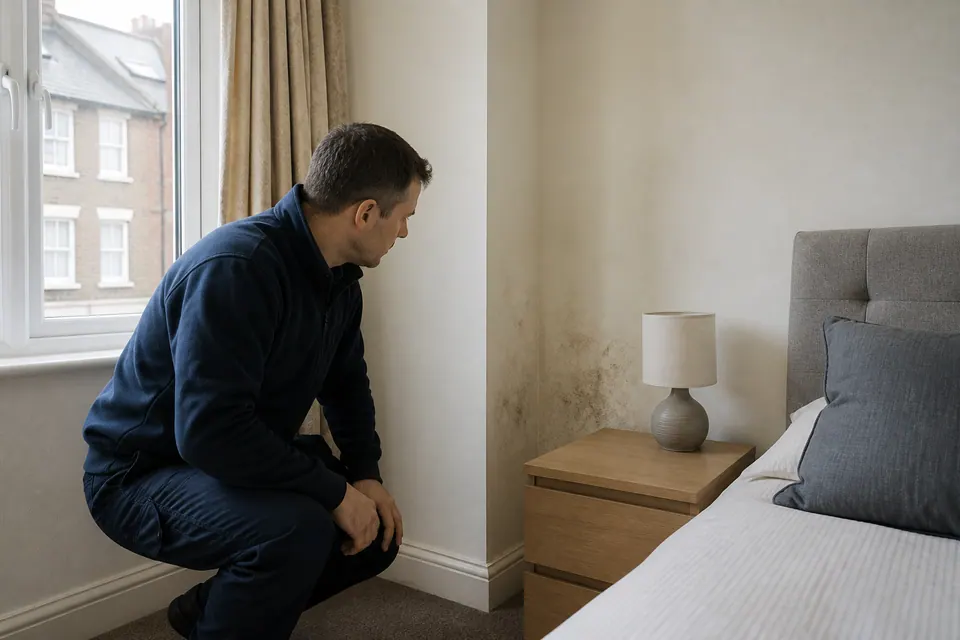
Include the furniture layout and room-use constraints. A second bedroom may need different arrangements.
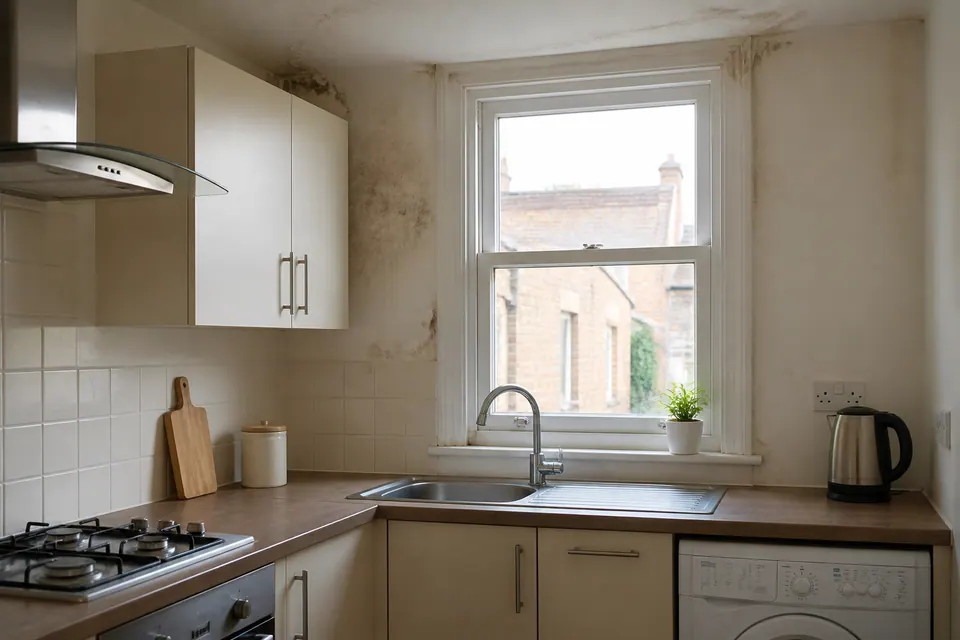
Link any known incident to the relevant fitting and surface. Keep unrelated patches separate.
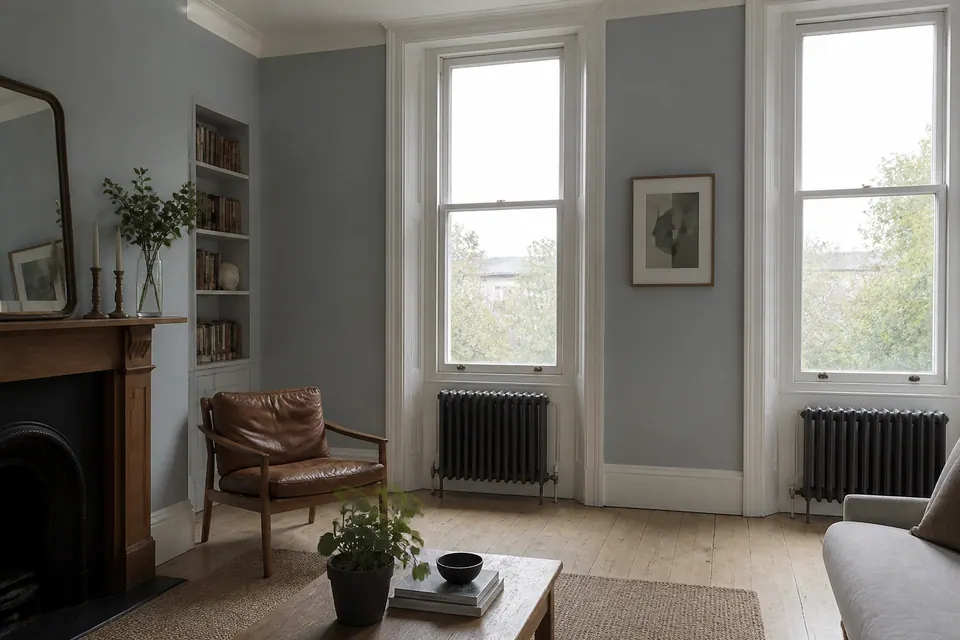
Show the wall within the furnished space and state what lies out of view behind large items.
Identify each finish and its visible condition. Similar colour on two substrates does not establish equal suitability for treatment.
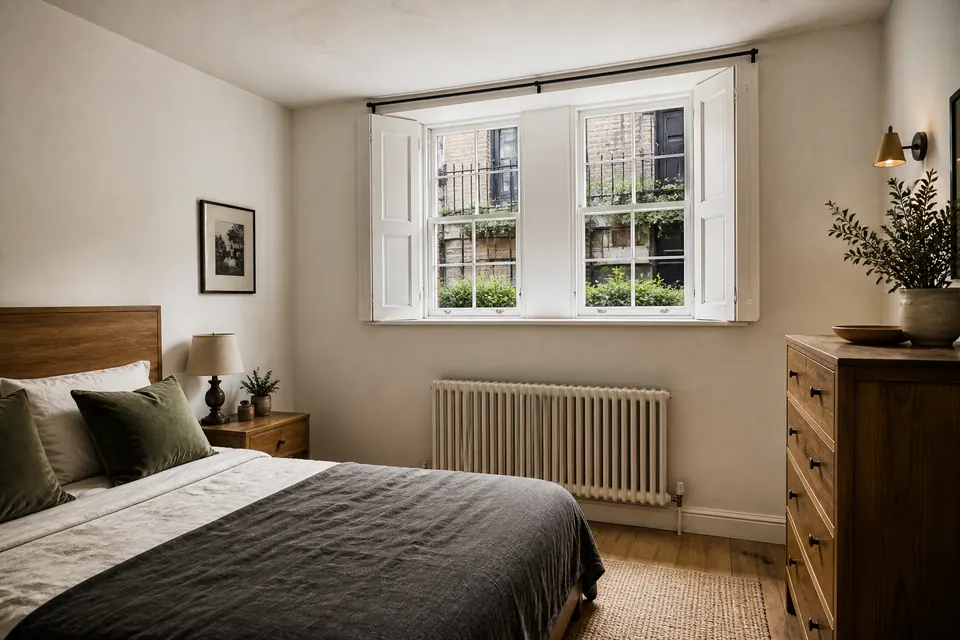
Specify the room containing the storage and the visible opening. Leave hidden backing or cavities unconfirmed.
A room with no visible marks provides context, but it does not diagnose why another room is affected.
Croydon / ONE CHANGING ROOM
A labelled set of photographs is easier to assess than an unlocated collection of marks.
For each affected room, name the surface, approximate visible extent and any documented water or repair history. Note practical differences such as fixed storage, high ceilings or sleeping use. The aim is not to invent a reason for the contrast, but to make sure a quotation and any preparation instructions refer to the right places.
03 / SEPARATE THE QUESTIONS
Different room conditions can raise useful questions. They do not establish a single explanation without appropriate assessment.
| Difference noticed | What to record | What not to conclude |
|---|---|---|
| Only one room changed | Its current surface and recent known events | That another room proves the source |
| Two similar-looking patches | Material and location for each | That their treatment needs are identical |
| Different repair histories | The actual work and dates by room | That all repairs succeeded or failed together |
| Unequal access | Furniture and fixed fittings in each space | That a room count defines reachable area |
Keep treatment, moisture investigation and material repairs tied to named locations.
Describe suspected growth separately from known wetting or damp observations.
| Point | Treatment record | Moisture record |
|---|---|---|
| Where? | The affected exposed material | The location of observed water or persistent wetness |
| When? | The first or latest visible change | The event or pattern actually noticed |
| What is uncertain? | Concealed extent and material suitability | The source when it has not been established |
| What follows? | An agreed suitable surface scope | Further assessment or repair where required |
04 / DIRECT ANSWERS
Yes. Provide separate details so assessment can define the work without losing the differences between areas.
Not for describing other affected locations. Label the views that relate to each proposed area.
No. Appearance does not establish source, extent or material suitability.
It can be mentioned as context, but does not prove why another room changed.
The affected extent, finish, access and required work matter; a room count alone is insufficient.
Confirm requirements by location, particularly where sleeping rooms, fixed storage or high areas differ.
Only report it where known to apply. Keep uncertainty explicit rather than extending an incident across the property.
Identify it as an additional area and ask whether the agreed scope needs review.
05 / QUOTATION, NOT GUESSWORK
Multiple affected areas require assessment. An organised room list helps distinguish the work included from areas merely mentioned for context.
Check the main treatment service ↗| Enquiry type | Quotation approach | Useful information |
|---|---|---|
| One small suitable exposed area | Photos may allow a quotation | Specific material and reach |
| Several rooms or recurring areas | Assessment defines the scope | Labelled location records |
| Complex damp or damaged materials | Specialist quotation may be required | Unresolved conditions by area |
Agree the total against a named scope. A reference to the property should not imply every room or concealed surface is included.
06 / A CONTROLLED APPROACH
Consider the material, visible extent and history without treating the first room as representative of all others.
Agree access, protection and occupancy requirements for the included spaces.
Treat suitable agreed surfaces while keeping additional or concealed areas outside assumptions.
Provide relevant guidance and identify any separate moisture or repair question by location.
A consistent room list makes the work and any later follow-up easier to understand.
Match photographs and observations to the same room names.
Keep the agreed locations and any changes to scope identifiable.
Report new observations against the correct room rather than merging them into a general property complaint.
Illustrations describe service stages, not verified outcomes across a customer property.
07 / WHEN IT COMES BACK
Identify which room and surface changed, and whether other included areas appear different. Do not describe the whole property as recurring when the evidence concerns one location.
A renewed moisture observation or altered material condition may change that room’s next assessment. Keep earlier treatment boundaries available so the follow-up refers to the actual work.
Consistent names prevent a new patch in one space being confused with an earlier patch somewhere else.
08 / ROOM-BY-ROOM CONTEXT
Record the precise finish and wetting observations for that room, not a generic bathroom assumption.
Name the affected side and explain sleeping-space arrangements and furniture clearance.
Attach known plumbing or appliance history only to the relevant location.
Show the wall in context and identify any fixed or substantial obstruction.
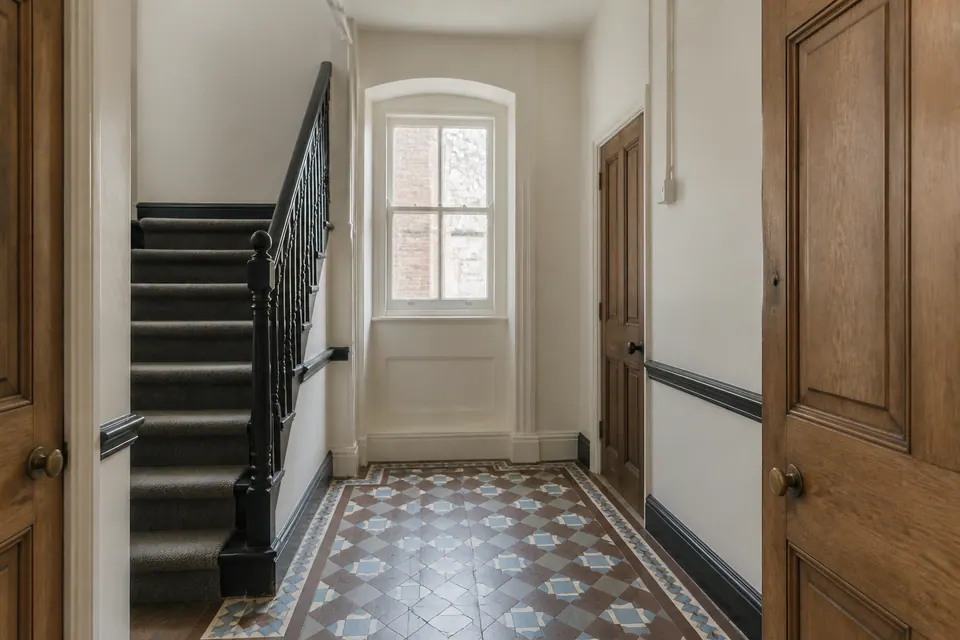
Clarify shared access and whether the affected part falls within the authorised work.
State its level and known water history without applying that history to upstairs rooms.
Croydon / ACCESS & PEOPLE
Use the same room names in photographs, messages and the quotation.
Describe actual events and works without inventing an explanation for differences.
Separate rooms proposed for treatment from rooms supplied only as comparison.
Tell the booking contact which spaces are difficult to take out of use and why.
Share repair information by location so an unrelated invoice is not mistaken for evidence about every patch.
Check that the written scope matches the areas you intended and leaves other work explicitly separate.
Croydon / PLAN THE APPOINTMENT
Use the Croydon postcode to confirm appointment availability.
Mention building entry, floors involved and any access restrictions between the included rooms.
Load the area map.
Croydon / BEFORE BOOKING
Clear labels help keep a larger enquiry manageable.
Use the room and surface, such as bedroom window reveal, rather than numbers with no location key.
Mention them only where useful context; their appearance does not establish the cause of another room’s condition.
Say it is unknown and show the visible finish without removing a covering.
Request assessment with each patch identified so the proposed scope can be confirmed accurately.
No. Smaller areas may involve different finishes, access or unresolved conditions.
Explain access and room-use constraints before booking so the arrangements can be discussed.
Follow the applicable guidance for the agreed work; do not assume immediate return throughout.
Only where relevant and known. Do not extend a documented event beyond its established area.
Send its location and current condition and ask whether assessment or the scope needs updating.
CROYDON / START WITH THE ROOM LIST
Send the postcode and labelled photographs with a short note for each location. Keep the surfaces, history and access constraints separate.
Property images are illustrative, not records of a completed multi-room customer treatment.
