
Visit cost?
Price the hardware change and exposed-finish work as separate outcomes.
NOTTING HILL · CAREFUL MINOR REPAIRS
Keep period details in the repair plan.
Small repairs should not casually replace the details that make a room work visually. Show the original fitting and explain whether you want adjustment, a matching replacement or a different finish.
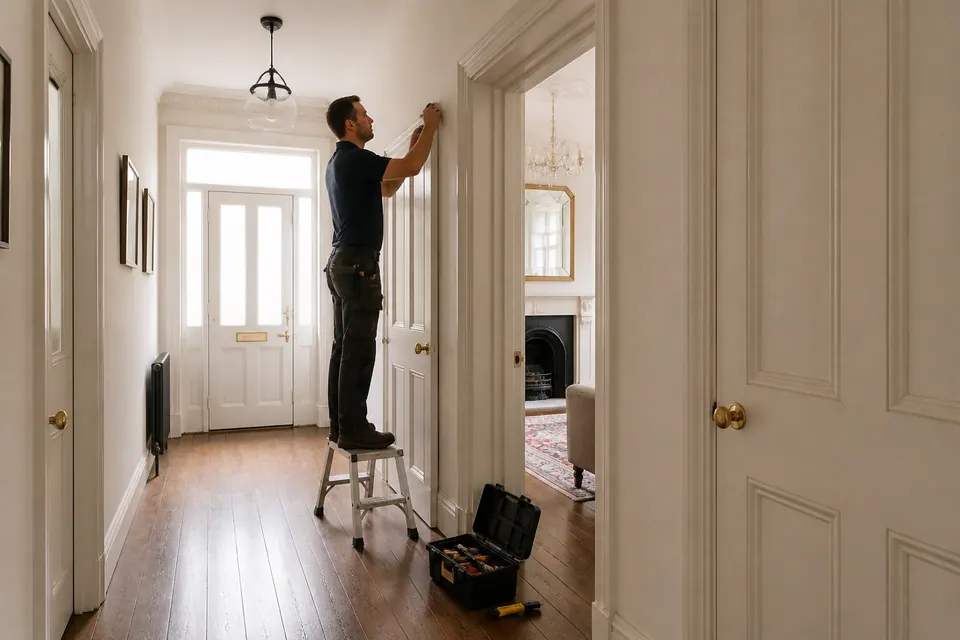
NOTTING HILL IN PRACTICE

Keep period details in the repair plan.
If your Notting Hill property has painted timber, older handles or unusual fixing centres, a close photograph alone may not establish compatibility. Include measurements and a view of the surrounding surface before ordering parts.
A smaller backplate may reveal an outline left by the original paint finish. Compare the full old and new footprints, not simply the spacing of the screws.
If retaining the original appearance matters, say so before ordering. An adjustment, a compatible replacement and restoration of damaged timber are different outcomes requiring different assessment.
Describe which original details should stay · Measure the spacing between fixing holes · Photograph the fitting in its wider setting · Agree the finish after any minor repair
START WITH THE TASK
Choose furniture assembly without assuming restoration is included.
02 ↗Describe whether new shelving should match existing timber.
03 ↗Photograph original handles before removing them.
04 ↗Screen mounting should account for finishes worth preserving.
05 ↗Compare accessory plates against their earlier wall marks.
06 ↗Distinguish worn hardware from split supporting timber.
QUICK JOB FINDER
Choose furniture assembly without assuming restoration is included.
Explore this service ↗QUICK ANSWERS
Price the hardware change and exposed-finish work as separate outcomes.
Minor fitting repairs differ from restoration of damaged timber or whole-room decoration.
Several original fittings can be reviewed together with individual dimensions and priorities.
Agree who supplies materials. Compare replacement footprints and fixing centres before purchasing parts.
Compatibility and the agreed finish influence the work planned for the visit.
Furniture assembly is available. New furniture assembly requires its own model rather than an assumed restoration brief.
Wall mounting must respect suitable support as well as decorative surroundings.
Agree permission before changing original fittings in rented interiors.
DIFFERENT ROOMS, DIFFERENT BRIEFS
Document features around each fitting.
Retain photographs of original hardware.
Confirm authority to change appearance.
Identify differing hardware room by room.
Separate functional repairs from refurbishment.
Check any finish requirements.
Homeowner? Prioritise everyday faults.
Landlord or manager? Authorise the repair scope.
Tenant? Obtain permission for alterations.
CLEAR BEFORE YOU BOOK
Show the original finish and the replacement fitting’s footprint.
Small furniture assembly is quoted separately from restoring existing details.
A new screen position must respect both support requirements and the surrounding finish.
| Task | Pricing basis | Guide |
|---|---|---|
| Repair or fitting | Exposed old holes and the agreed finishing boundary | Quotation |
| Small furniture assembly | Small replacement furniture specification | From £30 |
| Several small jobs | Hardware changes and separately named surface work | Combined scope quotation |
| Complex mounting | Mounting location and fragile surrounding material | Assessment quotation |
Small-item assembly source: Alesta’s furniture assembly page . Other work: individually quoted.
A handle change can leave a second surface-repair task. Include timber condition and the desired decorative result so the quotation does not stop at fitting the new hardware.
BUILD A REALISTIC LIST
Prioritise operation and identify details to preserve. The selector prepares a request only; it does not imply that matching parts or restoration work are already available.
| Situation | A practical next step |
|---|---|
| Familiar task | Photograph existing fittings before removing parts whose replacements are unconfirmed. |
| Multiple or awkward jobs | Decide which original components should be retained before ordering new hardware. |
| Uncertain mounting | Old fixing points need assessment; matching their position is not enough. |
| Regulated or specialist work | Treat historic or delicate glass and specialist door systems as separate work. |
WALK THROUGH THE PROPERTY
ROOM NOTES
Living-room television mounting needs appropriate support while identifying decorative finishes to preserve.
Service details ↗| Job type | Example | Property area | Service |
|---|---|---|---|
| Assembly | Build a supplied side cabinet | Alongside retained furniture | Furniture assembly |
| Mounting | Position a replacement accessory | Wall with an existing outline | Fittings |
| Adjustment | Review internal handle operation | Door with retained trim | Door repair |
| Timber work | Assess a damaged timber fitting | Original fitted storage | Carpentry |
FROM SMALL FIX TO FINISHED JOB
Photograph the original component in its setting.
Describe repair versus appearance objectives.
Keep detached parts available for comparison.
Agree compatible hardware and finish requirements.
Review any marks outside the authorised work.
A JOB, MADE VISIBLE
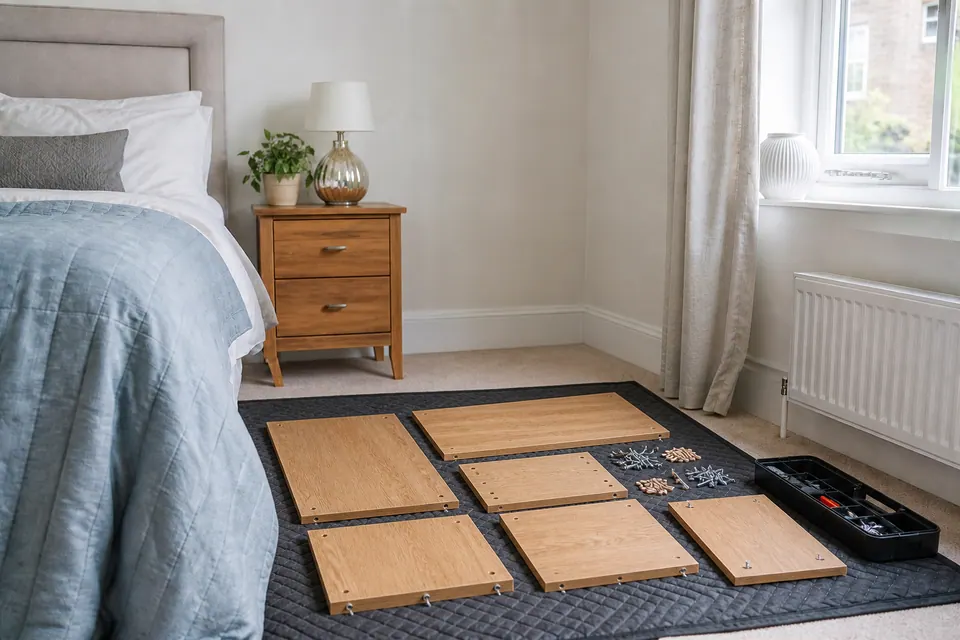
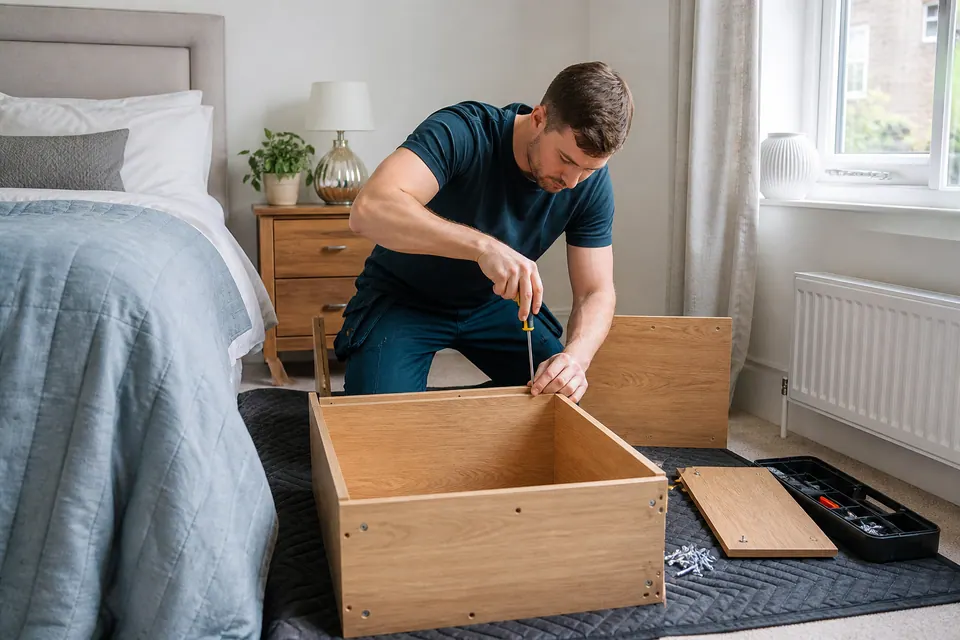
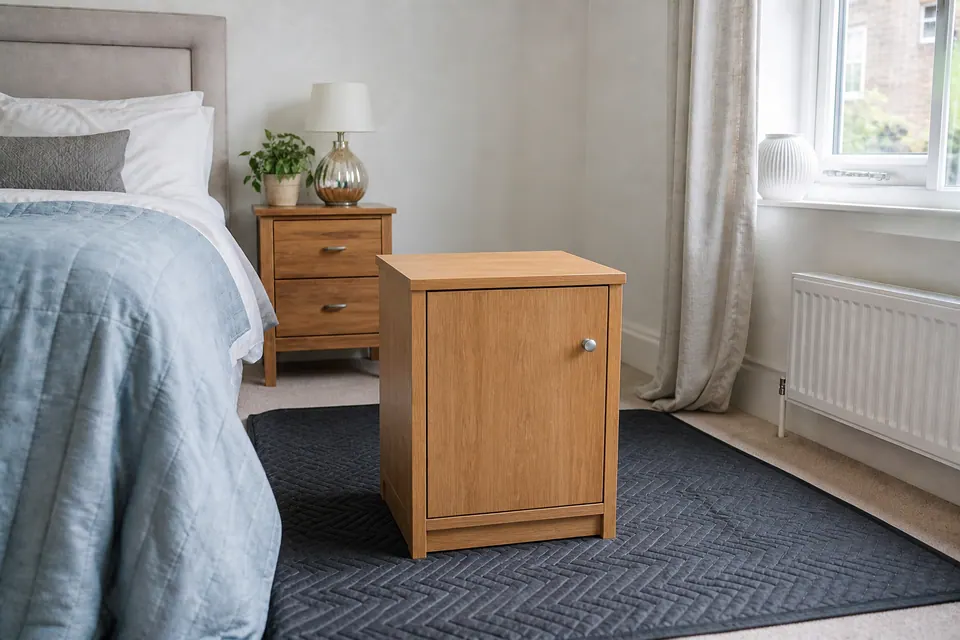
Illustration only; not customer evidence.
PLAN THE ARRIVAL
Identify the Notting Hill address and the room containing the original fitting. Mention fragile features along the equipment route where relevant.
Interactive area map
THE DETAILS OF YOUR VISIT
It may not conceal the paint outline or old holes. Compare dimensions before deciding.
No. Fixing centres, mechanism and supporting material must also be compatible.
Do not undertake potentially damaging preparation merely for an enquiry; show the current condition.
Ask for assessment of adjustment or repair before assuming replacement is necessary.
Show the surrounding timber. A new screw alone may not address the damaged fixing area.
The extent of damage decides the appropriate carpentry scope; restoration should not be assumed.
Only agreed decoration is included. Specify the visible result you expect after the fitting changes.
Provide dimensions and condition; age or appearance does not guarantee compatibility with the existing mechanism.
Send clear photographs and specifications, and explain whether alternatives are acceptable before parts are selected.
TURN THE LIST INTO A PLAN
Begin with the fitting in place, its dimensions and the detail you want retained after repair.
Images illustrate typical handyman tasks.
