
How is this priced?
Use the same rail, handle and drawer labels in the quote.
MORDEN · COMPONENTS BY ITEM
Keep detached hardware matched to the right item.
A loose rail, pulled-out handle and sticking drawer in a Morden home are three different requests. Label the parts from each so the enquiry can identify what is actually missing or damaged.
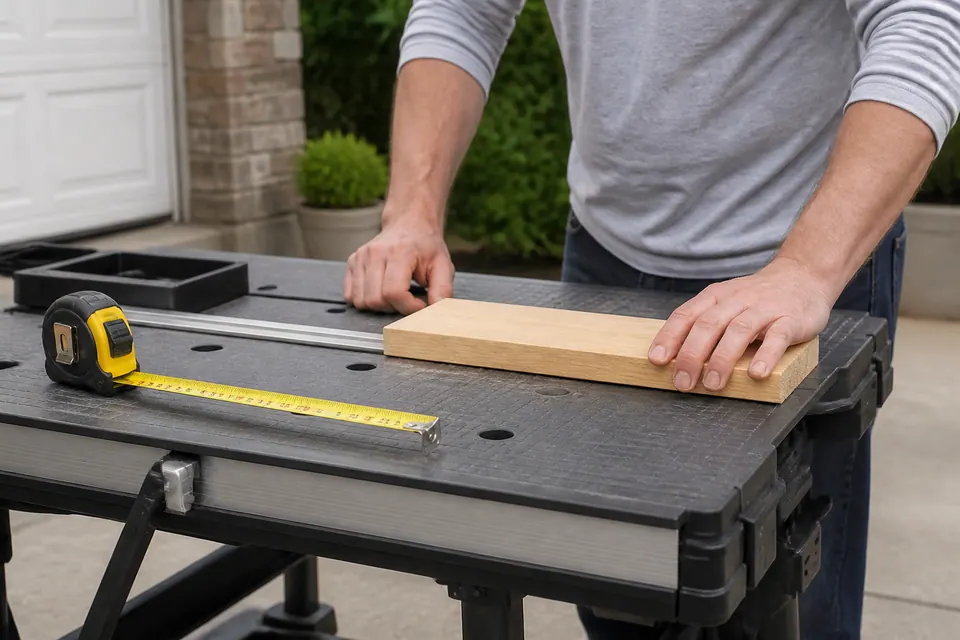
MORDEN IN PRACTICE

Keep detached hardware matched to the right item.
Photograph the surrounding panel before focusing on the detached component. An intact handle can pull away because its supporting material has failed rather than because the handle needs replacement.
Record the location and symptom beside each image. Hardware from adjacent cupboards may look alike while using different dimensions or fixing arrangements.
Prioritise restoring useful operation over optional cosmetic changes. Where damage extends beyond the fitting, ask whether a broader repair or replacement assessment is needed.
Identify a replacement unit separately from hardware repair; Keep TV bracket parts separate from furniture screws; Match every detached component to its damaged surface.
START WITH THE TASK
Identify a replacement unit separately from hardware repair.
02 ↗Show the support points behind the loose rail.
03 ↗Measure handle plates on the actual internal door.
04 ↗Keep TV bracket parts separate from furniture screws.
05 ↗Label mirror fittings by their original position.
06 ↗Match every detached component to its damaged surface.
QUICK JOB FINDER
Identify a replacement unit separately from hardware repair.
Explore this service ↗QUICK ANSWERS
Use the same rail, handle and drawer labels in the quote.
Suitable hardware repair depends on compatible parts and sound fixing material.
Several faults can share review without merging their components.
Keep detached fittings separated; agree any substitute before buying.
Unknown parts or panel damage may leave individual tasks pending.
A replacement unit may be booked for assembly once its model, instructions and working space have been assessed.
Do not reuse failed accessory holes without reviewing the surface and load.
The approving contact should recognise each labelled repair and replacement.
DIFFERENT ROOMS, DIFFERENT BRIEFS
keep component storage off access routes.
show worn fixing holes.
approve replacement choices by item.
label parts with their room.
identify the affected desk mechanism.
record replacement authority.
Homeowner? Photograph the surrounding panel before focusing on the detached component. An intact handle can pull away because its supporting material has failed rather than because the handle needs replacement.
Landlord or manager? The approving contact should recognise each labelled repair and replacement.
Tenant? Ask the owner to approve replacement choices by item.
CLEAR BEFORE YOU BOOK
Use the same rail, handle and drawer labels in the quote.
A replacement unit may be booked for assembly once its model, instructions and working space have been assessed.
Do not reuse failed accessory holes without reviewing the surface and load.
| Task | Pricing basis | Guide |
|---|---|---|
| Repair or fitting | Match every detached component to its damaged surface | Reviewed quote |
| Small furniture assembly | Identify a replacement unit separately from hardware repair | From £30 |
| Several small jobs | Several faults can share review without merging their components. | Agreed combined work |
| Complex mounting | Keep TV bracket parts separate from furniture screws | Mounting assessment |
For the published small-item guide, see Alesta’s furniture assembly page . Other fitting and repair requests are quoted individually.
Price each labelled defect and identify unresolved parts. Damaged panel material can require a different scope from tightening the detached fitting that first drew attention.
BUILD A REALISTIC LIST
Label the rail, handle and drawer separately. Prioritise restoring operation while the components are still linked to their original locations.
| Situation | A practical next step |
|---|---|
| Simple familiar task | Keep detached parts with a photograph of their original item. |
| Several jobs or awkward fitting | Ask for assessment if a handle has pulled out of damaged board. |
| Uncertain wall, load or fixing | Do not force the sticking drawer merely to expose its runner. |
| Gas, structure or fixed electrics | Treat security and service fittings outside ordinary furniture hardware. |
WALK THROUGH THE PROPERTY
ROOM NOTES
Keep TV bracket parts separate from furniture screws. Name the drawer that sticks in the sideboard.
View the relevant service ↗| Job type | Example | Property area | Service |
|---|---|---|---|
| Assembly | Identify a replacement unit separately from hardware repair | Furniture position | Furniture assembly |
| Mounting | Label mirror fittings by their original position | Fitting wall | Fittings |
| Adjustment | Measure handle plates on the actual internal door | Opening clearance | Door repair |
| Timber work | Show the support points behind the loose rail | Storage space | Carpentry |
FROM SMALL FIX TO FINISHED JOB
Label each rail, handle and drawer request separately.
Check proposed components against their original mechanisms.
Keep detached parts organised and the affected items accessible.
Refer additional panel damage before treating it as a small fitting exchange.
Review each labelled outcome and keep unresolved parts on the list.
A JOB, MADE VISIBLE
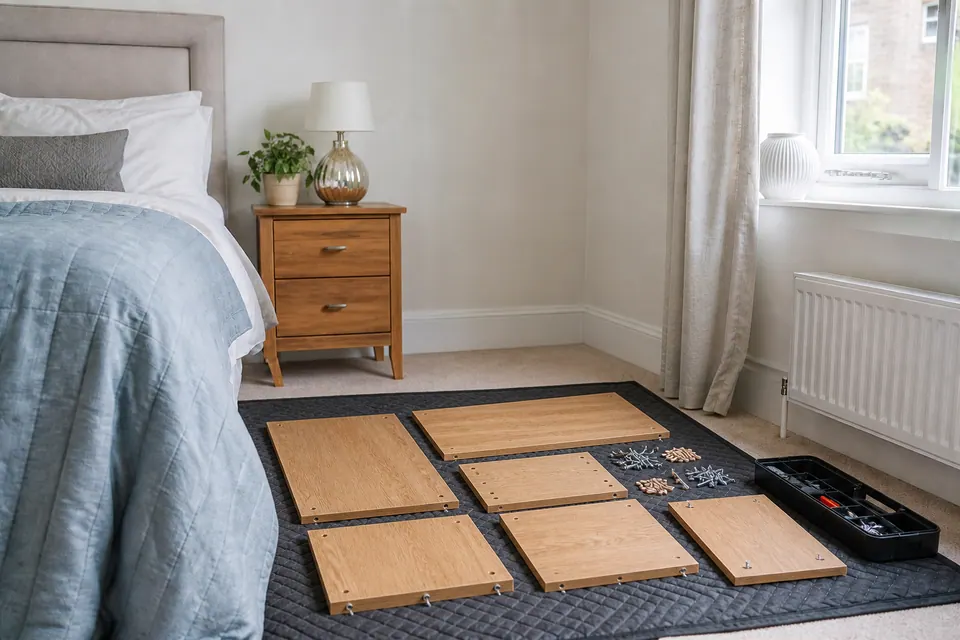
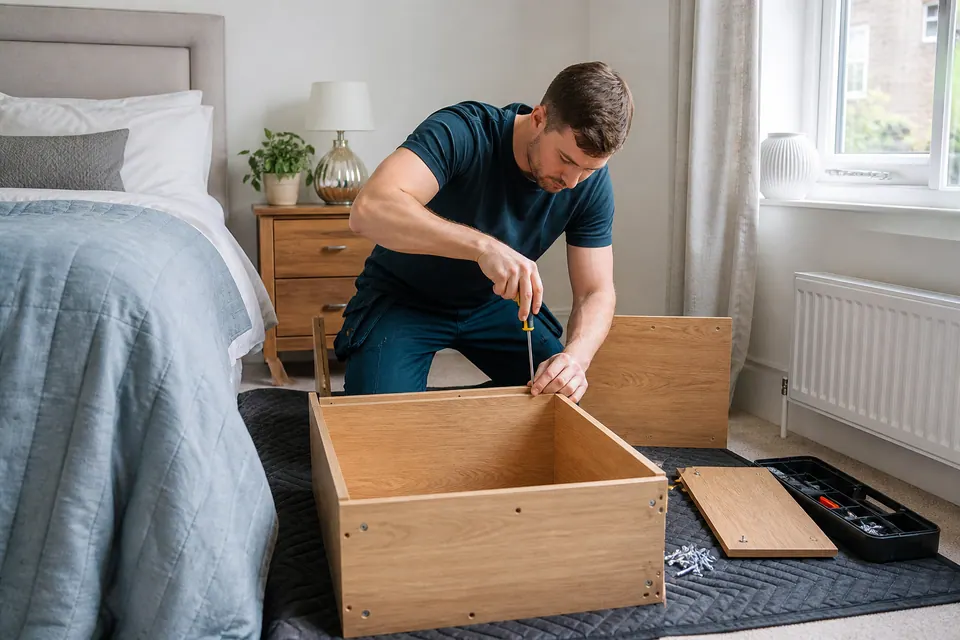
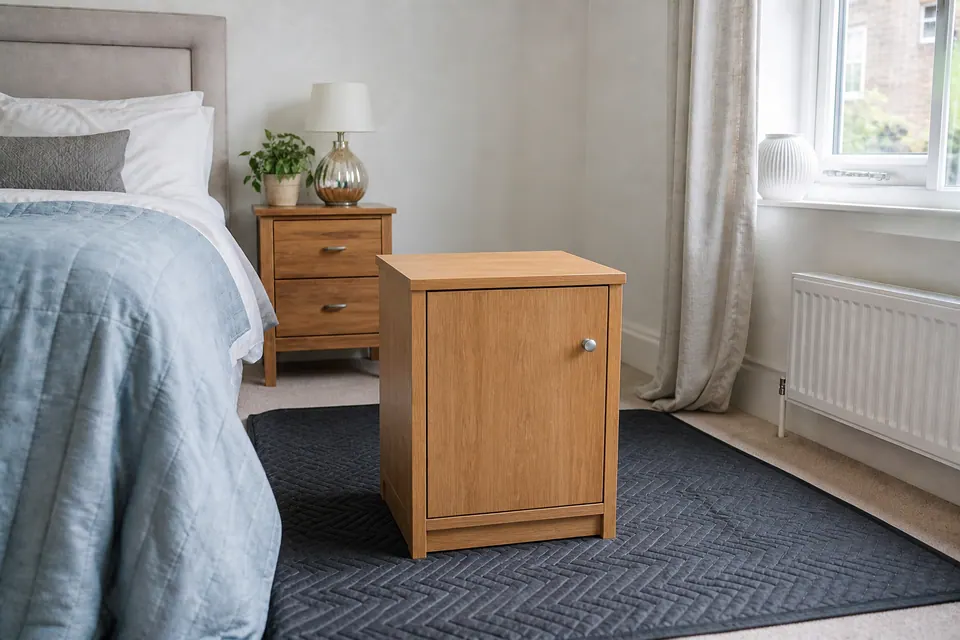
Illustrations explain assembly stages; they do not document a customer project.
PLAN THE ARRIVAL
Send the Morden postcode with the rooms containing the affected fittings. Confirm appointment options while keeping detached components available for identification rather than mixing them in storage.
Area orientation
THE DETAILS OF YOUR VISIT
Keep them separated by item instead. Similar hardware can have different dimensions, and a mixed bag removes useful information about its original application.
No. Show the panel around its fixing points. Damage to that material may be the reason the handle detached.
Photograph the complete mechanism and any matching accessible fitting. Product references may help, but compatibility should still be confirmed before substitution.
Do not force a jammed mechanism. Describe where it stops and provide safe accessible views so further assessment can be planned.
That is not an automatic solution. The rail’s purpose, load, dimensions and supporting panel need consideration before another position is chosen.
Describe the movement and visible condition rather than prescribing the answer. The assessment determines whether suitable hardware or wider material work is required.
List them separately from failed fittings and provide their specifications. Optional replacements should not displace the agreed priority repairs without discussion.
The scope may need revision or deferral. Additional material repairs require agreement rather than being presumed included in a small hardware task.
Use the same labels as the photographs: rail, handle and drawer. Confirm the intended outcome and any parts still awaiting identification for each.
TURN THE LIST INTO A PLAN
Bring the labelled parts and matching photographs together. A clear link between component, damaged surface and desired operation helps define each repair accurately.
Task images are illustrative.
