
Suitable handyman tasks?
Ordinary door hardware and alignment can be assessed before choosing a repair method.
EPSOM · INTERNAL DOOR ADJUSTMENTS
A door that needs lifting before it will latch.
Lifting an internal door to close it is a symptom, not a repair specification. For Epsom, show its alignment and explain how the movement has changed before choosing replacement hardware.
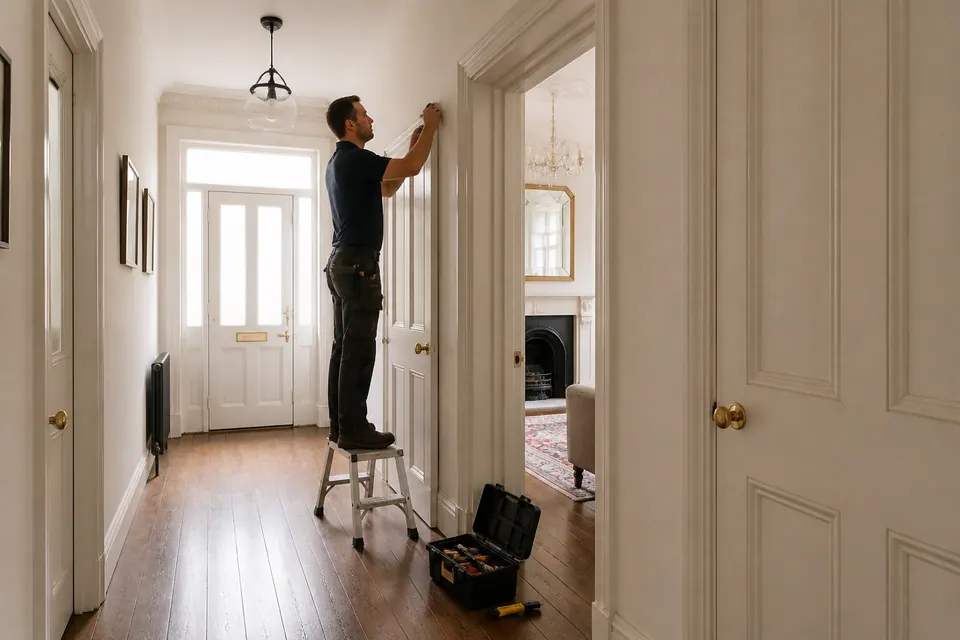
EPSOM IN PRACTICE
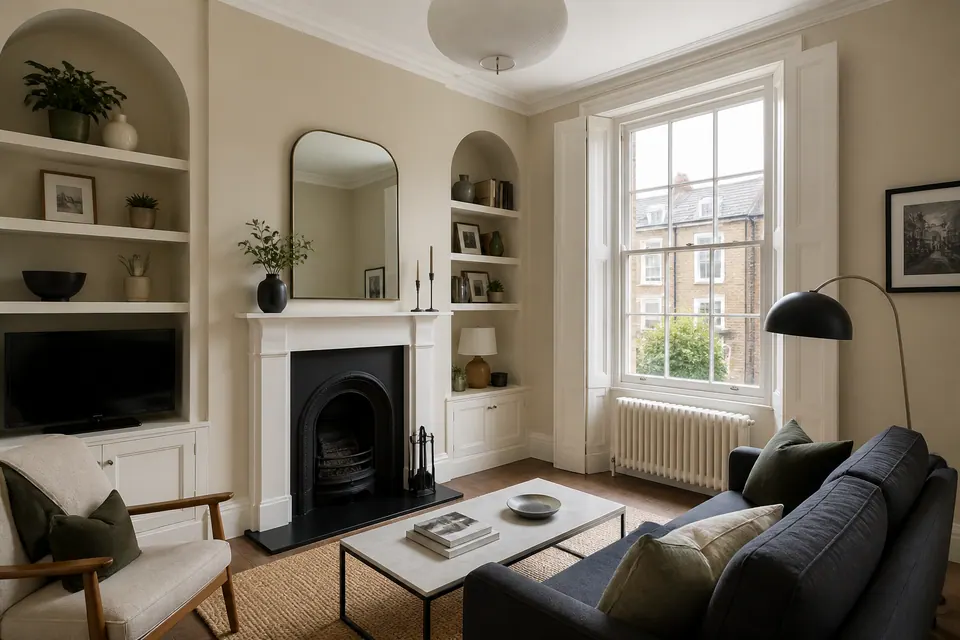
A door that needs lifting before it will latch.
Example brief: bedroom unit assembly, with handle and latch review recorded separately.
Photograph the top gap, hinge positions and latch edge in their normal condition. Mention decorating, flooring or hardware changes around the opening.
Fire-rated doors and specialist closing devices require appropriate assessment before general adjustments are assumed.
Bedroom unit assembly · Fitted doorway shelf · Lifting-door assessment · Doorway mirror fitting
START WITH THE TASK
Keep assembled furniture clear of the door’s working area.
02 ↗Measure shelf projection against the handle path before requesting timber cut for that position.
03 ↗Describe whether lifting is needed throughout closure or only at the latch.
04 ↗Supply screen specifications as a separate installation request.
05 ↗Mark mirror edges away from the opening door’s movement.
06 ↗Include the strike plate and the latch together in one photograph.
QUICK JOB FINDER
Keep assembled furniture clear of the door’s working area.
Explore this service ↗QUICK ANSWERS
Ordinary door hardware and alignment can be assessed before choosing a repair method.
Describe any nearby furniture or mirror work as additional tasks, not part of the latch fault.
Before booking, agree who supplies materials. Hold off buying a handle until compatibility and the actual fault are considered.
Door construction, alignment and specialist requirements influence the planned work time.
Furniture assembly is available. Bedroom assembly can be reviewed separately once the doorway and product are identified.
A new mirror or television needs independent mounting details and suitable wall support.
An occupant can report the lifting symptom while the owner approves the repair scope.
Quote the assessed door work; the £30 guide relates only to small furniture assembly.
DIFFERENT ROOMS, DIFFERENT BRIEFS
Show the door in its frame, not just a close-up taken in the flat.
Identify older handle plates and painted edges you want preserved.
Tell the owner about recent flooring or decorating changes relevant to the fault.
Label the room where lifting is needed so similar door photos are not mixed.
Explain if the door serves a study that must remain available.
Provide fire-rating and closer information to the person arranging the work.
Homeowner? Include the strike plate and the latch together in one photograph.
Landlord or manager? Tell the owner about recent flooring or decorating changes relevant to the fault.
Tenant? An occupant can report the lifting symptom while the owner approves the repair scope.
CLEAR BEFORE YOU BOOK
Quote the assessed door work; the £30 guide relates only to small furniture assembly.
This is furniture-assembly guidance, not a fixed charge for a door that needs lifting.
Supply screen specifications as a separate installation request.
| Task | Pricing basis | Guide |
|---|---|---|
| Handle and latch review | Before booking, agree who supplies materials. Hold off buying a handle until compatibility and the actual fault are considered. | Scope quotation |
| Small furniture assembly | Confirmed small-item product | From £30 |
| Combined lifting-door assessment | Door construction, alignment and specialist requirements influence the planned work time. | Reviewed combined quotation |
| Television position review | Supply screen specifications as a separate installation request. | Mounting assessment quotation |
The separate small-item guide is published on Alesta’s furniture assembly page
A latch adjustment, hinge repair and replacement mechanism have different requirements. Confirm any making good instead of assuming a door symptom implies one fixed-price treatment.
BUILD A REALISTIC LIST
Prioritise bedroom unit assembly or handle and latch review, then add optional fittings. This checklist is not a booking or quotation.
| Situation | A practical next step |
|---|---|
| Bedroom unit assembly | Do not repeatedly lift or force a door to prove its misalignment. |
| Several related tasks | Ask for assessment before requesting trimming or strike-plate relocation. |
| Fitted doorway shelf | Adjacent wall accessories still need their own suitable attachment arrangements. |
| Specialist systems | Fire-rated doors and security hardware require the appropriate specialist consideration. |
WALK THROUGH THE PROPERTY
ROOM NOTES
Supply screen specifications as a separate installation request. Include the proposed viewing wall.
View the relevant service ↗| Job type | Example | Property area | Service |
|---|---|---|---|
| Assembly | Bedroom unit assembly | Final assembly room | Furniture assembly |
| Mounting | Doorway mirror fitting | Chosen wall position | Fittings |
| Adjustment | Lifting-door assessment | Internal doorway | Door repair |
| Timber work | Fitted doorway shelf | Storage area | Carpentry |
FROM SMALL FIX TO FINISHED JOB
Include the strike plate and the latch together in one photograph.
Describe any nearby furniture or mirror work as additional tasks, not part of the latch fault.
Keep assembled furniture clear of the door’s working area.
Adjacent wall accessories still need their own suitable attachment arrangements.
Lifting-door assessment: review operation and deferred items.
A JOB, MADE VISIBLE
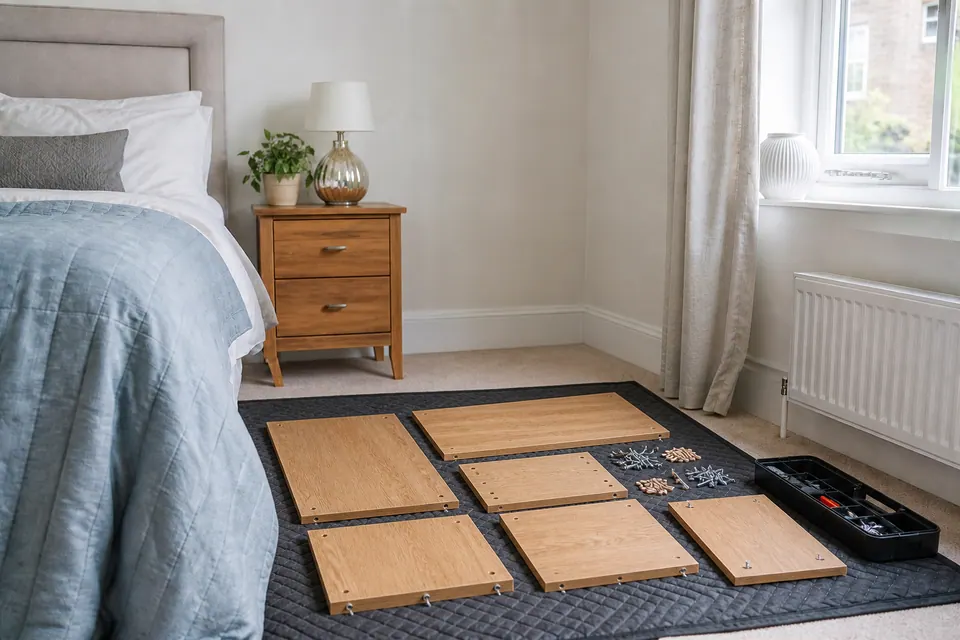
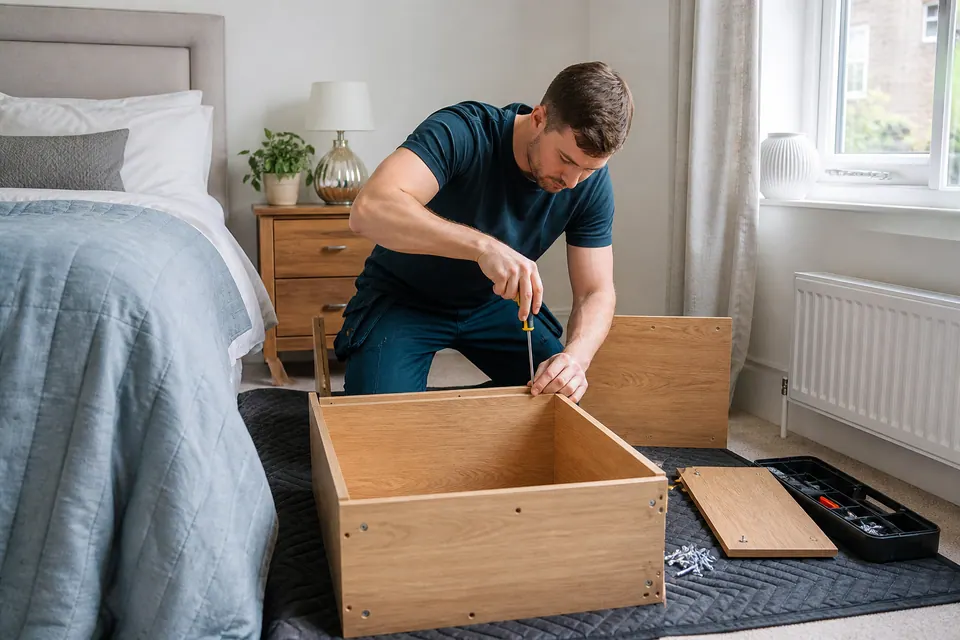
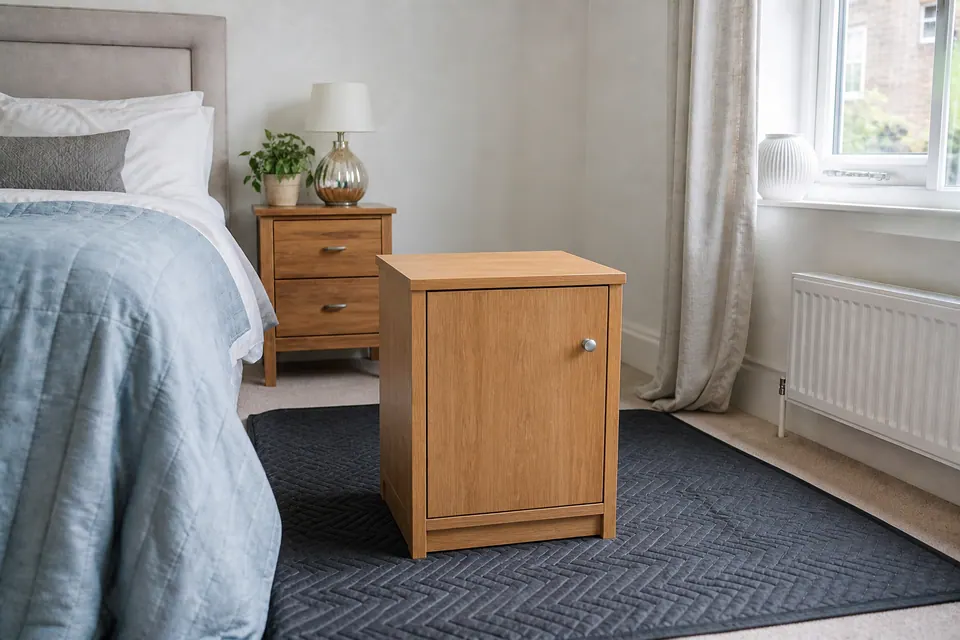
Illustrations only, not an Epsom customer case. Your bedroom unit assembly follows its own product requirements.
PLAN THE ARRIVAL
Epsom postcode, entrance and loading details help plan bedroom unit assembly. Confirm appointment availability for the address before making date-specific preparations.
Area reference, loaded on request
THE DETAILS OF YOUR VISIT
Describe the lifting symptom first. Hinge movement or alignment may be relevant, and material removal should not be assumed as the solution.
It helps show how the door sits in its frame. The latch problem may be connected to alignment elsewhere in the opening.
Only if the handle mechanism is the relevant fault. A matching finish does not establish that a new handle will resolve alignment.
Mention the timing and any changed hardware or painted edges. Those details belong in the assessment without proving a cause by themselves.
Avoid repeatedly stressing a door or loose hardware. Explain the movement and show accessible details without forcing operation.
The complete door and latch arrangement needs review before a method is selected. Identify any specialist or security requirements first.
Yes. Send the available information and closer details so the work is assessed for that assembly rather than as an unrestricted adjustment.
Specify any making good and expected appearance. Functional adjustment does not automatically include repainting the frame or door.
The actual door, hardware, access and assessed fault define the work. The enquiry should not promise a particular adjustment before inspection.
TURN THE LIST INTO A PLAN
Bedroom unit assembly or handle and latch review? Send the relevant photographs and your Epsom address to start the enquiry.
Illustrative Epsom task imagery, not customer evidence.
