
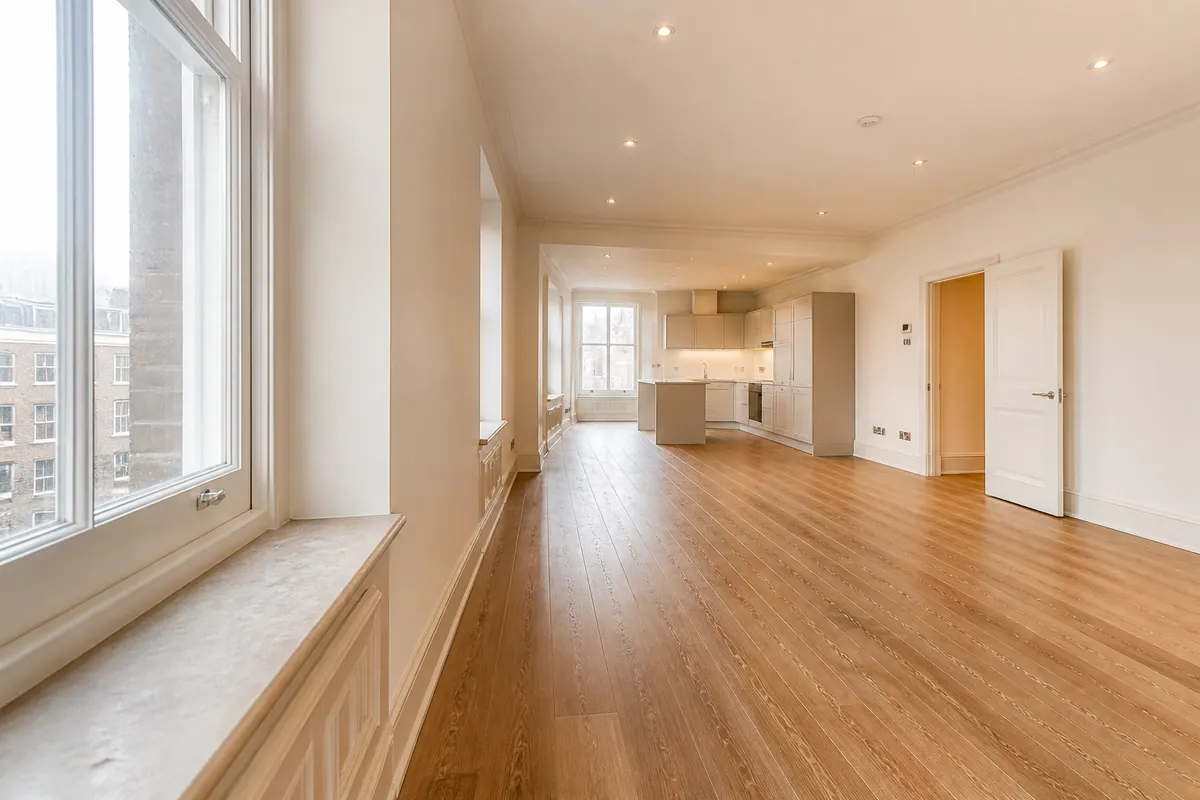
Release the work area
Identify the areas released after the last dusty task.
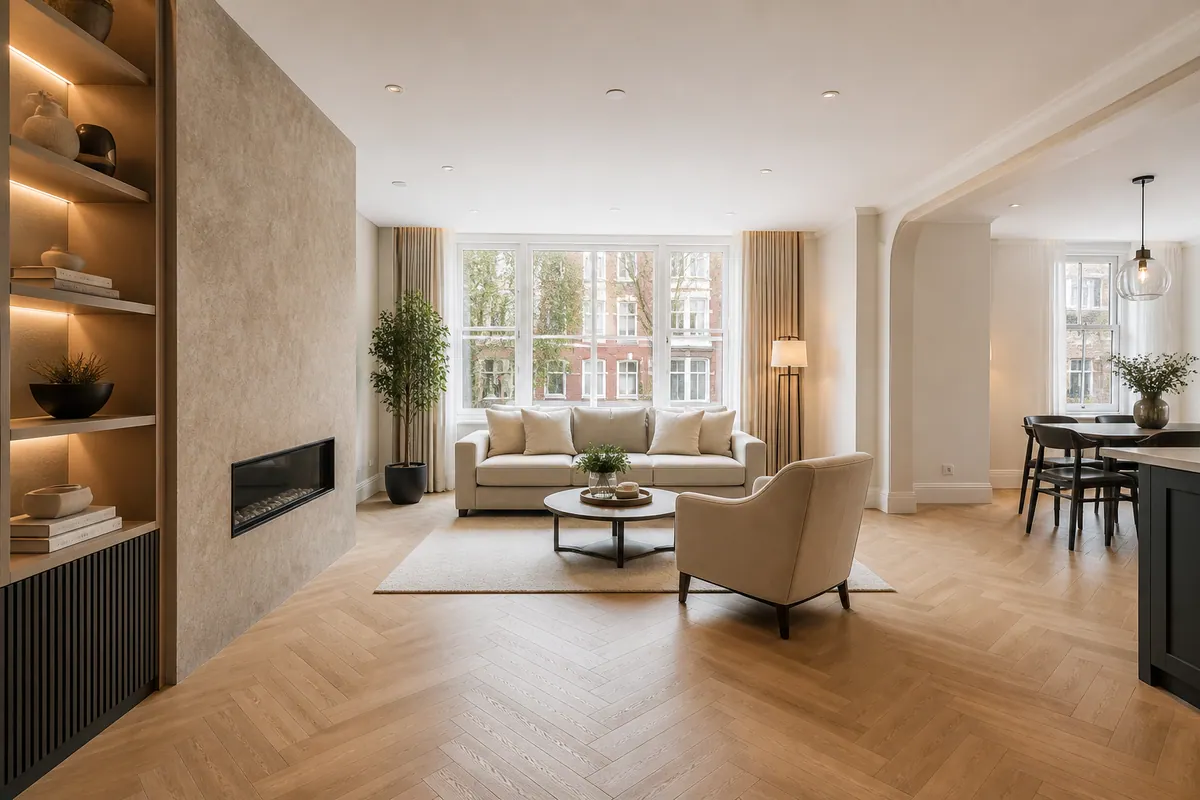
Primrose Hill · A reception room ready to furnish
A reception room ready to furnish
A clear brief for returning reception-room furniture.
For a reception-room renovation, the exposed joinery and floor edges deserve a clear brief before furniture returns. Tell Alesta which Primrose Hill rooms are cleared and which surfaces have only recently been painted.
No customer outcome is represented by the illustration.
Describe the Primrose Hill work
The selection is a prompt, not a confirmed service package. Add the room condition and access information when making contact.
A wider renovation needs a released-room list with material information. Show the connecting routes and distinguish any area still holding tools or supplies.
Inspect the affected route
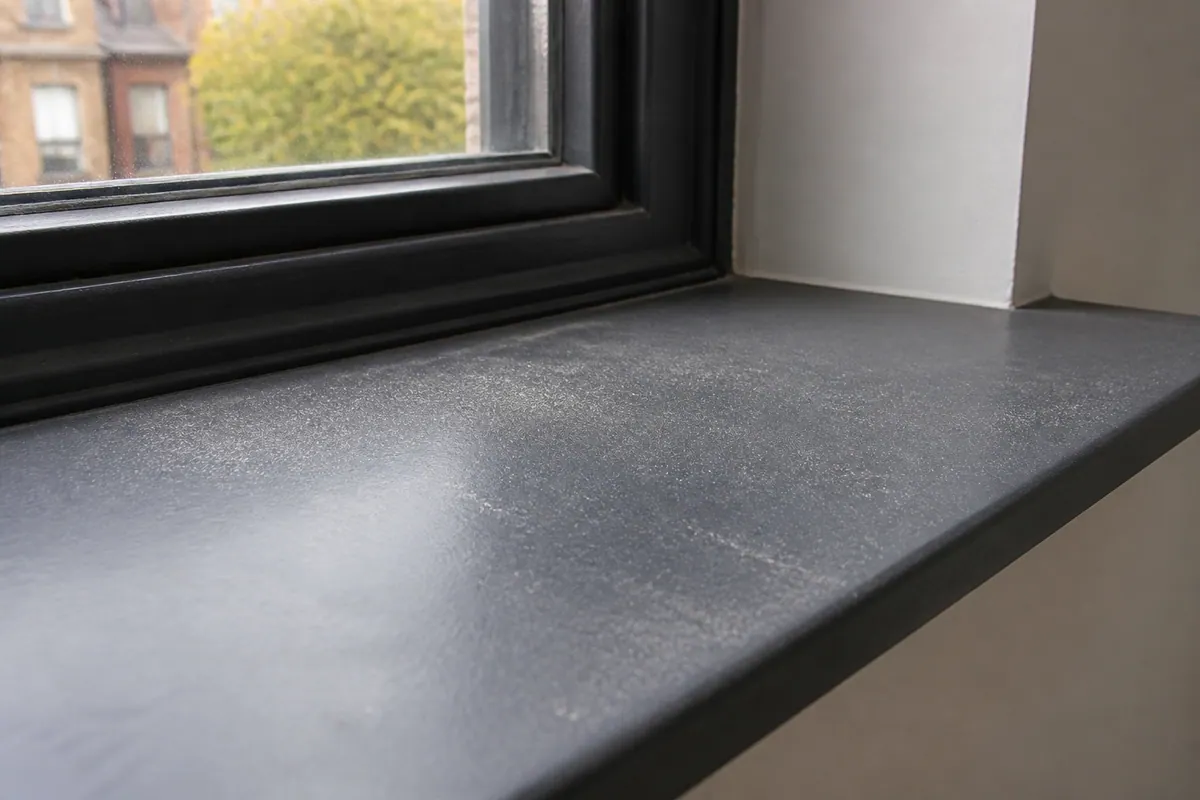
Follow the deposits into adjoining spaces.
Inspect the ledges around the reception room and the doorway into the rest of the home. A protected adjoining room may still show deposits at its entrance without needing an identical clean throughout.
Suitable vacuuming and surface-aware materials address agreed deposits. They do not establish that every hardened mark is part of the same task.
New deposits created afterwards need a separate scope discussion.
At your Primrose Hill property
Check clear room margins before delivery boxes occupy them.
Specify which rooms are actually cleared rather than simply saying the renovation is finished. Furniture stored in the next room may limit both carrying space and the cleaning perimeter.
Sequence the final decorating, cleaning and furniture return so they do not work against one another. If only part of the room is released, identify that limitation before booking.
Check the cleared ledges and floor boundaries before the room is dressed. Marks requiring a decorator should remain on a separate snagging list.
Quoting the Primrose Hill work
From £29/ hour
Check the current rate for the work described. Equipment and cleaning materials are part of the published service information.
The extent of fitting detail can matter as much as the floor area. Additional services remain separate considerations.
| Work described | Quote approach | Scope notes |
|---|---|---|
| One affected space | Confirm scope; from £29/hour | Condition of the reception-room ledges and doorway |
| Kitchen or bathroom installation | Starting guide: £29/hour | Readiness of painted joinery |
| Several released rooms | Agree cost against proposed work | Room access before returning reception-room furniture |
| Commercial suitability check | Specific commercial quote required | Working areas and restrictions |
Based on Alesta’s published after builders cleaning rate. Request waste clearance independently.
A sequence, not a completion guarantee
Identify the areas released after the last dusty task.
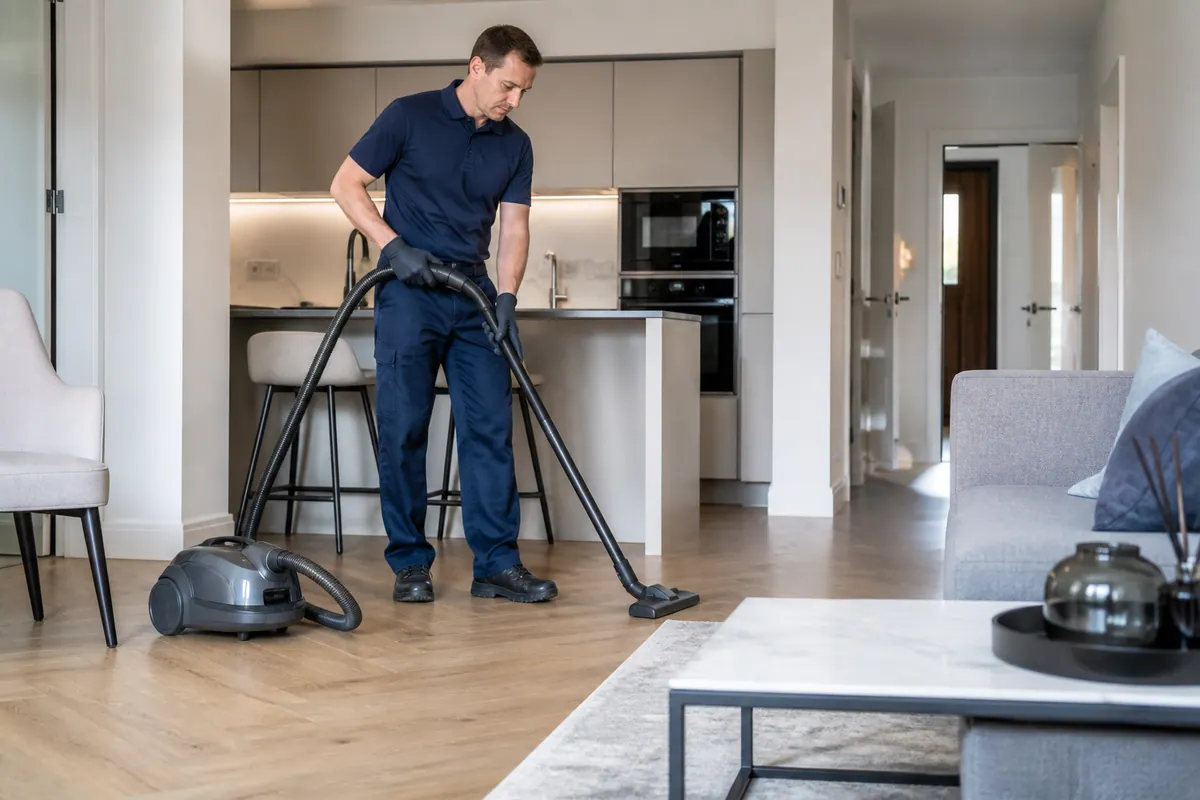
Match the surface approach to its material and condition.
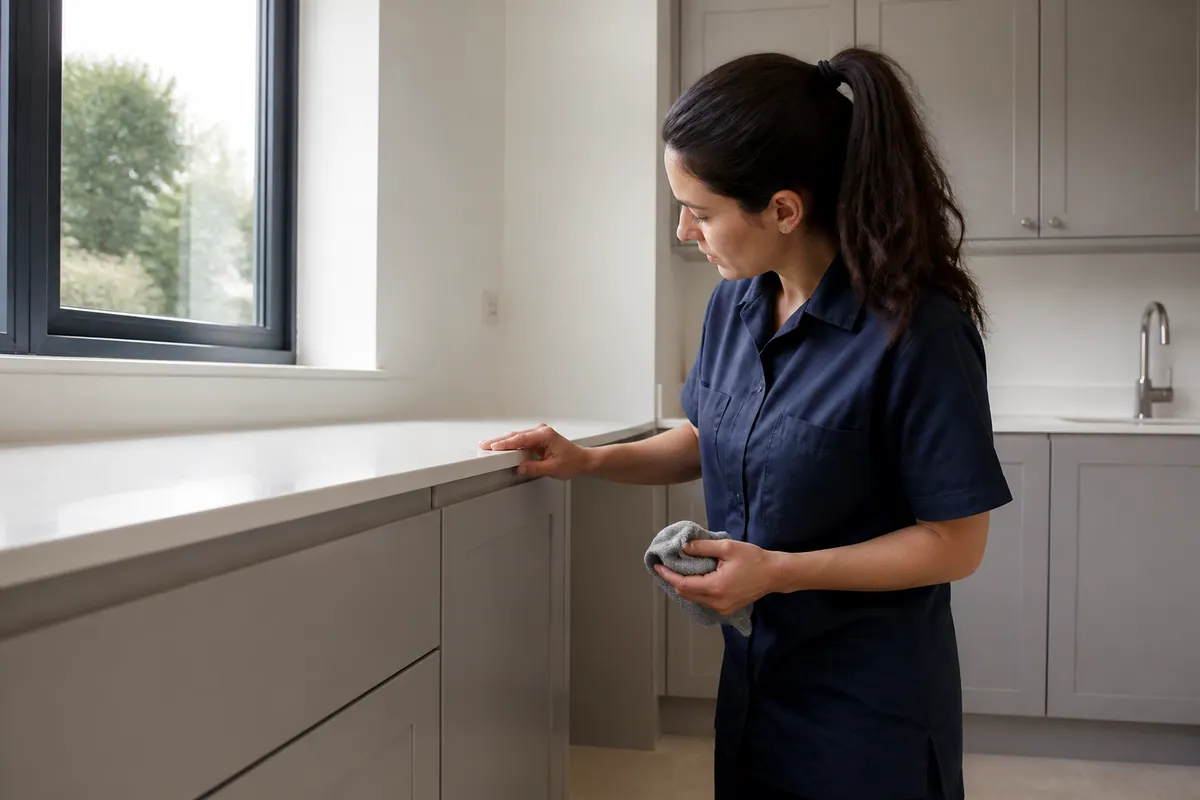
Compare completed work with the agreed room priorities.
Use the review to clarify what still needs attention.
The sequence is explanatory; the images do not promise an outcome.
Draw the cleaning boundary
The diagram is a planning illustration, not a survey of this property. Agree the reachable surfaces with Alesta.
Dust may be visible on exposed ledges after the central floor looks tidy; name those needing attention.
Skirting lines should be considered with the adjacent floor finish and access available.
Fittings should be named where they require particular care; a general dust description may not be enough.
Identify the route the trades used when explaining dust outside the renovated rooms.
Identify before treating
| Observed residue | Example detail | Before treatment |
|---|---|---|
| Dry surface dust | reception-room ledges and doorway | Define the reachable dust-removal area. |
| Minor loose residue | Non-bulky cleaning residue | Separate ordinary remnants from construction supplies. |
| Adhesive traces | Labels or marks beside painted joinery | Identify the coating and confirm any safe removal separately. |
| Hard construction spots | Isolated spots near the reception-room ledges and doorway | The material beneath the mark must be identified. |
| Surface protection film | Film around newly fitted detail | Agree handling with suitable care information available. |
Keep clearance outside the dust brief
A finishing visit addresses the named room detail rather than taking over the contractor’s removal list.
A waste enquiry should explain volume, weight and collection access. The cleaning quotation cannot substitute for those details.
Ask about separate building waste collection ↗Different work leaves different detail
If rooms remain occupied, explain the boundary between daily use and renovation effects. Everyday housekeeping is a different request from this finishing stage.
Kitchen detail should distinguish accessible fronts from the contents and interiors of cupboards. List additional work explicitly before the quotation is agreed.
Describe bathroom glass separately where wanted, including visible construction deposits. A standard finish clean should not be interpreted as unlimited glazing treatment.
For several renovated rooms, list those ready now and those still awaiting work. One proposed appointment is not a promise to clean dust created later.
Record outstanding repairs before the finishing clean. A clean surface is not confirmation that the installation or refurbishment contract has been completed.
Discuss the actual commercial task directly with Alesta. Contractor coordination is not assumed simply because the project is called a refurbishment.
Check the conditions for arrival
Before the clean
For the appointment
Name rooms, not an unlimited checklist
Name the accessible kitchen detail before discussing timing. Film, labels or hard spots should not be assumed removable within ordinary dust work.
List sanitaryware, tile surfaces and suitable flooring where wanted. Fresh sealing or unusual residue needs a readiness question before cleaning.
A bedroom kept closed during renovation may still need a check at its doorway. Describe what is visible before expanding the scope.
A connected living space can carry dust from neighbouring work. Agree the affected ledges and floor rather than adding an undefined whole-room package.
A finish is not just a colour
Illustrated material assessment.
The deposit cannot be assessed without the finish.
New paint on joinery needs the maker’s or decorator’s readiness advice. Distinguish visible dirt from defects in the painted surface before asking for more intensive treatment.
Do not disturb a fresh coating to meet a preferred date.
Flag a surface with an unknown treatment history.
Identify delicate detail before any treatment is discussed.
Brief answers, clear limits
Prepare a conversation, not a booking
Prepare the main scope facts for discussion.
The summary can record the room work but not the furniture positions. Explain those before agreeing the brief; selecting options does not send your details, create a reservation or establish a price.
Explain which reception-room edges will stay exposed. The planned furniture position can change the reachable work.
Talk through the room list: 020 3608 3976Make the responsible contact clear
Choose the reception-room surfaces that should be reviewed before furnishings return. A cleared central floor does not necessarily mean the ledges or adjacent room are equally accessible.
Share the room condition and responsibility for admission. The person with keys may still need another contact to clarify surface care.
Contractors should ask whether the project is suitable and explain access responsibilities. Commercial coordination is not an implied agreement.
Glazing is an explicit request
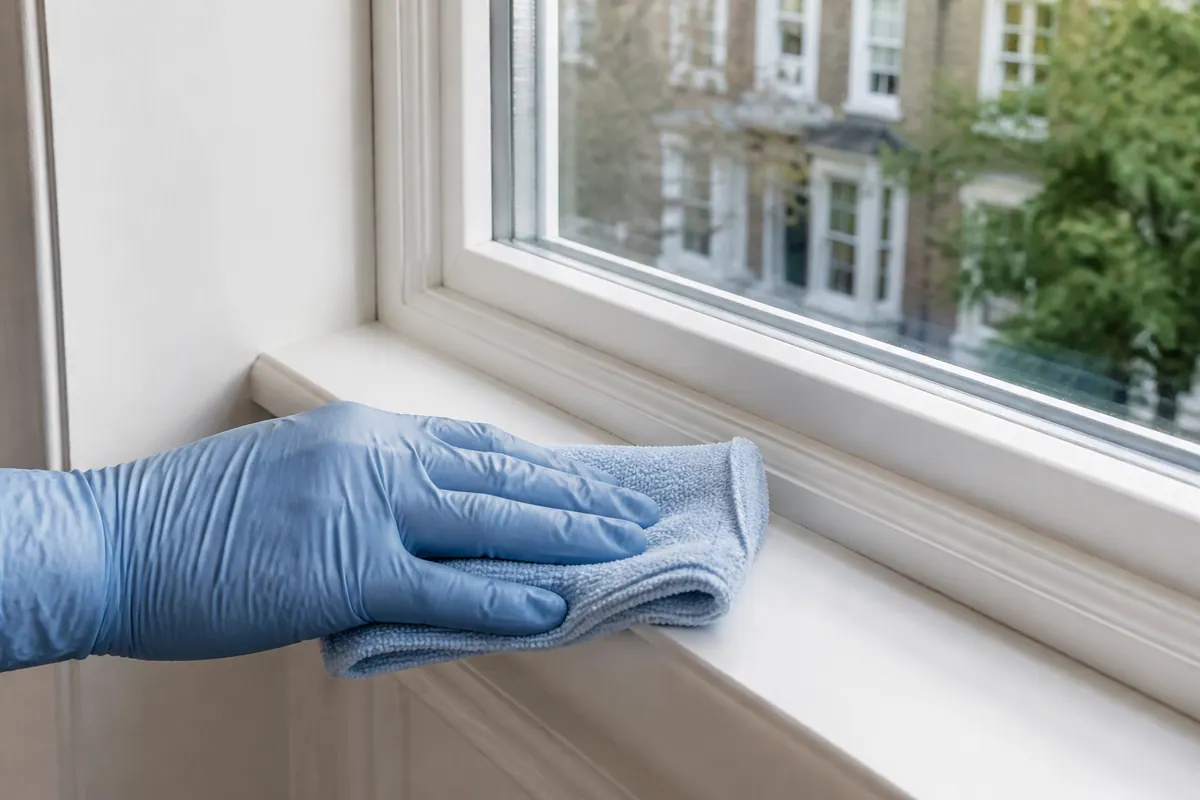
Before curtains or furniture return to the reception room, decide whether window work is wanted. Specify panes and frames separately from the newly painted joinery so the additional scope remains clear.
Glazing with building residue should be reviewed for a suitable method. A clean request does not override the manufacturer’s restrictions.
Ask about the window scope ↗Address and access
The map indicates the Primrose Hill service area, not an office address. Provide the actual property and access details when asking about availability.
For a separate location, use the main service enquiry before assuming attendance.
Questions for this project
Describe the work completed, then point to reception-room ledges and doorway. A clear account of visible deposits is more useful than assuming every room has the same condition.
Tell Alesta how the agreed surfaces can be reached on the day. Any change to access around reception-room ledges and doorway should be communicated beforehand.
Give the available guidance for painted joinery, including recent application or installation. Cleaning should not be expected to repair damage.
There is no automatic rule based on the doorway. Include relevant adjoining deposits in the room list and confirm their scope.
The guide starts at £29/hour, including cleaning materials and equipment. It is not a project total; ask for the current scope and quotation.
A return visit by a fitter can change the condition after cleaning. Include that information when deciding the date.
Ask about construction material independently of surface dust. Its volume and route out require information beyond the room-cleaning brief.
Window and carpet services should be distinguished from ordinary finishing detail. The property condition and availability govern any arrangement.
Ask about timing with the full brief rather than selecting a fixed slot from the page. Different fittings and deposits create different workloads.
Some deposits cannot be treated safely without risking painted joinery. Record the issue separately instead of assuming a stronger product must solve it.
Primrose Hill / next conversation
Explain what the trades completed and where deposits remain. Add the surface information and next-use plan so Alesta can discuss the appropriate work.
