
Homeowners
Keep existing floor wear visible in the discussion before the new deposits are assessed. The aim is an agreed cleaning task, not an implied restoration of the retained timber.
Wanstead · New work above a retained floor
New work above a retained floor
A clear brief for returning to the refurbished room.
Retained flooring deserves its own instructions after a room refurbishment. For Wanstead, identify new deposits without confusing them with older marks, and share what is known about the timber before the finishing visit.
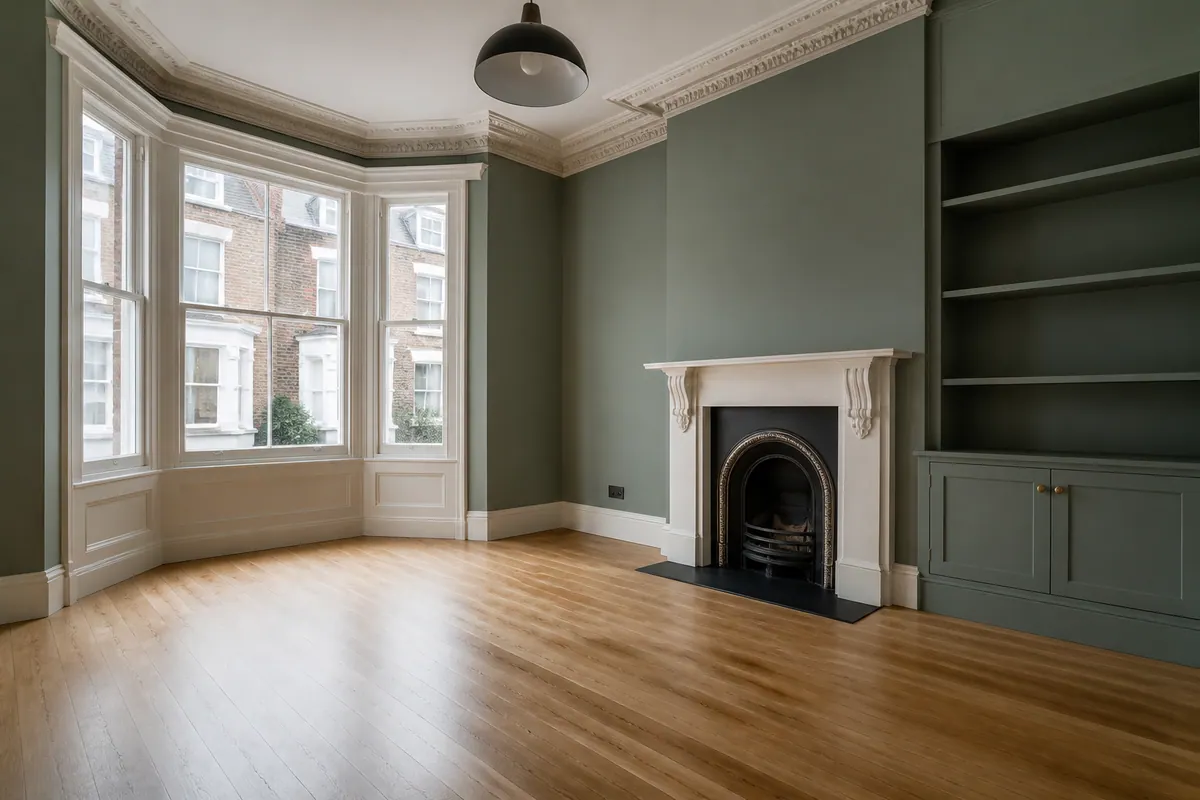
An illustrative scene rather than evidence from a completed visit.
Make the responsible contact clear
Keep existing floor wear visible in the discussion before the new deposits are assessed. The aim is an agreed cleaning task, not an implied restoration of the retained timber.
A rental-property request should explain the renovation itself, not only the next tenancy date. Any additional tenancy service must be confirmed.
If trades return after cleaning, explain the intended sequence beforehand. A contractor request does not automatically cover later deposits.
At your Wanstead property
Separate recent deposits from the original condition of retained features.
Identify the route across the retained floor and any protection the installer says must remain. Equipment access should not depend on removing material without confirming responsibility and readiness.
Confirm that refurbishment activity has stopped and protective arrangements have been resolved. The clean should not be used as an assumed removal service for every covering left behind.
Review recent deposits against the original condition of the floor. Remaining wear or damage may need a different specialist discussion rather than stronger cleaning.
Name rooms, not an unlimited checklist
Point out where installation deposits remain around the kitchen. Separate expected surface cleaning from adjustment or repair of new units.
Describe bathroom fittings by condition and material rather than assuming new means ready. Follow the relevant drying guidance.
A bedroom kept closed during renovation may still need a check at its doorway. Describe what is visible before expanding the scope.
In the living area, describe exposed ledges and the retained floor separately. A recently refurbished room can contain old wear, fresh deposits and furniture-limited margins at the same time. The agreed work should follow what is reachable now, without implying restoration of aged timber or movement of unmentioned belongings.
Quoting the Wanstead work
From £29/ hour
Alesta supplies equipment and materials for the agreed cleaning; confirm the current price with the room information.
For this retained-floor project, the quote needs the visible dust, reachable perimeter and known finish guidance, not only the room size. Explain protection still in place and any uncertain marks. Additional glazing, waste collection or specialist timber treatment should remain distinct questions rather than assumed parts of the hourly guide.
| Proposed area | Cost discussion | Condition to describe |
|---|---|---|
| One affected space | Starts at £29/hour; confirm tasks | Condition of the retained floor edges |
| Installed units and fixtures | Starting at £29/hour | Readiness of older timber flooring |
| A broader interior project | Discuss an individual quotation | Room access before returning to the refurbished room |
| Business refurbishment | Confirm the proposed arrangement | Release arrangements and access |
Based on Alesta’s published after builders cleaning rate. Disposal is not part of this hourly guide.
A sequence, not a completion guarantee
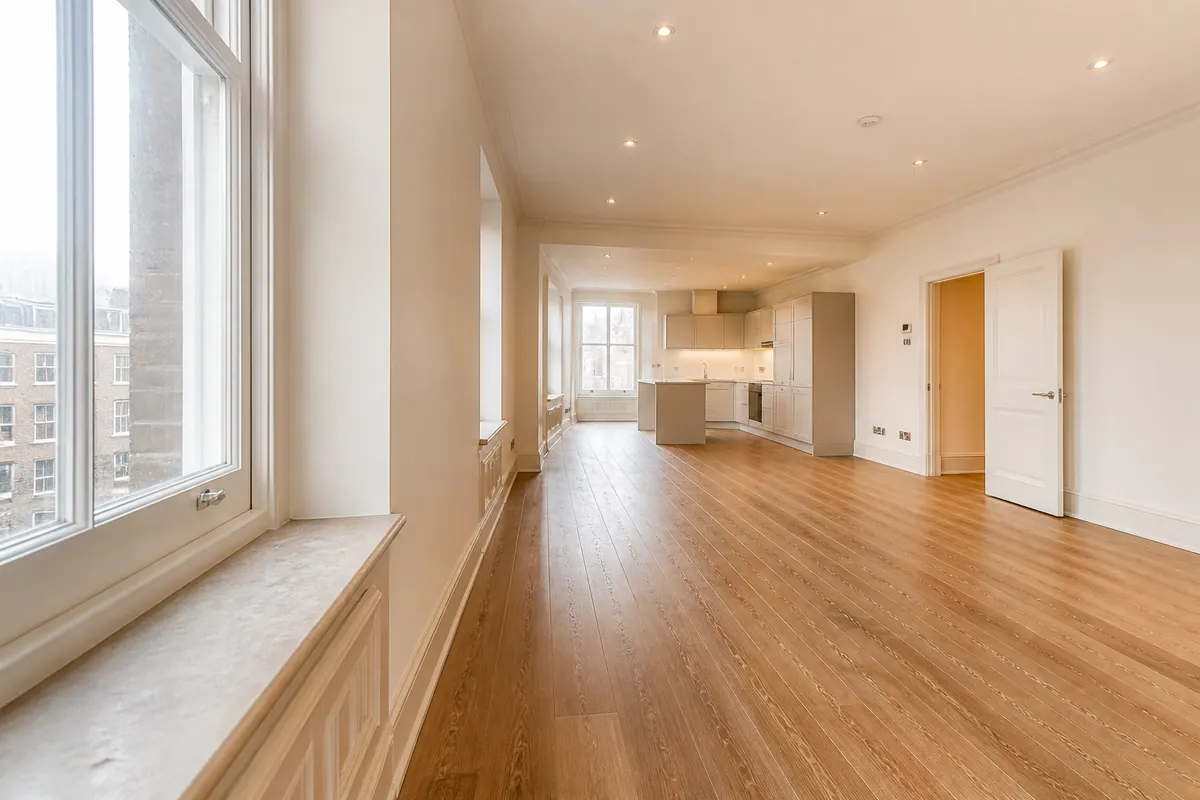
Identify the areas released after the last dusty task.

Address the named deposits and suitable floor areas.
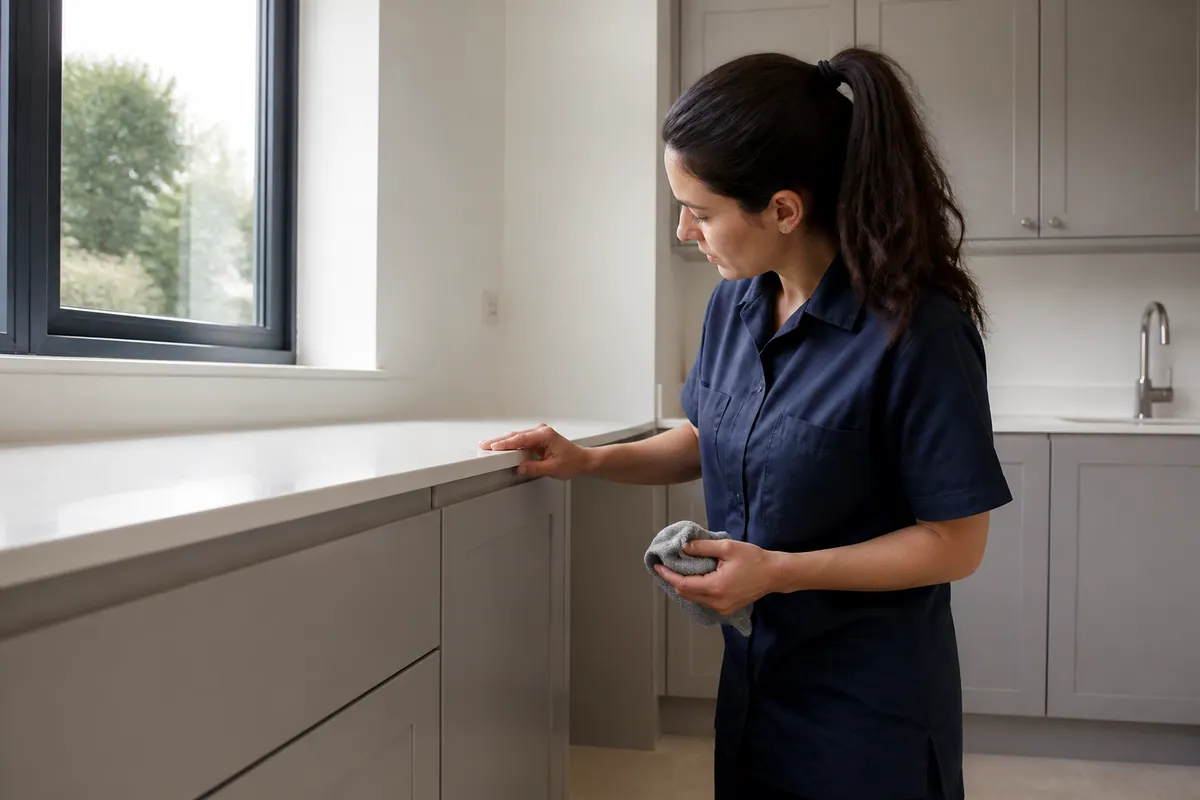
Keep unresolved fitting issues on the trade’s list.

Keep furnishing plans aligned with the room’s condition.
These are illustrative scenes, not successive photographs of a customer project.
Describe the Wanstead work
Use the closest category, then explain the differences in your property. Suitability and the actual scope still need agreement.
Explain what is complete and what still needs a trade. The cleaning plan should reflect that actual stage, not only the original renovation schedule.
Inspect the affected route
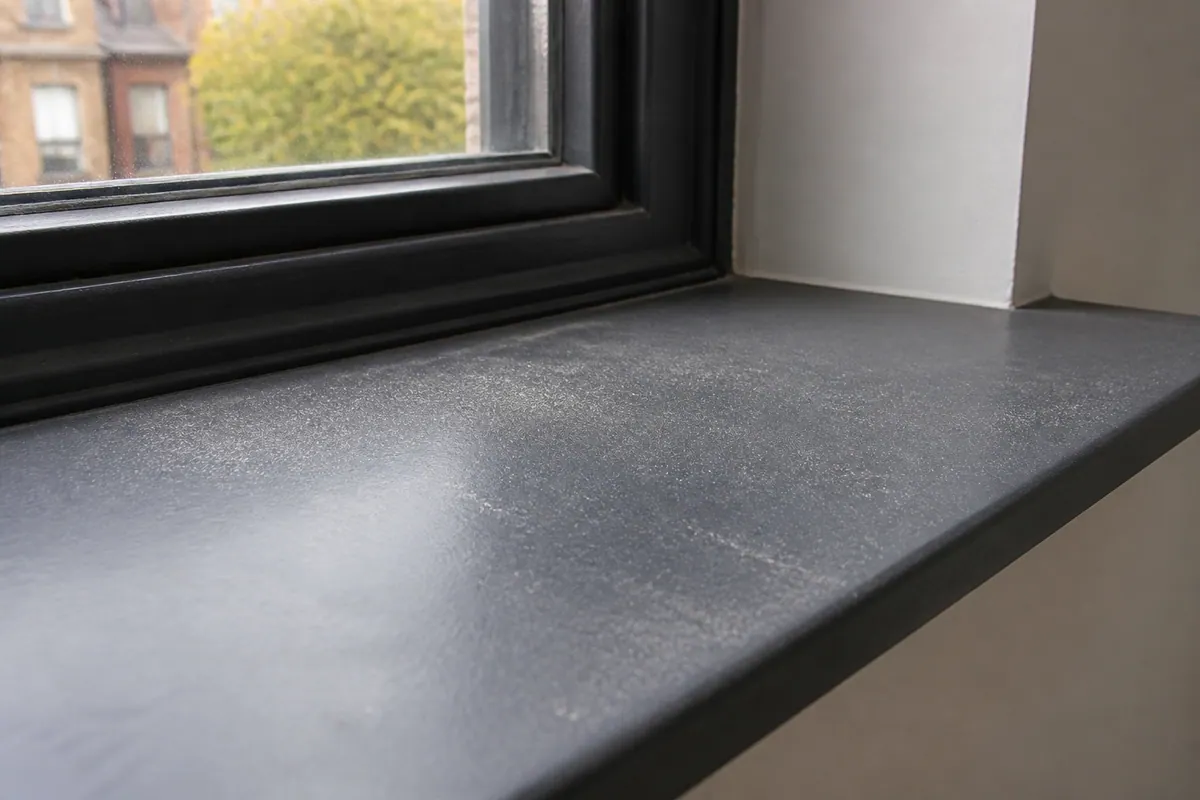
Inspect the route before ruling areas out.
Look at the exposed edges of the retained floor and nearby ledges. Describe recent dust separately from longstanding colour changes or wear so the cleaning brief remains realistic.
Tell Alesta which coverings have already been removed and which surfaces are exposed. Their previous protection does not prove they are clean now.
New deposits created afterwards need a separate scope discussion.
Draw the cleaning boundary
These categories organise the conversation. They do not promise that every pictured detail is included.
An external cabinet edge is different from an internal compartment. Explain the faces you want considered.
A threshold can connect dusty and relatively protected areas; describe both conditions.
Sanitary areas can be discussed within the room brief, with material and readiness identified.
A short corridor can be important to the final scope even when no fitting occurred within it.
Identify before treating
| Deposit | Example detail | Assessment |
|---|---|---|
| Settled dust | retained floor edges | Include the identified deposits by agreement. |
| Loose ordinary material | Light material beside fittings | Treat as cleaning only where included in the scope. |
| Possible sticky residue | Labels or marks beside older timber flooring | A suitable method and inclusion both need agreement. |
| Hard construction spots | Isolated spots near the retained floor edges | Avoid a guaranteed result where damage is possible. |
| Unremoved covering film | A layer supplied with the item | Identify the item and confirm the scope separately. |
Keep clearance outside the dust brief
The clean concerns reachable surfaces and their post-work deposits. It is not a commitment to empty the property of construction material.
Timber offcuts and plasterboard are not simply another kind of surface dust. Ask about their clearance independently of the finishing visit.
Ask about separate building waste collection ↗Different work leaves different detail
For a flat between occupants, identify a contact who knows the condition inside. Key collection alone may not answer questions about recently installed surfaces.
Use the kitchen enquiry to identify uncertain spots individually. Cleaning cannot correct a scratch or poor fitting merely because the item is new.
If grouting or adjustment remains, tell Alesta before planning the clean. Later fitting activity can change the condition of already cleaned areas.
For several renovated rooms, list those ready now and those still awaiting work. One proposed appointment is not a promise to clean dust created later.
A handover deadline is worth discussing early, but timing still depends on condition and readiness. Do not assume a fixed-duration visit from the date alone.
Commercial suitability must be checked for the specific premises. Explain the proposed work and site access before expecting a contractor arrangement.
Check the conditions for arrival
Before the clean
For the appointment
A finish is not just a colour
Illustrated material assessment.
The deposit cannot be assessed without the finish.
Older timber can have an uncertain treatment history. Share any known finish guidance and explain what protection was used during the works; cleaning cannot restore wear or guarantee removal of embedded marks.
Different finishes can require different release times.
Name the finish beneath any bonded residue.
Ask about labels before assuming their removal.
Brief answers, clear limits
Prepare a conversation, not a booking
Collect the project basics before contacting Alesta.
The form cannot identify a timber treatment history. Add that information directly when discussing the summary; the answers are not sent and no attendance or cost is established.
Share the retained floor’s known care history. The summary cannot distinguish recent residue from older wear.
Talk through the room list: 020 3608 3976Glazing is an explicit request
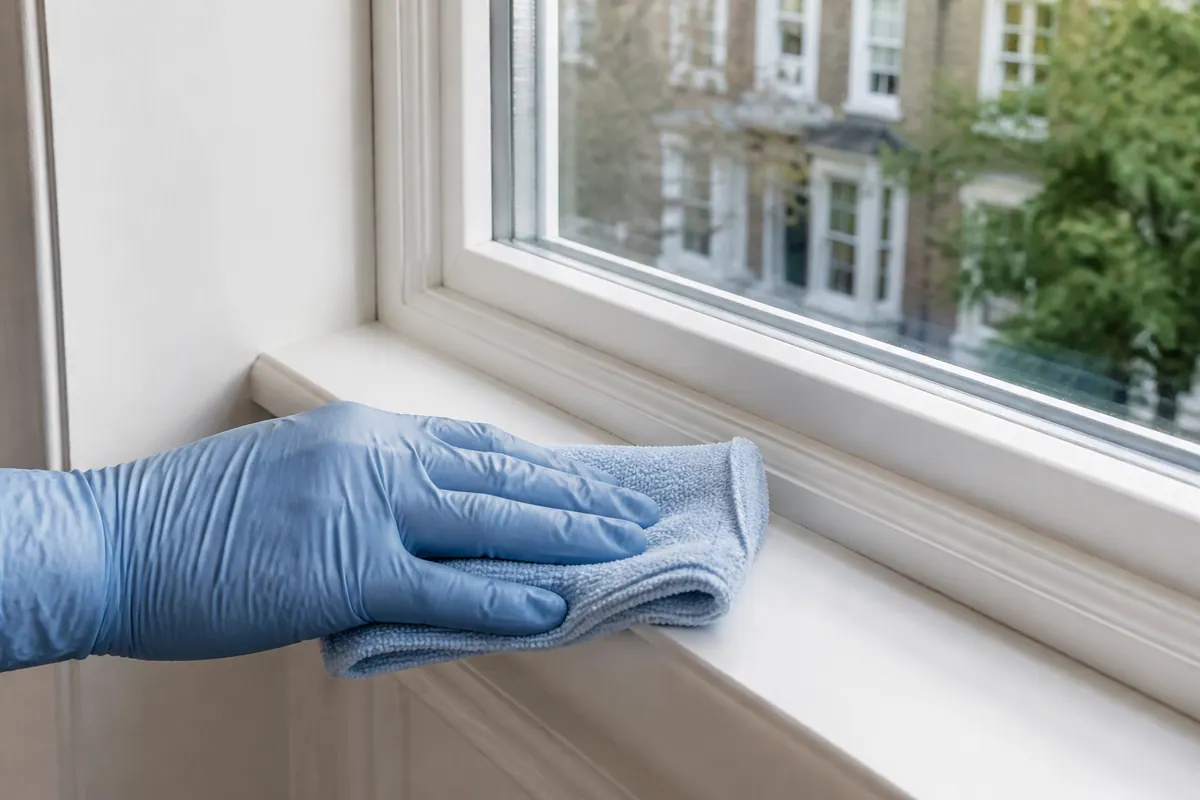
If windows are included in the enquiry, explain the route across the retained timber. Existing floor protection or uncertain finishes can affect access without changing the number of glass faces wanted.
Glazing with building residue should be reviewed for a suitable method. A clean request does not override the manufacturer’s restrictions.
Ask about the window scope ↗Address and access
Ask about service at your particular Wanstead address before relying on a date. The area marker does not indicate an Alesta premises.
For another property, use the after builders service page and confirm availability.
Questions for this project
List the renovated areas and any visible dust beyond them. For this project, retained floor edges deserves a specific entry rather than an implied inclusion.
Explain the timber’s known finish and any protection still in place. If responsibility for removing a covering is unclear, resolve it rather than assuming the cleaners will lift it. The accessible route needs to be understood together with the care requirements, not merely described as a clear room.
Identify older timber flooring and provide the applicable care notes. An unknown finish should remain a question rather than receive an assumed treatment.
Protected rooms can be checked at their exposed edges. Only the work agreed beyond retained floor edges should form part of the expectation.
Alesta’s published starting rate is £29/hour. Check the current quotation for the condition described; included cleaning supplies do not make extras automatic.
Describe what was present before refurbishment and where fresh deposits now appear. Cleaning may address the agreed residue without restoring worn colour or repairing damage. Keeping those observations separate helps set expectations for the retained floor and identifies questions that belong with a different specialist.
No automatic bulk clearance forms part of the finishing visit. Give the type and amount of material remaining for a distinct quotation.
Explain those requirements in advance so the separate tasks can be considered. A builders-clean request alone does not include them.
The proposed return or delivery date is useful context, not a guarantee. Alesta needs to consider the real scope and any drying restrictions.
A finishing clean cannot promise to restore older timber flooring. Any unresolved mark should be identified with the relevant limitation.
Wanstead / next conversation
Start with the actual rooms rather than an expectation that everything is included. Discuss any separate treatment or clearance requirements explicitly.
