
Leaves
Wet leaves can settle into layers and slow water moving towards an outlet.
Rainwater routes · access · clear scope
A gutter does not need to be completely blocked before it deserves attention. Our Bushey service clears leaves, moss, silt and routine debris from accessible channels agreed for the visit. Reachable outlet openings can be included where confirmed. Damaged components, obstructions deeper in a downpipe, underground drainage and unusual access needs are considered as separate issues.
Visible clues
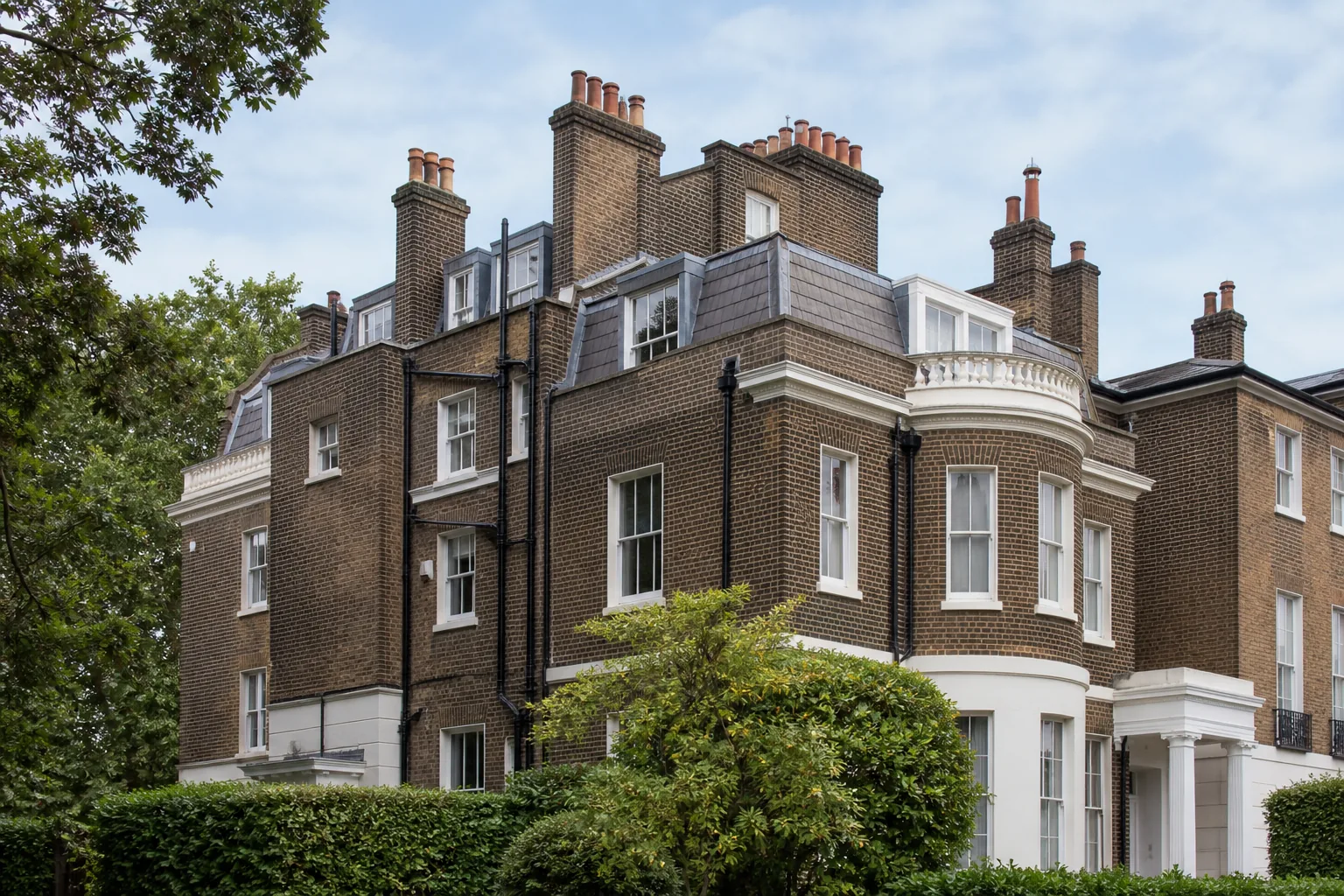
Plants in the channel, a dark line of silt, water spilling during moderate rain or a corner that drains slowly can all justify a clean. A crack, loose union or unsuitable fall may look similar from below, so the visible symptom should not be treated as a diagnosis.
Local property context
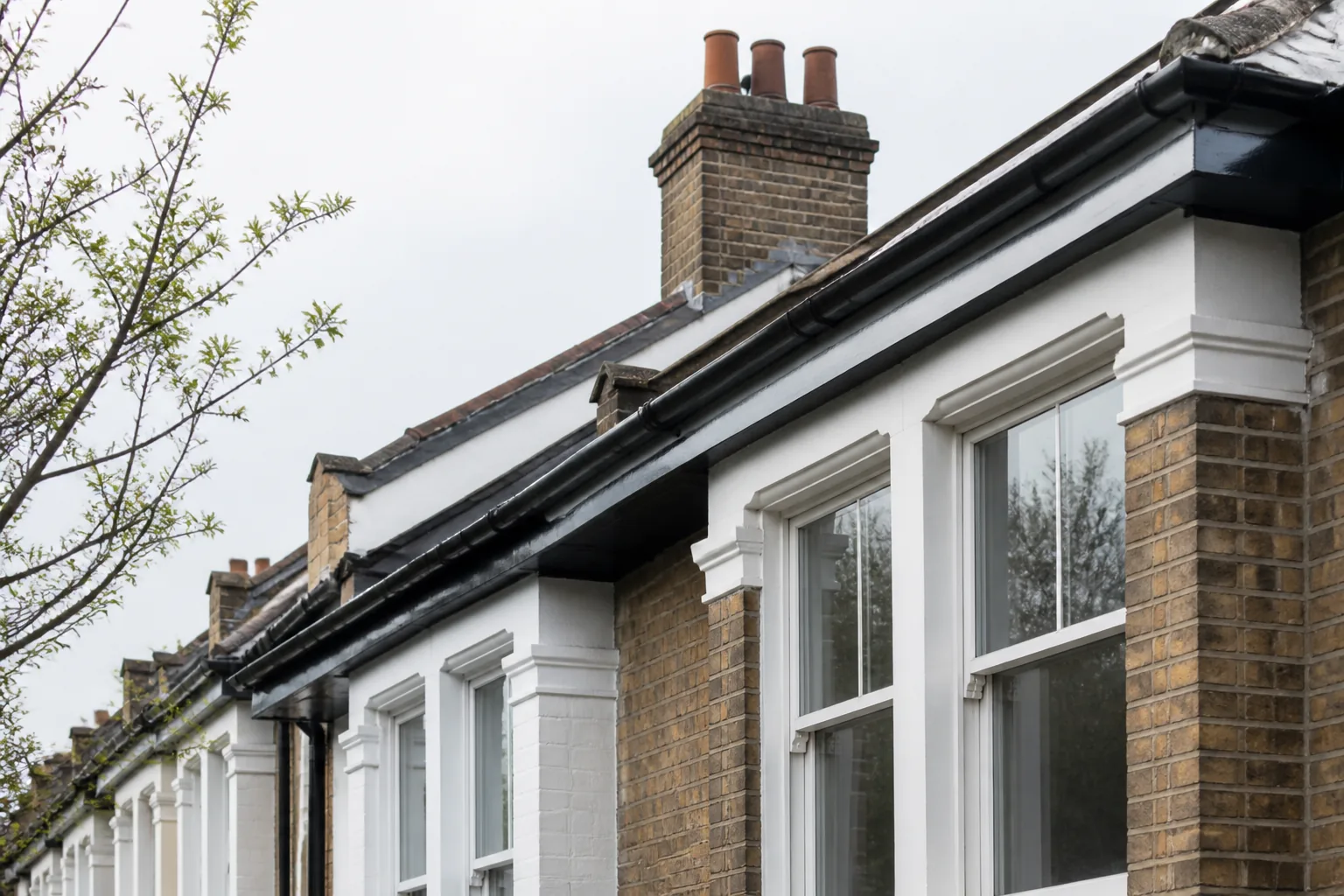
Properties in Bushey may have front and rear channels at different levels, side additions or a garage set away from the house. None of those features automatically makes a section part of the job. What matters is the layout at the actual address, the routes available around it and the rooflines you want considered. A narrow passage, planted border or shared drive may affect reach, while an open elevation may be simpler. Describing each relevant area helps establish a realistic scope before the visit.
Where water spills, the position offers a useful clue. A cascade above an outlet may relate to leaves packed around the opening, whereas a drip beneath a clear joint may suggest a failed fitting. Silt spread along a channel can slow water without creating an obvious plug. Cleaning addresses routine material in the accessible agreed areas; it does not realign a gutter or open concealed pipework. If overflow remains once debris is gone, the cause needs separate consideration rather than more cleaning by default.
Access is assessed for the particular elevation. Extensions, conservatories, sloping ground, close boundaries and locked side routes can change what is reachable. Mention outbuildings separately and explain any part that can only be approached through a shared or neighbouring space.
| Property situation | Access or gutter consideration |
|---|---|
| Houses with side additions | An added roofline may create its own channel while limiting approach to the original gutter. |
| Terraced homes | Rear access and the exact boundary of each requested run should be clear beforehand. |
| Homes with mature planting nearby | Leaves and seeds may gather most heavily at sheltered corners or outlet mouths. |
| Properties with detached garages | Garage channels need to be named and assessed separately from the main house. |
Structured service guide
| System area | Possible agreed action | Outside that action |
|---|---|---|
| Accessible channel | Remove leaves, moss and silt | Realignment or replacement |
| Reachable outlet mouth | Lift loose material when included | Clear concealed pipe sections |
| Below-ground drainage | No routine cleaning | Separate drainage investigation |
Structured service guide
| Observation | Cleaning may address | Separate attention may address |
|---|---|---|
| Plants along a run | The debris supporting growth | Any underlying damaged section |
| Drip at a union | Material causing water to back up | A failed seal or fitting |
| Overflow with a clear channel | No visible cleaning cause | Alignment, pipework or capacity |
Structured service guide
| Detail | Why it matters |
|---|---|
| Requested elevations | Defines the amount of channel |
| Roof and ground levels | Influences access assessment |
| Additions or obstacles | May restrict a particular run |
| Density of build-up | Changes the clearing requirement |
Structured service guide
| If the address has | Clarify this first |
|---|---|
| A narrow shared drive | Access and permission for the facing run |
| A conservatory | Whether the upper rear gutter is reachable |
| A detached garage | Whether its channels are requested |
| Several roof heights | Which levels belong in the scope |
Common causes
Wet leaves often hold moss fragments and fine sediment in place. The mixture can settle around an outlet or along a shallow section, leaving less room for rainwater. Clearing reachable channels removes that routine build-up, but it cannot confirm that the rest of the rainwater route is open.
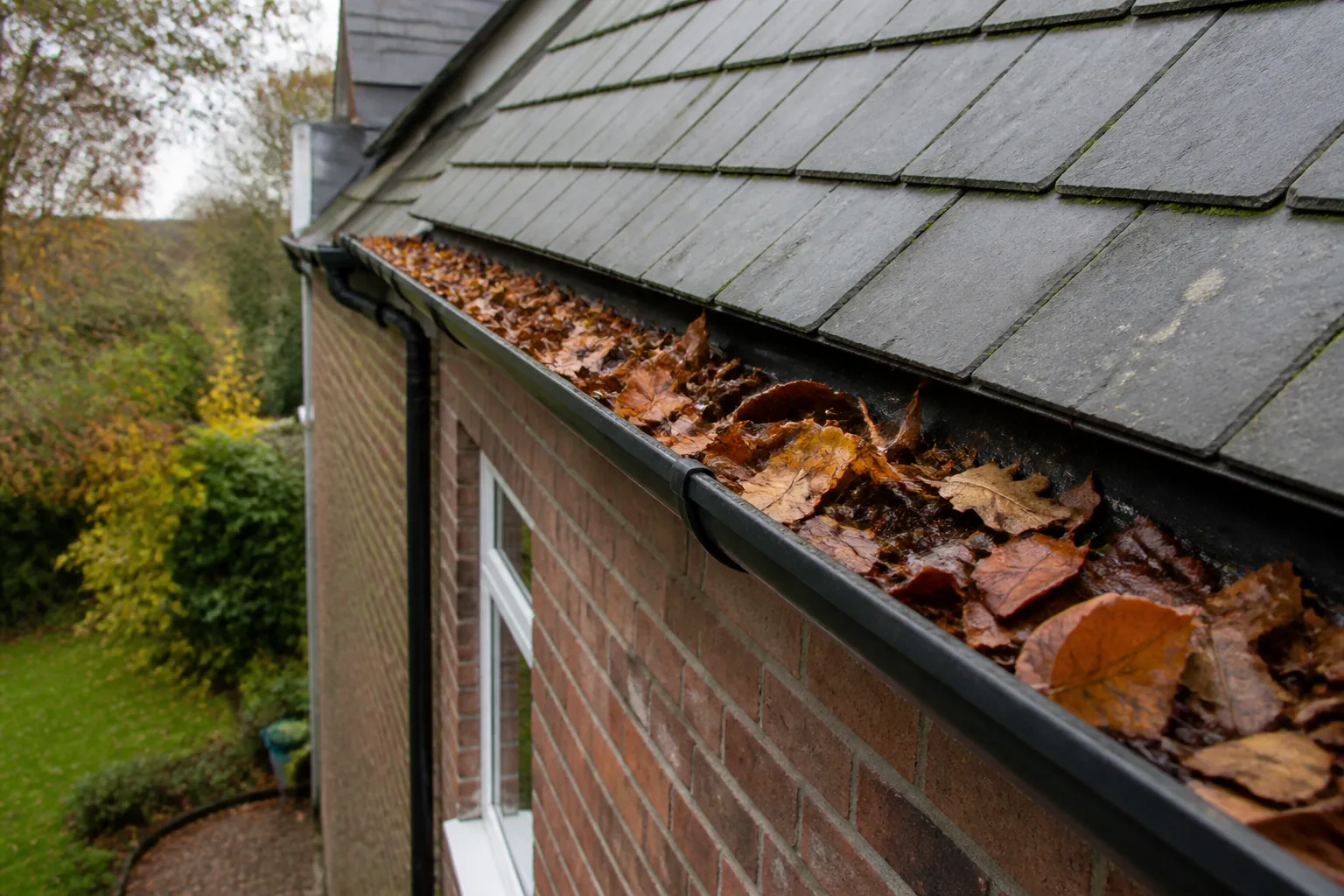
Wet leaves can settle into layers and slow water moving towards an outlet.
Loose roof moss can collect in the channel and hold other material in place.
Small twigs can bridge narrow points and trap lighter debris behind them.
Loose surface material may wash down from the roof during wet weather.
Older material can become dense and reduce the channel available for runoff.
Fine deposits can gather beneath larger debris and close to an outlet.
Seasonal context
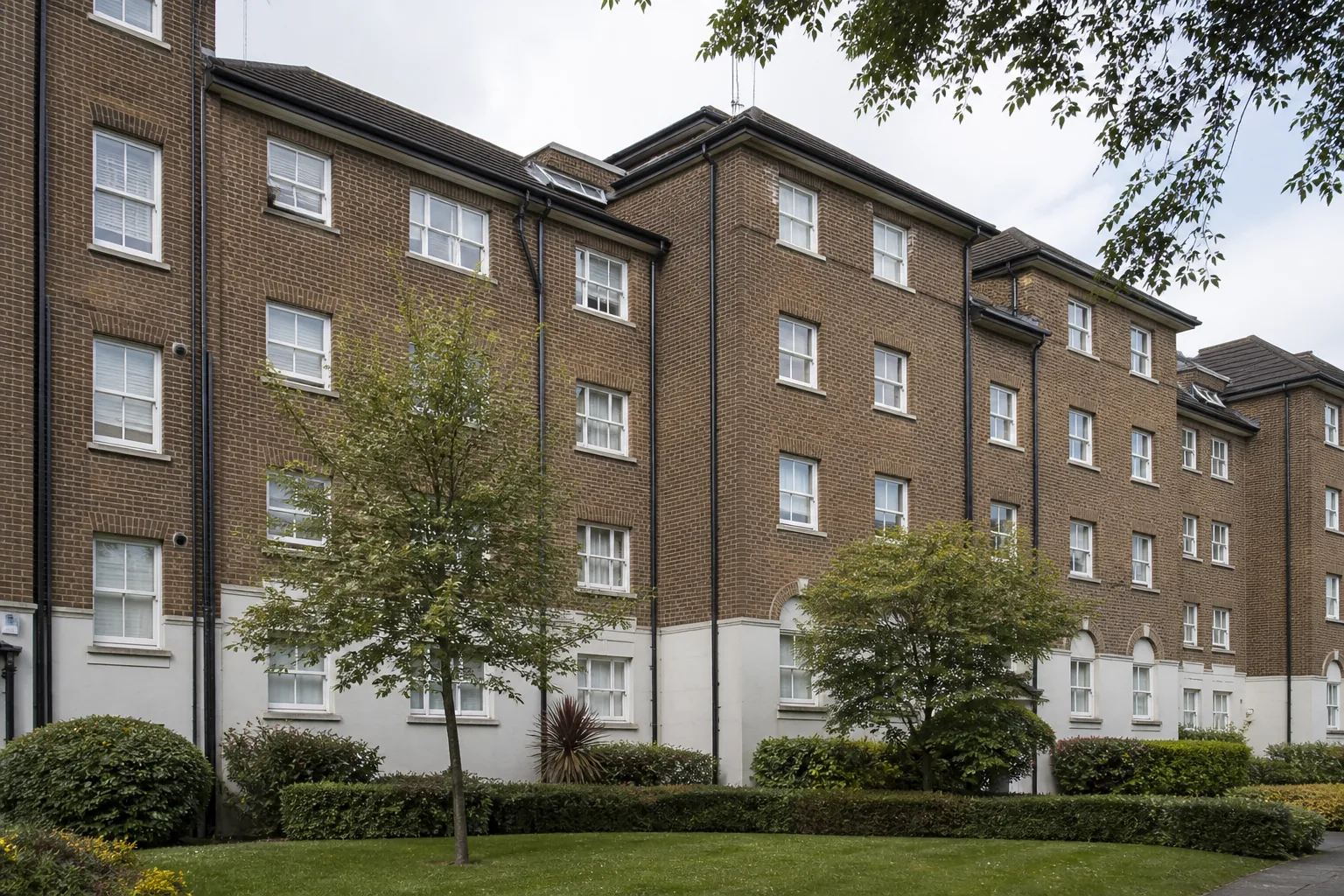
Autumn leaves are only one maintenance cue. Moss fragments, seeds and wind-blown sediment may settle at other times, especially in sheltered corners. Use visible accumulation, earlier overflow and the way each run handles rainfall to decide when another check is worthwhile.
Nearby trees, roof moss, gutter shape and exposure can all affect how quickly material accumulates. A visible symptom is more useful than applying one fixed timetable to every address.
Quick answers
It removes leaves, moss, silt and similar loose debris from agreed channels that are accessible. A reachable outlet opening can be included, but repairs and restrictions further down remain separate.
A focused scope may be possible when the elevation and access are clear. The spill could still come from damage or a deeper obstruction, so cleaning cannot promise to cure every cause.
No. Ask for its roofline specifically if it needs attention. The garage may differ from the house in height, access, channel length and the amount of material present.
The restriction may sit inside the downpipe or beyond the reachable opening. Routine channel cleaning does not include hidden pipework or underground drainage, so another assessment may be appropriate.
No. A clean can remove debris around a sound fitting, but it cannot reseal a joint, replace a cracked section or correct poor alignment. Those faults require separate consideration.
Describe the storeys, requested elevations, gates, extensions, conservatories and separate buildings. Ground-level photographs may help show the arrangement, although actual access still depends on the property.
Bushey service area
Nearby gutter-cleaning pages
Before booking
Silt can appear as a dark, level layer beneath moss or small plants rather than a loose pile. Water may move slowly across it after rain. If the material is within an agreed accessible channel, routine cleaning can remove it.
Cleaning may stop water backing up against a sound joint, but it cannot restore a failed seal or loose connection. A drip that continues when the channel is clear points towards a repair issue that should be assessed separately.
Only the sections that are agreed and accessible at the actual address can form the routine scope. Rear additions, different roof levels or restricted boundaries may leave some runs outside it. Explain the complete layout so exclusions are understood early.
No. Guards may change how material gathers, but fine debris can still settle and leaves may obstruct the surface. Their presence can also affect access to the channel. Mention the guard type and location before work is agreed.
Rainfall intensity can exceed a channel's capacity even when debris is not the sole cause. Build-up, outlet restriction, alignment and roof discharge can all contribute. Cleaning is relevant where accessible material is present, not as a guarantee against every storm.
A reachable outlet opening may be cleared if included in the agreement. The concealed length of the downpipe is different. A blockage below reach, a loose connection or an underground drainage problem needs its own investigation and scope.
Yes, if you want them considered. Porches and small projections can have separate channels and outlet arrangements that are easy to miss in a general description. Naming them avoids assuming that every minor roofline belongs in the main request.
Trees may increase leaves, seeds or twigs, but wind, roof shape and shelter affect where material lands. Check the home's actual pattern rather than relying on distance alone. Some elevations can fill faster than others at one address.
A section that cannot be reached should remain outside the work unless another suitable arrangement has been agreed. Gates, permissions and shared routes are best settled beforehand. The completed scope should reflect only the channels actually accessed and cleared.
Persistent pooling can relate to the channel's fall, supports or outlet position rather than debris. Cleaning creates space by removing material; it does not alter alignment. Standing water after a clean therefore warrants a separate look at the installation.
Discuss the actual roofline
The likely cost reflects the length and number of channels requested, building levels, debris quantity and practical access. A small high or obstructed section can require different consideration from a longer open run. Repairs and investigations beyond the agreed cleaning scope should be discussed separately.
