
Can a tenant arrange the work?
That depends on tenancy and exterior maintenance responsibility. The tenant can report the issue, but authority to approve cleaning, provide communal access or decide on repairs should be confirmed first.
Rainwater routes · access · clear scope
Shared exteriors need a clear decision-maker as well as a clear roofline. At a Guildford address with tenants, communal areas or adjoining rainwater goods, the first question may be who can authorise requested work. Once settled, ordinary deposits can be removed from agreed accessible channels. Repairs, private neighbouring sections and hidden drainage do not become included through shared use.

Local property context
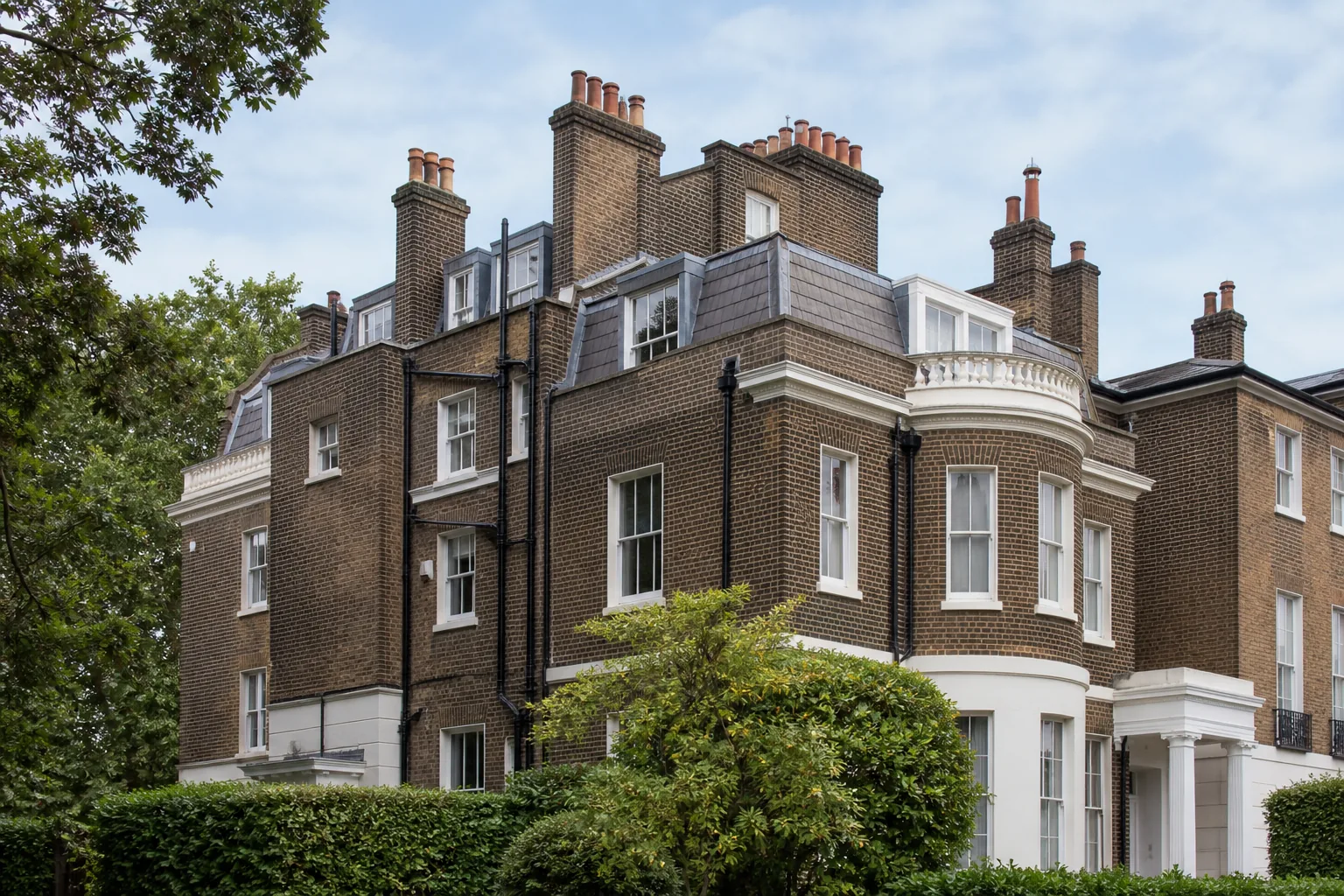
Some Guildford buildings may be rented, divided into flats, managed collectively or joined to another exterior. A resident can accurately report overflow without necessarily having authority to commission work across every affected section. Before a scope is accepted, it helps to identify the landlord, owner, agent or other party responsible for the rainwater goods. That conversation should also establish whether access passes through communal space, another occupation or land controlled by somebody else.
Authority does not enlarge the cleaning service itself. The agreed task still concerns reachable channels containing leaves, loose moss, grit, seeds, twigs or silt, with an exposed outlet mouth included only when specified. A shared downpipe may serve several roof edges, yet its enclosed interior and underground connection remain outside ordinary clearance. If damaged guttering is visible, the appropriate decision-maker can arrange a separate repair assessment without confusing it with authorised maintenance.
Keys, entry codes, locked yards and permission to cross communal or neighbouring areas may be relevant at the actual address. Access should be arranged through the responsible party. Visual proximity from one dwelling does not confer permission to enter another space or clean beyond the authorised boundary.
| Property situation | Access or gutter consideration |
|---|---|
| Tenanted house | Establish whether occupier or landlord is authorised to approve exterior maintenance. |
| Converted flats | Identify which roof edges are communal and who can provide access to them. |
| Adjoining commercial and residential space | Agree suitable access and the exact exterior boundary with responsible parties. |
| Channel continuing towards a neighbour | Stop scope at the section for which permission has been confirmed. |
Visible clues
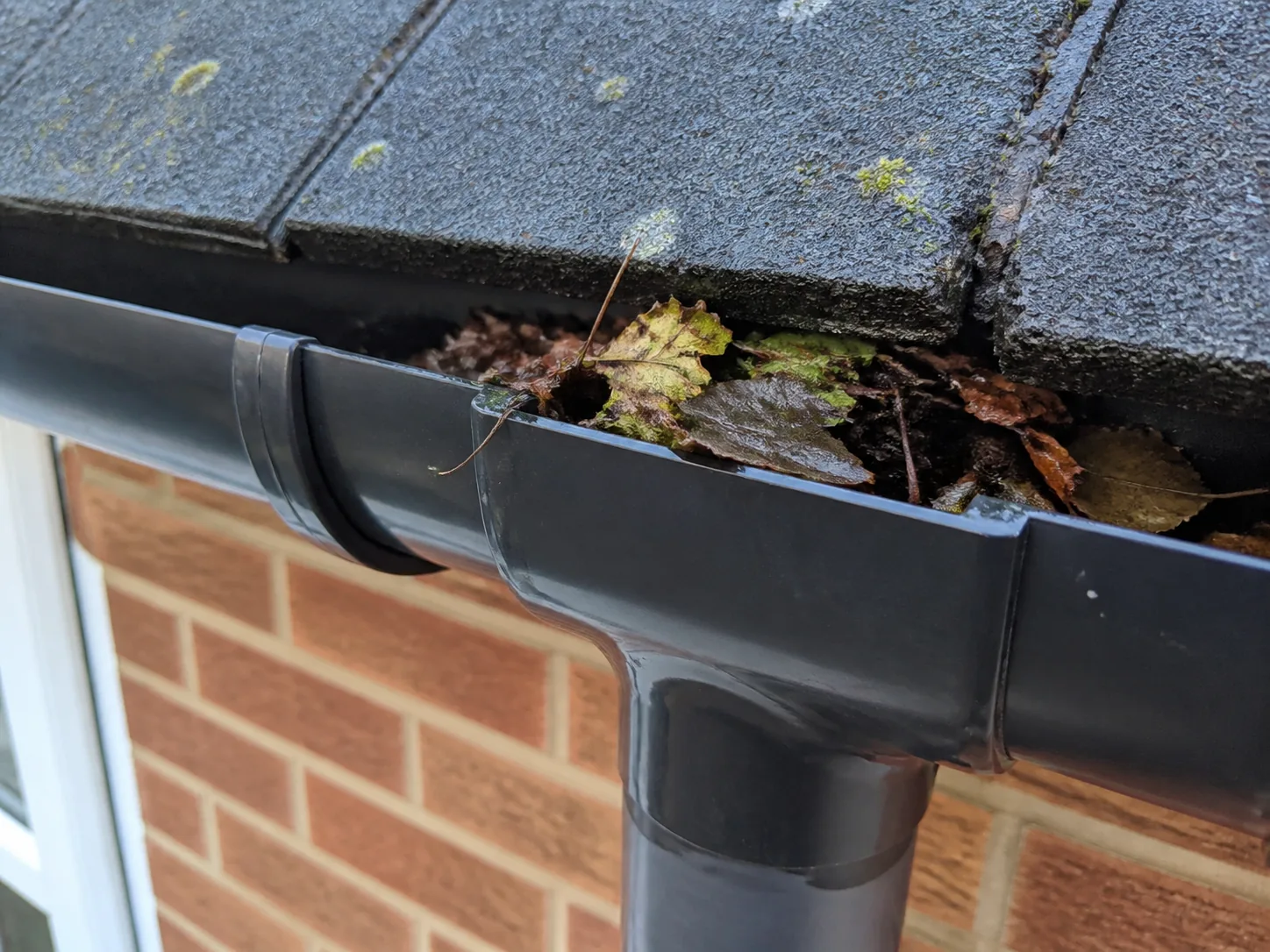
A tenant or occupier can usefully report material above an edge, water crossing the rim or staining around an outlet. Those observations support an enquiry but do not establish ownership or liability. A damaged union or detached length should be relayed to whoever controls repair decisions.
Structured service guide
| Question | Reason | Scope result |
|---|---|---|
| Who controls exterior? | Identifies decision-maker | Instructions come from authorised party |
| Which channel is communal? | Separates shared and private parts | Only defined section is considered |
| Who controls access route? | Prevents unapproved entry | Keys or consent arranged beforehand |
| Who decides on repairs? | Keeps authority distinct | Faults follow correct management route |
Structured service guide
| Part | Possible authorised clean | Still separate |
|---|---|---|
| Communal eaves channel | Remove deposits from named lengths | Private continuation |
| Exposed shared outlet | Free reachable matter when specified | Enclosed vertical pipe |
| Leaking communal union | Clear adjacent channel if included | Approval and repair |
| Drain connection below | No routine channel work | Downstream investigation |
Structured service guide
| Planning detail | How it helps |
|---|---|
| Authorised roof-edge plan | Shows precise maintenance boundary |
| Access contact and route | Supports legitimate entry |
| Known private exclusions | Prevents accidental overreach |
| Separate repair contact | Directs physical faults appropriately |
Structured service guide
| Arrangement | Conditional next question |
|---|---|
| Tenant in whole house | Does tenancy permit exterior instructions? |
| Flats under one freeholder | Which communal runs are authorised? |
| Mixed residential and business access | Who agrees timing through each area? |
| Goods crossing a boundary | Where does booking authority end? |
A clear service sequence
Quick answers
That depends on tenancy and exterior maintenance responsibility. The tenant can report the issue, but authority to approve cleaning, provide communal access or decide on repairs should be confirmed first.
It may be an owner, freeholder, landlord, agent or residents' body. Check the actual arrangement. The person instructing the visit should be able to define the communal section and permit access.
Not necessarily. Several channels can connect to one vertical route while responsibility differs between roof edges. Establish the authorised exterior boundary and keep internal pipe investigation distinct from ordinary clearance.
Only with appropriate permission arranged in advance. A requested roof edge is not automatically suitable when the approach depends on land outside the booking party's control.
Pause confirmation of the affected shared section until relevant documents or a managing contact clarify authority. It is better to settle responsibility than assume permission for exterior work or access.
They can be considered together when every part is listed, authorised and accessible. Each boundary remains explicit, and one section does not imply permission for connected or neighbouring roofline.
Seasonal context
Communal gutters can still accumulate unevenly. A channel beside planting may receive leaves while another mainly holds grit or loose moss, and responsibility does not change with the season. Maintenance timing should be agreed by the relevant party using actual history and conditions rather than a universal schedule.
Nearby trees, roof moss, gutter shape and exposure can all affect how quickly material accumulates. A visible symptom is more useful than applying one fixed timetable to every address.
Guildford service area
Nearby gutter-cleaning pages
Before booking
Confirm who controls the exterior, which channel serves the requested area, and how legitimate access will be provided. Then define the maintenance boundary. Occupation of one flat may not authorise work on communal rainwater goods or entry through shared spaces.
Yes. The useful report describes elevation, roof level, visible material and water behaviour. Ownership and cause can be considered afterwards. An occupier need not decide whether a shared outlet, broken fitting or hidden pipe is responsible.
It covers ordinary loose deposits in selected accessible channel sections, plus reachable exposed outlet openings only where agreed. Authorisation does not extend service to roof surfaces, repairs, enclosed downpipes, underground drains or omitted parts of the exterior.
Use a physical reference such as a party line, change in roof form, outlet position or agreed endpoint, while checking ownership. Instructions should show where permission begins and ends rather than relying on visual continuity.
A section that cannot legitimately be approached may remain outside completed scope. Keys, codes and responsible contacts should be arranged beforehand. An appointment does not authorise forced entry or access through an unapproved occupation or locked shared yard.
A visible concern can be described to the appropriate contact, but the booking party may not control remedial decisions. A split fitting, loose support or displaced channel should follow the building's agreed management route for further assessment.
No. An agreed reachable mouth may be freed of loose matter at the channel, but the enclosed vertical route and lower connection are separate. Shared use does not alter the boundary of ordinary gutter cleaning.
Only if ownership or management arrangements give that person authority. The number of homes served does not answer permission. Confirm the relevant decision-maker and precise exterior section before accepting communal maintenance work instructions for the building.
The quote considers authorised lengths, levels, access arrangements and loose accumulation. It should identify excluded private or neighbouring sections. Coordination, repair assessment or concealed drainage concerns are discussed separately rather than hidden inside a general building price.
The responsible party should use prior accumulation, nearby conditions and reports of recurring overflow. Different sections may need different timing. A management cycle is convenient, but should not replace observations from the actual rainwater goods.
Discuss the actual roofline
A Guildford quote needs authorised channel limits, number of roof levels, likely access route and amount of routine accumulation. Coordination through a managing party may affect planning, but no generic surcharge is assumed. Repairs, concealed restrictions and unapproved adjoining runs receive separate treatment.
