
Why label different roof levels?
Upper, lower and side runs may have separate outlets, access constraints and symptoms. Labelling them prevents an accessible section from being confused with another edge that needs a different decision.
Rainwater routes · access · clear scope
One property can have several gutter runs that behave quite differently. For Hornchurch enquiries, we separate upper and lower roof edges, identify the reported symptom and agree which accessible channels need clearing. Routine leaves, moss and silt are within scope; reachable outlets may be added where agreed. Defects, deep downpipe restrictions and underground drainage follow their own assessment.
Quick answers
Upper, lower and side runs may have separate outlets, access constraints and symptoms. Labelling them prevents an accessible section from being confused with another edge that needs a different decision.
Accessible agreed gutters can be cleared of leaves, moss, silt and similar loose material. Reachable outlet openings are included only if specified, while fixed faults remain outside cleaning.
No. Material at a reachable mouth may be removed when agreed, but reduced flow farther down can have another cause. Concealed pipework requires a separate assessment before work is proposed.
No. Include the sections that show build-up or form part of the agreed maintenance need. Other channels can be considered individually rather than added simply because they are lower.
Loose debris around it may be removed if the section is suitable and accessible. The opening itself is a repair issue, and clearance should not be presented as sealing or realigning it.
Identify each relevant elevation and level, provide safe exterior photographs and mention additions, narrow routes or shared access. Describe where water escapes and whether an outlet appears involved.
Local property context
Some Hornchurch properties may have more than one roof level because of a bay, porch, garage or rear addition. Others may present a simpler edge, yet access can still vary between the street-facing and garden-facing sides. The address itself decides which of these conditions applies. A useful enquiry maps the symptom to a particular run: upper rear, lower front, garage side or another clearly described section. This avoids grouping unrelated channels together and makes it easier to examine what lies directly below each one.
A gutter and its downpipe form a connected route, but cleaning does not cover every concealed part of that route. The agreed task removes ordinary loose build-up from accessible channels and can include material at a reachable outlet opening. It does not repair a split, reseal a union, correct a fall or clear a blockage hidden lower in the pipe. Nor does it extend into underground drainage. If water still behaves poorly after visible debris is removed, the next step depends on the remaining symptom rather than an automatic extension of the cleaning work.
Different levels require different access decisions. A low roof may sit beneath an upper gutter, while a side gate, fence line or garden feature can alter the approach elsewhere. Each named run must be assessed as accessible before inclusion. Any specialist access requirement is arranged and priced outside the routine assumption.
| Property situation | Access or gutter consideration |
|---|---|
| House with a bay or canopy | A small lower channel may have a short outlet route and should be distinguished from the main eaves above. |
| Home with mixed roof heights | Every level can differ in access and debris load, so the requested sections should be labelled individually. |
| Property with a garden room or addition | The structure may create its own rainwater edge and reduce clear approach space below the original rear run. |
| End position in a terrace | A side return may exist depending on the roof design, but its presence and accessibility must be checked at the address. |
Common causes
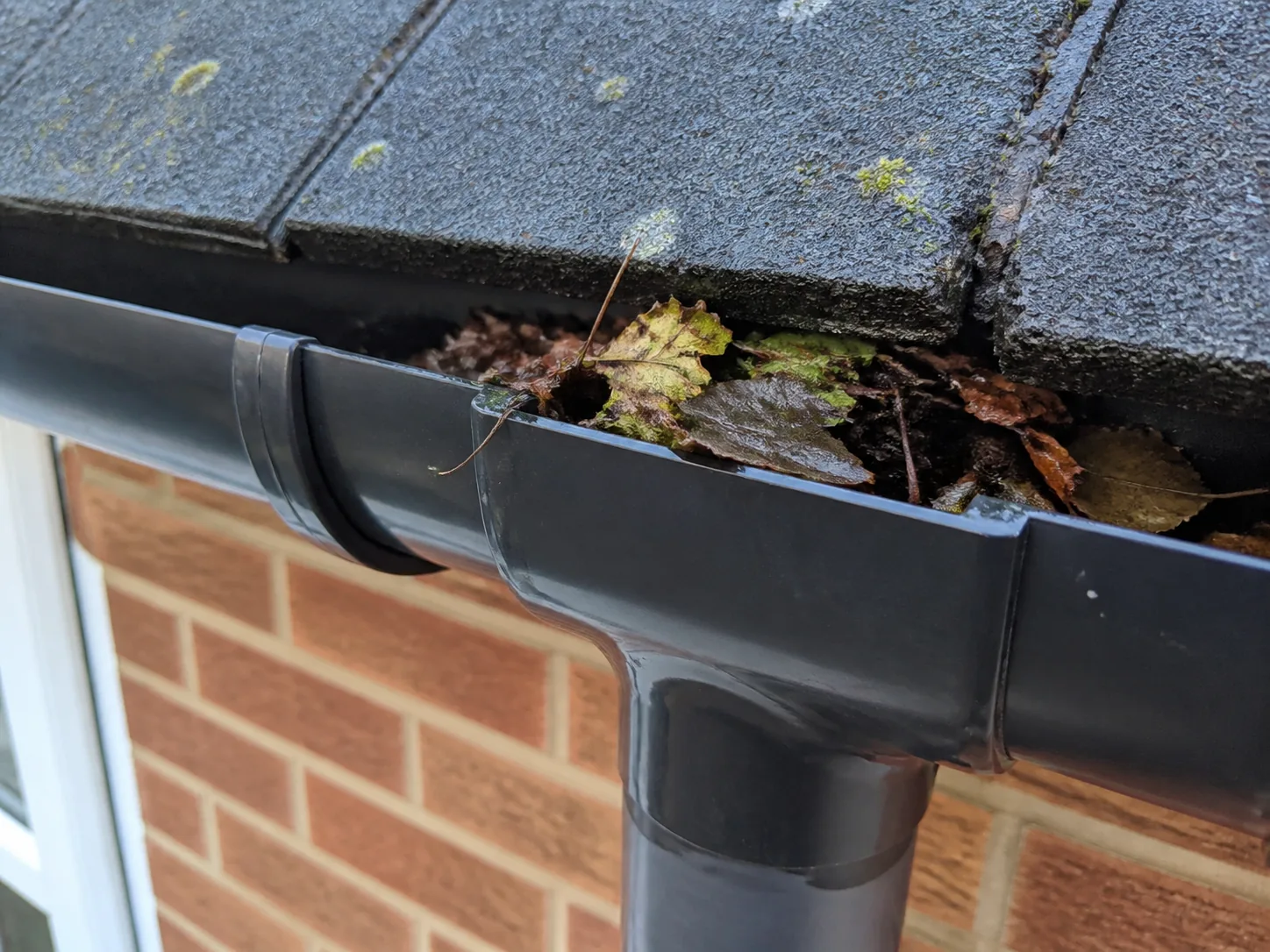
Loose moss can break into small pieces that settle beneath larger leaves, while fine sediment collects in quieter stretches of channel. The resulting layer may slow water before the build-up looks substantial from below. Accessible bends and outlet mouths can be addressed where agreed, without making claims about concealed sections.
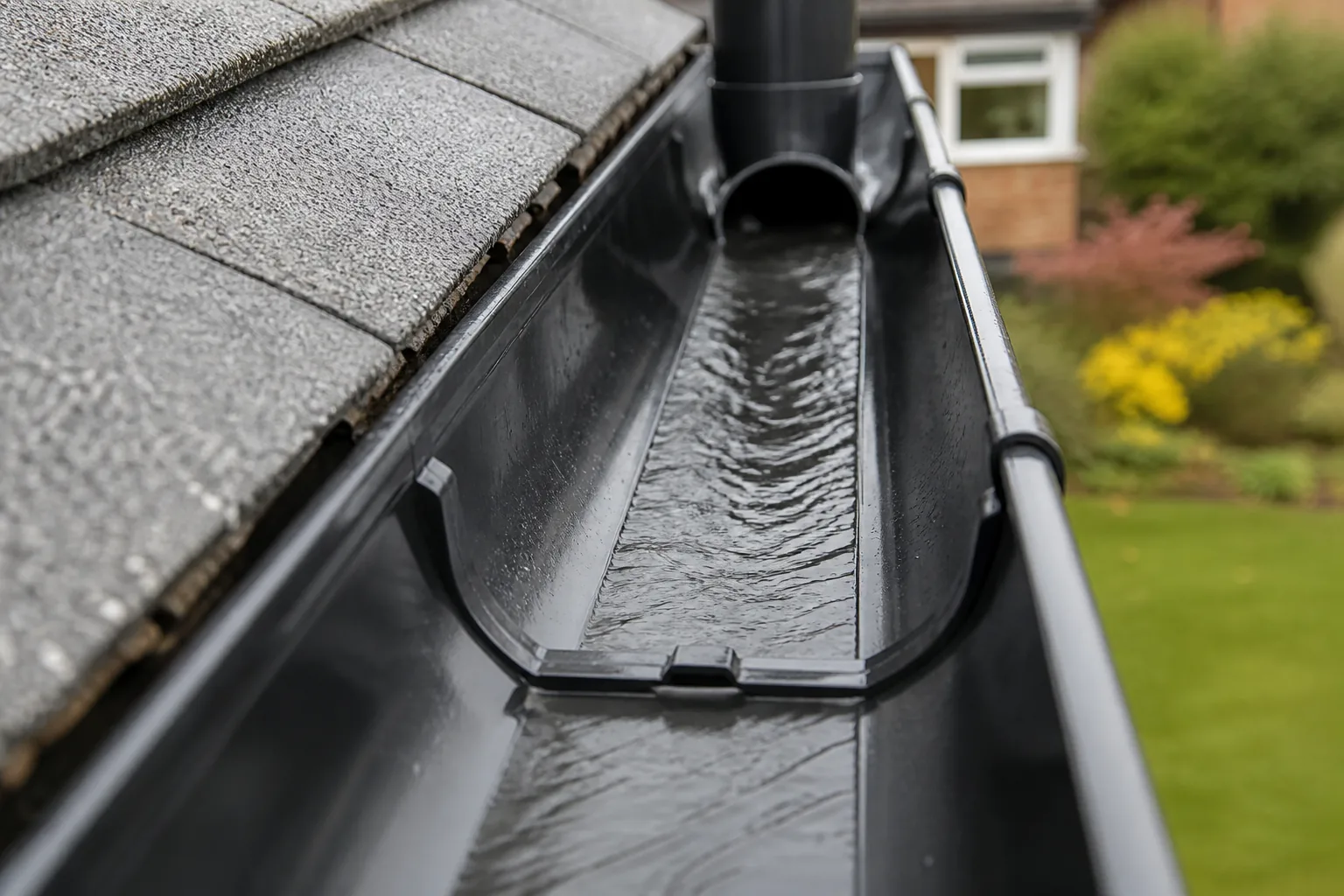
Wet leaves can settle into layers and slow water moving towards an outlet.
Loose roof moss can collect in the channel and hold other material in place.
Small twigs can bridge narrow points and trap lighter debris behind them.
Loose surface material may wash down from the roof during wet weather.
Older material can become dense and reduce the channel available for runoff.
Fine deposits can gather beneath larger debris and close to an outlet.
Structured service guide
| Part | Cleaning treatment | Limit |
|---|---|---|
| Agreed open channel | Clear ordinary loose build-up where accessible | No repair to shape or fixings |
| Accessible outlet mouth | Remove gathered material if included | No promise about deeper pipe flow |
| Downpipe interior | Not part of channel clearance | Requires separate assessment |
| Below-ground connection | Excluded from gutter cleaning | Refer as a drainage concern |
Structured service guide
| Symptom | Possible cleaning response | Possible separate response |
|---|---|---|
| Leaves visible above the edge | Clear loose material from the named run | Assess any damaged section independently |
| Water collects near a corner | Attend to accessible debris and outlet mouth | Consider pipe depth or channel fall |
| Joint drips in light rain | Remove any surrounding build-up | Check seal or connection for repair |
| Run has pulled out of line | Clear only if suitable and agreed | Assess brackets, fascia and alignment |
Structured service guide
| Planning item | Variation to consider | Effect |
|---|---|---|
| Roof levels | One continuous edge or multiple heights | Defines separate access decisions |
| Channel extent | Short canopy runs or longer main eaves | Changes the amount of clearance |
| Outlet count | Independent or connected discharge points | Clarifies reachable opening work |
| Surrounding access | Open area, addition, boundary or narrow route | Determines which runs can be agreed |
Structured service guide
| Conditional layout | Clarifying question | Scope decision |
|---|---|---|
| If a bay has a lower gutter | Does it discharge separately? | Name it apart from the upper front run |
| If an addition sits below rear eaves | What access space remains? | Assess the upper channel independently |
| If a garage joins the house | Are the edges continuous or separate? | List the actual runs rather than assuming |
| If a side return is near a boundary | Is usable access permitted? | Include only after the route is settled |
A clear service sequence
Seasonal context
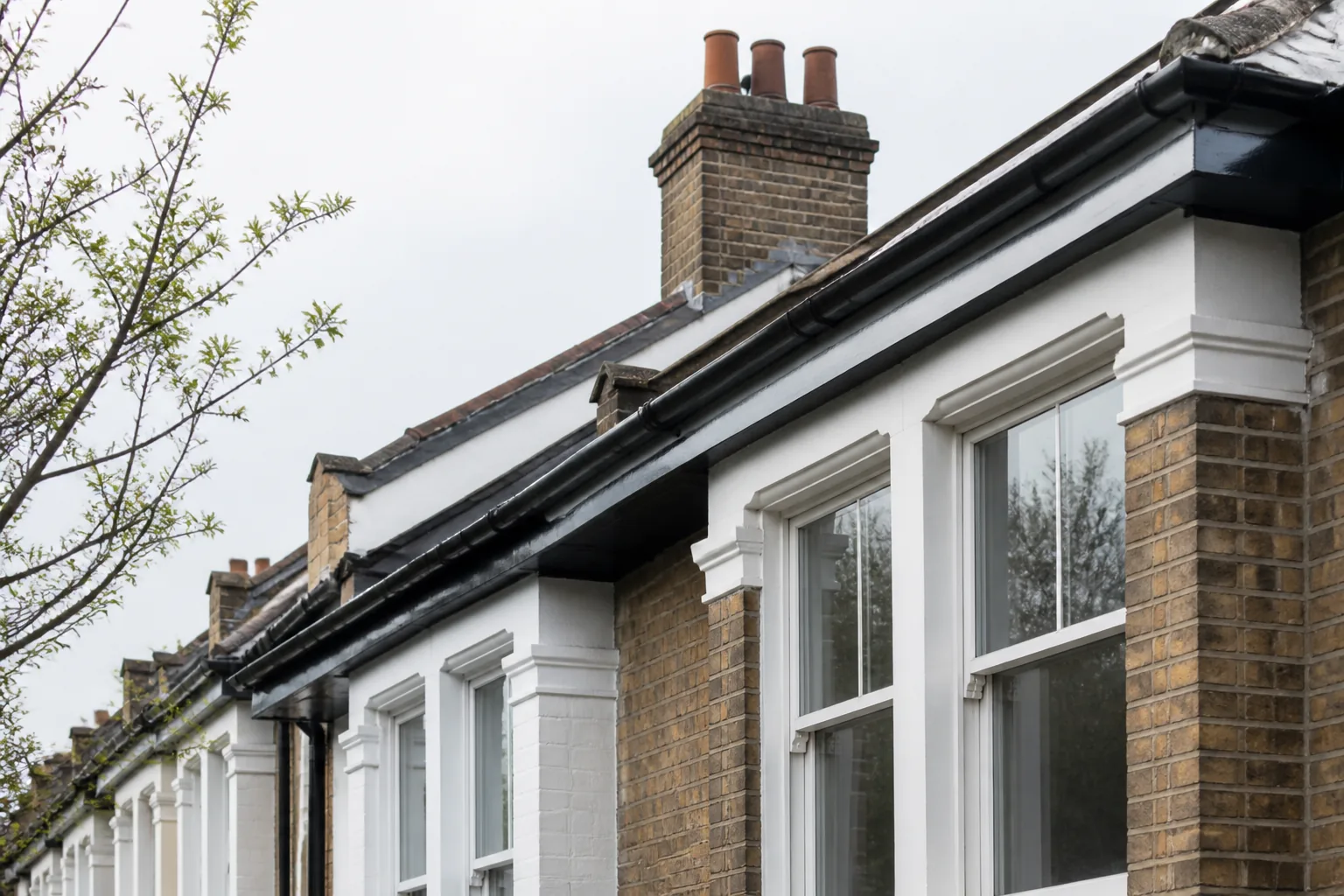
One roof edge may collect wind-blown leaves while another gathers moss fragments washed from above. Timing can therefore vary even around the same building. Check the condition after notable leaf fall or weather exposure, and respond to actual overflow or accumulation rather than assuming every run needs identical seasonal treatment.
Nearby trees, roof moss, gutter shape and exposure can all affect how quickly material accumulates. A visible symptom is more useful than applying one fixed timetable to every address.
Hornchurch service area
Nearby gutter-cleaning pages
Before booking
It covers the accessible channel runs agreed for the visit, removing routine leaves, moss, silt and loose fragments. Reachable outlet openings can be included when named. Repairs, deep downpipe restrictions, underground drainage and specialist access require their own assessment and agreement.
A lower channel may be shorter, receive water from another roof area or have a small outlet, depending on the layout. Debris can also gather unevenly. The actual connections and visible build-up should be assessed rather than inferred from height alone.
Possibly. The garage roof shape, channel height, route around the building and surfaces beneath the eaves all affect accessibility. Its gutter may also be separate from the main roof. Inclusion follows a property-specific access review and clear agreement.
Water behind a gutter can relate to alignment, roof-edge detailing, a gap or overflow from debris. Cleaning addresses only accessible loose material within the agreed channel. If the symptom continues, the fitting or surrounding area may need separate investigation.
No. Sound and visible discharge vary with rainfall, roof area and the route taken by water. A covered outlet is one possibility, while a deeper restriction is another. Only the reachable opening belongs within an agreed channel-cleaning scope.
They can be considered within one quote, but each still has its own length, level, outlet and access area. Listing the runs separately produces a clearer scope and avoids assuming that one reachable section guarantees access to all the others.
Share the approximate layout and any gates, stored items or boundaries when enquiring. The usable space must be assessed for the relevant elevation. If ordinary access is not suitable, that run may be excluded or need separate planning.
No. Clearance may reduce weight and allow water to move through the open channel, but it cannot reset supports or change alignment. A persistent pool after debris is removed can point to a repair issue needing another assessment.
The connected channels and reachable opening should be identified together. Surface material can be cleared where accessible and agreed. If flow remains restricted below the junction, the concealed downpipe sits outside routine clearance and requires separate consideration.
Visible accumulation, repeated spillover or a known history of debris at a particular run are sensible prompts. Timing also depends on exposure and nearby growth. There is no universal interval that suits every roof edge or property.
Discuss the actual roofline
Price depends on the roof edges selected, their lengths and levels, the number of agreed outlet openings and the access space for each section. A simple sketch or labelled ground-level photographs can clarify the layout. Repairs, concealed pipe investigation, underground drainage and specialist access are assessed as additional, separate needs.
