
Can different roof levels be cleaned together?
They can be considered within one enquiry, but each level must be accessible and agreed. A lower run being straightforward does not confirm that the channel above it can also be reached.
Rainwater routes · access · clear scope
Routine gutter care is most useful when its boundaries are clear. In Potters Bar, we remove leaves, moss, silt and ordinary loose build-up from agreed channels that are accessible. Reachable outlet openings can be part of that work when specified. Leaks, damaged sections, deeper pipe obstructions, underground drainage and specialist access requirements need separate consideration.
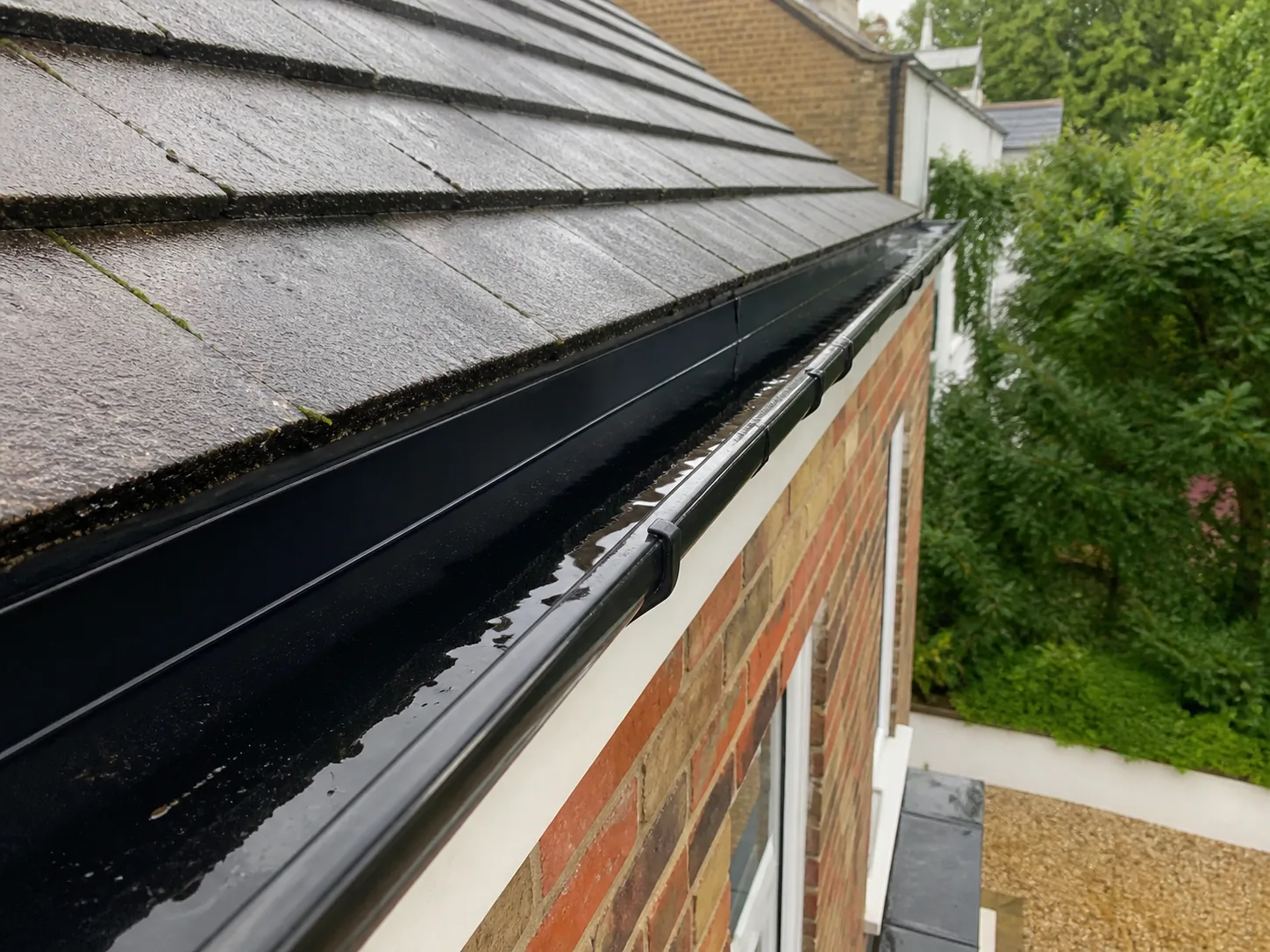
Visible clues
A tuft of growth, water dropping from the front edge, damp debris visible above the rim or a slow-draining corner can signal accumulation. Drips from fittings and persistent pooling may instead involve repair or alignment, so note the exact place and timing.
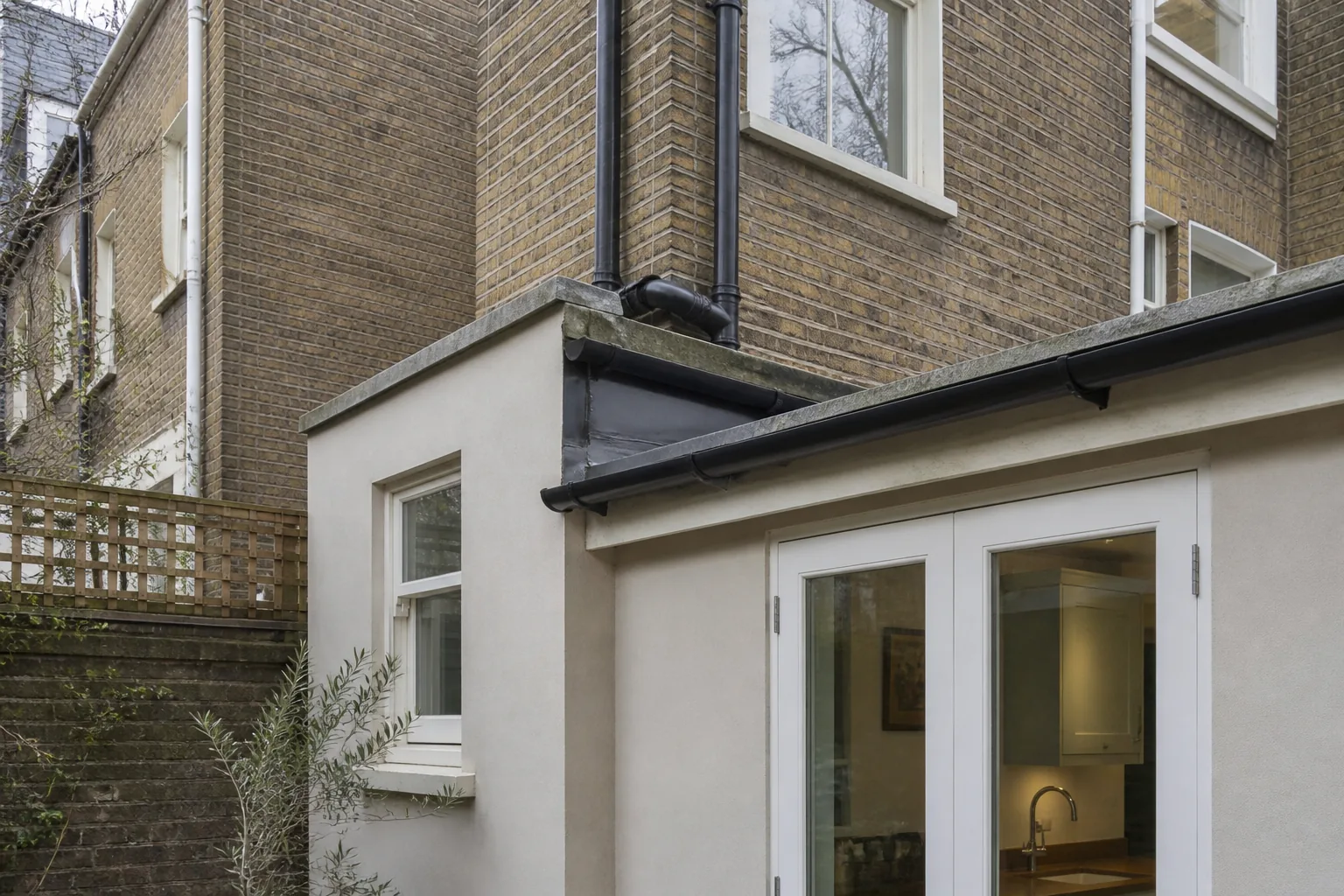
Local property context
Some Potters Bar properties may combine a main roof with lower extensions, attached garages or projecting entrance roofs. Each element can collect a different amount of debris and have its own outlet. A front run may be open to approach while a rear section is affected by sloping ground, a conservatory or dense planting. The correct scope follows those individual conditions. List the elevations and smaller rooflines you want checked, plus any boundary or access limitations, so nothing is included merely because it belongs to the same address.
The pattern of water can help distinguish a cleaning need from a fault. A channel full of moss and sediment plainly has less capacity, but overflow from an apparently open section could arise from poor alignment or a blockage below the outlet. A split pipe may release water even when the gutter above it is clear. Routine cleaning deals with accessible loose material and reachable openings named in the agreement. It does not test concealed drainage or repair the components that carry water away.
Ground conditions matter as much as roof height. Steps, slopes, walls, garden structures and narrow side gaps may change reach from one elevation to another. Make gates and agreed routes available, and identify any section facing neighbouring or communal land.
| Property situation | Access or gutter consideration |
|---|---|
| Detached homes with several elevations | Long and short runs may have separate outlets, levels and access conditions. |
| Houses on changing ground levels | The effective channel height may differ noticeably between front, side and rear. |
| Homes with attached garages | Confirm whether the garage run joins the house system or forms a separate requested area. |
| Properties beside dense planting | Material may settle unevenly according to shelter, wind and outlet position. |
Structured service guide
| Location | Cleaning action | Not included |
|---|---|---|
| Agreed reachable run | Remove ordinary loose material | Repair the channel |
| Accessible outlet opening | Uncover when specified | Trace a deep restriction |
| Pipe below ground | No action | Drain clearance or testing |
Structured service guide
| What is seen | Possible cleaning role | Possible separate issue |
|---|---|---|
| Dense moss in channel | Remove the loose accumulation | Roof treatment is unrelated |
| Repeated drip at fitting | Clear backed-up material | Seal or joint failure |
| Pooling after clearing | No remaining debris to lift | Fall or support problem |
Structured service guide
| Input | Reason |
|---|---|
| Number of roof sections | Each needs scope and access review |
| Changes in ground height | Reach can vary around the building |
| Obstacles near elevations | Some channels may be excluded |
| Volume and density | Heavy silt differs from light leaves |
Structured service guide
| If this occurs | A sensible response |
|---|---|
| Leaves gather after autumn weather | Check the run and outlet mouth |
| Moss appears during another season | Use condition rather than the month |
| Only a sheltered rear corner fills | Name that area in the enquiry |
| Clear gutters still overflow | Consider a cause beyond cleaning |
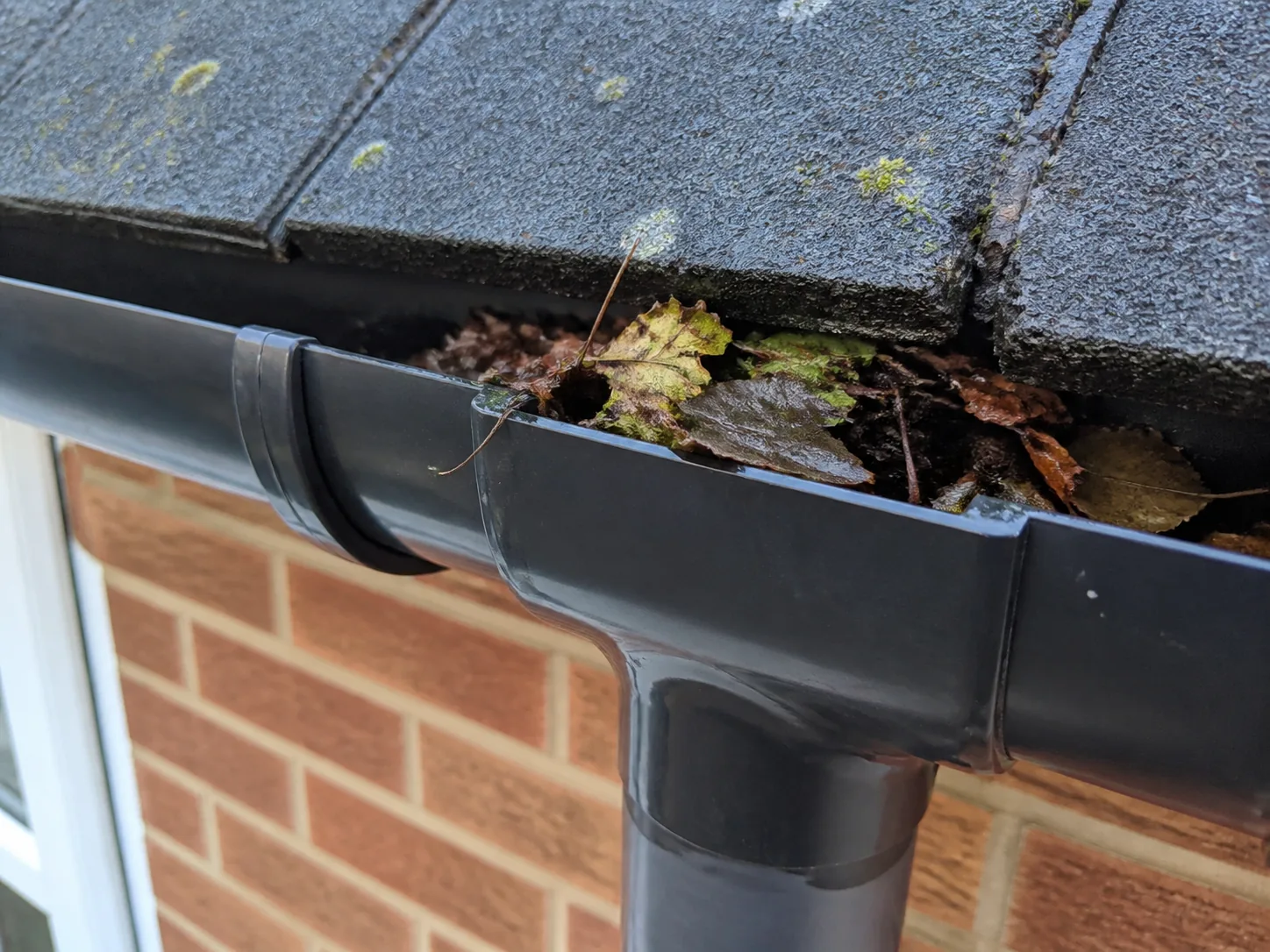
Seasonal context
A check after leaf fall may suit homes near planting, but silt and loosened roof moss do not arrive on a single calendar date. Sheltered channels can stay damp and retain material. Previous build-up and visible rainwater behaviour are better guides than season alone.
Nearby trees, roof moss, gutter shape and exposure can all affect how quickly material accumulates. A visible symptom is more useful than applying one fixed timetable to every address.
A clear service sequence
Quick answers
They can be considered within one enquiry, but each level must be accessible and agreed. A lower run being straightforward does not confirm that the channel above it can also be reached.
Compacted routine silt can be removed from an accessible channel as part of the agreed clean. If it contains unusual material or sits beyond reach, the task may need to be reconsidered.
Only the reachable outlet opening belongs in routine channel work when agreed. A restriction deeper inside the pipe cannot be assumed to be accessible and requires a separate assessment.
Yes. A change in ground height can affect the practical reach of a rear or side gutter. Include slopes, steps and retaining walls when describing the access around your home.
Accessible debris may be removable where appropriate, but cleaning will not close the split. The damaged section is a repair matter and should be identified separately before work is agreed.
Not automatically. Garage, porch and extension channels should be named if they need attention. Each may have different access, debris and outlet arrangements from the main roofline.
Potters Bar service area
Nearby gutter-cleaning pages
Before booking
Coverage is limited to the accessible runs identified in the agreement. Ordinary leaves, moss and silt are removed, with reachable outlets included where confirmed. Other elevations, concealed downpipes, repairs and underground drainage are not implied by a general request.
It can help when loose material blocks the route or covers the outlet. Spilling can also result from channel alignment, damaged parts, pipe restrictions or intense rainfall. For that reason, debris removal cannot guarantee that every overflow will disappear.
Shelter can change wind movement and allow damp leaves or moss to remain in place, although every roofline behaves differently. Outlet position and roof condition also influence accumulation. Use what is visible at the actual home rather than a general assumption.
No. The garage should be stated in the requested scope. Its run may connect to the house or drain separately, and the access can differ. Clarifying it beforehand ensures the quotation and visit reflect all named areas.
A small residue can reflect the channel profile, but persistent standing water may point to fall, support or outlet-position concerns. Because cleaning does not alter those features, continuing pooling should be assessed as a separate issue.
Underground drains are outside routine gutter cleaning. An outlet and channel can be clear while a problem remains below ground. If rainwater still fails to discharge, explain the symptom and arrange the appropriate separate drainage investigation.
No. Loose moss already lying inside an agreed accessible gutter can be cleared as debris. Removing or treating moss on the roof surface is a different task and should not be inferred from the channel-cleaning scope.
Photographs can help show elevations, obstacles and visible build-up, making the initial discussion more informed. They may not reveal every access constraint or concealed condition. The final scope should still correspond to what can actually be reached and agreed.
Obtain any necessary permission and make sure the route will be available at the planned time. Explain which gutter faces the shared area. Without suitable access, that section may need to stay outside the routine work.
Base the next check on how quickly material returns, nearby planting, visible moss and the home's history of overflow. One elevation may need attention sooner than another. A fixed town-wide timetable would ignore those property-specific differences.
Discuss the actual roofline
Cost depends on the rooflines requested, their levels, ease of approach and how much routine material needs removing. Multiple short runs can add complexity even when their combined length is modest. Any fault-finding or access arrangement beyond ordinary cleaning should be priced separately.
