
Why describe the nearest corner and outlet?
Those details help show how the affected channel may connect to the spill point. They also reduce the chance of scoping only a small visible area when material lies farther along the same run.
Rainwater routes · access · clear scope
Water may appear at one corner even when the material slowing it lies along another part of the run. Gutter cleaning in Weybridge clears leaves, loose moss, silt and routine debris from accessible channels included in the agreement. Reachable outlet openings can be covered when specified, while repairs, hidden downpipe restrictions, underground drainage and specialist access are considered separately.
Visible clues
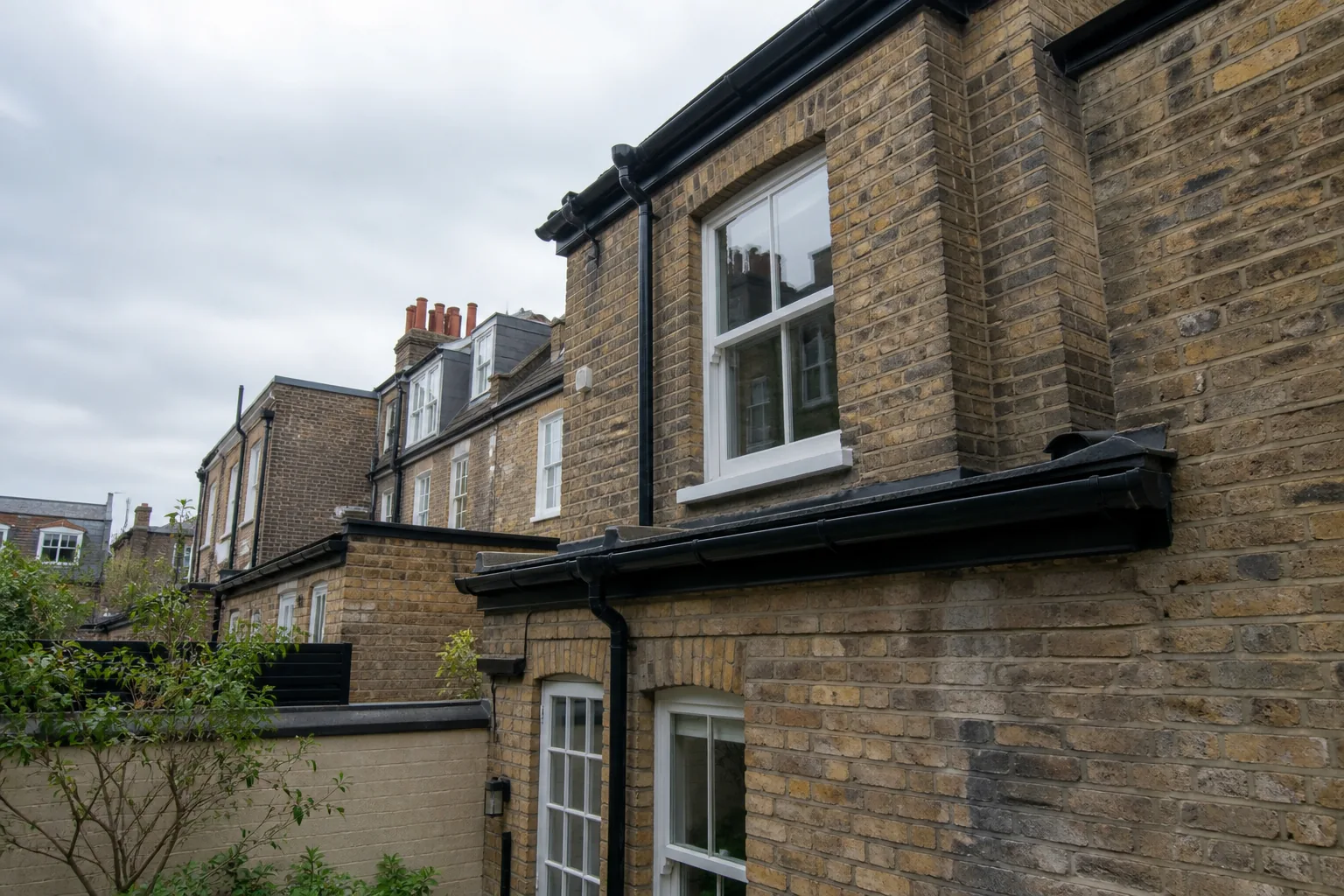
Look for water crossing an edge, plants rooted in deposits, visible moss or a sediment ridge around a corner. A drip from beneath a connection, separation from the fascia or standing water in an otherwise clear run may point towards a physical fault instead.
Local property context
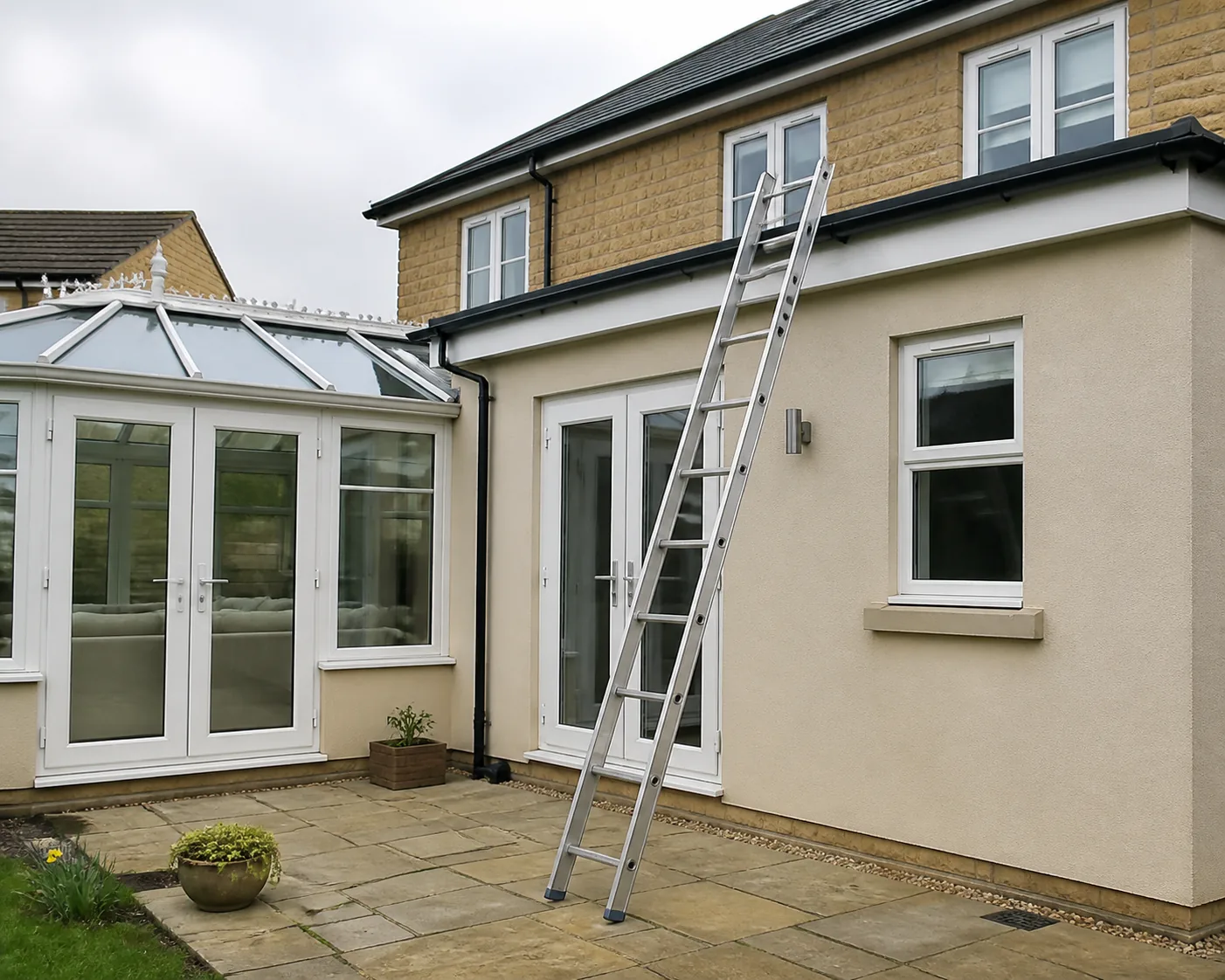
A Weybridge home may have channels that turn around a corner, meet above an addition or discharge through an outlet away from the visible overflow. Other addresses may have short, independent runs serving a porch or garage. These are possibilities to check at the individual property, not claims about a particular street. Explain which elevation shows trouble, where the nearest outlet sits and whether adjacent roof edges appear connected. Naming the requested runs gives a more reliable scope than treating the wettest point as the whole job.
Once the route is understood, routine debris can be separated from other causes. Loose leaves at a bend, moss fragments along the base and silt around an accessible outlet can all reduce the space available for rainwater. Clearing those materials does not mend a cracked joint, alter a poorly aligned channel or open a blockage deeper in a pipe. If an agreed run is clear but water still backs up, the next assessment should follow the rainwater route beyond the cleaned area rather than simply repeating the same work.
A connected gutter does not necessarily have one access condition throughout. A rear addition, glazed area, narrow side route, wall or change in ground height may affect only part of it. Each requested section is reviewed at the actual address before inclusion is confirmed.
| Property situation | Access or gutter consideration |
|---|---|
| House with a wraparound channel | A spill on one elevation may relate to debris near a corner or outlet on the connected section. |
| Home with a lower rear addition | Its gutter may be independent, while the structure below can change access to the original roof edge. |
| Property with porch and garage runs | Each short channel needs to be named if it is expected within the agreed clean. |
| Building with shared rainwater goods | Responsibility, permission and the precise communal sections should be settled before work is arranged. |
Structured service guide
| Part of the route | Routine cleaning role | Separate issue |
|---|---|---|
| Selected accessible channel | Remove ordinary loose deposits | Unlisted or unreachable lengths |
| Reachable corner | Clear gathered leaves and moss | Damaged corner fitting |
| Specified outlet mouth | Lift accessible loose material | Restriction deeper in the pipe |
| Drain below ground | Outside channel clearance | Drainage investigation |
Structured service guide
| Condition | Cleaning may address | Other response may be needed |
|---|---|---|
| Moss banked at a bend | Remove the accessible deposit | None if normal flow returns |
| Drip under a clear joint | No component correction | Resealing or replacement |
| Clear channel holding water | Confirm debris is absent | Alignment or support review |
| Open outlet with slow discharge | Keep the mouth clear | Pipe or drain assessment |
Structured service guide
| Detail | Effect on the quotation |
|---|---|
| Length of connected runs requested | Defines how much channel is included |
| Number of roof levels | Creates separate access considerations |
| Structures or narrow routes below | May limit particular sections |
| Depth and spread of deposits | Changes the clearing work involved |
Structured service guide
| If the address has | Confirm before the visit |
|---|---|
| A channel turning a corner | Whether both connected elevations are required |
| A rear addition | Which lower and upper runs belong in scope |
| A detached garage | The specific sides to include |
| Communal rainwater goods | Who authorises access and work |

Seasonal context
Leaves can form obvious clusters in autumn, while fine grit, seeds and loose roof moss may settle more gradually. A sheltered bend can collect material differently from an exposed straight run. Future timing is best guided by the property’s own recurring collection points.
Nearby trees, roof moss, gutter shape and exposure can all affect how quickly material accumulates. A visible symptom is more useful than applying one fixed timetable to every address.
A clear service sequence
Quick answers
Those details help show how the affected channel may connect to the spill point. They also reduce the chance of scoping only a small visible area when material lies farther along the same run.
Accessible leaves, loose moss, silt, seeds and similar everyday deposits can be cleared from the agreed channels. Fixed items, unusual material and anything inside concealed pipework need separate consideration.
No. Reachable outlet openings are covered only where the agreement includes them and their connected runs. An outlet on an unlisted elevation or separate structure should be requested expressly.
It may remove debris that causes water to back up near the joint, but it cannot restore a failed seal or cracked fitting. A continuing component leak needs a repair assessment.
Poor discharge may then arise deeper in the downpipe or drainage route, although other causes are possible. Routine channel cleaning does not establish that hidden sections are clear.
Yes. Its channels form a separate part of the property and are not automatically included with the house. State which garage sides need attention and any access limits around them.
Weybridge service area
Nearby gutter-cleaning pages
Before booking
List the relevant building, elevations and roof levels, then describe where overflow or visible deposits appear. Mention corners, outlet positions, additions and restricted side routes. This gives the requested work clear boundaries before access is assessed.
It can. A pocket of leaves or moss at a turn may slow water arriving from a connected section, so the spill need not sit directly above the material. The actual channel arrangement still needs checking rather than assuming a cause.
No. It covers the accessible gutter channels selected and reachable outlet openings where stated. Downpipe interiors, buried drains, roof surfaces, component repairs and any sections requiring a different access arrangement remain outside that routine scope.
Standing water can relate to the channel’s alignment, support or outlet arrangement rather than loose deposits. Cleaning confirms that accessible routine material has been removed; it does not change the fall or correct damaged supporting components.
It may be considered, but the structure beneath can affect whether the section is accessible. Provide the position and layout when enquiring. Inclusion depends on conditions at the address, not simply on the gutter being visible.
No. Growth shows that moisture and material have persisted in part of the channel, but it does not reveal the condition of the connected pipe. Clear the accessible deposits first and assess continued poor discharge separately.
The reachable section can be considered within a clearly limited agreement, while the inaccessible length remains excluded. Because material elsewhere may still affect water movement, the partial boundary and its limitations should be understood before booking.
They may be, provided the person arranging the work has authority and can supply the necessary access. The communal sections, responsibility and any entry arrangements should be confirmed rather than inferred from the position of the building.
No single interval suits every property. Previous build-up, surrounding planting, roof condition, shelter and reported overflow all matter. Review the places that collect material and plan future attention around observed need rather than a fixed area-wide timetable.
Not unless repair has been separately assessed and expressly included. The cleaning quotation is shaped by the chosen accessible runs and deposits. Failed joints, damaged brackets, misalignment and concealed restrictions require their own scope and planning.
Discuss the actual roofline
The quotation reflects the total length and number of selected runs, their levels, the route beneath each section and the amount of material present. Short linked channels still add work. Repairs, concealed pipe clearance, underground drainage and different access requirements are priced separately.
