
Natural stone
Tell the team which stone is present if you know, with any care notes.
Acton / Restart upkeep from the condition you have now
Give the first visit its own realistic brief.
After a break in regular cleaning, the old timetable may no longer fit. Describe the current rooms and accumulated tasks, agree what the first visit should address, and review the later maintenance routine separately.
Kitchen · Bathroom
Living areas · Bedrooms
Put the household choices in order
Select the arrangement you would like to explore. The tool is only an outline: pricing and appointment availability require a separate, confirmed discussion.
Before products are chosen
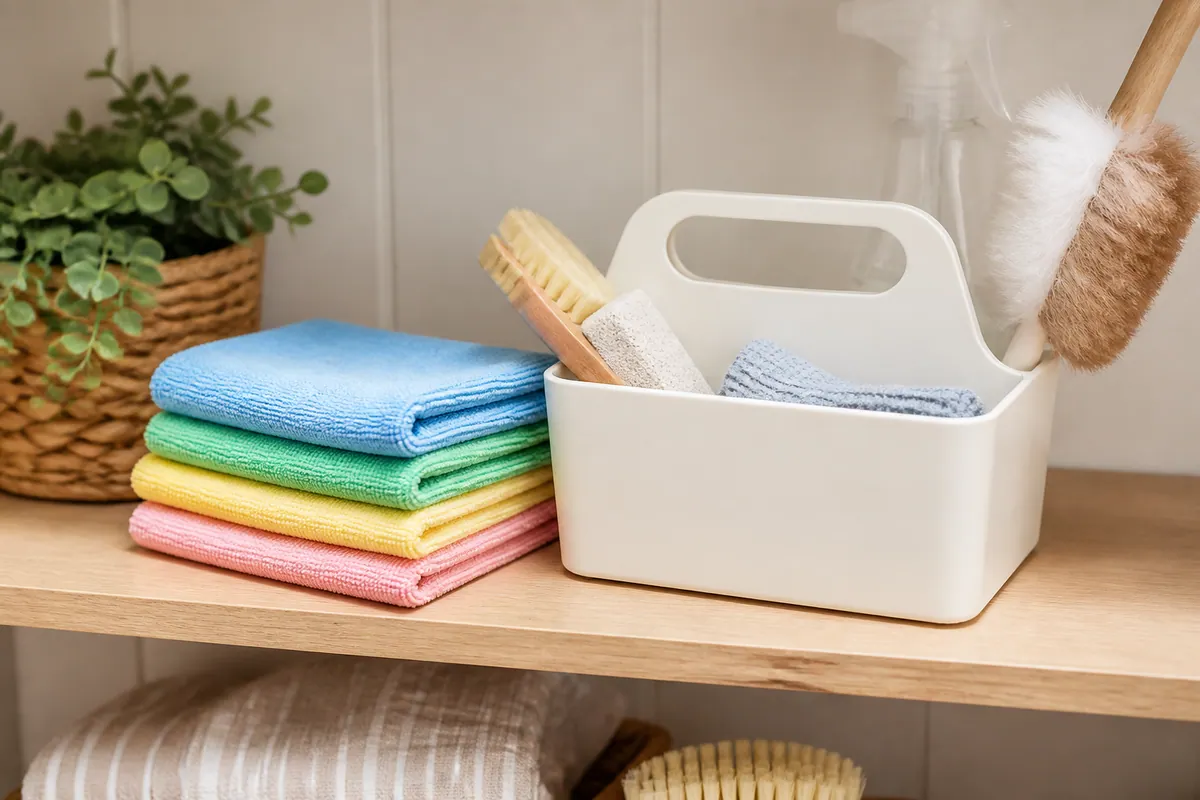
Known material information is worth sharing early. A routine visit should not depend on assuming that timber, stone, lacquer and painted finishes all tolerate identical cleaning.
Tell the team which stone is present if you know, with any care notes.
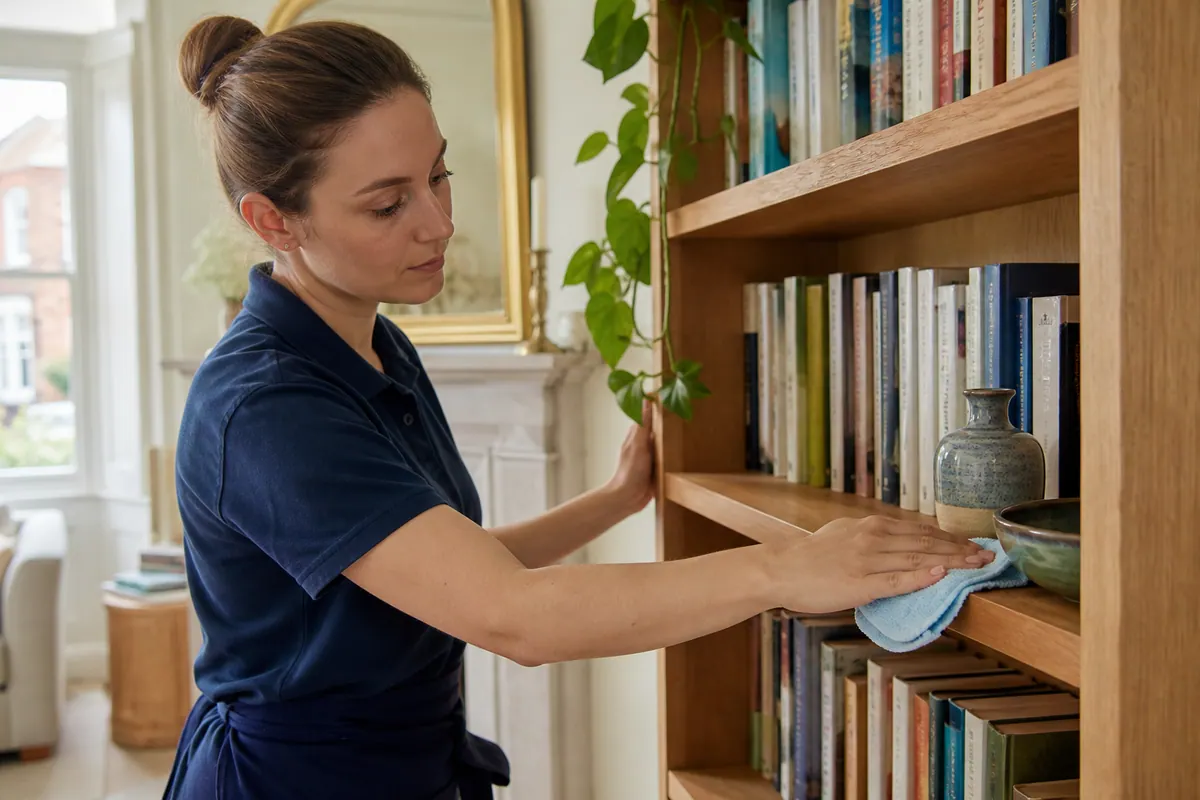
Describe the timber finish and any existing wear that needs to be avoided.
Sensitive lacquer should be flagged before surface work is agreed.
Keep stainless-steel wiping defined as exterior care within the domestic list.
Point out fragile or damaged paint rather than expecting cleaning to renew it.
Acton / a household scenario
Give the first visit its own realistic brief.
Restarting is not simply repeating the last booking from months ago. Household use, condition and priorities may have changed, so begin with what is actually there today.
For Acton, explain the gap and the rooms you want addressed without assuming an intensive scope is included. Specialist work should be identified separately from domestic maintenance.
The first or occasional visit starts from £90, with its final scope confirmed. That starting price does not establish the duration or guarantee every accumulated task can be completed.
Once a baseline is agreed, discuss regular care from £20/hour. The recurring list can focus on the everyday rooms rather than carrying every first-visit task forward indefinitely.
The small instructions that matter
Agree key collection and return with the team rather than leaving sensitive details in a public message.
Confirm any concierge handover and who can permit access to the apartment.
Settle the alarm instructions for the beginning and end of the visit privately.
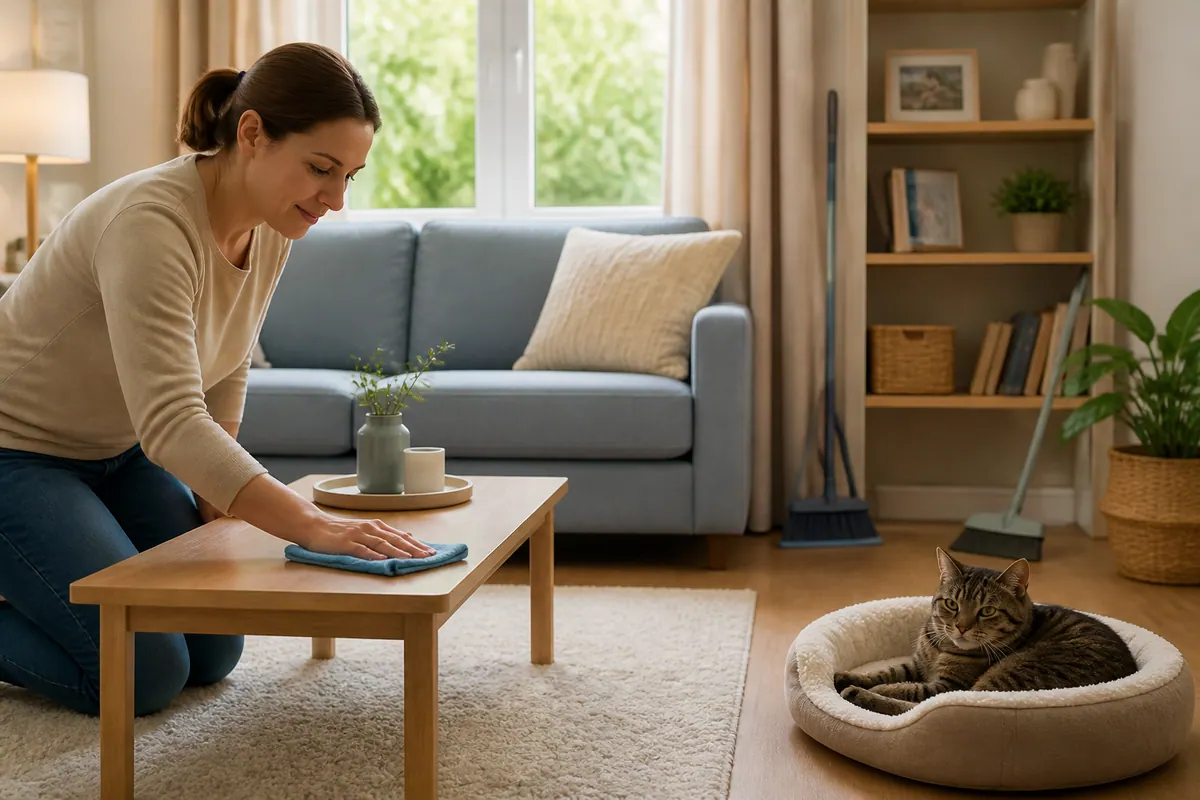
Tell the cleaner which spaces pets will occupy and which boundaries need care.
Explain calls or a private desk and discuss the sequence around the occupied area.
Share the parking or loading information you know before timing is agreed.
Make room exclusions and untouched belongings part of the actual brief.
Useful preparation combines ready rooms with suitable products and confirmed access. A broad request for everything to be cleaned cannot replace those practical decisions.
Agree the visit behind the rate
Use these published starting figures to begin the enquiry. The final domestic arrangement still needs a confirmed minimum visit, included supplies and realistic task list.
| Service | Price | Main factors |
|---|---|---|
| Regular domestic cleaning | From £20/hour | Property scale, frequency, minimum time and agreed supply/access arrangement |
| First / one-off domestic visit | From £90 | Initial workload, included rooms and selected starting tasks |
| Specialist / intensive scope | Quoted separately | Intensive condition or service-specific equipment and access needs |
A larger property or different starting condition can change the time required. Frequency, supplies, entry and parking also matter, while specialist requests need separate consideration rather than an implied inclusion.
What returns, what rotates
Start with the household surfaces and floors that need repeated care. Occasional detail work is a separate decision, even when it sits in the same room as a recurring task.
Name the detail and its location when discussing the visit. That makes its scope clearer than adding a general instruction to be thorough everywhere.
Room choices, clear scope
The tabs show the household work to discuss, not a fixed package for every property. Explain condition and access so a room label translates into an achievable cleaning brief.
Kitchen
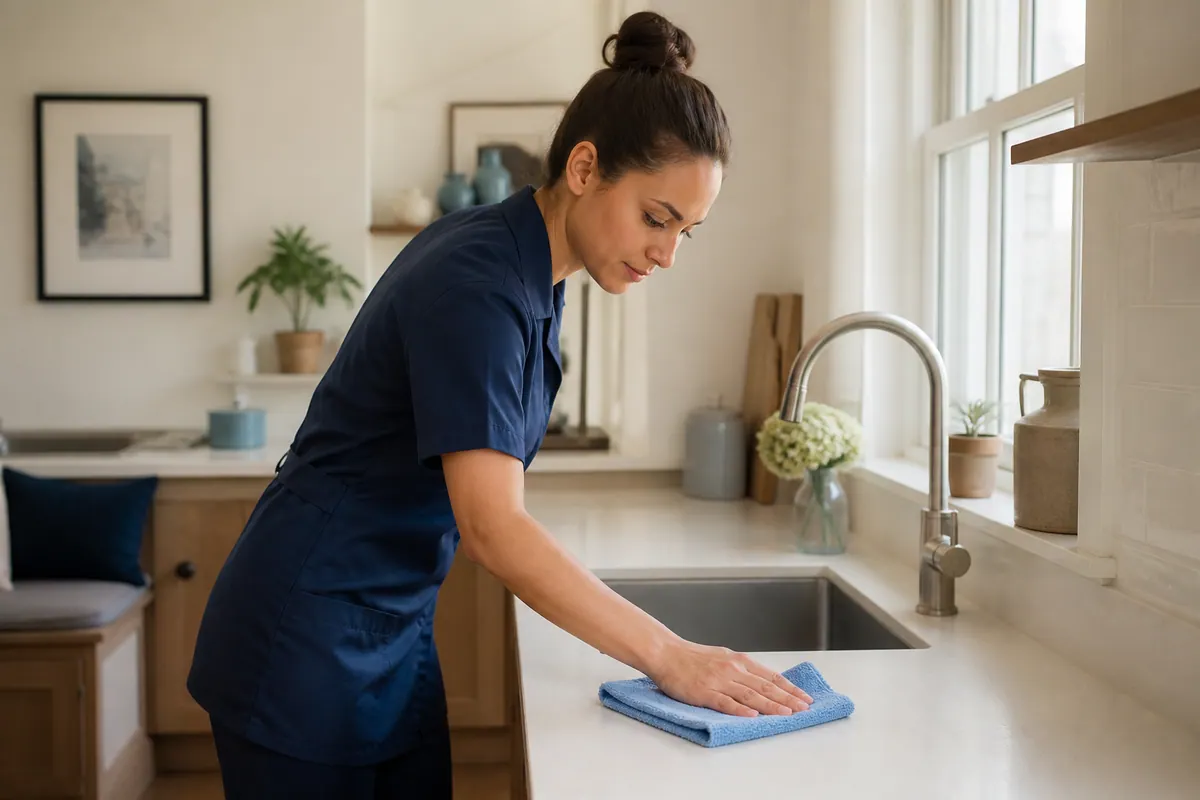
For the kitchen, discuss the sink, reachable worktops and splashback, then any cupboard fronts or appliance exteriors in scope. Detailed interior work is a different request.
Remove food and small personal items from the cleaning area; do not assume oven internals are covered.
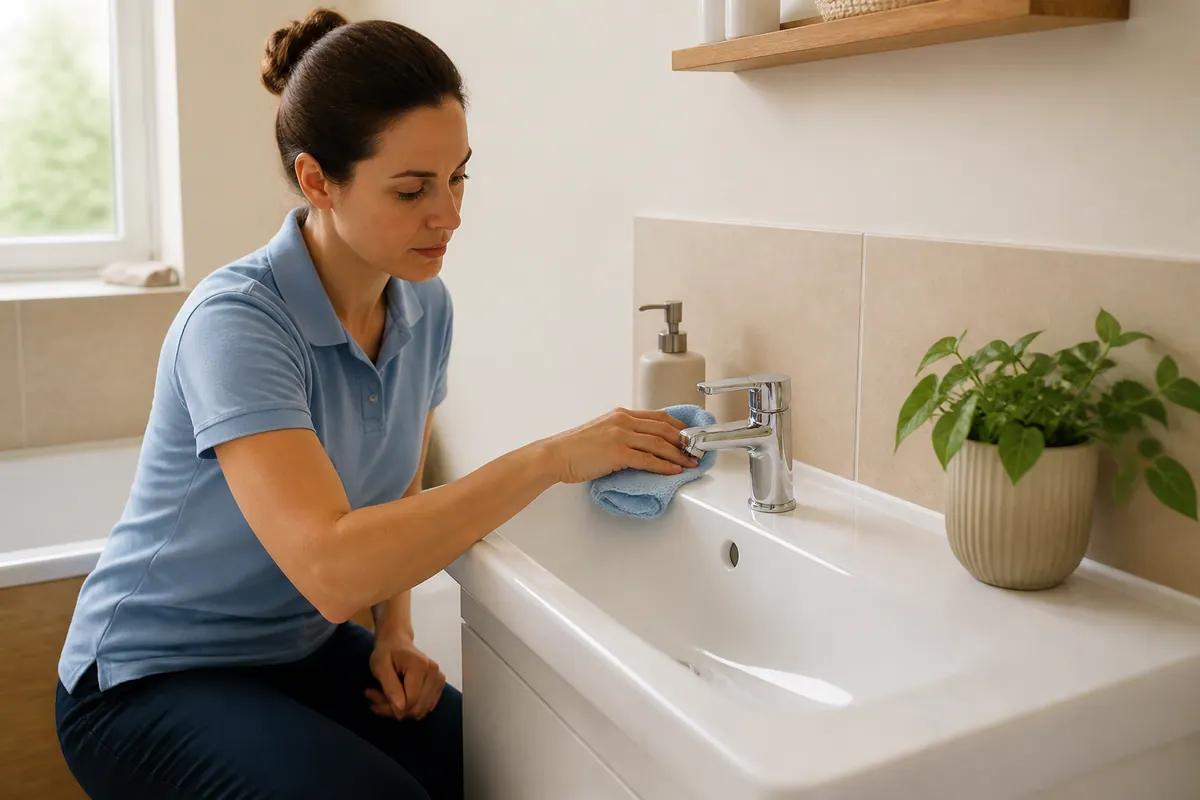
Bathroom
Around sanitaryware, showers and taps, explain the material and condition as well as the room. Mirrors and accessible tiles can be part of the agreed bathroom work.
Existing damage should be identified; cleaning is not a repair to a seal or fitting.
Living areas
In living spaces, identify furniture that is ready for dusting and floors that can be reached. Vacuuming precedes compatible floor care within the confirmed room list.
Put away breakable objects and documents; do not leave the handling of personal items uncertain.
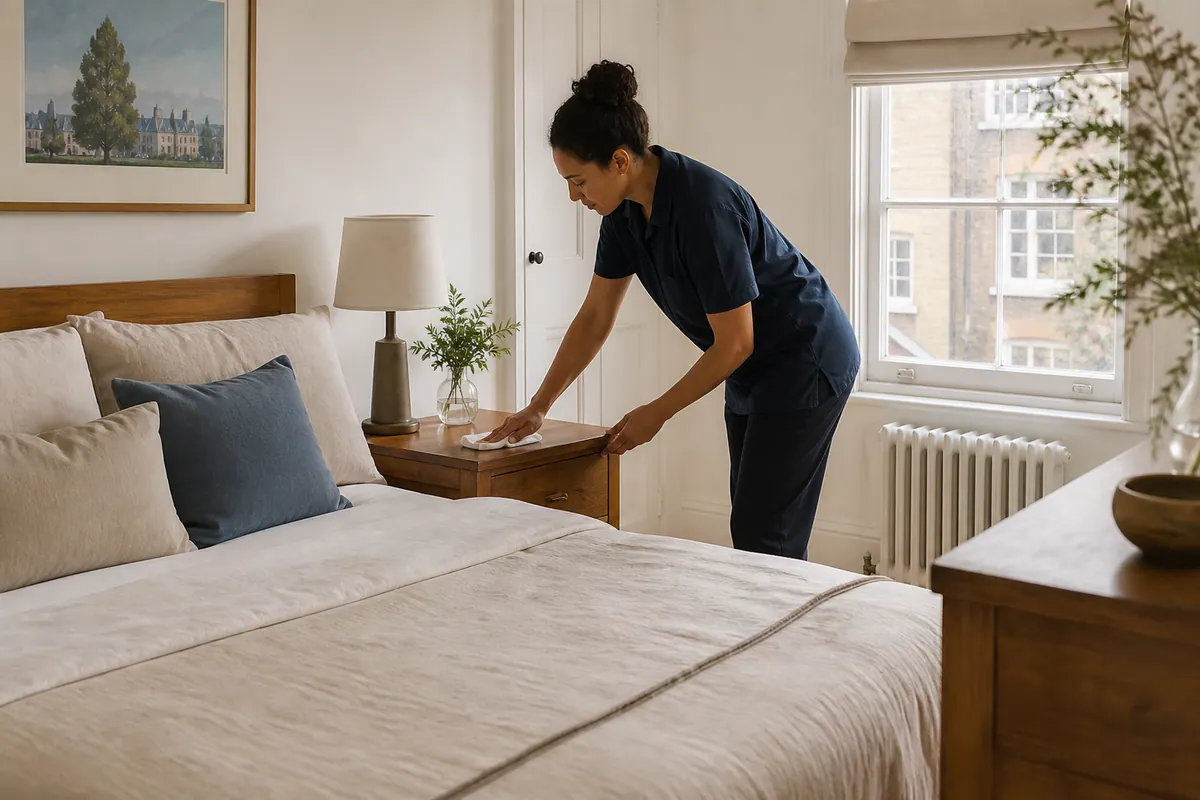
Bedrooms
Included bedrooms can receive reachable dusting, vacuuming and appropriate floor care. A bedroom list should specify the rooms, not assume every closed door is part of the visit.
Put medication and personal items away, and explain which sleeping spaces are excluded.
A schedule with a reason
Frequency is a planning choice, not a guarantee about how much can fit into a visit. Consider use and condition alongside the rooms and time being discussed.
| Planning point | Weekly | Fortnightly |
|---|---|---|
| Best suited for | Used spaces needing more frequent maintenance consideration | Spaces needing a periodic rather than weekly discussion |
| Core focus | A shorter cycle for the core room work | A longer cycle with different accumulation to consider |
| Priority planning | Retain a clear, repeatable list | Select carefully from the work needing attention |
| Visit scope | No assumed package or duration | No assumed package or duration |
At the beginning, there may be tasks that do not recur in the same way. Identify them for the first appointment and ask how they affect the time, rather than treating initial work as ordinary upkeep.
For subsequent visits, review what actually needs repeating. Keep new or additional requests explicit so the core routine remains realistic for the arrangement confirmed.
Different homes, practical instructions
Use the examples to frame a conversation about your own home. No household type automatically determines the amount of cleaning required.
Long working days can make access the first issue to settle. Explain who will open the home and which everyday areas matter most.
A family routine benefits from an agreed preparation step. Clear toys or personal belongings from surfaces included in the kitchen, bathrooms and floor route.
Tell the team about pets before arrival, including their safe location and room boundaries. Do not leave those choices for the cleaner to improvise.
A call or occupied desk can alter the proposed order. Share the quiet window and identify an available room that can be considered first.
For rented homes, distinguish current household care from a future move-out requirement. Keep the person authorised to agree changes identifiable.
Managed arrangements need consistent information from the booking contact. Confirm how updated room instructions and entry details will reach the team.
Not every task is domestic upkeep
Specialist work is not absorbed into a recurring room list. High-level access, lifting heavy items and restoration require separate planning alongside the services below.
Vacuuming maintains an accessible carpet; extraction involves a different process and equipment.
An exterior wipe does not include the inside of the oven. Discuss that detailed task separately.
Do not treat a mould concern as an extra wipe during maintenance. It needs its own assessment.
Exterior glazing brings different access requirements from reachable indoor surfaces.
Residue left by building work needs a post-construction brief, not ordinary household upkeep.
A more intensive reset may need a separately agreed one-off service rather than repeated maintenance tasks.
The short booking guide
Priorities that can be explained
The controls let you reorder the sample tasks for discussion. They do not send instructions to a booked cleaner or confirm that additional work fits the visit.
A practical sequence
Explain what needs attention, who will be home and which areas can be reached.
Agree the frequency discussion and the core task order rather than presenting an unlimited checklist.
Make access, supplied equipment and sensitive surfaces part of the same booking conversation.
The included rooms receive maintenance suited to their surfaces and agreed priorities.
Check the result against the brief, noting work needing another service or a different amount of time.
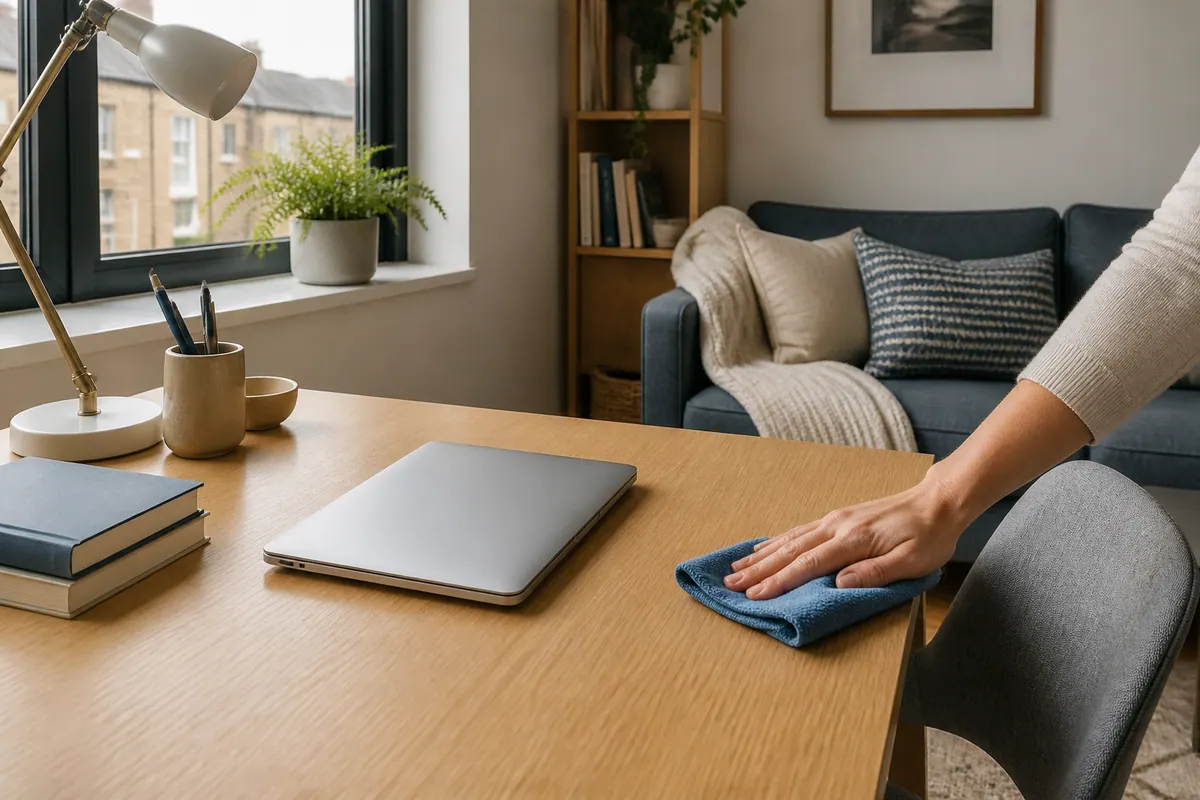
The starting condition described honestly.
A planned sequence through accessible rooms.
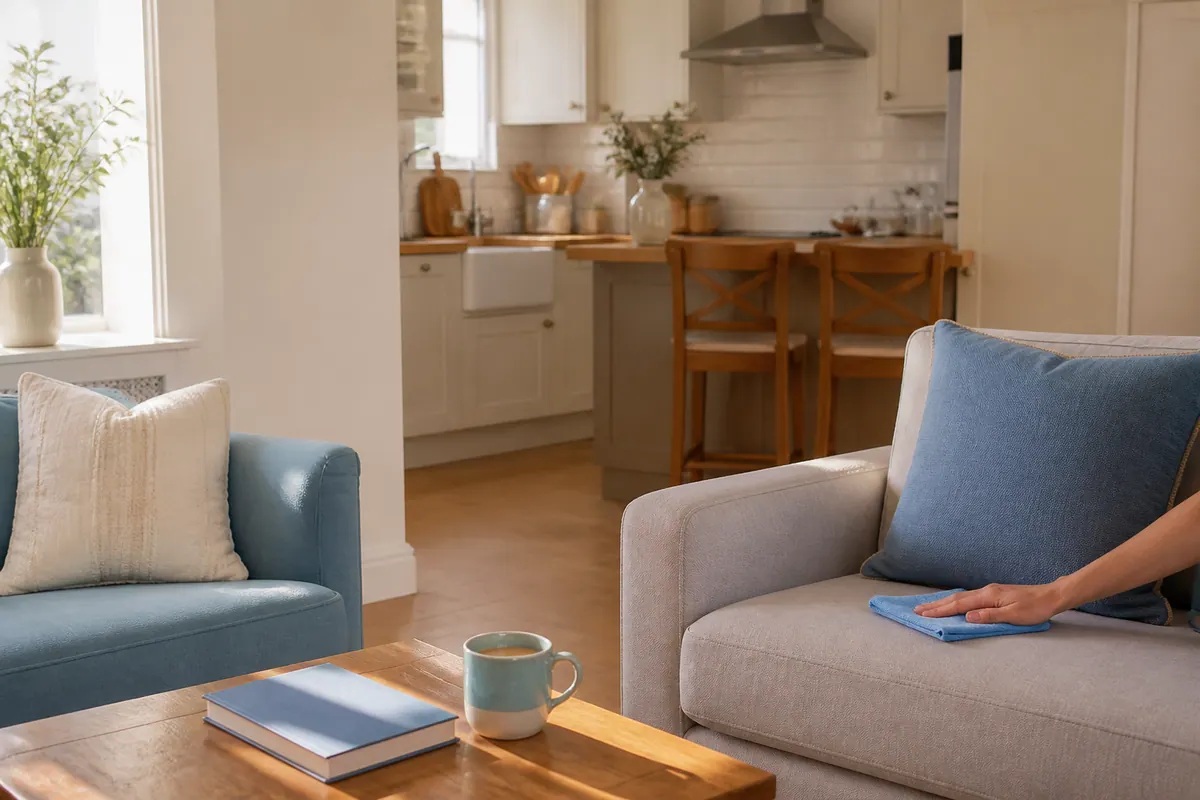
An agreed reference for ongoing care.
The photographs are illustrative scenes, not documentation of a completed customer job.
Details beyond the room list
Describe the condition now rather than referring only to the old arrangement. Identify the first tasks to address and discuss the time needed, with any intensive or specialist requirement separated from ordinary household upkeep.
It can be a reference, but it may not reflect the current workload. Review the initial needs first, then establish which tasks actually require repeating once a realistic maintenance baseline is agreed.
Regular care is advertised from £20/hour. Ask about the minimum booking, included supplies, interval and scope for your property, including access and postcode considerations, before treating that guide as a final quote.
No interval is automatically correct. Discuss how the kitchen, bathrooms and other rooms are used, what builds up and the visit length being considered before deciding on a recurring pattern.
Raise it in advance when possible and identify the exact surface or area. The team can explain whether the work fits the available time or requires a revised agreement.
It is a starting price for a first or one-off domestic appointment. The number of rooms, condition and selected priorities affect the final arrangement; specialist work is not automatically part of it.
The method should suit the material. Share known instructions and damage for timber, stone, lacquer, steel or painted areas, and confirm the supply arrangement before the appointment.
Give the actual boundaries: where the pet stays, which doors matter or when a workspace is free. These details make a proposed room sequence clearer than a broad note about being home.
Only through a specific separate agreement. Those tasks differ from exterior kitchen wiping and ordinary vacuuming, with their own process and requirements.
No; it is a page-based planning aid, not a booking confirmation. Share the relevant room choices, postcode and access arrangements directly when asking Alesta about availability.
Acton / enquiry area
For a home in Acton, explain the postcode, starting condition and how entry will work. Those details allow the team to discuss a realistic visit and confirm whether the preferred timing is available.
For the wider service scope, see Domestic Cleaning, or ask the team about your address.
Map for orientation
An area view can support the conversation about reaching the property.
Open map in a new tabActon / the next conversation
Tell us about the rooms in your Acton home, their condition and the routine you want to arrange. Restart my home routine: share your preferred frequency and access details directly with the team.
