
HAMMERSMITH · A HEAVY RUG AND A PLANNED ROUTE
Rug Cleaning in Hammersmith for Wool Rugs in Flats
This Hammersmith brief concerns a substantial wool piece on engineered boards. Building work has left powder through the pile and a coffee table has compressed two areas. We establish what is loose, what is structural and how the rug can travel through the building.
- Photograph the rug square-on before lifting a corner
- Show pale building dust and both furniture indentations separately
- Capture the underside, selvedge and label without forcing access
- Confirm the service-lift window and timber finish
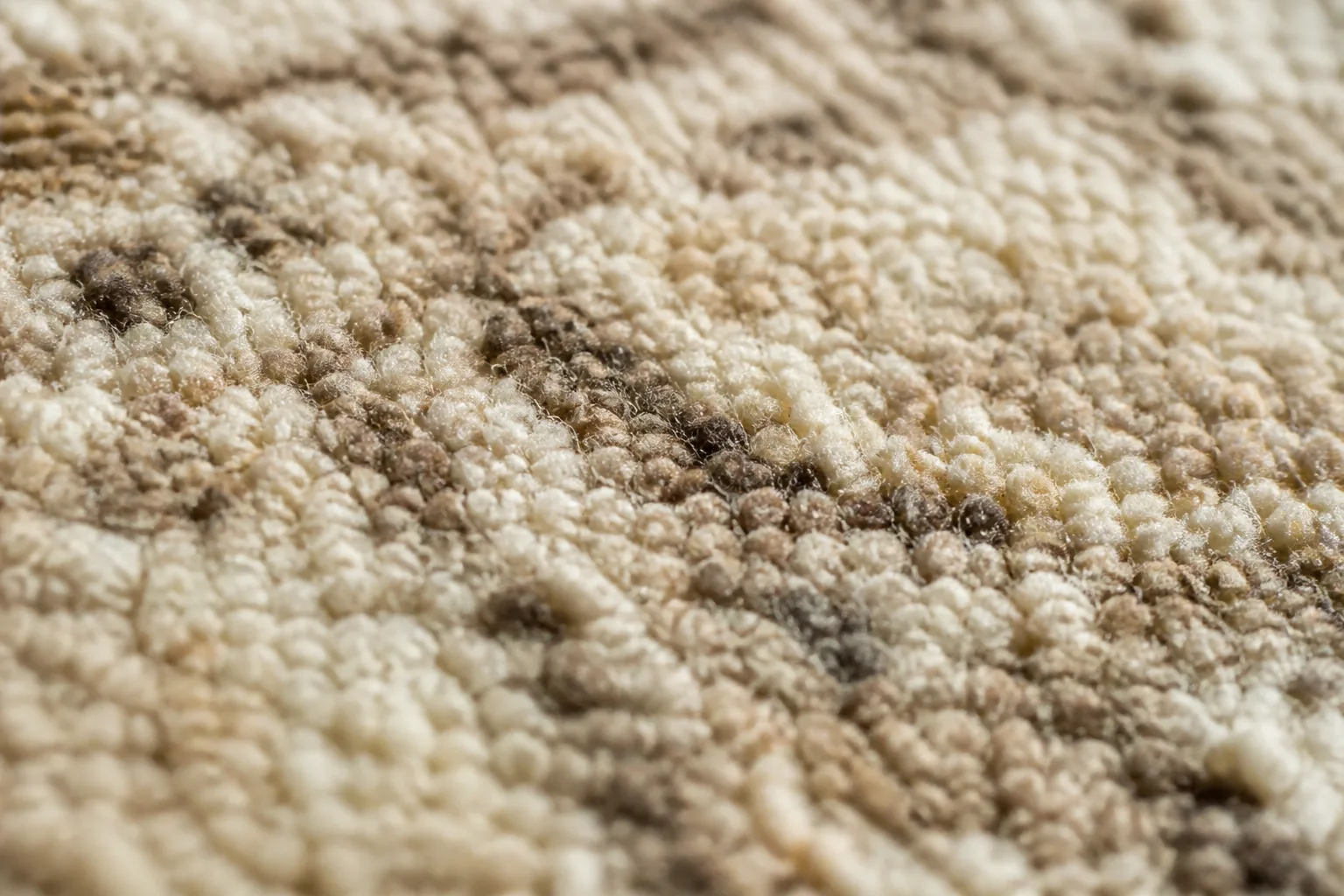
BUILD A USEFUL FIRST RECORD
Sort facts from assumptions before the appointment
Use these prompts to describe the piece. They organise the inspection and never act as an automatic method selector.
FROM LIVING ROOM TO LOADING BAY
The building journey is part of this Hammersmith job
The rug lies in a high-floor riverside apartment, so collection cannot be treated like a doorstep handover. The concierge controls the loading bay and service lift. Inside, the engineered floor needs a clean lifting zone; on the textile, fine plaster-like debris must be distinguished from faded or crushed wool.
The apartment example. A wide photograph shows the table, border and available turning space. Three detail images isolate chalky debris, compressed pile and one previously damp corner. Photography establishes the brief; it cannot establish cleanability.
The resident measures the shortest lift dimension, asks reception about contractor hours and clears small objects. That preparation lets the team discuss removal and floor protection before anyone rolls the rug.
A Hammersmith handover file
Starting view: Keep the table in the first photograph so its footprints can be matched to the pile.
Dust clue: Note when nearby building work finished and whether windows remained open.
Reception: Obtain the loading-bay address rather than assuming the public entrance is suitable.
Lift: Record door height, car depth and the confirmed contractor slot.
Underfoot: State whether the boards are sealed, oiled or of unknown finish.
Colour map: Photograph pale and saturated motifs in the same natural light.
Edge check: Flag pulled binding, uneven corners or tassels caught by furniture.
Earlier care: Name any powder, spray or rental machine already used.
Moisture event: Describe where water reached the rug and how quickly it dried.
Dimensions: Give maximum length and width, excluding loose tassels.
Obstacles: Mention fire doors, narrow turns and restrictions on trolley use.
Wear pattern: Separate walking lanes from the table’s stationary pressure marks.
Arrival day: Reserve a clear, clean area large enough for safe rolling.
Quotation: Let size establish the band, then qualify access and condition.
Aftercare: Follow item-specific return advice instead of a calendar estimate.
Boundary: No outcome is promised for permanent crushing, fading or dye change.
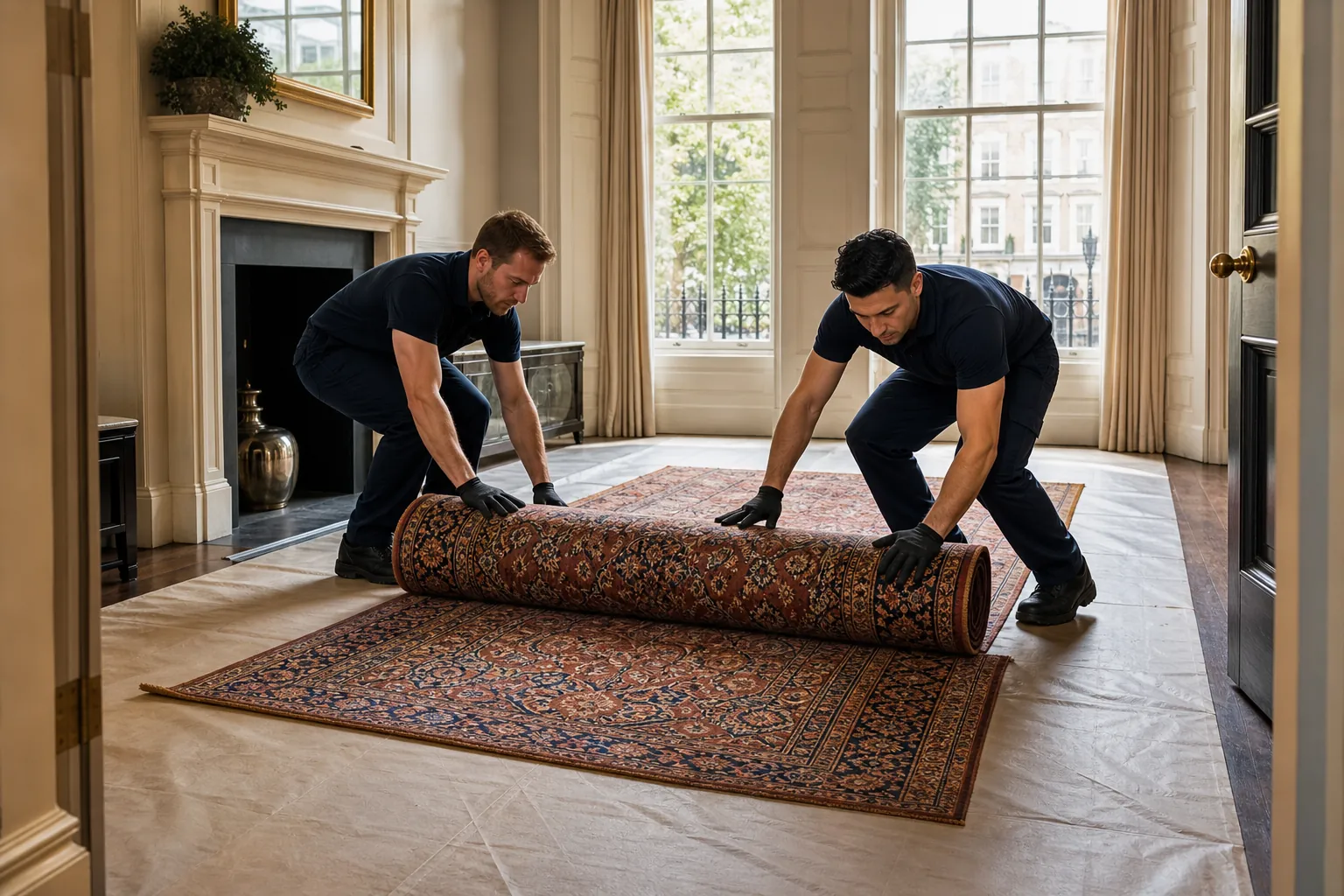
POWDER OR PILE CHANGE?
Read each pale area in context
Building residue can settle beneath the visible tips, while repeated pressure changes how wool reflects light. We map both before deciding what practical improvement can be attempted.
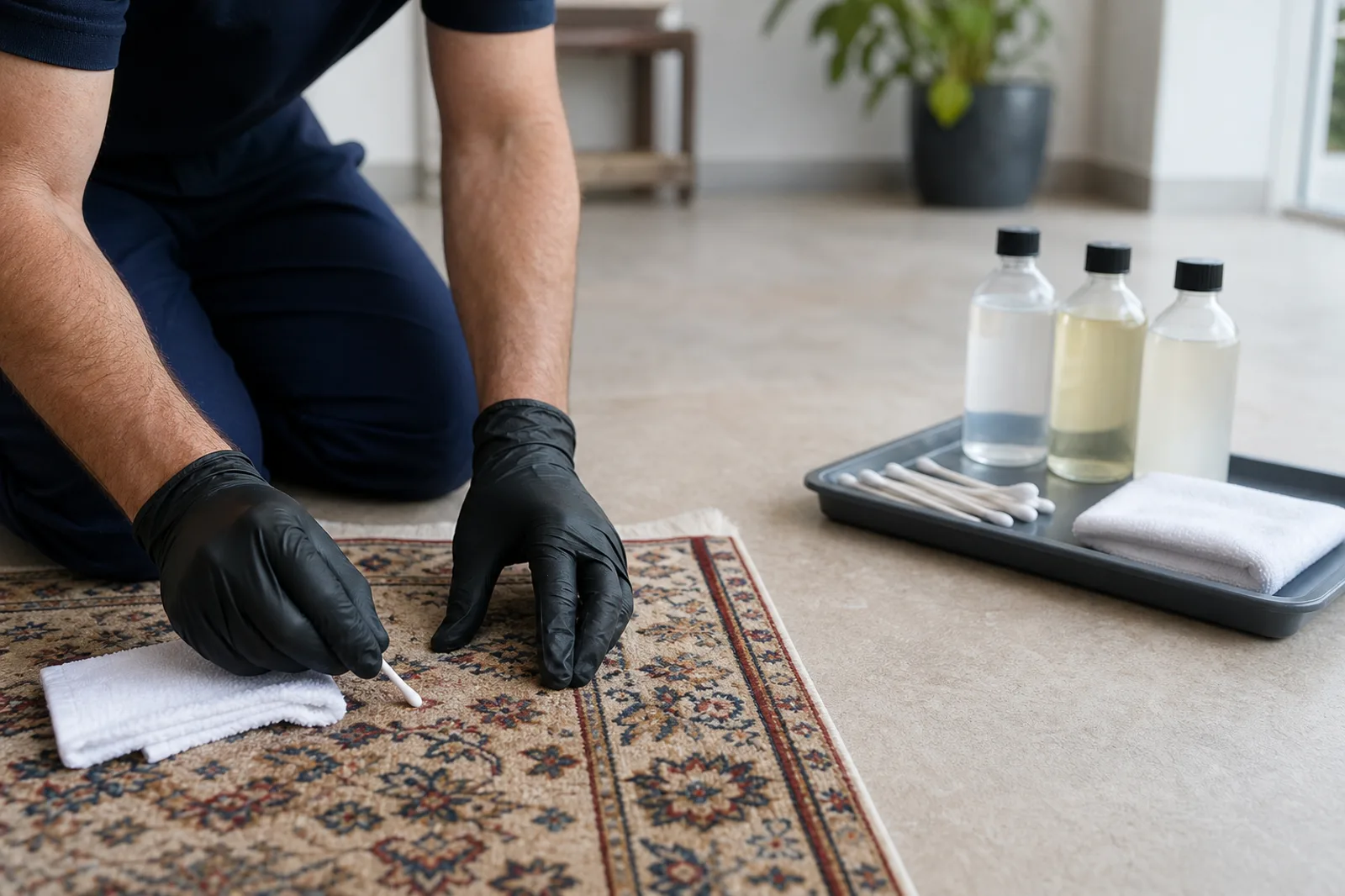
A DAMP CORNER HAS ITS OWN HISTORY
Locate the source before discussing odour
A smell near one edge may involve the backing, the boards or an earlier product. The account of what happened matters as much as the current surface appearance.
- Mark the boundary on the full-rug photograph
- Name sprays or powders used afterwards
- Check whether the underside was also wet
- Keep expected change conditional on inspection
PREPARE THE ENQUIRY
Bring nine useful facts to the first call
- Hammersmith postcode and building name
- Maximum rug length and width
- A photograph containing the whole border
- Separate views of powder and table footprints
- Readable label or reverse construction
- Any weak edge or previous repair
- Date and type of nearby works
- Known spill products and earlier cleaning
- Loading-bay and service-lift arrangements
Four answers for apartment planning
Can the photograph decide the process?
No. It directs attention, but fibre response, colour stability and construction require assessment.
Will table dents lift completely?
Not necessarily. Compression can be lasting where weight and time have altered the pile.
Must reception be contacted first?
Yes where the development controls contractor entry, lift use or loading times.
When should furniture return?
Use the specific handover advice for the rug and engineered boards, not a generic interval.
A SEVEN-PART HAMMERSMITH ROUTE
From access confirmation to careful return
This sequence keeps textile decisions separate from building logistics, then brings both together for handover.
- 01
Log
Match dimensions, photographs and room position
- 02
Route
Confirm loading bay, lift and corridor clearance
- 03
Examine
Distinguish loose powder, wear and crushed pile
- 04
Test
Check colour behaviour where the item permits
- 05
Proceed
Use only the approach supported by findings
- 06
Review
Compare priority zones without disguising limitations
- 07
Return
Explain placement and furniture timing for the boards
HAMMERSMITH SIZE GUIDE
Area opens the estimate; the brief completes it
Measure the textile rather than the room. Construction, edge weakness, renovation residue and controlled building access may alter the confirmed scope.
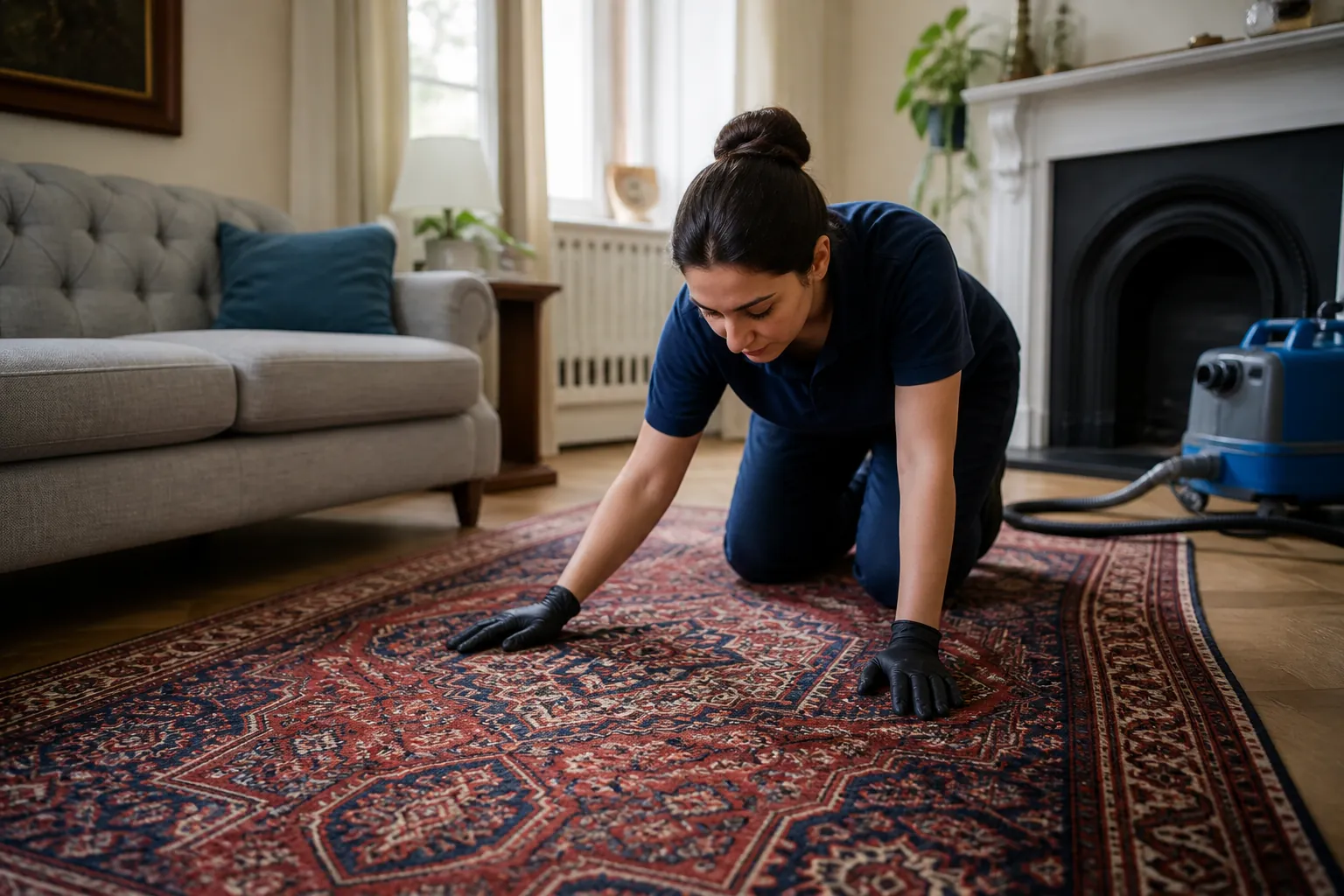
THE FOUR-WAY READING
One rug presents several kinds of evidence
A label is only one clue. Yarn, colour, assembly and vulnerable finishing all affect what can be handled safely.
Absorbency and resilience
Fibre response sets workable limits for contact and agitation.
Contrasts and migration
Pale borders beside deep motifs call for deliberate checks.
Foundation and density
The reverse reveals clues about weight, moisture movement and support.
Tassels, binding and repairs
Weak details are recorded before rolling so old change remains identifiable.
HAMMERSMITH QUESTIONS
Ten points to settle before access is booked
Which photograph is most useful first?
Take a level image with the complete perimeter, table and nearby doorway visible.
Why ask when renovation work ended?
Timing and work type help distinguish likely fine debris from ordinary household soil.
Are furniture impressions considered stains?
No. They are pile compression and must be discussed separately from contamination.
What information does the underside provide?
It can reveal construction, repairs, backing change and the reach of a damp incident.
Can a concierge slot change the quotation?
Access constraints can affect handling time or staffing, so they belong in the scope.
Should I roll the rug before the visit?
Leave it in place unless instructed; the room position contains useful evidence.
Is a wool label enough to choose treatment?
No. Dye response, foundation, finish and present condition remain relevant.
Will construction powder always be removable?
No guarantee is made before inspection, particularly where particles sit deep in dense pile.
How is a damp smell described accurately?
Map its boundary and share the source, date, drying conditions and products applied.
How do the four published prices work?
Measured area selects a guide band; the confirmed quotation reflects the complete agreed brief.
START WITH THE ROOM AND THE RUG
