
How Long Does a Deep House Clean Take?
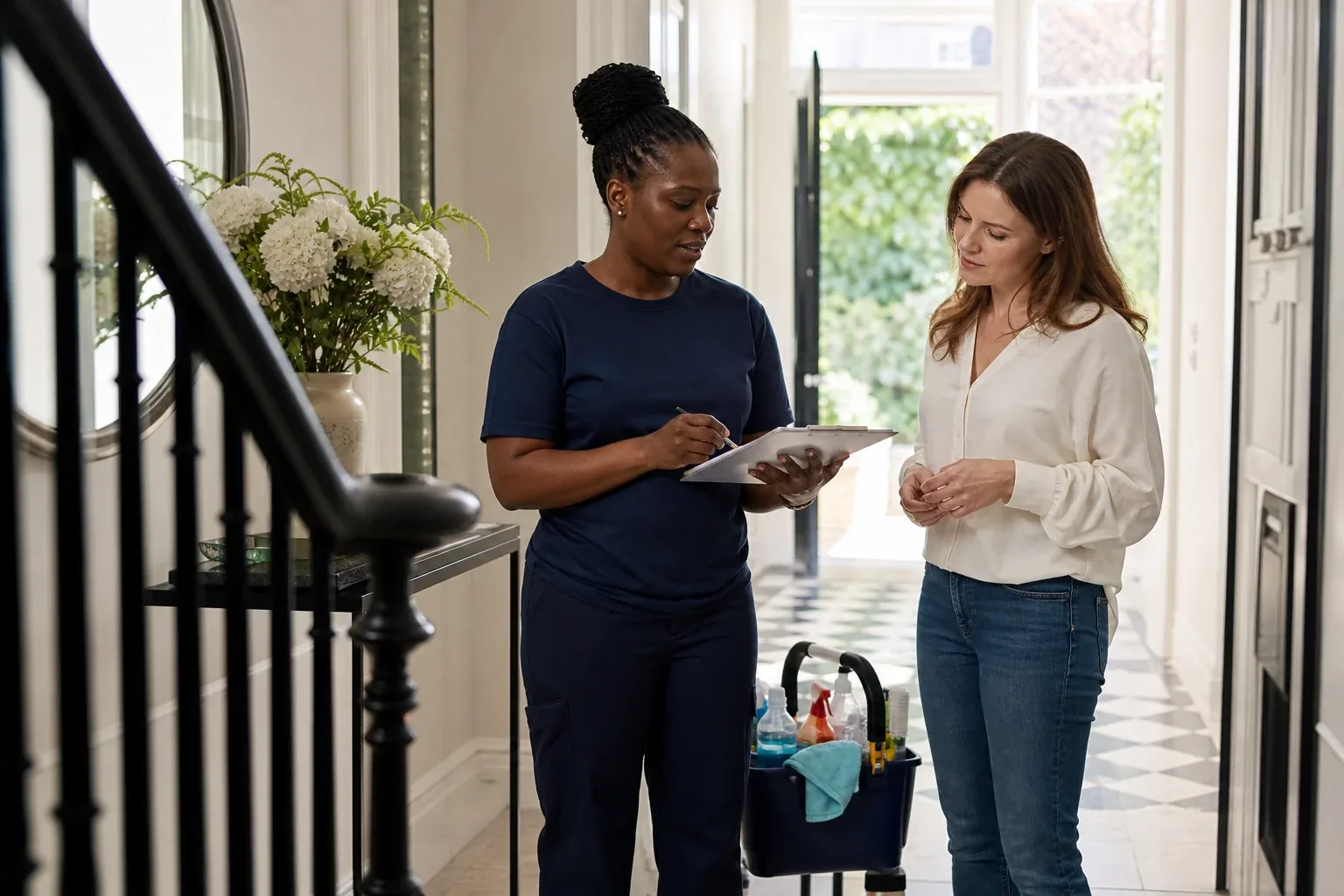
A deep clean can take from half a day for a maintained small flat to one or two full working days for a larger or heavily used home. The useful unit is cleaner-hours: two cleaners working five hours provide ten cleaner-hours. Size matters, but condition, bathrooms, kitchen grease, clutter and requested detail usually change the estimate more than bedroom count alone.
Estimate the work room by room
Count bathrooms, kitchen, reception rooms, bedrooms, halls and stairs. Then mark each as maintained, built-up or heavily soiled. A compact bathroom with dense limescale may take longer than a spare bedroom. Add specific tasks such as internal windows, cupboard interiors, skirting, doors and reachable high dusting rather than relying on the words “deep clean”.
For a defined reset, ask Alesta’s one-off cleaning team to estimate cleaner-hours from photographs and a written brief.
A realistic cleaner-hour framework
| Property condition | What usually consumes time | Planning implication |
|---|---|---|
| Maintained | Detail beyond the weekly routine | A short team visit may be enough |
| Moderate build-up | Grease, limescale, edges and multiple rooms | Allow a substantial day or split priorities |
| Heavy or specialist | Fine dust, contamination, extreme grease or access limits | Survey and specialist scope first |
This is deliberately not a promise of hours. Furniture density, finish and access can move a property between categories.
The kitchen and bathrooms set the pace
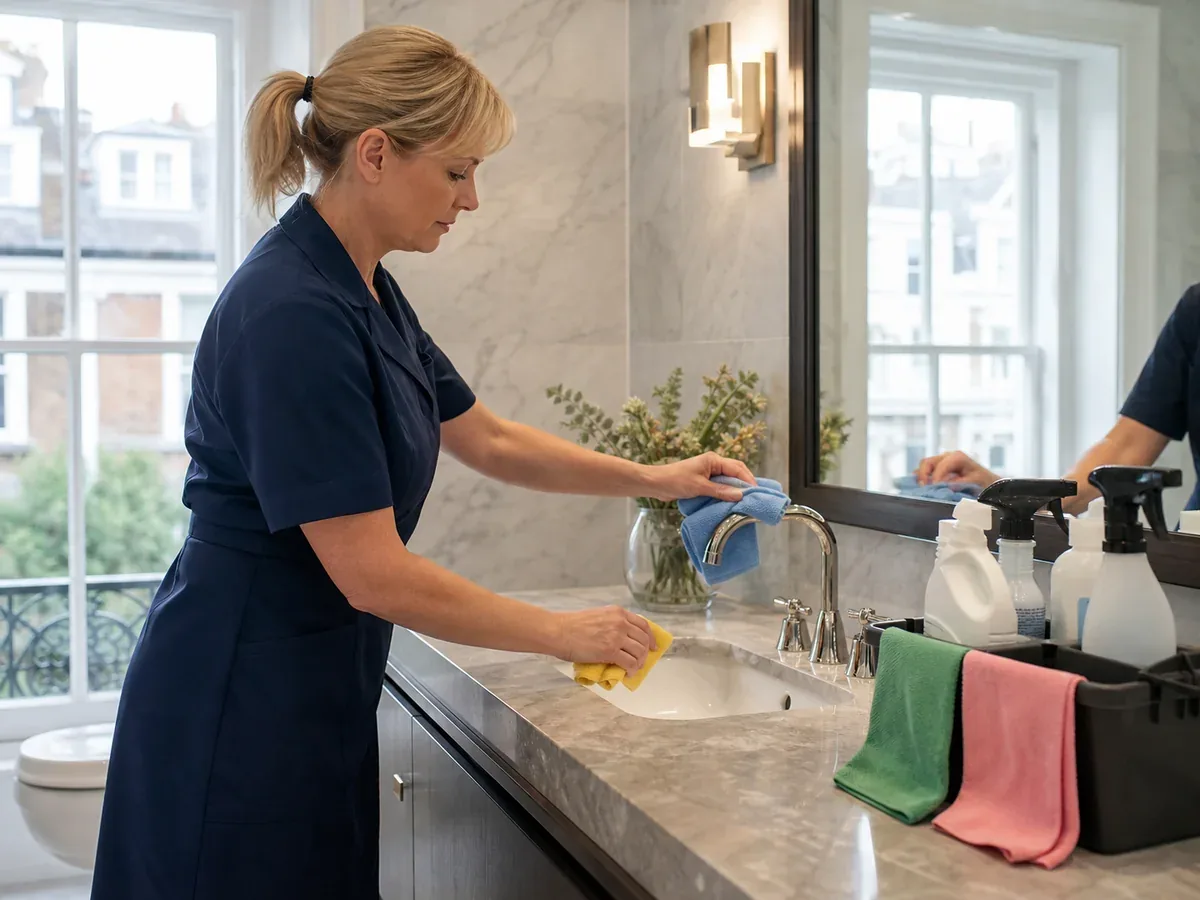
Degreasing cabinet fronts, splashbacks and hob areas involves dwell time and repeated clean cloths. Limescale on taps, screens and tiles needs material-compatible treatment. Natural stone, brass and specialist finishes slow work because harsh acids or abrasives may damage them.
Inside ovens, fridges and cupboards are not automatically included. An oven-cleaning appointment may run alongside the house clean, but it needs its own scope and equipment.
Furnished versus empty property
An empty property offers open floors and access to skirting, but cupboard interiors and move-out standards add tasks. A furnished home requires careful movement around belongings and prevents access behind heavy items. Cleaners should not move pianos, unsafe furniture or packed wardrobes simply because the booking is described as deep.
What clients often forget to mention
- Second bathrooms and separate utility rooms
- Pet hair on stairs and upholstery
- Parking distance and building access
- Delicate stone, timber, brass or high-gloss surfaces
- Internal windows, blinds and high ceilings
- Heavy clutter that blocks floors and worktops
- Recent decorating or renovation dust
Fine plaster and construction dust needs repeated capture rather than ordinary wiping. Use after-builders cleaning when that is the dominant issue.
How a two-person team changes clock time
Twelve cleaner-hours could mean one cleaner for twelve hours, two for six or three for four. More people reduce elapsed time only where work can be divided. One small kitchen cannot always use three cleaners efficiently, and product contact or drying time does not shrink.
Ask how many people will attend, likely arrival and finish windows, and whether quoted hours are cleaner-hours or wall-clock hours. This prevents the most common scheduling misunderstanding.
Prepare the home without doing the clean yourself
Clear personal paperwork, jewellery and fragile ornaments. Put away clothes and toys enough to expose cleaning surfaces. Confirm hot water, electricity, parking, alarms and pets. The aim is to prevent paid cleaning time being spent sorting possessions, not to arrive at a spotless baseline.
When to split the clean
If the estimate exceeds the available day, choose zones. Kitchen and bathrooms may be day one; bedrooms, reception rooms and detail work day two. A split protects quality and allows safe drying. It is preferable to asking a team to rush chemical contact times or leave every room partly complete.
Deep cleaning is not remediation
Active leaks, mould sources, pest contamination, sewage, needles or unsafe electrics require the relevant specialist first. Ordinary cleaners should not be asked to disturb hazardous material. Likewise, carpet and upholstery extraction are separate processes from vacuuming; request them explicitly if required.
How to receive and compare estimates
Send the same photos, room list and priorities to each provider. Ask what is excluded, what products and machines are supplied, and what could change the estimate on arrival. Confirm whether VAT, parking and minimum booking are included. A lower number based on a thinner task list is not a faster version of the same clean.
For ongoing upkeep afterwards, regular domestic cleaning can maintain the reset and reduce the size of the next one-off job.
Turn cleaner-hours into diary time
Plan in cleaner-hours, not a universal number of clock hours. A small maintained property may fit into a half-day team visit; a larger or built-up home can occupy a team for a full day or longer. The best estimate comes from current-condition photographs, a room-by-room scope and clear priorities.
A sample plan for a three-bedroom home
Imagine a furnished three-bedroom home with one bathroom, one cloakroom and a kitchen used daily. The occupants maintain dishes and floors but want limescale, grease, doors, skirting and internal windows reset. The quote should allocate substantial time to the kitchen and wet rooms, then divide remaining rooms by condition. If the kitchen includes an oven interior and cupboards, those must be itemised; otherwise the team may spend half the visit in one room.
Now add a shedding dog, a carpeted staircase and limited parking. Loading equipment and removing hair from edges change the estimate even though the bedroom count is unchanged. Remove the internal windows and leave the oven to a specialist, and the same property becomes a different job. This is why examples help only when every assumption is visible.
What “finished” should mean before work starts
Agree observable outcomes: accessible floors vacuumed and mopped where suitable, bathroom fittings descaled within material limits, kitchen worktops and cabinet fronts degreased, reachable surfaces dusted and named detail tasks completed. Avoid vague standards such as “hotel clean” or “perfect”. Some stains, sealant discolouration, etched glass and worn finishes cannot be cleaned back to new.
Ask the provider to flag permanent damage rather than repeatedly scrubbing it. Photographs before and after can distinguish remaining soil from worn material. At handover, walk through priorities while the team is present and raise omissions promptly.
Timing around children, pets and home working
Deep cleaning moves room by room and can involve wet floors, open windows, cables and products. Plan a safe area for children and pets, and tell the team about allergies or sensitivities. If someone works from home, protect one quiet room until late in the visit rather than repeatedly crossing active work zones.
Allow ventilation and drying after the advertised finish time. Booking guests to arrive the minute cleaners leave creates pressure to replace damp rugs or close freshly cleaned rooms too soon. The job ends when surfaces are safely usable, not merely when the team packs equipment.
