
Mattress Cleaning for Dust Mites: What Works and What Does Not
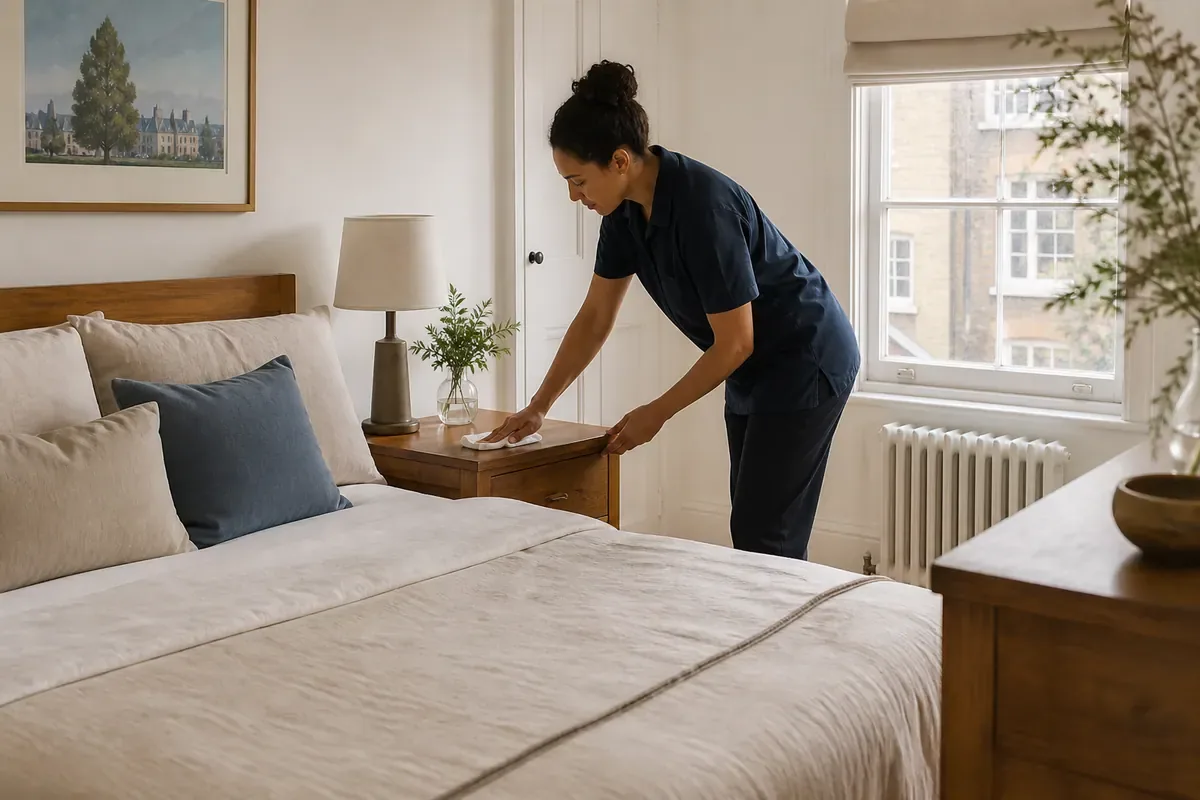
Mattress cleaning can remove dust and some allergen from the surface, but it cannot make a bed permanently free of dust mites. The effective plan combines careful vacuuming, washable mite-resistant covers, bedding washed at the hottest temperature its care label permits, and control of excess indoor humidity. Avoid soaking a mattress: deep padding dries slowly and retained moisture creates a different hygiene problem.
Work on exposure, not an impossible extermination claim
Dust mites feed on shed skin and live in textiles where temperature and humidity suit them. The particles that commonly concern allergic people include mite waste and body fragments. Killing some live mites does not automatically remove that material, while vacuuming visible dust does not prove every mite has gone.
Set a realistic objective: reduce the reservoir and prevent it rebuilding quickly. If someone has persistent wheeze, severe eczema or disturbed sleep, cleaning advice is not a medical diagnosis. Speak to a clinician or pharmacist about symptoms and follow their advice alongside environmental measures.
Check the care information before cleaning
Find the mattress label and manufacturer instructions. Note whether it is sprung, latex, memory foam, natural fibre or a layered hybrid. Products, heat and moisture tolerated by one construction can damage another. Remove and wash only covers explicitly designed to come off; a zip does not always mean the outer cover is consumer-removable.
Inspect seams, handles and the base for staining, tears and signs of pests. Dust mites are microscopic, so a visible insect is something else. If you find dark spotting, cast skins or a specimen around the frame, pause the cleaning plan and use a pest-identification route rather than steaming blindly.
A low-dust vacuuming method
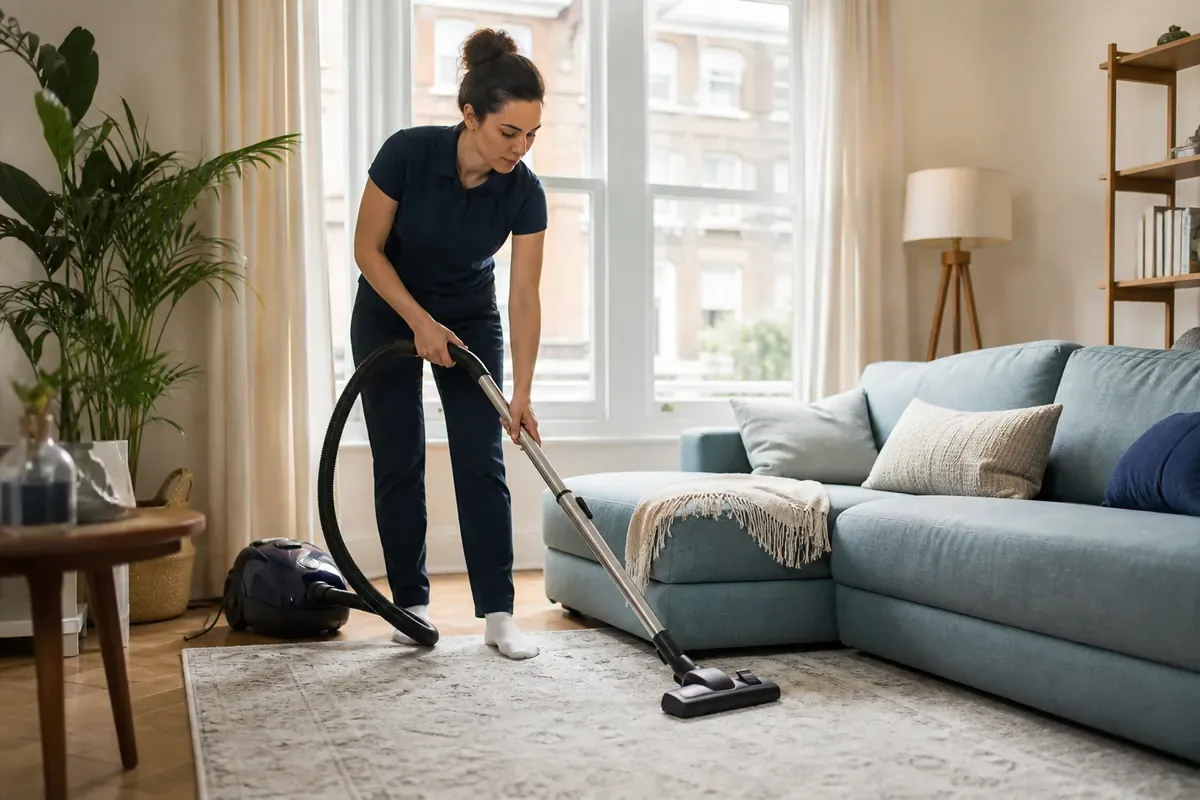
Open a window if outdoor conditions and security allow, and keep anyone with pronounced symptoms out of the room while dust is disturbed. Use a vacuum with suitable filtration and a clean upholstery attachment. Work slowly across the top, then sides and seams. Several deliberate passes are more useful than fast strokes that merely groom the fabric.
Do not press hard enough to damage quilting or pull loose threads. Vacuum the bed base, accessible frame ledges and floor beneath, because treating the mattress while leaving a dusty divan and carpet changes little. Empty a bagless machine outdoors where possible without creating a plume; seal disposable bags according to the appliance instructions.
Bedding carries the easiest washable load
Wash sheets, pillowcases and suitable protectors regularly using the hottest programme each care label safely allows. Dry them fully before remaking the bed. Do not quote one universal temperature for wool blankets, synthetic duvets and delicate covers; their labels decide what they can tolerate.
Pillows and duvets need their own washing and drying guidance. A bulky item that remains damp inside can smell or clump. If home equipment cannot wash and dry it properly, use an appropriate laundry service rather than forcing it into the drum.
Encasements only work when used consistently
A mite-resistant encasement surrounds the mattress or pillow and reduces movement of allergen between the filling and sleeping surface. Choose a properly sized, breathable product with a protected zip. Fit it to a completely dry mattress and leave it in place as directed; opening it frequently defeats the purpose.
An encasement is not a substitute for laundering ordinary bedding. Clean its outer surface and wash it at the manufacturer’s interval. Check that the zip is not strained by an oversized mattress topper.
Humidity: measure before buying a gadget
Mites favour humid conditions, so controlling persistent excess humidity can help. A simple hygrometer shows patterns across days. Use bathroom and kitchen extraction, deal with leaks and ventilate sensibly. A dehumidifier may assist in a damp room, but it must be sized, positioned and maintained correctly.
Do not make the bedroom excessively cold or dry in pursuit of a number. Comfort, building fabric and health matter. Condensation on windows, mould or a musty wall requires a moisture investigation beyond mattress cleaning.
Why popular home remedies disappoint
Bicarbonate of soda can absorb some odour at a surface but has not transformed a mattress into a mite-free environment. Fine powder may be difficult to recover and can burden some vacuums. Essential oils add fragrance and may irritate skin or airways. Household disinfectant is not automatically suitable for a large porous sleeping surface.
Leaving a mattress in sunlight may help air it under safe conditions, but London weather, security and the risk of damp make it an unreliable treatment. Freezing a pillow or heating it with improvised equipment does not remove allergen and may damage the item.
Steam and extraction require restraint
Steam can affect exposed organisms when sufficient temperature and contact are achieved, but a quick pass does not prove penetration through deep fillings. It also introduces moisture. Extraction can recover soil and solution from suitable fabrics, yet foam and thick natural fillings may dry slowly.
A professional mattress cleaning service should identify the construction, inspect stains, select an appropriate low-moisture or extraction method, and explain expected drying. Ask what the service can and cannot claim about mites and allergen.
Do not forget the rest of the bedroom
Carpet, rugs, curtains and upholstered headboards collect the same household dust. Damp-dust hard surfaces, vacuum floors methodically and reduce clutter that cannot be cleaned. Where fitted carpet is a major reservoir, professional carpet cleaning may form part of the plan, subject to fibre and drying conditions.
Routine support through regular dust-control cleaning can maintain accessible surfaces, but tell the cleaner about allergies and preferred products. “Hypoallergenic” is not a universal guarantee.
Stains need their own diagnosis
Blood, urine, drinks and cosmetic products have different chemistry. Blot a fresh spill; do not flood it or scrub it deeper. Test any label-approved product in an inconspicuous place. Old biological contamination that reached padding may not be fully removable, and a persistent local smell can justify replacement.
Allow the mattress to dry completely with airflow before covering or sleeping on it. Check seams and the underside, not just the top panel.
A routine that is sustainable
- Wash suitable bedding regularly according to care labels.
- Vacuum mattress, base and nearby floor slowly.
- Keep a fitted encasement intact where advised.
- Measure and manage persistent excess humidity.
- Clean the wider room without aerosolising dust.
- Review symptoms with a health professional.
The best result comes from repeating modest, safe measures. A dramatic one-off treatment followed by damp bedding and an untouched bedroom is poorer allergen control than a routine the household can maintain.
Replace a mattress when its structure has failed, contamination remains within inaccessible filling, or cleaning cannot provide a dry and hygienic sleeping surface. Cleaning should extend useful life where condition allows; it should not be used to disguise collapse, persistent damp or material breakdown.
