
Low Water Pressure in One Tap vs the Whole House
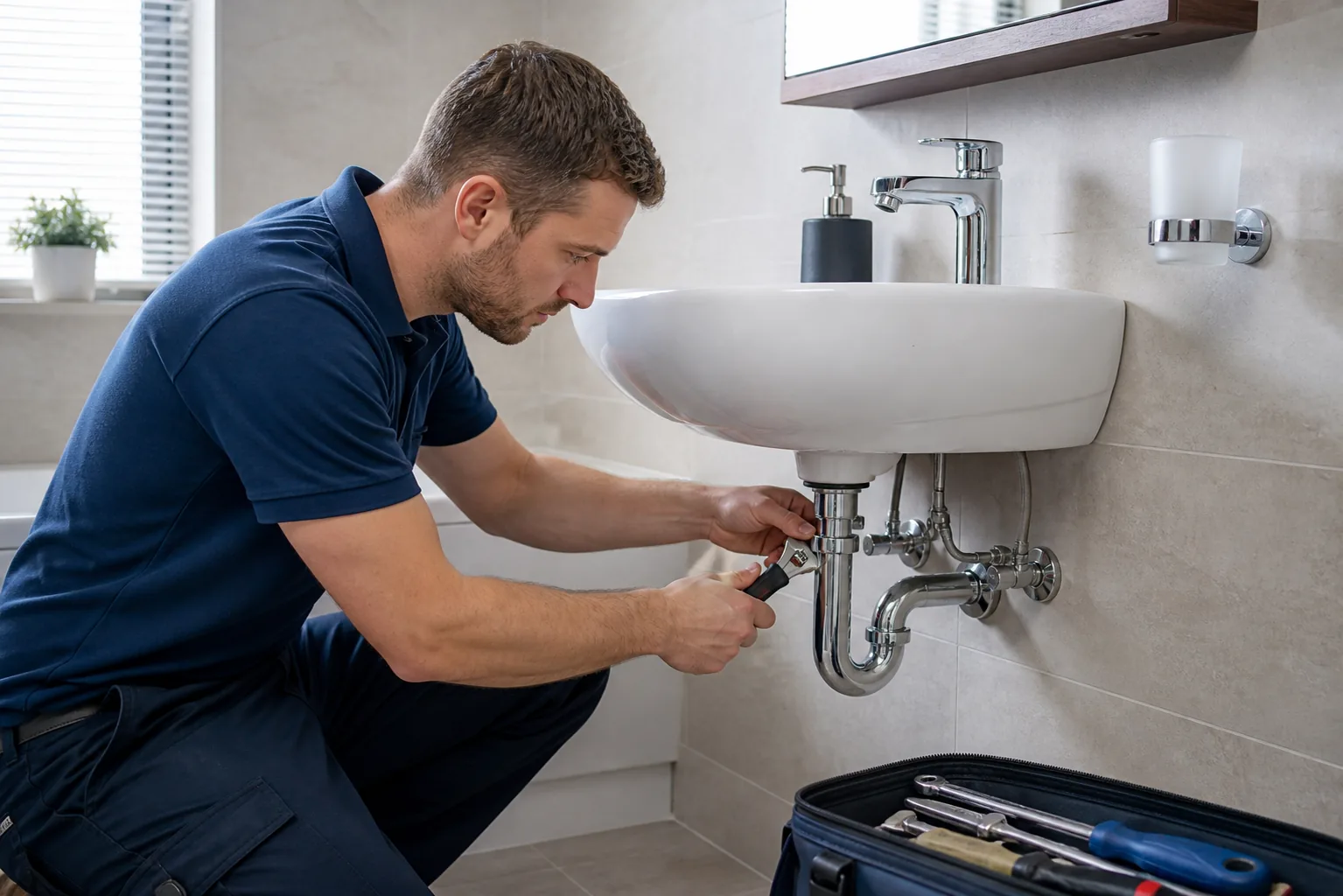
Low flow from one tap usually points to a local restriction: a blocked aerator, partly closed isolation valve, kinked flexible hose or worn tap cartridge. Low flow at every outlet suggests the incoming supply, main stopcock, pressure-reducing equipment, stored-water system or a leak. Compare hot and cold at several taps before buying a replacement. A sudden whole-property loss, visible leak or sound of water in hidden spaces needs prompt investigation.
Pressure and flow are related, but not identical
People say “low pressure” when a tap delivers little water. Static pressure is the force in the pipe when no water moves; flow is the amount delivered over time. A narrow blocked outlet can produce poor flow even when supply pressure is normal. That is why one-tap faults are investigated at the outlet first.
Use the same container to compare outlets if you want a rough record, but do not turn a domestic check into an engineering measurement. Note how long it takes to fill and whether the stream changes when another tap opens. Those observations help a plumber choose the right tests.
Draw a simple hot-and-cold map
| Pattern | Likely area to inspect |
|---|---|
| Cold weak at one tap; hot normal there | Cold-side valve, hose, cartridge or inlet |
| Hot weak at one tap; cold normal | Hot-side restriction or tap component |
| Both weak at one mixer only | Aerator, cartridge, shared local valve or hoses |
| Hot weak throughout; cold normal | Hot-water system or its distribution |
| Hot and cold weak everywhere | Incoming supply, main controls, leak or whole-house equipment |
Include showers, toilets and an outdoor tap where safely accessible. A toilet cistern filling normally while one basin crawls towards full is useful evidence of a local fault.
Clean a removable aerator first
The small mesh fitting at a spout can collect limescale and debris. Protect the finish, unscrew it by hand or as the manufacturer describes, and remember the order of washers and screens. Rinse loose particles and use only a compatible descaling method. Do not grip a plated spout with bare pliers.
Briefly compare flow with the aerator removed while preventing splashing. If normal flow returns, clean or replace the correct insert. Refit its seal without cross-threading. A shower head can be checked similarly, but concealed flow restrictors and thermostatic cartridges require model-specific guidance.
Look beneath the basin without forcing valves
Many taps have small isolation valves on their supply pipes. A slot aligned with the pipe often indicates open, but designs vary. Compare the position of the hot and cold valves and look for leakage or corrosion. Do not force a seized valve; its stem or pipe can fail and create an uncontrolled leak.
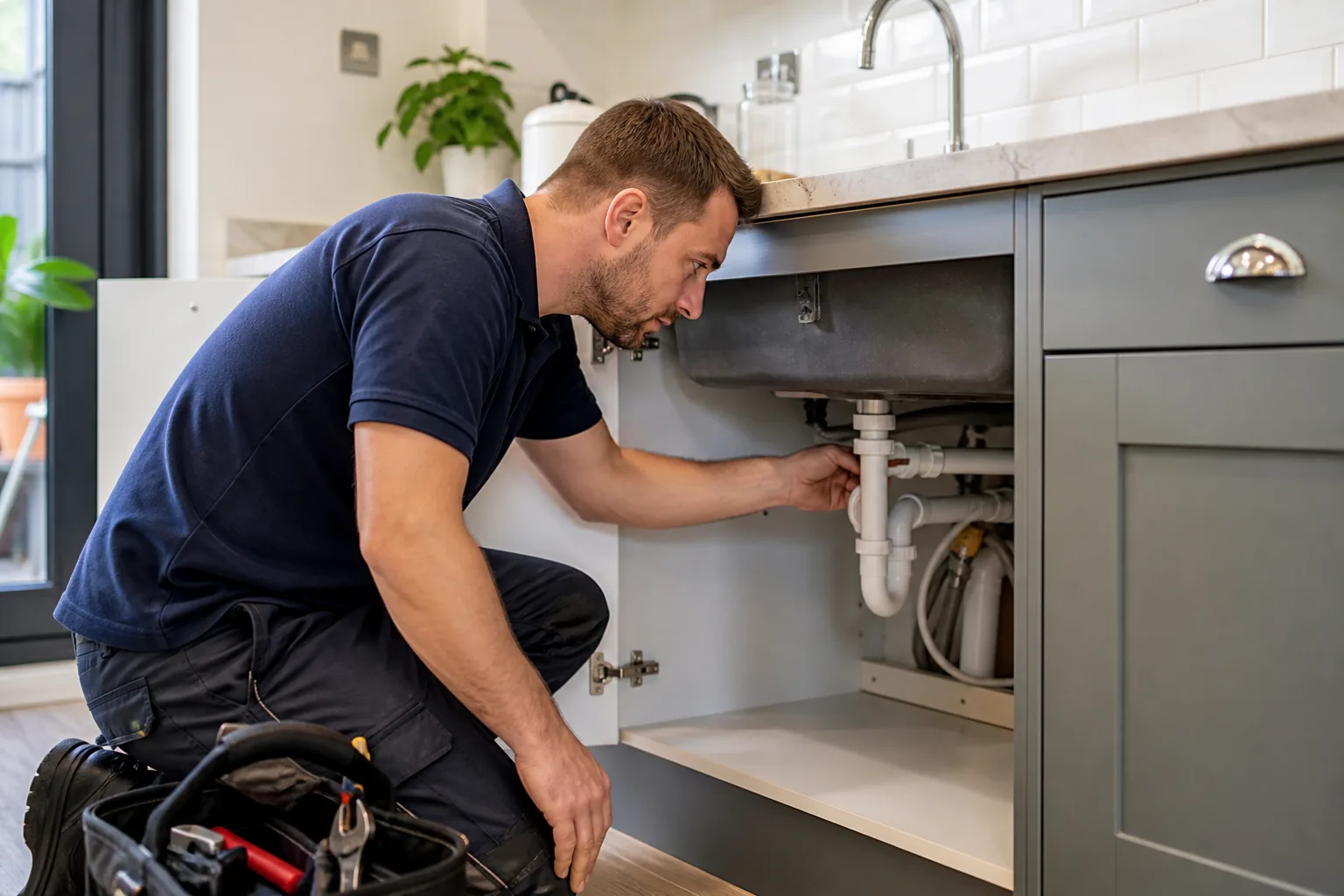
Flexible hoses can kink when stored items press against them or after a tap is replaced. Clear the cupboard and inspect the visible curve. Bulging, rust, fraying or drips mean the hose needs replacement, not straightening and reuse. For a persistent single-outlet fault, a tap repair or replacement visit is more specific than a whole-house pressure upgrade.
If the problem began after plumbing work
Debris released during an interruption can lodge in an aerator or cartridge. A valve may have been left partly closed, or a flexible connector may have twisted during refitting. Tell the plumber what work was done, which outlet changed and whether neighbours were also affected.
Do not dismantle a thermostatic or ceramic cartridge without identifying it and isolating water. Small parts, orientation and seals matter, and an improvised repair can make the tap leak into cabinetry.
Whole-house loss: check the obvious boundaries
Ask a neighbour in the same building whether their supply is affected and check the water company’s current incident information. Shared mains work, a burst main or building maintenance belongs upstream of your private tap. If neighbours have normal supply, look at your internal stopcock and any pressure-reducing valve or filter—but never force unfamiliar controls.
In a London block, upper floors may experience changes differently from ground level. Building pumps, communal tanks and management-controlled valves can be involved. Contact the managing agent with the time, affected outlets and neighbour comparison.
Could it be a leak?
A sudden drop accompanied by running-water noise, damp, meter movement or an unexpectedly high bill warrants investigation. Turn off water-using appliances and observe the meter only if it is safely accessible and you know it serves your property alone. Do not lift street covers or enter a communal plant room.
Use hidden leak detection when the pattern suggests water is escaping but the route is not visible. Active leakage near electricity, a collapsing ceiling or rapid flooding is an emergency, not a pressure experiment.
Hot water has its own branch
If every hot tap is weak while cold flow is healthy, record the type of system: combi boiler, unvented cylinder, vented tank or communal hot water. Do not adjust sealed-system valves or temperature controls speculatively. Scale, valves, heat-exchanger restrictions and system design require different tests.
A single weak hot side at a mixer remains local until evidence shows otherwise. This distinction prevents paying for boiler work when the obstruction sits inside one tap.
Why a booster pump is not the first purchase
A pump cannot correct a blocked aerator and may be unsuitable for the supply arrangement. Water regulations, available mains flow, noise, storage and pipe sizing all affect design. Some properties need a pressure-reducing valve adjusted or replaced; others have adequate pressure but undersized or restricted pipework.
Ask a professional plumbing diagnosis to measure static and dynamic conditions where the issue is property-wide. The quote should state what was measured, the proposed remedy and how it affects other outlets.
Information that shortens the visit
- Exact date and whether the change was sudden or gradual.
- Hot/cold result at each outlet.
- Effect of opening a second tap.
- Recent plumbing, appliance installation or water-company work.
- Neighbour or communal-area comparison.
- Leaks, noises, meter observations or boiler messages.
A video of two comparable taps can help, provided it does not delay urgent leak action.
The sensible order
Map the outlets, clean a user-removable aerator, inspect visible valves and hoses without force, then establish whether the supplier or building is affected. If the fault remains local, repair that tap. If it spans the property, measure the system and check for leakage before proposing pumps or major pipework. That order turns “bad pressure” into a defined, repairable problem.
Keep the diagnosis after the repair
Once flow returns, ask what was found: limescale at the outlet, a failed cartridge, restricted hose, closed valve or upstream supply issue. Keep the replaced part details and note the result at other taps. If the symptom returns, that record distinguishes recurrence from a new whole-house change and stops the next appointment repeating the same broad search.
