
Alignment assessment
Open and closed operation is compared, including hinge position and frame keeps. An adjustment may be considered where the mechanism itself remains serviceable.
Handle · cylinder · gearbox · alignment
A UPVC door lock is a system rather than one interchangeable part. Describe how the key, handle and door behave when open and closed so the locksmith can separate the cylinder, multipoint mechanism, keeps and alignment.
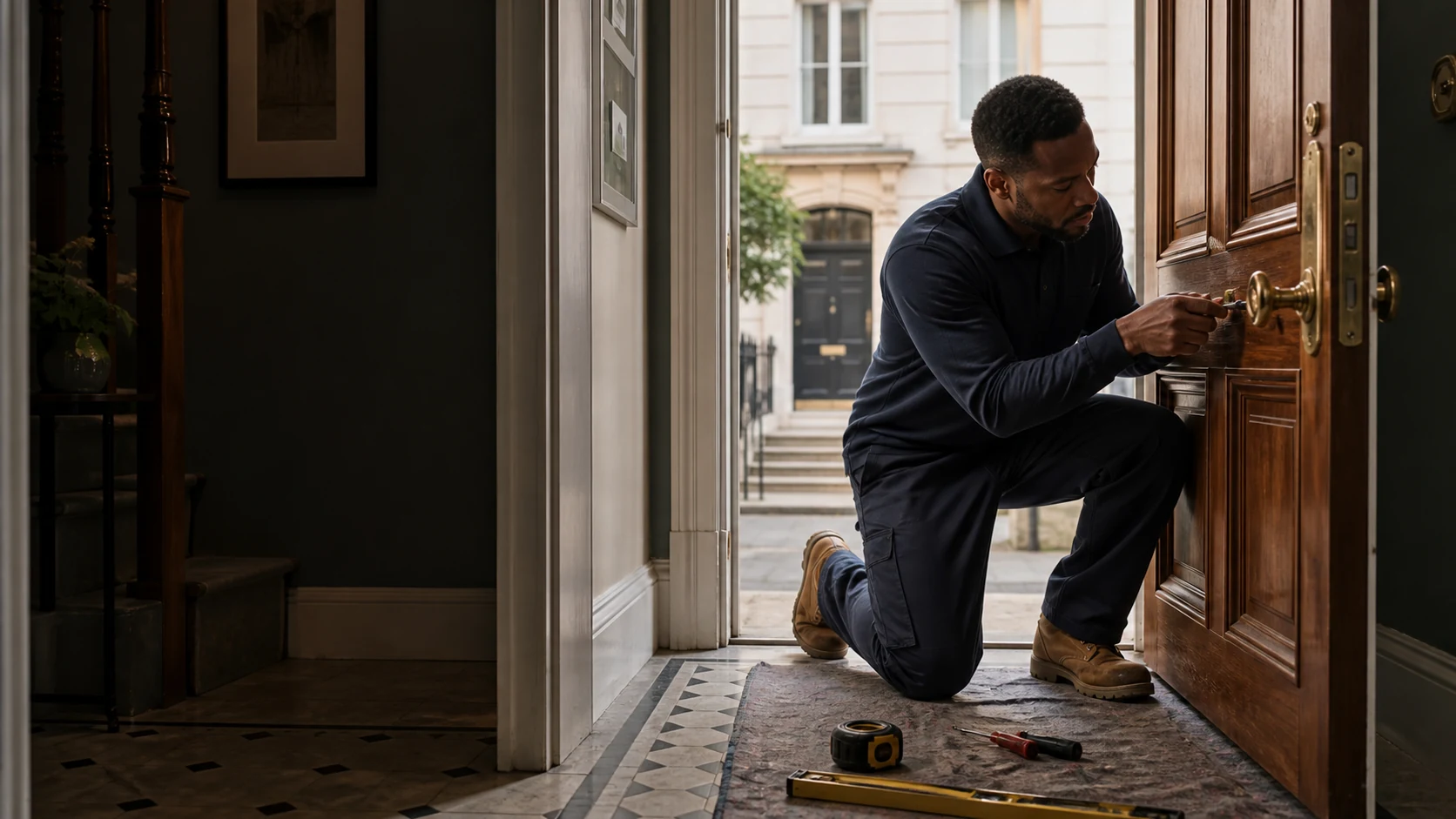
UPVC and multipoint anatomy
Fulham terraces with rear extensions, basement flats and managed apartments can use UPVC or composite doors at garden, patio and private entrances. Many operate through a euro cylinder connected to a gearbox and a long multipoint strip. Lifting the handle moves hooks, rollers or bolts towards keeps in the frame; turning the key then secures the mechanism. If the leaf has moved or the keeps are tight, the handle can resist even when the internal components remain serviceable.
Other symptoms point elsewhere. A key that will not enter can involve the key or cylinder. A floppy handle may relate to handle furniture, spindle or gearbox. A mechanism that works with the door open but not closed raises alignment questions. These are observations, not remote conclusions. Stop forcing the system and let the locksmith inspect the complete operating sequence.
| Component | Normal role | Information that helps assessment |
|---|---|---|
| Euro cylinder | Accepts the key and operates the central locking function | Key entry, turning movement, dimensions and visible damage. |
| Handles and spindle | Transfer hand movement to the gearbox | Lifting range, looseness, return and operation with the door open. |
| Gearbox | Drives the central latch and multipoint strip | Noise, resistance and whether the handle moves connected locking points. |
| Multipoint strip | Moves hooks, rollers or bolts along the door edge | Visible movement when safely operated with the door open. |
| Frame keeps | Receive the latch and locking points when the door closes | Contact marks, looseness and which points appear tight. |
| Hinges and alignment | Hold the leaf in the correct relation to the frame | Gaps, rubbing, need to lift the door and change between open and closed use. |
Safe fault observations
If the door is already open and can remain safely open, note whether the handle lifts and the key turns in that position. Do not close a door that may trap you outside or leave the property insecure. When closed, record whether gentle pressure or lifting changes the symptom, but stop if the key bends, the handle strains or the mechanism grinds. Repeated force can damage a gearbox or snap a key.
For a rear garden door, give the access route through the home and say whether a side gate is available. A basement flat may have a separate entrance and limited working space. In a managed apartment, confirm whether the affected door is private and whether the building sets rules for contractor arrival or hardware. Safe photographs should include both faces, the full edge strip, handles, cylinder and frame keeps.
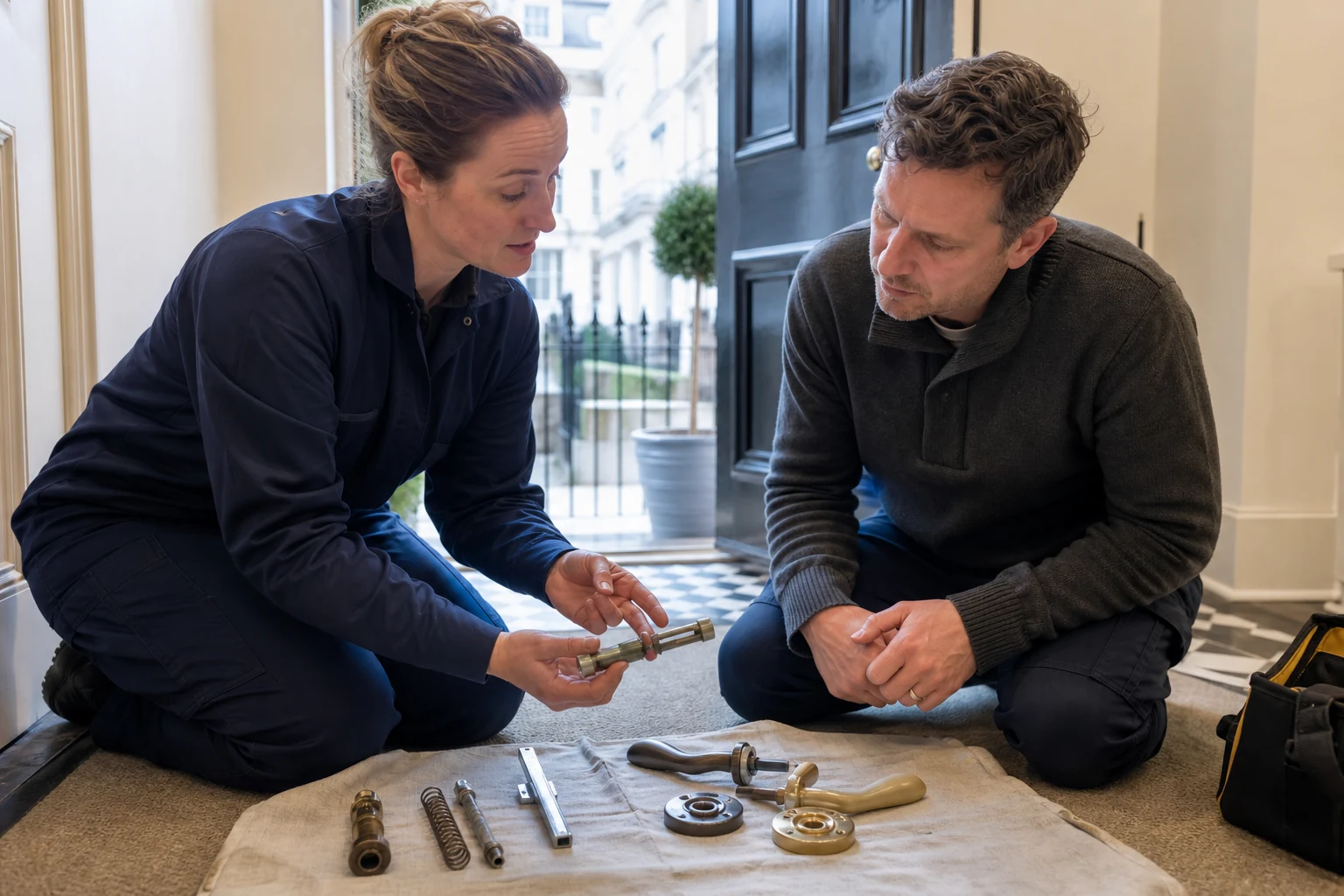
Fault matrix
| Observed behaviour | Possible areas to distinguish | Safe next step |
|---|---|---|
| Key turns only when the handle is lifted very hard | Alignment, tight keeps, gearbox or strip resistance | Stop forcing and report open-versus-closed operation. |
| Handle lifts normally but key will not turn | Cylinder, key, gearbox position or incomplete engagement | Try no improvised tools; keep a sound authorised key for inspection. |
| Handle is loose or drops | Handle fixing, spindle, spring or gearbox | Limit use and photograph both handle faces. |
| Hooks move when open but not into the frame | Door position, keeps and hinge alignment | Record where the leaf contacts the frame. |
| Key snapped in the cylinder | Fragment position, prior resistance and cylinder condition | Leave the fragment, retain the other piece and report the door state. |
| Door locks but lets in movement or draught | Compression, keeps, seals, hinges and door condition | Request a whole-door assessment rather than a cylinder-only change. |
Repair routes
Open and closed operation is compared, including hinge position and frame keeps. An adjustment may be considered where the mechanism itself remains serviceable.
A failed or unsuitable cylinder can be measured and replaced without assuming that the multipoint strip also needs changing. Cam and dimensions must match.
Fixing centres, spindle, backplate dimensions and door thickness guide a compatible set. Loose handles can also indicate a connected internal fault.
Part identification may require edge markings, measurements and direct examination. A similar-looking mechanism is not automatically interchangeable.
If the door is locked shut, authority and the actual failed condition guide an opening method. Post-entry repair remains a separate agreed step.
The current door and mechanism are audited before changing cylinder, handles or other hardware. The expected use and key control remain part of the brief.
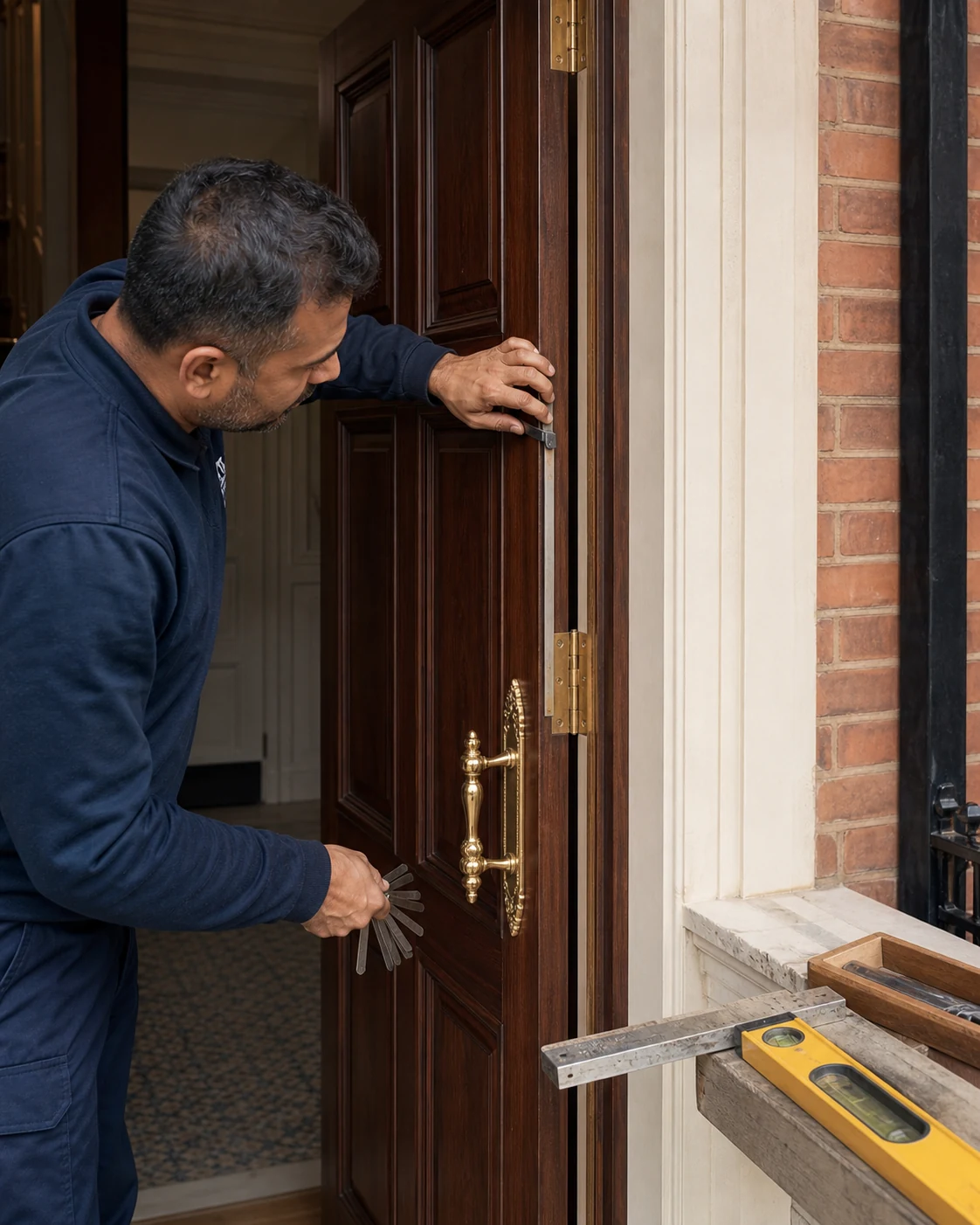
Terraces, basements and rear additions
A rear extension may place the affected door beyond finished rooms and fitted kitchens. Arrange a clean route for tools and keep pets away from the working area. If the garden can be reached only through the locked door, say so before attendance. A basement entrance may be exposed to water and pavement debris, but exposure alone does not identify the failed component.
Where a flat is managed, establish whether the door belongs solely to the dwelling. Balcony or common escape doors may be subject to building rules, and a resident should not alter shared hardware without permission. Report any closer, restrictor or electronic sensor separately from the multipoint mechanism.
The repaired door should be operated normally through closing, handle lift, key turn, unlocking and opening. Check that locking points meet their keeps without excessive force and that keys withdraw correctly. Record any seal, hinge, frame or door-leaf issue that remains outside the accepted locksmith scope.
Parts and quotation
There is no single UPVC door-lock price and no area-only Fulham figure. The quote depends on diagnosis, access, compatible parts and whether alignment or wider door work is included. Ask for each component and labour stage to be visible.
| Scope | Information needed | What to confirm |
|---|---|---|
| Fault assessment | Open and closed behaviour, door state, photographs and history | Diagnostic labour before any part is approved. |
| Cylinder replacement | Dimensions, cam, door thickness, security aim and key quantity | Specified cylinder, fitting, tests and supplied keys. |
| Handle work | Fixing centres, spindle, backplate and connected mechanism condition | Whether handles alone solve the identified fault. |
| Gearbox or strip | Markings, measurements, locking points and part availability | Exact compatible component and labour to fit and test it. |
| Alignment | Hinges, keeps, frame contact and door construction | Adjustment included versus separate structural door repair. |
| Locked-shut door | Authority, urgency, opening method and likely follow-on part | Attendance, opening, repair and final security as distinct items. |
If opening or inspection reveals a different failed component, the locksmith should explain the evidence and revised price. Do not authorise unlisted parts merely because the door is already dismantled.
Fulham locksmith FAQ
Some multipoint doors require a normal handle lift before key locking. If unusual force or lifting the whole door is needed, alignment or mechanism condition should be assessed.
Not necessarily. Tight keeps, door movement, the strip, handles and gearbox can create similar resistance. Open-and-closed checks help distinguish them.
Yes when the identified issue and desired key control concern the cylinder and the remaining mechanism works correctly. Accurate dimensions and cam compatibility are required.
No. Excessive force can damage the key, handle or internal parts. Leave the door secure by another authorised means if possible and request assessment.
Usually not. Edge markings, dimensions, locking-point arrangement and direct inspection may be needed to select a compatible component.
That difference is valuable evidence and can indicate how the leaf meets the frame. It still requires checks of both alignment and mechanism condition.
Say which sides are reachable and whether another garden route exists. Safe access affects testing and the method for a locked-shut door.
Only if stated. Lock mechanism, alignment, hinges, seals and structural door repair can be separate scopes.
Show the whole door, both handles, cylinder, full edge strip and frame keeps. Keep all hardware assembled and avoid photographing sensitive keys in detail.
Map and nearby live pages
These linked pages exist or are being completed in the same batch. Choose the actual address so the access and property guidance fits the door.
Report the movement before ordering the mechanism
Send open-and-closed behaviour, door access, edge photographs and the person authorised to approve the identified repair.
