
Private lockout
The locksmith verifies a reasonable right to enter and assesses the secured flat or room door. Earlier shared entrances must still be opened lawfully.
Street door · shared hall · flat entrance · rear access
A converted terrace or shop-adjacent home may place several locks between the street and the affected room. Map every door in order, identify which key serves it and name the person responsible before arranging locksmith work.
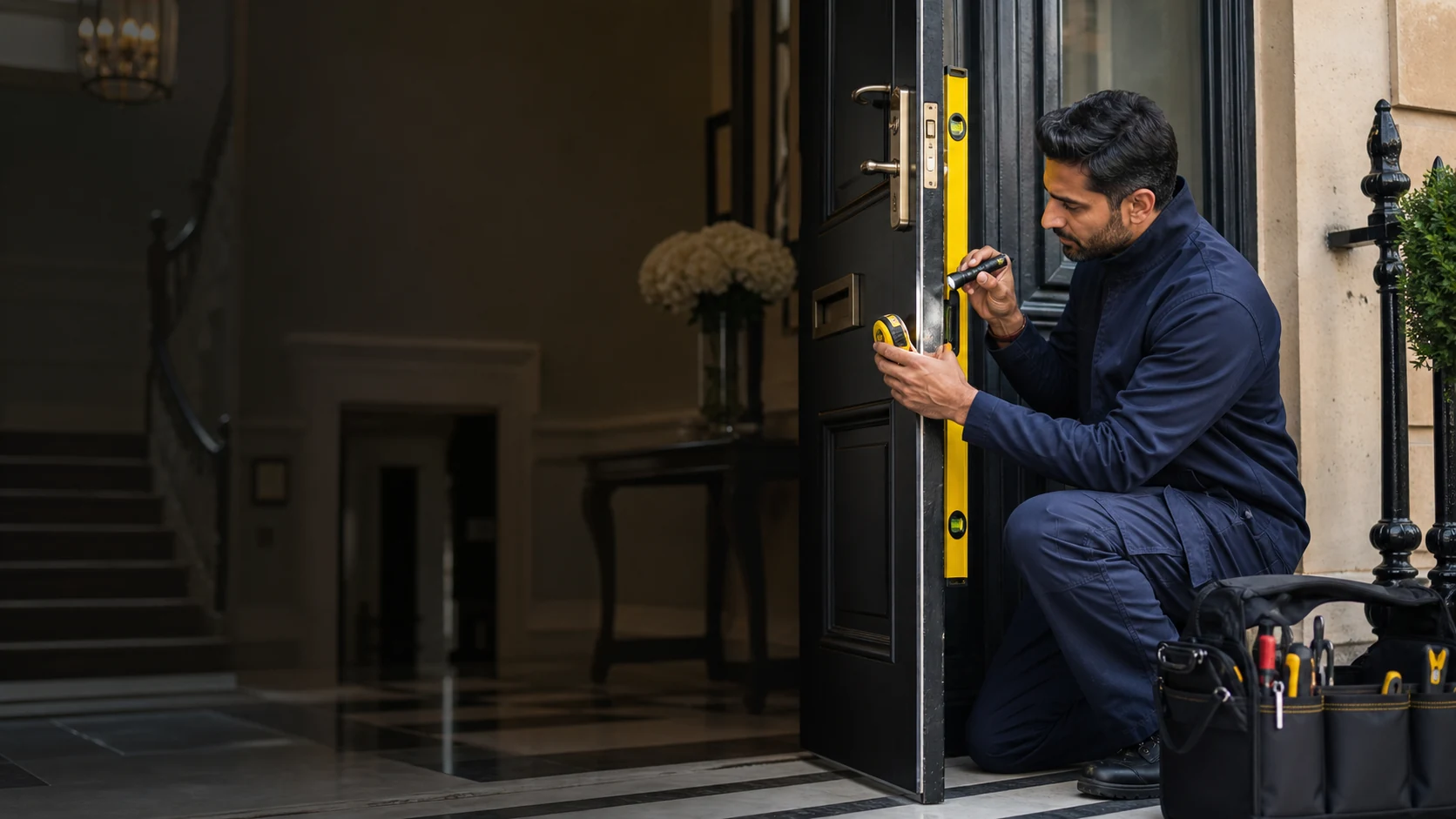
Front-to-rear access map
Shepherd’s Bush homes can sit beside commercial units, within converted terraces or behind shared halls leading to rear additions. The visible shopfront or main house number may not explain which doorway belongs to the dwelling. Start with the pavement: describe the residential entrance, any gate, the common hall and the private door. If the affected lock is at the rear, continue the route through the flat, side passage or garden.
Assign a controller to each stage. Shop staff may unlock a side gate but have no authority over the flat. A tenant may control the dwelling while the freeholder remains responsible for the common front door. A rear room may be private even though access crosses shared ground. This simple map prevents the locksmith being directed to the wrong lock or asked to alter hardware on one occupier’s instruction.
| Stage | Details to record | Authority question |
|---|---|---|
| Street-facing entrance | Door number, appearance and relation to the nearby shop or house | Is it residential, commercial or shared? |
| Common hall | Key, intercom, latch, closer and available working space | Who represents all households using it? |
| Private flat door | Floor, door material, lock faces and current symptom | Can the occupier approve repair or replacement? |
| Rear addition | Internal path, garden access and any UPVC or composite system | Does the dwelling control the entire route? |
| Side or service gate | Opening hours, key holder, lighting and safe carrying route | Is permission available at the appointment time? |
| Commercial boundary | Shutter, stock area or staff-only passage that is not part of the home | Must the business arrange separate access? |
Map the keys as well as the doors
If keys are lost or unreturned, do not request every lock at the address to be changed automatically. Establish whether the missing key serves the street door, common hall, private flat, rear gate or several of them. Consider whether it can be connected to the address and which authorised users still need access. A common key change requires coordination for all households.
Describe keys by function rather than sharing detailed photographs of cuts or codes. Keep damaged and broken pieces. If one key is stiff, compare an authorised spare without repeatedly forcing the lock. A worn key can create different evidence from a mechanism that resists every key.
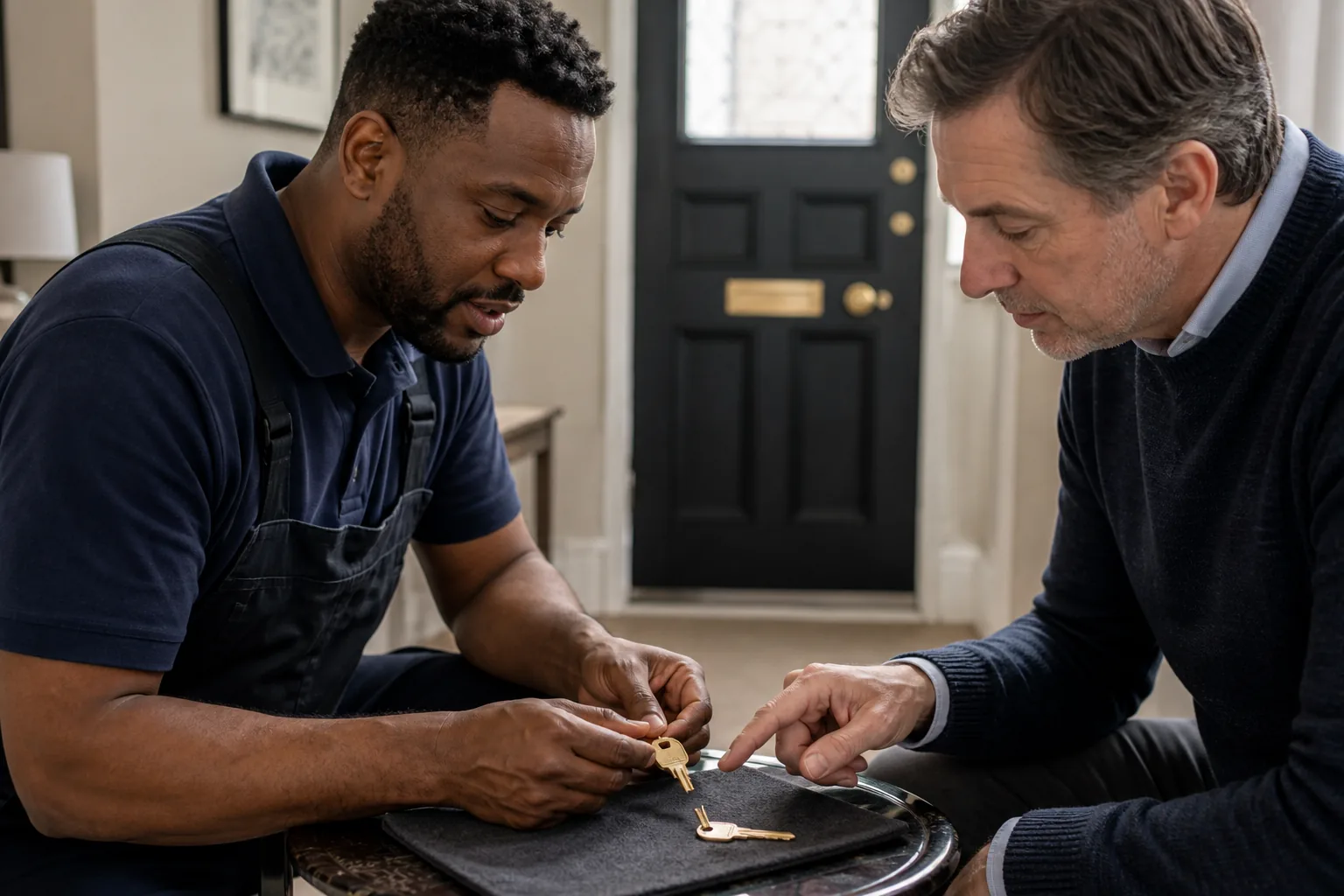
Door, key and next step
| Observed issue | Information to gather | First decision |
|---|---|---|
| Street key fails but private flat key works | Other residents affected, key condition and common-door controller | Refer the shared entrance through the freeholder or agent. |
| Private flat key snapped | Door open or closed, fragment position and prior stiffness | Assess extraction, entry and lock condition under occupier authority. |
| Rear UPVC door handle will not lift | Open-versus-closed operation, hooks, keeps and door movement | Distinguish alignment, handles, gearbox and multipoint strip. |
| Common door latches only when pushed | Closer movement, frame contact and electric-release behaviour | Coordinate lock, door and control checks with management. |
| Side gate is unavailable after shop hours | Business contact, lawful alternative and booking window | Arrange access before scheduling work at the rear. |
| Damage affects lock and timber surround | Safe photographs and whether the entrance can be secured | Separate immediate locksmith work from joinery and decoration. |
Service choices for the exact door
The locksmith verifies a reasonable right to enter and assesses the secured flat or room door. Earlier shared entrances must still be opened lawfully.
Key movement, handle return and latching are checked with the door open and closed. A frame issue is not treated automatically as a failed lock.
Missing keys can justify new control for the authorised door. Common locks and business hardware remain outside a private change unless separately approved.
Leave fragments undisturbed. Removal may preserve a sound lock, while damage or the original fault may support repair or replacement.
Cylinder, handles, gearbox, strip, keeps and alignment need direct comparison. A stiff handle does not identify one universal part.
An immediate task can restore a lockable barrier. Permanent repair to leaf, frame, gate, glazing or shutter should be defined independently.
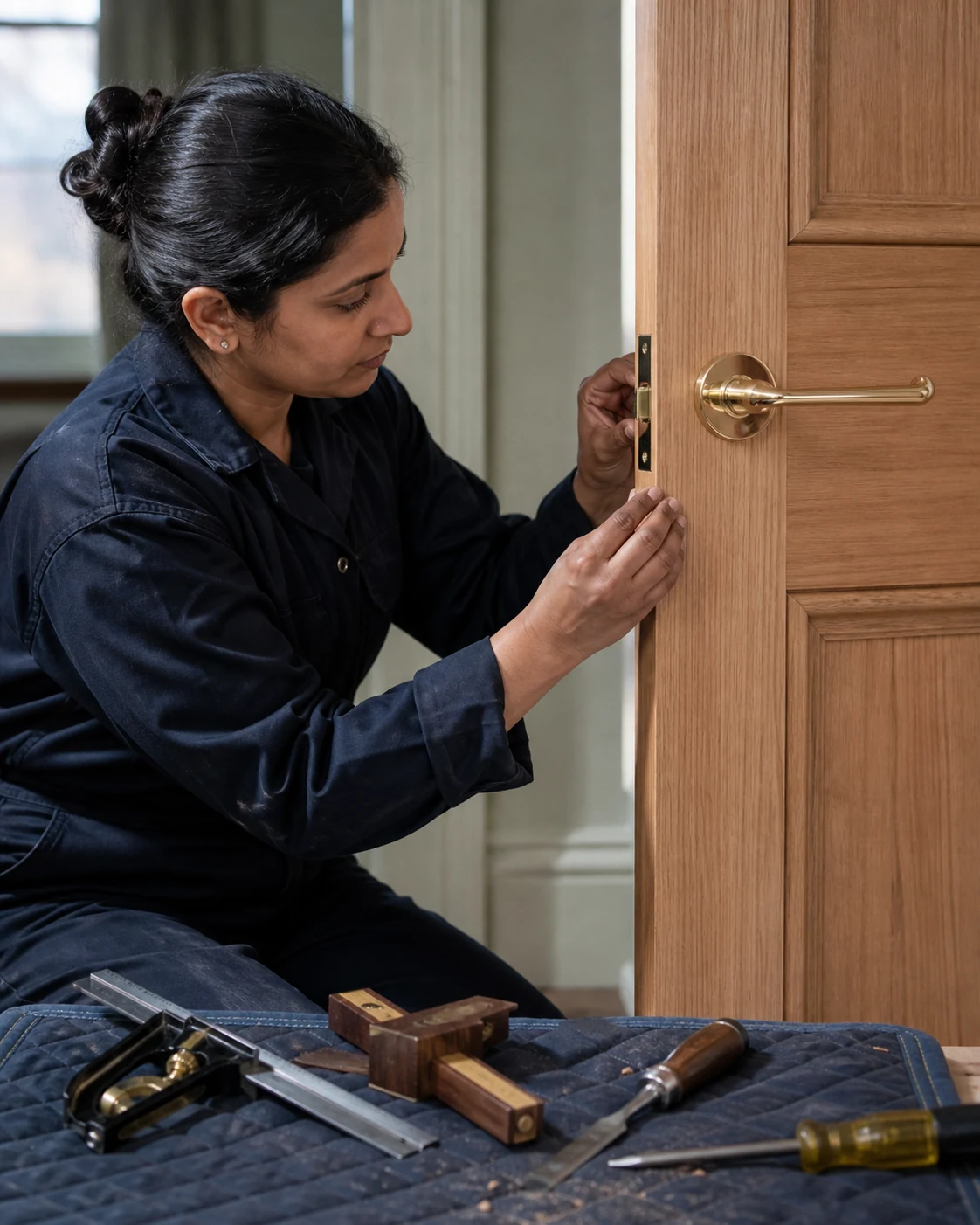
Shared halls and rear additions
Converted terraces often have compact halls, closely spaced flat doors and stairs used by several households. Tell neighbours about planned work where reasonable and keep the passage clear. Move ordinary possessions, bicycles or deliveries if you control them, but do not remove fixed panels, lock covers or another occupier’s belongings.
A rear addition can use different door hardware from the original frontage. Provide access through the home and say whether the garden is reachable by another route. If a UPVC door is locked shut, the availability of both sides affects assessment. Do not force a side gate or cross commercial storage without permission simply to reach it.
Test the completed door through its normal sequence and count supplied keys. For a common entrance, the manager should coordinate distribution and check closer or access-control operation. For a private rear door, record any hinge, seal or frame issue that remains beyond the lock repair.
Quotation boundaries
A Shepherd’s Bush name does not produce a reliable figure. The quote should reflect the actual entrance, authority, method, compatible parts and route through shared or commercial areas. Ask whether each door is a separate item.
| Scope factor | Details to provide | Written boundary |
|---|---|---|
| Arrival and route | Street entrance, shop relationship, hall, stairs, side gate and contact | Which controlled stages are assumed available. |
| Lockout | Affected private door, authority, lock state and known damage | Attendance, opening, repair and final securing. |
| Shared entrance | Manager instruction, all users, closer and electronic release | Key distribution and work outside the mechanical lock. |
| Private replacement | Measurements, door type, desired control and key count | Specified hardware, fitting, tests and handover. |
| Rear multipoint fault | Open and closed behaviour, edge markings and alignment evidence | Diagnosis, component, adjustment and excluded door repair. |
| Damage | Lock, leaf, frame, gate, glazing and current security | Temporary protection compared with permanent reinstatement. |
If the route or affected door differs on arrival, establish new authority and scope before work begins. Destructive opening, added hardware or work on another entrance should be explained and approved, not absorbed into an ambiguous instruction.
Shepherd’s Bush locksmith FAQ
Start at the pavement and describe the door number, nearby frontage, common hall, floor and final private entrance. Include any gate controlled by a business.
Not solely on one occupier’s instruction. The freeholder or managing agent should coordinate authority, replacement keys and any door-control requirements.
Stop pushing or turning the fragment, keep the other piece and say whether the door is open or closed. Avoid glue, drills and improvised extractors.
No. Identify the doors it serves, whether it can be linked to the address and who retains authorised access. The response should match the actual key-control risk.
They can provide access if authorised, but that does not give them power to approve work on the dwelling. Confirm both the route and the residential decision-maker.
The comparison helps separate internal mechanism behaviour from frame and alignment pressure. Do not close a door that may trap you or leave the property insecure.
Describe the width, stairs and ordinary obstructions before attendance. Agree a safe working arrangement without blocking escape or dismantling fixed elements.
Only if that work is specifically included. Lock fitting, structural timber repair, filling and decoration can be separate scopes.
Retain the accepted scope, hardware description, invoice and number of keys supplied. Common-door records should go to the responsible manager.
Map and nearby live pages
Use the page matching the actual address and entrance route. These linked pages are already present or included in the same batch.
Map every door before changing one
Send the entrance sequence, keys involved, affected hardware, access contacts and the person authorised to agree the work.
