
Private lockout
The locksmith verifies reasonable authority and assesses an opening method from the actual lock and door. Entry may reveal a separate repair requirement.
Entrance identity · estate route · residential doorway · responsible contact
A shop address, estate block and terraced house can each hide the useful residential entrance in a different way. Create an entrance identity card with the exact door, route, access method and controller before describing the lock problem.
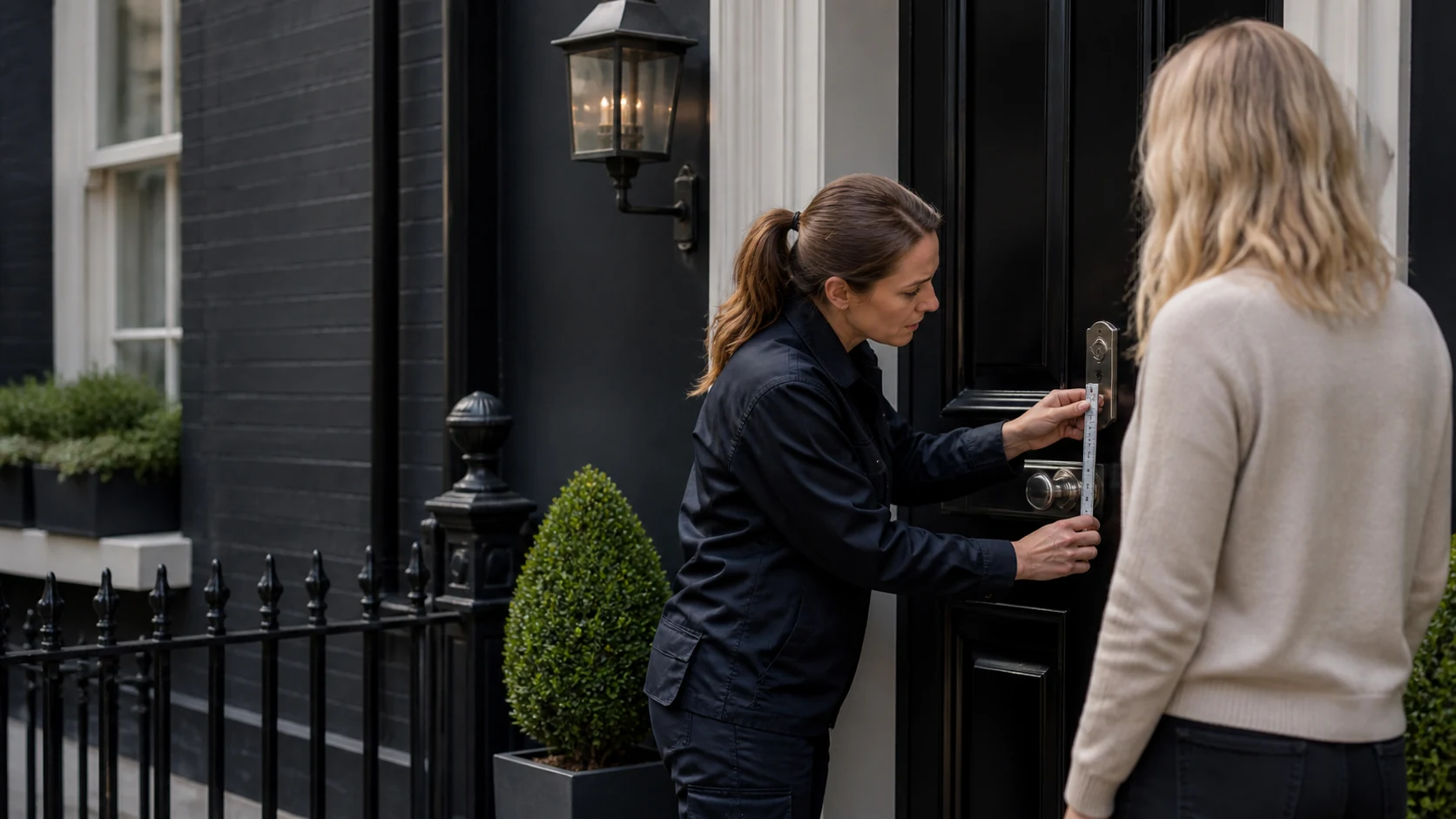
Entrance identity card
Peckham properties include homes above shops, estate flats and terraces with separate residential entrances. A business name may be the clearest landmark without being part of the home. An estate address can require a block, core, floor and flat number. A terrace divided into flats may place the common front door before the private entrance. Write these details in the order they are encountered.
Add a short physical description that does not expose sensitive security information: door position, colour, relation to the frontage and whether a bell or concierge is used. Give the telephone number of the person meeting the locksmith. Avoid assuming that a nearby shop, neighbour or estate office will hold keys or authority.
| Property type | Location detail | Access detail |
|---|---|---|
| Home above a shop | Residential number and doorway position beside the trading frontage | Whether business staff control a gate or shared stair. |
| Estate flat | Estate name, block, entrance core, floor and flat | Fob, intercom, concierge or housing-provider contact. |
| Terraced house | Street number and affected front, side or rear door | Occupier contact and lawful unloading option. |
| Converted terrace | Common entrance followed by individual flat door | Freeholder or agent for shared hardware. |
| Rear residential entrance | Side road, gate or passage and lighting | Authorised key holder and available access window. |
| Managed mixed-use block | Reception, residential lift and private apartment | Contractor procedure and boundary of building control. |
Describe the failed stage
Say where you are and which earlier doors still work. If the common fob is rejected but the private key is available, building management may need to restore credential access. If the lobby opens but the flat key has snapped, the locksmith brief concerns the private door. If a shop-side gate is closed outside trading hours, arrange that route before a rear-door appointment.
For a mechanical symptom, state what the key, handle and latch do. Report whether the door is open or locked shut and any visible damage. Do not tailgate into an estate block, force a common door or ask commercial staff to lend unverified keys. Authority checks remain part of lawful entry work.

Entrance stage and next action
| Failed stage | Information to confirm | Responsible next step |
|---|---|---|
| Estate lobby credential | Whether others are affected and if the mechanical override works | Contact the housing or access-control operator. |
| Communal terrace door | Closer, latch, frame contact and common key behaviour | Arrange freeholder or managing-agent instruction. |
| Private flat lock | Authority, door state, key and handle movement | Book locksmith opening, diagnosis or repair for the dwelling. |
| Shop-adjacent residential gate | Gate key holder, trading hours and alternative route | Coordinate physical access without changing commercial hardware. |
| Rear multipoint door | Open-versus-closed operation, strip and keeps | Assess cylinder, mechanism and alignment as a system. |
| Damage across lock and frame | Current security, safe images and evidence requirements | Define locksmith securing and separate door repair. |
Service menu after identification
The locksmith verifies reasonable authority and assesses an opening method from the actual lock and door. Entry may reveal a separate repair requirement.
Stiff keys, poor latching and loose hardware are checked with the door open and closed. Frame pressure is considered before replacing parts.
Measurements, door type, key-control objective and number of users guide compatible hardware for the authorised door.
Leave the fragment undisturbed. Extraction, opening and continued lock use are separate decisions based on its condition.
UPVC and composite doors involve cylinder, handles, gearbox, strip, frame keeps and alignment. Direct checks identify the relevant component.
Immediate securing may be agreed where normal locking has been lost. Door, frame, glazing and electronic work remain visible boundaries.
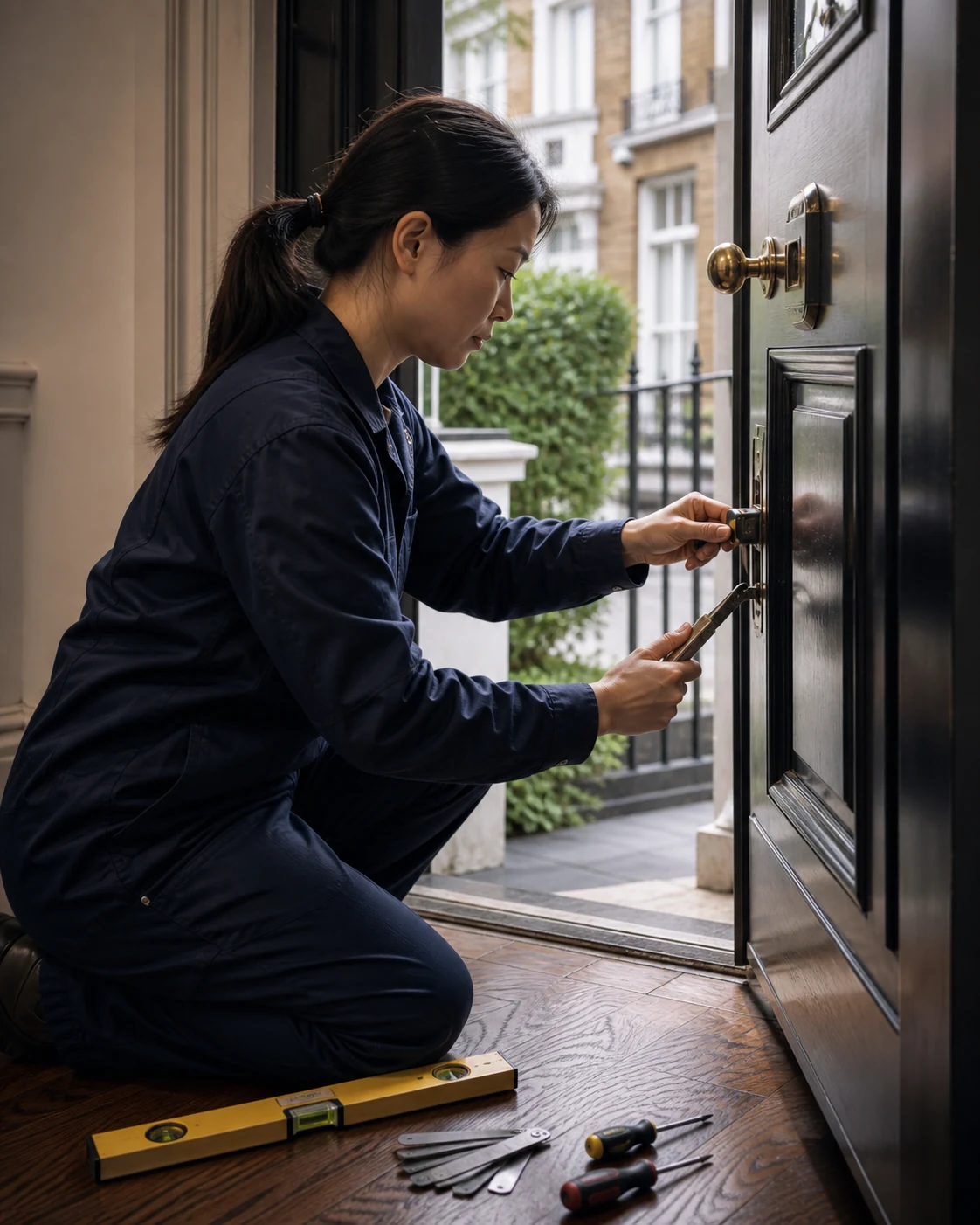
Estates and shop-above homes
An estate lobby or narrow shop-side stair remains in use by other residents. Agree where tools may be placed and avoid blocking the route. A common fire-resisting door should not be wedged open. In a managed block, follow the contractor procedure and let the building controller handle fobs or system overrides.
For a home above a shop, distinguish a convenient landmark from an authorised contact. Staff may explain where the residential door is but should not be expected to approve work or remain responsible for new keys. If tools must cross a trading area, obtain permission and an appropriate access period.
Test the identified door in normal operation. Count new keys and hand them to the nominated customer. If a common closer, frame or electronic release still fails, describe that outcome for the responsible organisation rather than presenting the private lock as the complete solution.
Quotation by entrance
Peckham is not a fixed price input. The quote depends on arrival, authority, door state, method and parts. A building with several locks needs a scope naming the exact one rather than an address-wide promise.
| Factor | Information to supply | Boundary to record |
|---|---|---|
| Location and route | Entrance identity card, contact, parking and controlled stages | Which route is assumed available. |
| Authorised opening | Proof route, door state, lock and visible damage | Attendance, method, opening and securing afterwards. |
| Repair | Key, handle, latch and open-versus-closed behaviour | Diagnosis, labour, parts and frame exclusions. |
| Replacement | Door construction, measurements, security aim and keys | Specified product, fitting, tests and handover. |
| Shared access | Manager, residents, closer and electronic system | Mechanical work versus managed access-control work. |
| Damage | Current security, leaf, frame, glazing and evidence needs | Temporary security compared with permanent repair. |
A changed door or controller changes the instruction. Stop and obtain proper authority plus a revised quote before destructive entry, additional parts or work on another entrance.
Peckham locksmith FAQ
Give the estate, block, entrance core, floor and flat, plus the fob, intercom or concierge route. Name the person meeting the locksmith.
No unauthorised bypass should be requested. Report credential or reader faults to the building operator and arrange lawful entry to private work.
Not necessarily. They may be a landmark or key holder without authority over residential hardware. Confirm the owner, resident or manager for the door.
Reasonable evidence of occupancy, ownership or authorised management is required. Explain if identification is inside so verification can be discussed.
Not alone. The freeholder or agent should coordinate authority, keys for all residents and any door-control obligations.
That can indicate pressure where the door meets its frame, but the lock also needs assessment. Avoid force and report the behaviour accurately.
Sometimes, if extraction succeeds and the lock remains undamaged and reliable. The original cause and keyway condition determine the advice.
Only if written. Lock work, temporary protection, glazing, joinery and decoration can be separate scopes.
Retain the door identity, accepted scope, invoice, hardware description, key count and any referral for shared or electronic equipment.
Map and nearby live pages
Use the page matching the actual property and entrance. These nearby pages exist or are included in this batch.
Identify the entrance before choosing the service
Send the block or doorway, controlled stages, failed lock action and the person entitled to approve the work.
