
Authorised opening
The locksmith verifies the instruction, assesses the actual door and explains a suitable opening approach before the method expands.
Threshold · owner · authority · outcome
Follow the route from pavement to the affected room and give every secured threshold an owner. A street door, communal lobby, flat entrance and rear gate can sit at one address while requiring different instructions.
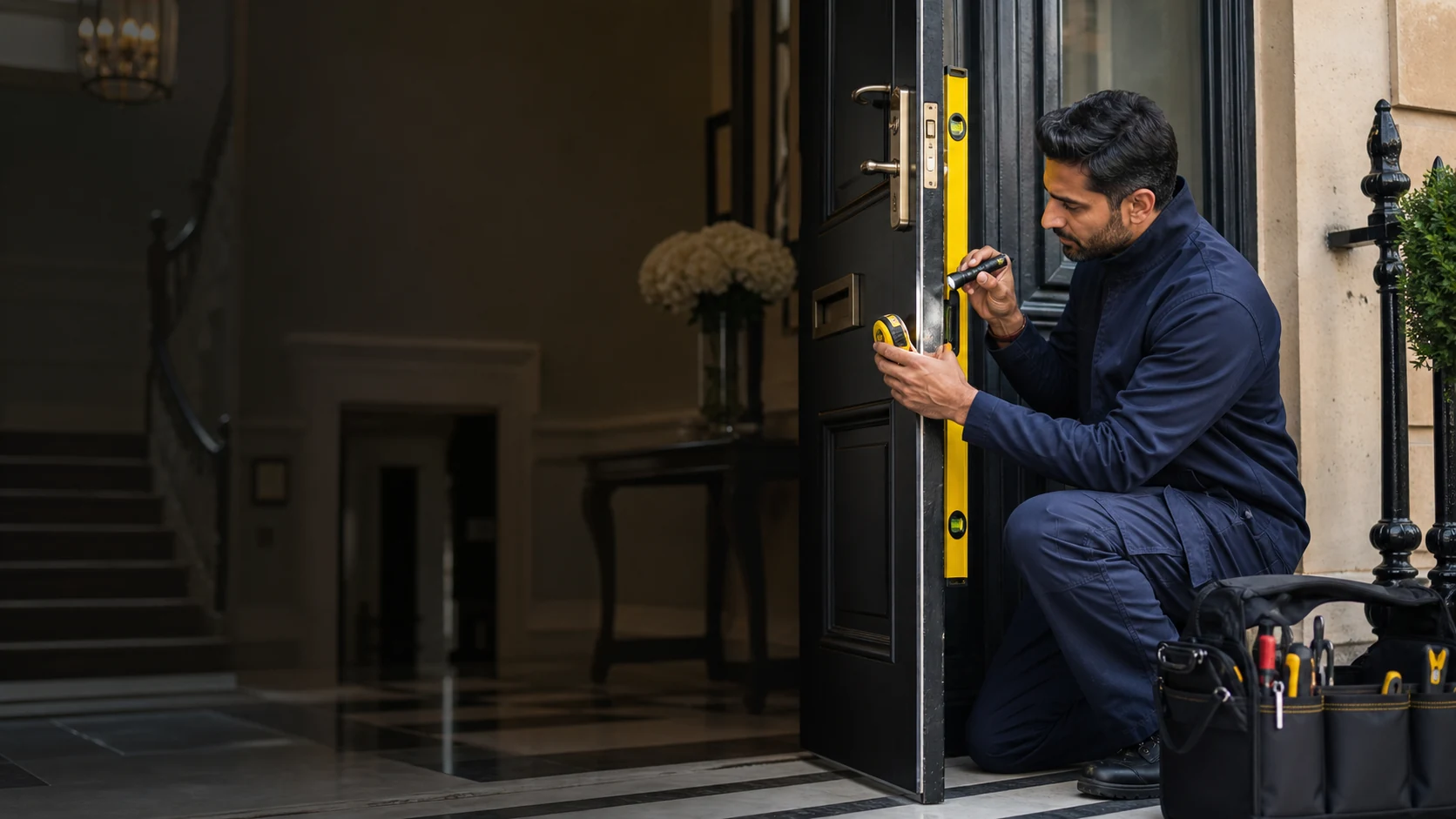
Property-first planning
A useful map can be a simple list. Start at the pavement and write each door crossed before reaching the problem: street gate, common front door, lobby, flat door, bedroom or store. Add the person or organisation responsible for each. This identifies where the customer’s authority begins and ends without making assumptions from a key ring.
In a Kennington terrace used as one home, a single owner may control front and rear entrances. In a conversion, the freeholder or managing agent may control the outer door while occupiers manage their flats. In an estate block, the common door can include mechanical and powered access elements. Property form frames these questions; it does not reveal the lock type, condition or permitted alteration.
| Threshold | Information to record | Authority question |
|---|---|---|
| Street gate or front garden gate | Who uses it, key holders, closer or release and visible damage | Is it private to one home or shared by several occupiers? |
| Main building entrance | Mechanical key, fob or intercom operation and building contact | Can the resident instruct work, or must management approve? |
| Private dwelling entrance | Occupier, owner, door state, lock symptom and proof route | Who can authorise opening, parts and extra keys? |
| Separately let internal room | Named tenant, access arrangement and tenancy contact | Does the caller control this room as well as the shared house? |
| Rear, basement or store door | Route, lighting, keys and whether both sides are reachable | Which owner or occupier controls the final space? |
Tenure boundaries
A tenant may lawfully enter a flat and report a broken lock, yet the property agreement can reserve alteration decisions to the landlord. A caretaker can open a communal cupboard without having authority to replace the common-door hardware. A flat owner can decide about their private entrance while sharing responsibility for the outer door with others.
State the caller’s relationship to the property and keep the relevant decision-maker reachable. If identification is locked inside, mention that at booking so an appropriate verification route can be discussed. For work arranged on behalf of another person, provide a named contact rather than expecting a neighbour to confirm the instruction informally.
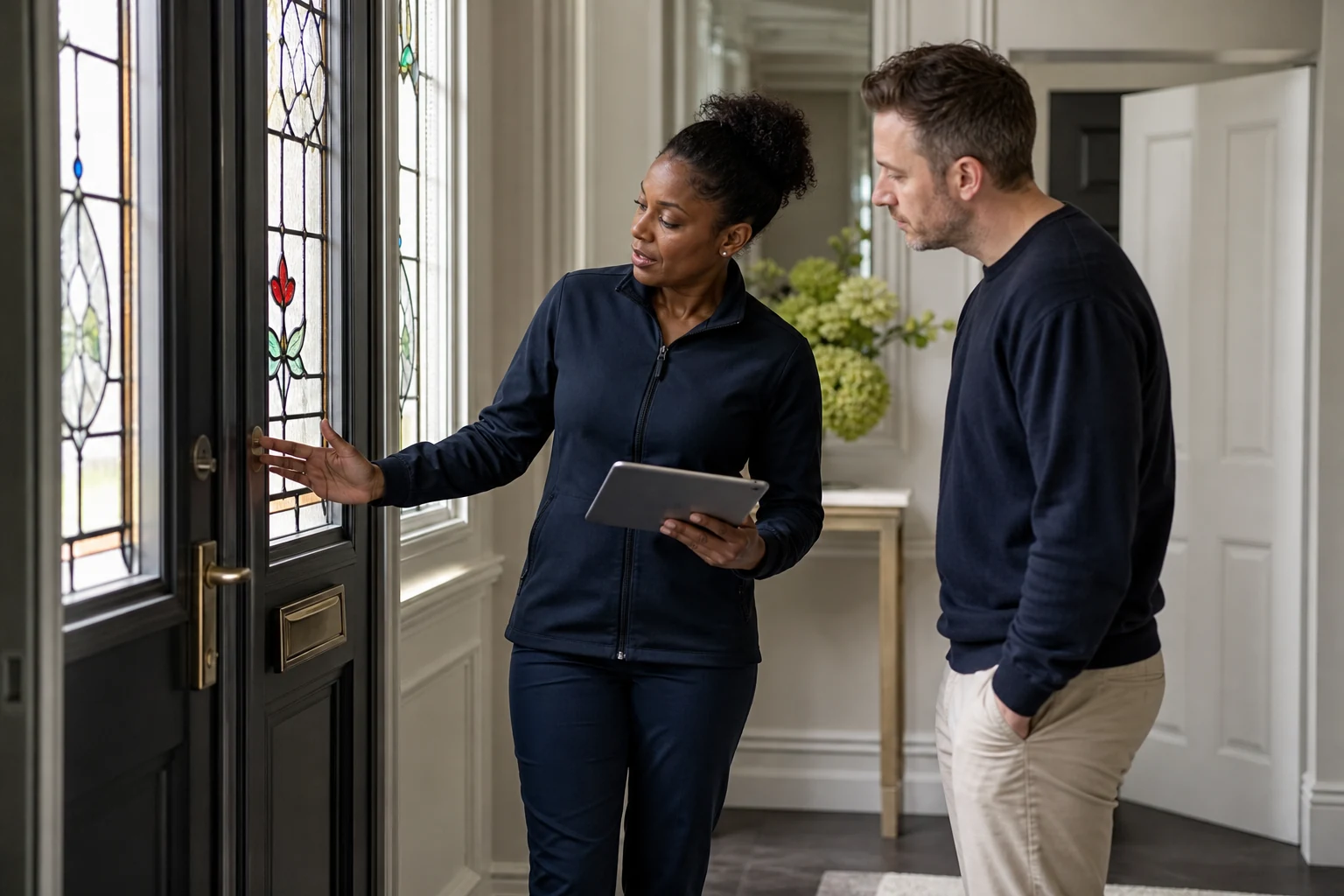
Door problem at the right boundary
Once the threshold is identified, describe whether the door is open or closed, what the key does, how the handle moves and whether the latch meets the frame. Do not remove covers or repeatedly operate a failing mechanism. A private lock can be faulty while the common entrance works normally; a building-level release can fail while the resident’s lock remains serviceable.
| Observation | Safe next step | Scope boundary to preserve |
|---|---|---|
| Resident cannot open the private flat door | Prepare authority evidence and describe key, handle and door state | Opening versus later repair or replacement |
| Common front door will not latch | Notify the building contact and keep users from forcing it | Mechanical lock, closer, frame and management duties |
| One fob fails while other access works | Report credential and reader behaviour through management | Electronic administration versus mechanical locksmith work |
| Rear door is damaged after forced entry | Preserve safe evidence and discuss immediate securing | Lock work versus leaf, frame, glazing and permanent repair |
| Keys remain with a former occupier | Identify affected doors and legitimate users | Private key-control change versus communal key distribution |
| Key works only when the door is pushed | Stop adding force and request door-and-lock assessment | Hardware fault versus alignment, hinge or frame work |
Services after ownership is clear
The locksmith verifies the instruction, assesses the actual door and explains a suitable opening approach before the method expands.
Key, lock, handle, latch, frame and alignment are considered. A visible lock face does not establish the failed part.
Lost, stolen or unreturned keys prompt a user and risk review before compatible hardware and quantities are agreed.
The desired function, documented requirement, measurements and door preparation guide product selection.
Urgent protection after damage can be separated from permanent joinery, glazing, decoration or insurer-led reinstatement.
Powered releases, intercoms and building controls may need management to appoint an access-control or electrical specialist.

Kennington property context
A period terrace occupied as one dwelling can place front, rear and garden doors under one owner, but the hardware still differs by opening. A conversion can add a shared street entrance and separately controlled flat doors. An estate flat may sit behind managed common access with a concierge, caretaker or estate office involved in contractor entry.
For a terrace, include every exterior opening within the desired security outcome and note whether another route provides lawful access. For a conversion, identify the freeholder or agent before asking about the common door. For an estate block, give the block, floor, flat and building reporting reference where one exists, while keeping the private lock description separate.
Do not infer tenure, fire-door status or lock specification from the exterior. Use the actual lease, tenancy, building record or owner instruction when such a requirement affects work. The locksmith can assess hardware; the responsible property party supplies the authority.
| Setting | Prepare | Written distinction |
|---|---|---|
| Single-family terrace | Complete exterior-door list, users and alternative entry | One owner’s brief with separate hardware findings |
| House divided into flats | Common entrance owner, private flat contact and internal route | Freeholder work versus individual occupier work |
| Estate or purpose-built flat | Block, floor, caretaker process and private-door details | Estate common access versus dwelling entrance |
| Basement or rear flat | Gate, steps, lighting, exact entrance and both-side access | Route permission versus lock instruction |
| Communal door with powered release | Key, latch, closer, fob and intercom observations separately | Mechanical component versus electrical access control |
Quotation by threshold
Price depends on access, timing, verification, door state, method, labour, compatible parts and follow-on work. A Kennington postcode cannot supply those facts. The quotation should repeat the threshold map and state what happens at each included door.
Use the same door label, owner and present condition as the customer’s map.
State attendance, opening, repair, hardware, keys and tests without merging them.
Name communal access, frame repair, powered controls and decoration outside scope.
Give keys, findings and remaining decisions to the correct resident or manager.
If inspection changes the work, the responsible person for that threshold should approve the revision. A communal decision should not be passed to a private tenant simply because they are present.
Kennington locksmith FAQ
The occupier, owner or authorised manager should provide a reasonable basis for lawful entry. Explain beforehand if identification is inside or another party is booking remotely.
Not without the authority required for the building. A freeholder, managing agent or responsible residents’ body should decide work affecting all legitimate users.
Check who uses it, who maintains it and what the property records say. Holding a key does not by itself establish ownership or alteration authority.
Report the observed operation and avoid forcing it. Coordinate access and approval with the landlord where the tenancy places the repair decision there.
Not necessarily. Credential, reader, controller, power and mechanical latch can be separate. Report the symptom to management so the correct service is assigned.
Only if expressly included and within the provider’s scope. Lock hardware, temporary securing, frame, leaf, glazing and decoration should be described separately.
Send the exact door in its frame, both hardware faces, edge and keeps, plus the route showing whether other thresholds are shared. Do not dismantle parts.
Identify which private or communal doors the keys serve and who needs ongoing access. The responsible party can then choose a proportionate key-control response.
Record the door label, work completed, fitted product, keys, operation tests, exclusions and any matter passed to the landlord, freeholder or manager.
Nearby coverage
Use contextual service links for the task and current area pages for nearby responsibility guidance.
Map the threshold before changing the lock
Send the entrance sequence, authority contacts, door symptom and required security outcome for a clearly bounded visit.
