
Authorised opening
The locksmith confirms the private door and lawful instruction before considering the suitable method at that lock.
Residential clock · trading clock · exact door
A mixed-use address can run on two schedules. Identify when the residential route is available, when commercial activity controls a shared passage and which door actually needs work.
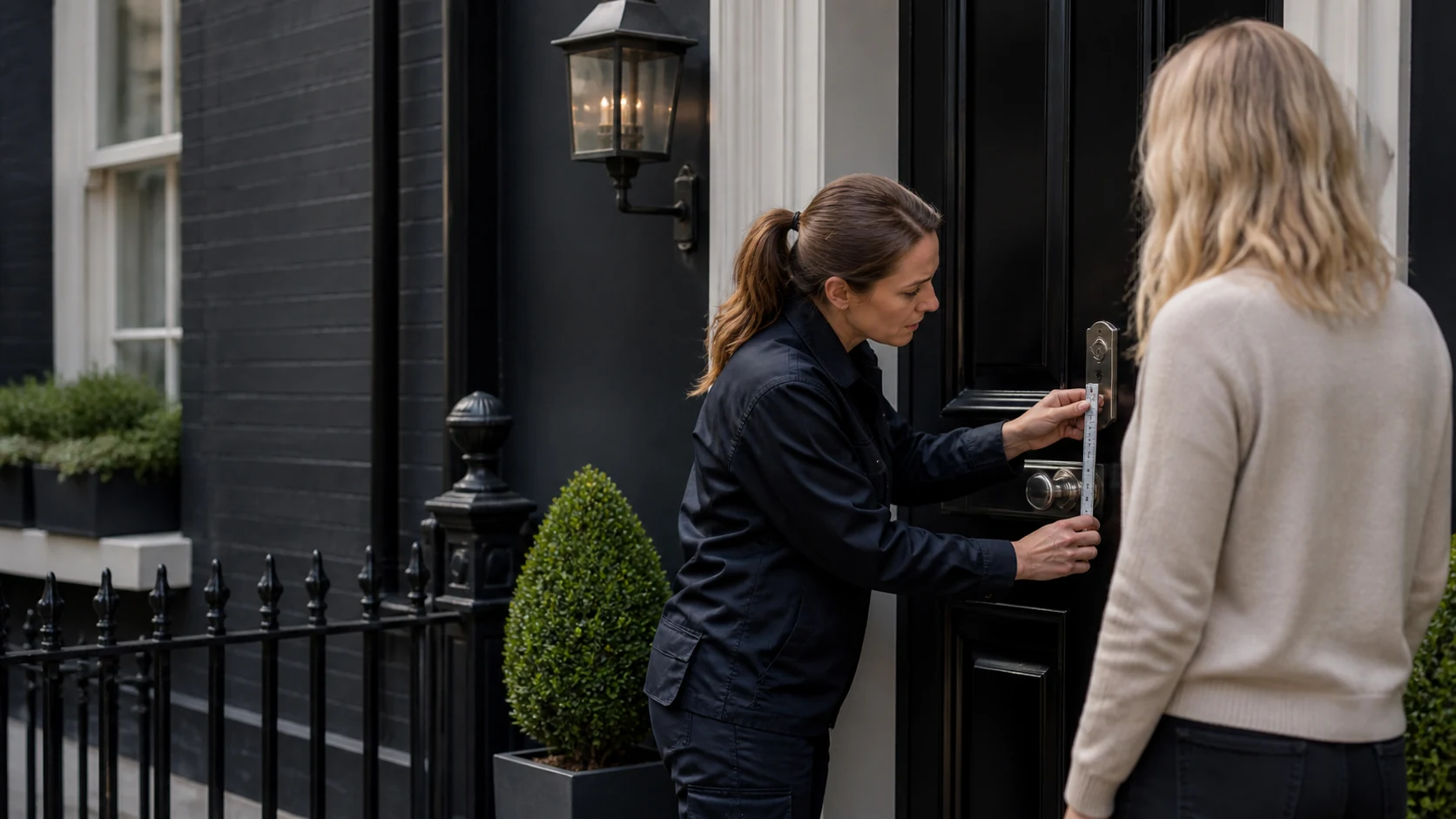
Two-schedule access planning
A home above, behind or beside commercial space may have a dedicated entrance, a route shared for part of the day or a service gate controlled by the business. The residential occupant can authorise work at their private door without necessarily controlling the gate. Commercial staff may unlock a passage while having no authority to choose the flat’s hardware.
Write both schedules. Record business opening, deliveries or secured periods only where they actually affect the residential route. Add the resident’s availability and any landlord or building manager needed for common doors. The useful appointment window is the overlap in which the locksmith can enter lawfully, reach both sides of the target door where required and obtain decisions from the correct person.
| Route element | Residential information | Commercial or management information |
|---|---|---|
| Street entrance | Door number, buzzer, occupant and whether it is dedicated to homes | Neighbouring frontage, trading entrance and any shared threshold |
| Internal passage | Right to use it, flat route and times residents normally enter | Business use, deliveries, locked periods and authorised key holder |
| Lift or stairs | Floor, flat and ability to carry tools to the home | Service-lift or loading procedure where one genuinely applies |
| Private residential door | Door state, lock symptom, authority and desired outcome | No assumption that business staff can approve private work |
| Shutter, loading or service gate | Only include if it forms an authorised residential route | Business owner or premises manager controls commercial hardware |
| Common building door | Residents affected and their normal access method | Freeholder or manager authorises shared mechanical or powered work |
Name the target door
A shutter across a business, a glazed commercial door and a discreet residential entrance can sit close together. Send a pavement-level photograph from an authorised position and mark the home doorway. Continue with the buzzer, stairs or lift, floor and final entrance. If the route begins at the rear, identify the lawful gate and lighting rather than directing the locksmith through an unverified alley.
For a lockout, state whether you are outside the street door or only outside the flat. If identification is inside, explain the property contact who can support reasonable verification. Do not ask business staff to force a private entrance, lend keys outside their authority or permit work through occupied commercial space without approval.
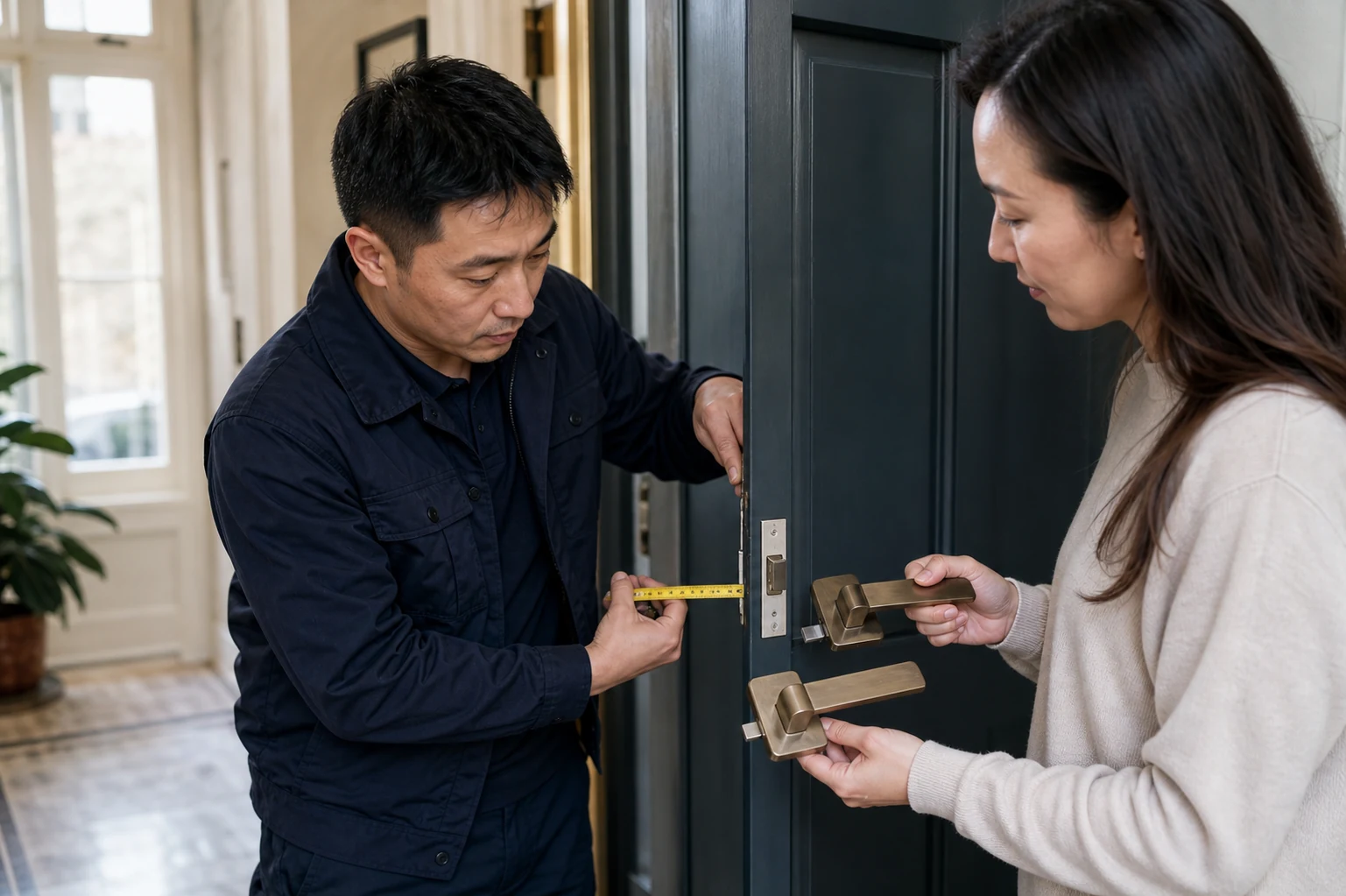
Problem by threshold
| Reported issue | First responsible party | Scope distinction |
|---|---|---|
| Resident is locked outside the private flat | Resident, owner or authorised property manager | Opening and private lock work beyond the shared route |
| Residential street door will not latch | Freeholder or building manager where used by several homes | Mechanical lock, closer, frame and powered release |
| Business shutter or shop lock fails | Commercial occupier or premises owner | Business security scope, not assumed from a residential booking |
| Shared gate key no longer turns | Owner of the gate and all legitimate route users | Authorised common mechanical work and continued access |
| Intercom opens no door after a call | Building management | Intercom, power, release and mechanical latch assessment |
| Attempted entry damages a private door and frame | Resident or owner, plus police or insurer route where relevant | Urgent securing, locksmith hardware and permanent door repair |
Residential service inside mixed use
The locksmith confirms the private door and lawful instruction before considering the suitable method at that lock.
Key, handle, latch, door and frame are described without blending nearby commercial hardware into the cause.
Assess whether keys identify the home, which doors they serve and who requires the new issue.
Door measurements, existing preparation and documented property requirements guide compatibility.
Retain the pieces, avoid glue and tools, and keep extraction, opening and replacement as separate decisions.
Distinguish lock and temporary security from the leaf, frame, glazing and decoration.
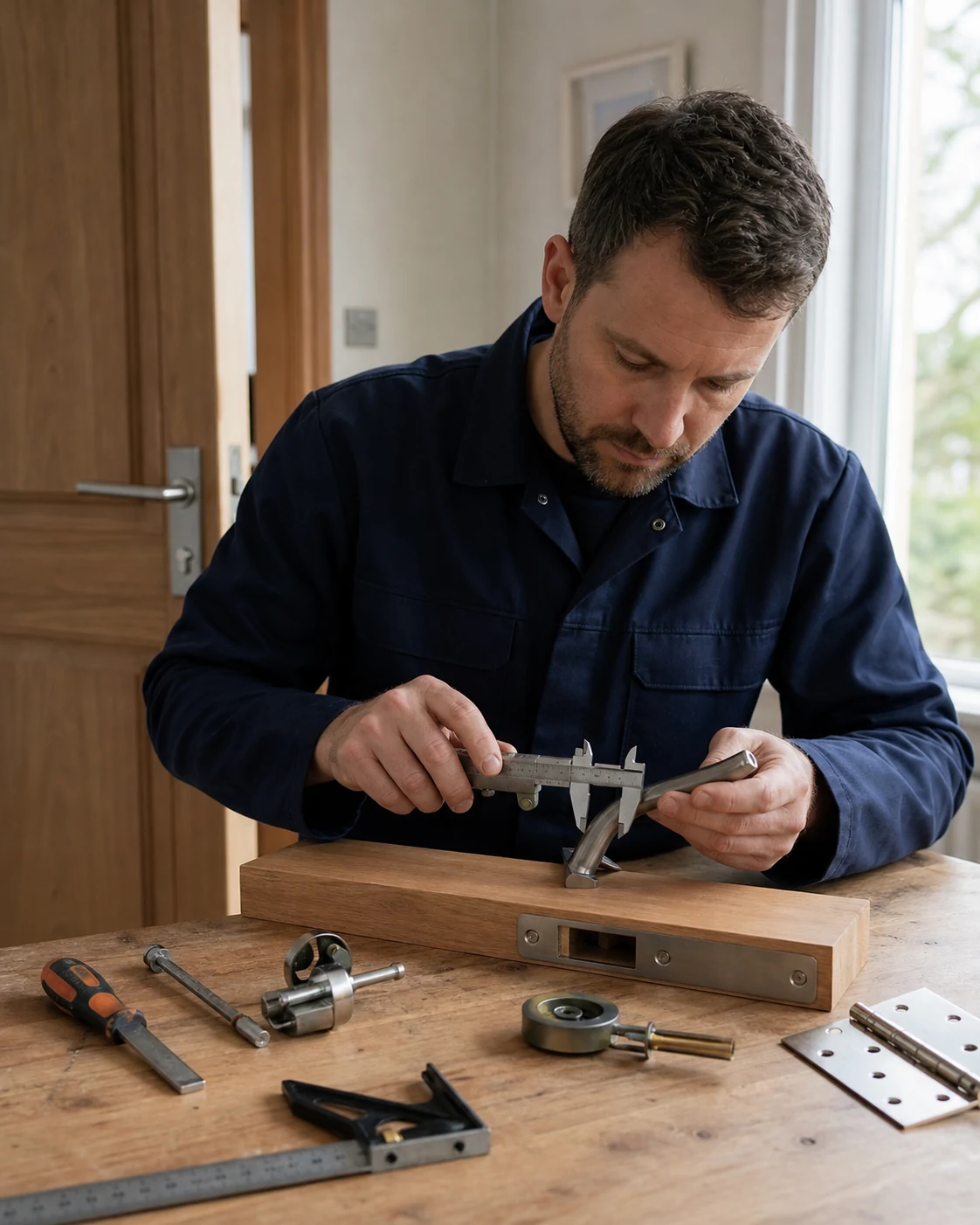
Bermondsey property context
Bermondsey enquiries can involve warehouse conversions, newer apartment buildings, terraces and residential entrances beside commercial units. A conversion may have substantial common doors and internal routes; a newer block can use reception or electronic access; a terrace may have a direct private entrance. These forms do not identify the installed lock.
For a warehouse conversion, confirm the building entrance, lift, corridor and manager responsible for common hardware. For a newer flat, use the visitor and contractor procedure currently supplied by management. For a terrace beside business premises, distinguish the house entrance and any rear service route. If a delivery yard or shutter is nearby, do not treat it as part of the home unless the owner confirms lawful shared use.
Noise, trading or delivery timing may affect practical attendance, but this page invents no standard hours. Use the real schedule supplied by the people controlling the route.
| Setting | Route facts | Authority boundary |
|---|---|---|
| Warehouse conversion | Common entrance, lift, internal corridor, flat and loading procedure | Building manager versus private owner |
| Newer managed apartment | Reception, fobbed floors, visitor registration and exact door | Admission process versus lock-change approval |
| Flat beside commercial frontage | Residential doorway, buzzer and business access interaction | Home occupier versus commercial tenant |
| Terraced home | Direct front door, rear gate and any shared alley | Private scope versus third-party route permission |
| Common door with powered release | Fob, intercom, release, latch and closer observations | Locksmith mechanics versus access-control systems |
Quote on one schedule
Price depends on the exact door, route, timing, verification, method, labour and compatible parts. Neither Bermondsey nor “mixed use” provides a reliable figure. Ask for the quotation to state the access window and responsible door.
The residential and commercial contacts confirm the lawful path and its available period.
Opening, repair, replacement, key quantity and conditional work are distinguished.
Common lock, powered access and structural issues go to their responsible owner.
Keys and private work return to the resident; route issues return to management.
If the shared route closes before assessment is complete, record the limitation instead of moving through unauthorised space. A second attendance and any different price should be agreed from actual scope, not hidden within a vague emergency label.
Bermondsey locksmith FAQ
Give the door number or colour, buzzer, floor and a context photograph. State whether any gate or passage belongs to the business or the wider building.
Only if they genuinely hold that property authority. Their ability to open a shared passage does not automatically cover the private residential lock.
Arrange an overlap with the route holder, resident and decision-maker. Do not assume a commercial space can be crossed after it is secured.
The freeholder or managing agent should receive the report and authorise work affecting multiple residents or businesses.
Not unless it is expressly included under the commercial owner’s authority. Shutter, shopfront and private-flat hardware should remain separate scopes.
Prepare evidence of occupancy, ownership or management authority. Explain if identification is inside and name the property contact who can support verification.
Only after mechanical and powered symptoms are distinguished and the right providers are authorised. An intercom or controller may require an electrical access specialist.
It should state the agreed route window, attendance assumptions and what happens if a controlled door or contact is unavailable.
Private residential keys go to the authorised resident or owner. Common and commercial keys should follow the separate management or business record.
Nearby coverage
Use contextual services for the task and current local pages for related property arrangements.
Two schedules, one authorised residential route
Send the residential entrance, commercial boundary, key holder, door state and approval contact for a workable mixed-use visit.
