
Local lock repair
A serviceable latch, lock case, cylinder or furniture item may be repaired when the fault and part condition support it. The surrounding door still needs checking.
Locate the resistance · preserve the evidence · choose the repair
When a door becomes difficult, the location of the resistance matters more than a guessed cause. A Crystal Palace fault brief should separate the key, handle, latch, lock case and the way the leaf meets the frame.
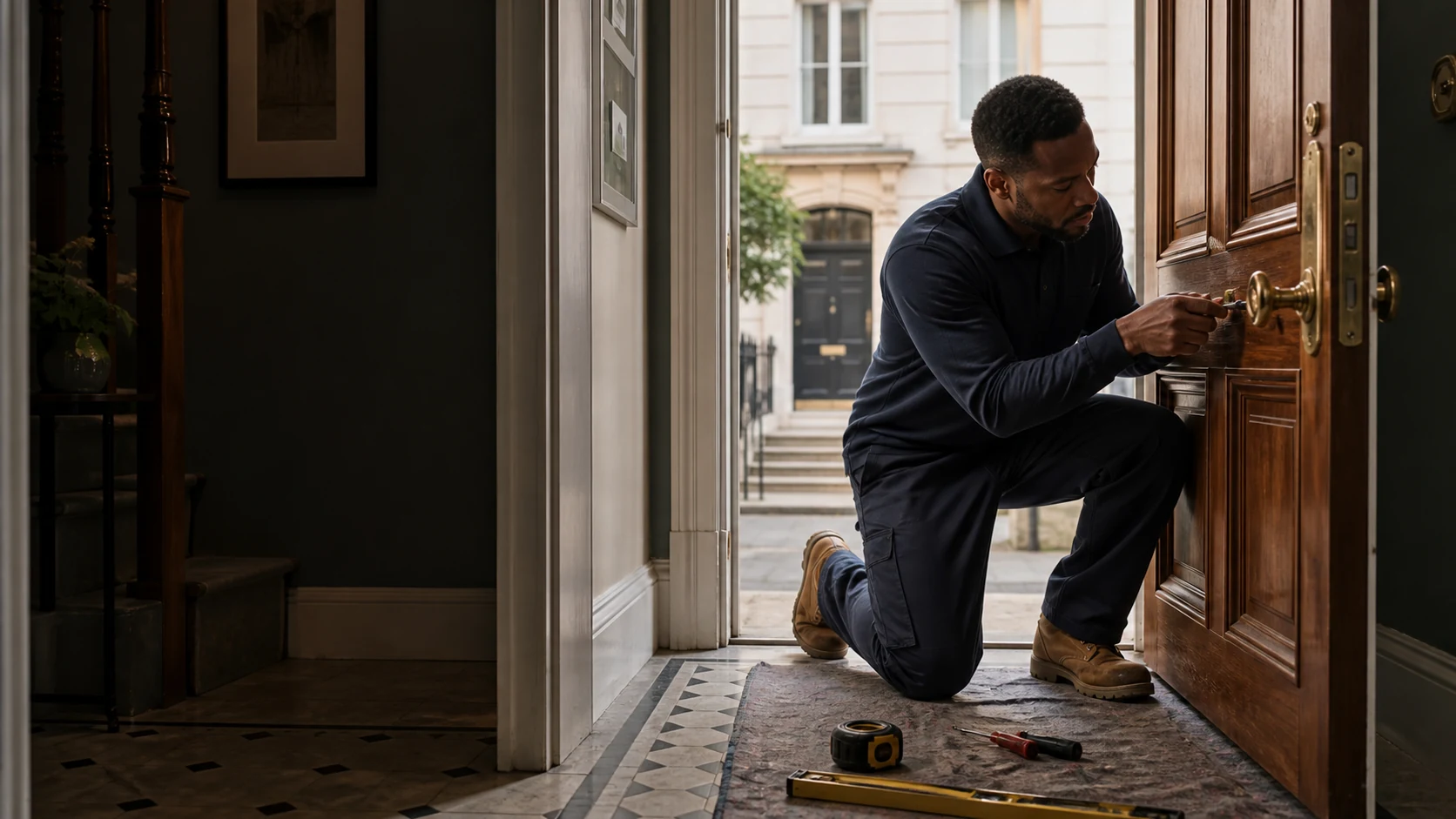
Fault-location interview
A key that will not enter differs from one that turns but does not retract the bolt. A handle that is loose differs from a handle that becomes stiff only when the door closes. A latch that misses the keep may be part of a door-position issue, yet inspection is needed before any adjustment or replacement.
Write the sequence from arrival at the door to secure closure. Include sounds, visible contact and whether the symptom appears open, closed or both. Stop if further operation could break the key or trap the user. Do not dismantle the case, move keeps or file timber to produce a temporary improvement.
| Operating action | Direct observation | First assessment boundary |
|---|---|---|
| Insert or withdraw key | Key shape, obstruction, depth and whether another sound key differs | Key and keyway before connected lock pressure is considered |
| Turn key | Direction, travel, resistance and whether the door is open or closed | Cylinder or lock case versus door-to-frame pressure |
| Move handle or knob | Free play, stiffness, return and effect on the latch | Furniture, spindle and internal mechanism |
| Close door | Contact at top, side, latch or threshold | Leaf, hinges, frame, obstruction and alignment |
| Secure and release | Whether bolts or locking points engage and return normally | Complete system reliability rather than one successful movement |
Protect the fault evidence
Keep the affected door in its safest available state and limit use. Retain all keys and fragments. Photograph the whole door, visible lock faces, edge hardware and frame from a stable position. If the door is reached by steps, explain their number and condition in general terms and clear loose objects before attendance.
Do not attribute resistance to subsidence, weather or the hill from one observation. A locksmith can assess the mechanical lock and how the door meets the frame. Structural or wider building questions need the relevant property professional. The boundary should be explicit, particularly where cracks, distorted frames or continuing movement are visible.
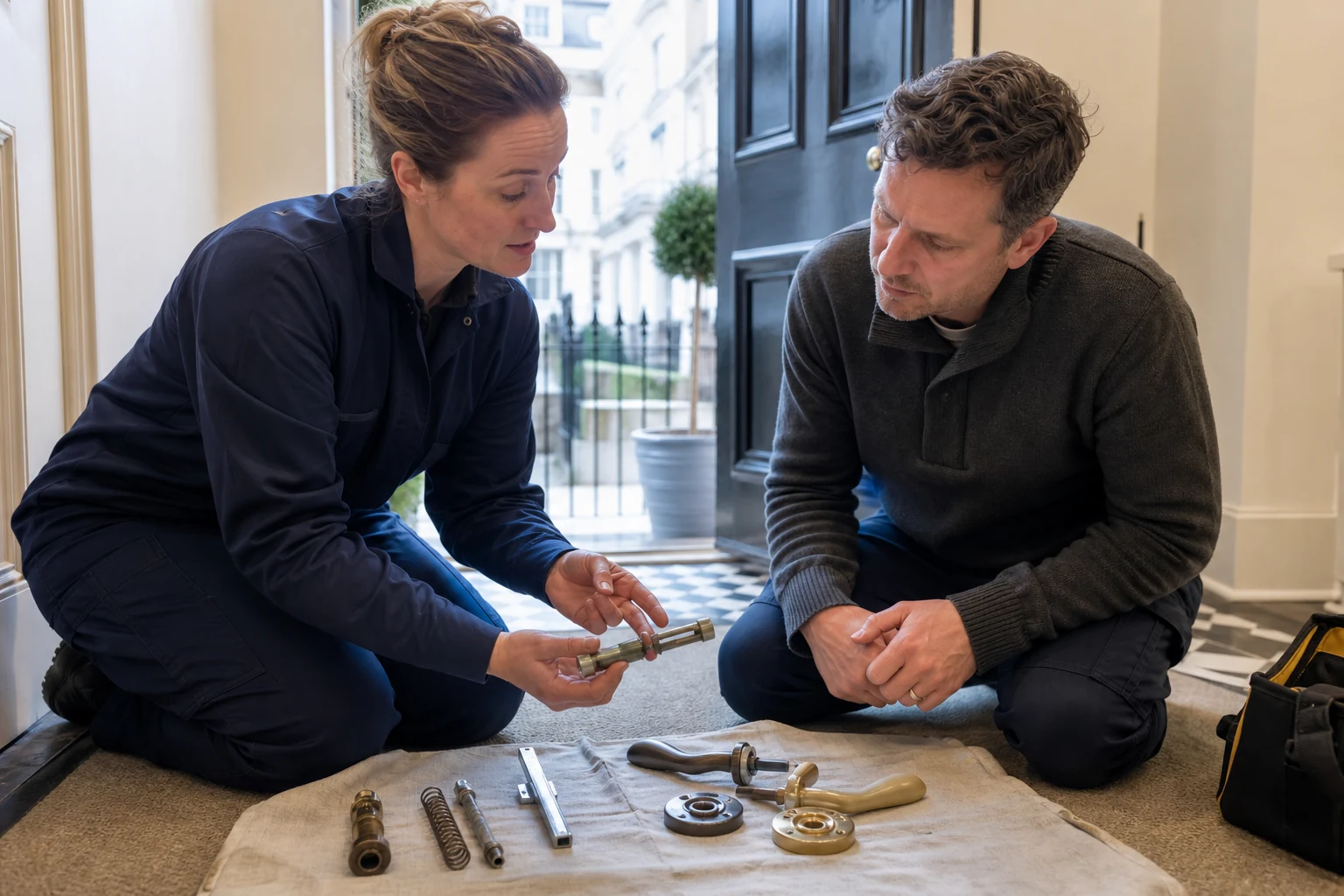
Fault severity and next step
| Present condition | Preparation now | Decision after inspection |
|---|---|---|
| Door remains secure but operation is becoming stiff | Reduce unnecessary use and record the failing action | Adjustment, repair or monitored replacement plan |
| Door closes but cannot be locked reliably | Supervise the entrance and seek prompt authorised assessment | Temporary security and permanent repair scope |
| Authorised occupant cannot enter | Prepare identity or authority evidence and describe the door state | Suitable opening method and post-entry condition |
| Key or handle is close to breaking | Stop applying force and keep people from repeated attempts | Extraction, component repair or replacement |
| Communal door does not latch | Notify the managing party and avoid disabling other hardware | Lock, closer, frame or access-control responsibility |
| Door or frame is visibly damaged | Preserve required evidence and protect the area | Locksmith securing plus allocated door or structural work |
Repair or replacement
A serviceable latch, lock case, cylinder or furniture item may be repaired when the fault and part condition support it. The surrounding door still needs checking.
Door contact and operation open and closed are compared. Keeps, hinges or other positions should be adjusted only from evidence.
When damage, wear or incompatibility prevents reliable repair, dimensions and function guide a replacement. Appearance alone is insufficient.
Keep the fragment and avoid glue or drills. The lock is assessed after extraction before another component is condemned.
Authority, door state and hardware inform the opening route. Any destructive method should be explained and approved before it is used.
Frame damage, hinge failure or wider movement can sit outside locksmith work. Record the mechanical finding and the required specialist boundary.
Quote the fault branch
Crystal Palace does not set a standard locksmith price. The actual route, door, method, labour and hardware determine the proposal. A fault-led quote should explain what investigation is included before repair materials are finalised.
| Quote line | Question to ask | Completion evidence |
|---|---|---|
| Access and attendance | Are steps, levels, parking and controlled doors included in the plan? | Target door reached without unresolved access limits |
| Investigation | Which key, furniture, lock and alignment checks are covered? | Identified fault and exclusions recorded |
| Repair | Which part or adjustment is proposed from the findings? | Normal operation demonstrated after work |
| Replacement | What hardware, dimensions, keys and preparation are included? | Specified item fitted and handover completed |
| Door-related work | Are hinge, frame, timber and making good inside the scope? | Separate provider named where excluded |
| Changed findings | How will hidden damage or a different mechanism be approved? | Revised work accepted before expansion |
A low repair figure and a full replacement figure are not like-for-like if they begin from different assumptions. Ask each proposal to state the evidence stage and final operating test. Do not accept a broad allowance as permission for undefined cutting or parts.
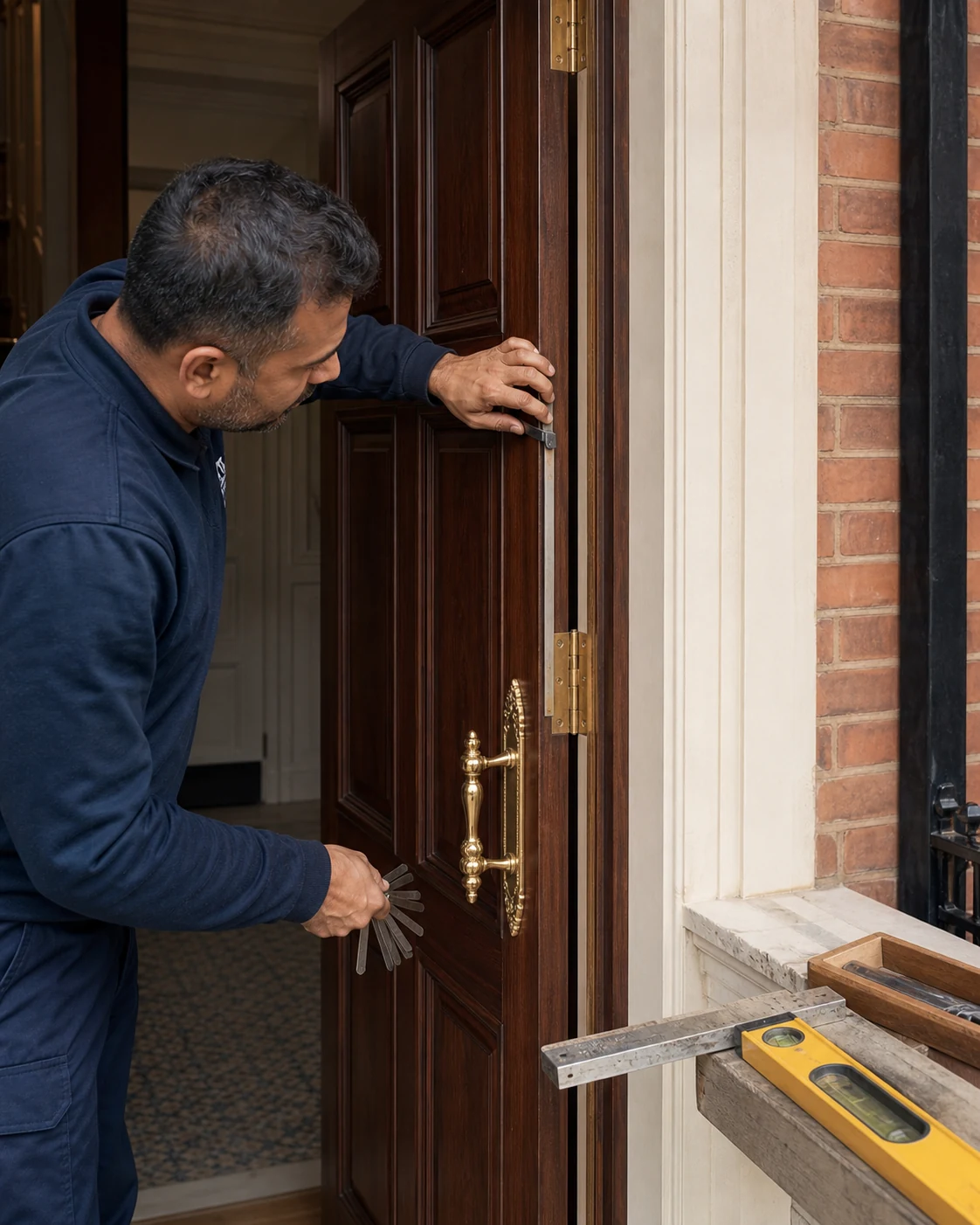
Crystal Palace property context
A home reached by external steps needs a clear, stable route for tools. Give the best authorised entrance and identify any landing where equipment can be placed safely. The slope or number of levels should not be used to explain the lock fault.
Split-level homes can separate the reporting occupant from the main door or rear entrance. Make sure the person meeting the locksmith knows which door and can authorise the work. In a conversion, confirm whether the affected entrance is private or common.
If movement or changing alignment is suspected, keep dated direct observations and seek the right building advice. The locksmith’s useful role is to describe the door-and-lock evidence, not to make unsupported structural claims.
Fault-closed handover
Repeat the full operation with the authorised person: approach, close, latch, lock, retain, unlock and release. The user should not need excessive force or an undocumented technique. Count keys where hardware changed.
Record any remaining contact, unavailable test or referred door issue. If the work is temporary, state the safe use limit and the person arranging permanent repair. A clear residual-fault note is better than an unsupported claim that the whole door is fixed.
Crystal Palace lock-fault FAQ
It shows the lock can move in that position, but does not prove every component is sound. Closed-door pressure and frame contact still need assessment.
No. The contact point is useful evidence, and removing material before inspection can hide the condition or create another fault.
No. A locksmith can report lock, door and alignment observations. Structural concerns should go to an appropriately qualified property professional.
Describe the route, clear loose objects and provide safe lighting. The locksmith needs a stable access plan for tools and working space.
Not necessarily. Repair, adjustment and replacement depend on the identified fault, condition, compatibility and desired reliability.
Possibly, after the fixings and connected mechanism are checked. Tightening alone may not resolve wear or internal resistance.
If the entrance is communal, the freeholder or manager should approve it. A private flat door follows its own owner and occupier arrangement.
Record the identified issue, work completed, complete operating test, keys supplied, exclusions and any door or building referral.
Nearby coverage
Select the page matching the actual property and entrance.
Locate the failing action
Send the Crystal Palace address, stepped route, exact door, direct observations and authorised contact.
