
Furniture
Freestanding sofas, tables, wardrobes and other bulky household pieces.
Collection planning · Maida Vale
Describe the material, show the full load and explain the route from item to vehicle. Those facts are checked before collection scope or timing is agreed.
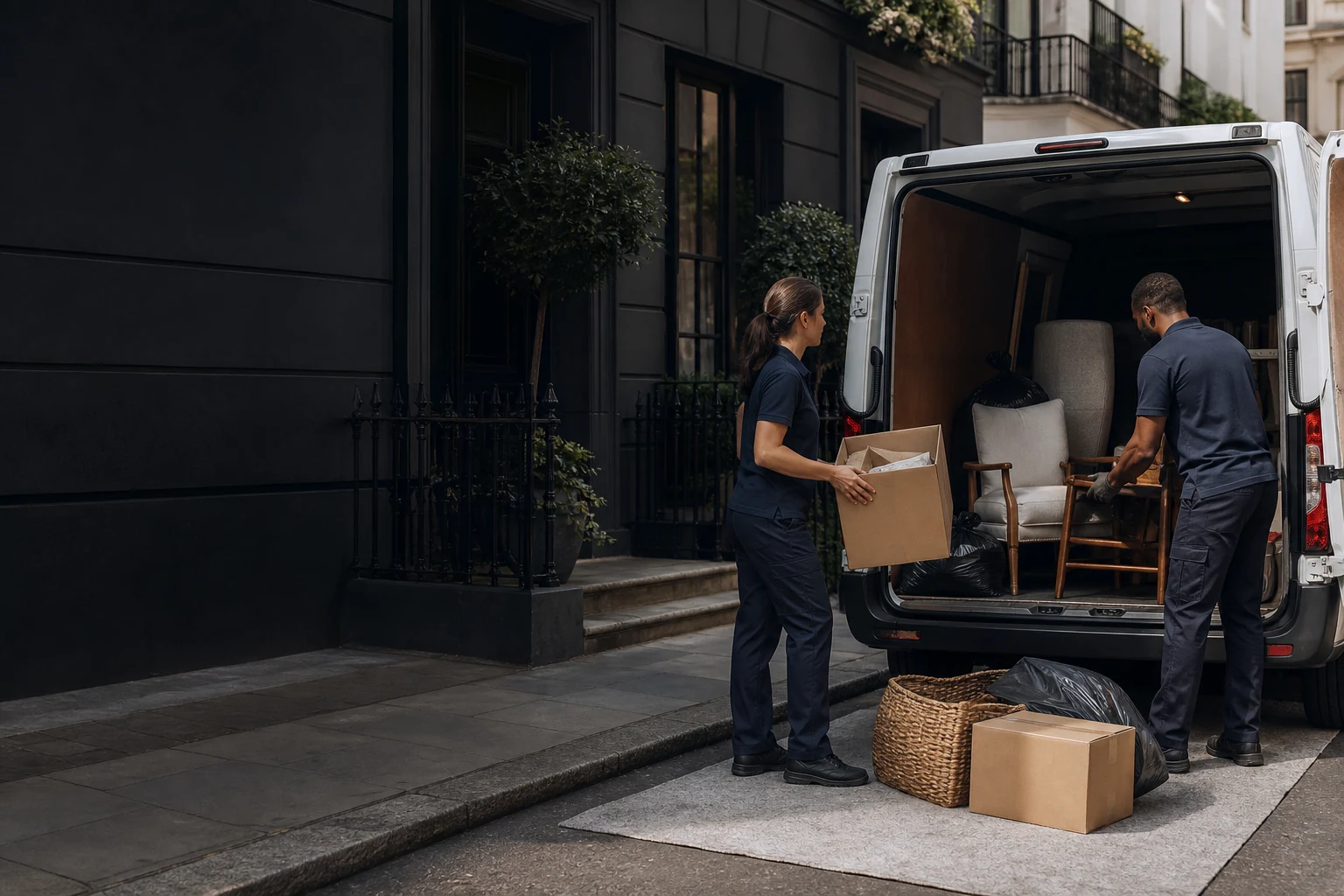
Identify the material For the wider booking boundaries, review Alesta's waste removal service.
Describe every group that is present. Do not place uncertain liquids or unlabelled containers inside an ordinary mixed load.
Freestanding sofas, tables, wardrobes and other bulky household pieces.
Closed bags with their general contents described and unusual weight highlighted.
Cuttings and garden material kept visible and separate where accepted.
Compatible non-hazardous project debris, declared before the quotation.
Make the load visible Bulky household pieces can be assessed separately through the furniture disposal service.
Different materials need different evidence. Give a bag count for contained household waste, dimensions for wardrobes or sofas, and separate photographs for dense renovation material. An overview establishes overall occupied space; closer images reveal awkward shapes, broken edges or labels. Say whether items are loose, stacked, dismantled or distributed across several rooms. Do not conceal batteries, chemicals, paints, solvents, fuel or unidentified containers inside ordinary sacks. These require declaration and clarification. If drawers or cupboards contain further belongings, include them in the inventory rather than treating closed furniture as empty.
Property context in Maida Vale Declared renovation material should follow the separate building waste disposal service rather than an ordinary mixed load.
Begin with a complete view of everything intended for collection. Separate furniture, bagged household contents, garden material and renovation debris in the description, even when they occupy the same room. Count bags, measure bulky pieces and identify anything particularly heavy, sharp or uncertain. Photographs should show the whole group as well as details that affect safe handling. This evidence gives the assessor a dependable picture without relying on a vague estimate of size.
Maida Vale properties can include mansion flats, basement homes and converted buildings with shared entrances. Walk from the furthest item to a realistic loading point and record each flight, narrow turn, threshold, lift and communal doorway. Note any management arrangements that affect entry. Outside, describe the current carrying distance and lawful vehicle position rather than assuming the van can stop beside the entrance. A precise route account helps match labour and loading plans to the address actually being cleared.
Quotation basis
The assessment considers declared volume, material type, weight and disposal charges alongside the work needed to carry and load everything. Stairs, lift availability, long corridors, distant parking and agreed furniture dismantling may change labour requirements. There is no automatic Maida Vale rate based on the postcode. The quotation follows the photographed load and recorded access. Extra bags, hidden contents or heavier debris discovered later can alter capacity or require another journey, so uncertainty should be reported before collection rather than absorbed into an invented fixed figure.
Access changes the work
Show steps, gates and the distance from door to vehicle.
State the floor, stair turns and shared areas.
Confirm the working size and any booking rule.
Photograph gates, alleys and surface changes.
Use current signs or authority information.
Supply dimensions before dismantling is considered.
Collection sequence
Send photographs and identify material.
Explain basement or upper-floor routes, floors and vehicle position.
Confirm the expected work and quotation basis.
The presented load is checked before loading.
Suitable material follows the appropriate disposal route.
Before the team arrives
Keep items for removal clearly apart from possessions that remain. Clear ordinary obstacles, confirm keys or building entry arrangements and check that the stated loading information is still current. Avoid making an unstable pile in a corridor or blocking neighbours and emergency routes. Restricted materials must stay labelled and separate from routine household waste. Report a failed lift, added items or changed vehicle position promptly. The person authorised to answer inventory questions should remain reachable when the crew attends.
Material route and limits
Reusable and recyclable material is separated where practical. The actual route depends on what is presented, so no fixed recycling percentage is promised.
Unknown liquids, paints, solvents, fuel and refrigerants must be declared before any collection is discussed. Batteries, specialist electrical items and hazardous substances need to be identified rather than hidden inside bags or boxes.
Questions for this collection
Provide one wide image of every collection area, followed by close views of bulky, dense or unusual items. Include bag counts and measurements where photographs alone cannot show scale accurately.
Floor level, stair turns and lift availability affect how objects can be carried and how long loading may take. Include an alternative route if the shared lift cannot be relied upon.
Give a realistic number and identify any unusually heavy, sharp or loosely packed contents. Do not combine restricted substances with routine bags, and mention anything that may require safer repacking.
No. Supply furniture dimensions and show the tightest doorway or turn. Safe dismantling must be considered and agreed beforehand; fixed fittings and service disconnections remain separate work.
Declare chemicals, gas cylinders, fuel, paints, solvents, batteries, refrigerants, clinical waste and unidentified liquids or containers. They are not accepted as ordinary mixed household material.
The distance from entrance to loading point changes carrying effort and timing. Describe restrictions or controlled parking as observed, without promising that a particular space will be available.
Send updated photographs and counts before attendance. A larger or heavier load can affect labour, vehicle capacity, disposal arrangements and whether an additional journey is required.
No fixed result should be promised for an individual collection. Reusable or potentially recyclable material may be separated where practical, with the actual route depending on its condition and type.
Collection area
Use the map to identify the collection address and describe the actual vehicle approach. Current access restrictions still need to be checked for the proposed date.
Return to the Waste Removal Services hub for the service scope.
