
Ledges & surfaces
Look along flat ledges, not only at surfaces directly beneath the building work.
Kensington · Detail around a refurbished period room
Detail around a refurbished period room.
Returning pictures and furniture should follow the agreed surface review.
Decorative ledges deserve a separate look after sanding and painting. For your Kensington enquiry, describe the reception room and its approach. Keep a note of old chips so they are not mistaken for removable residue.
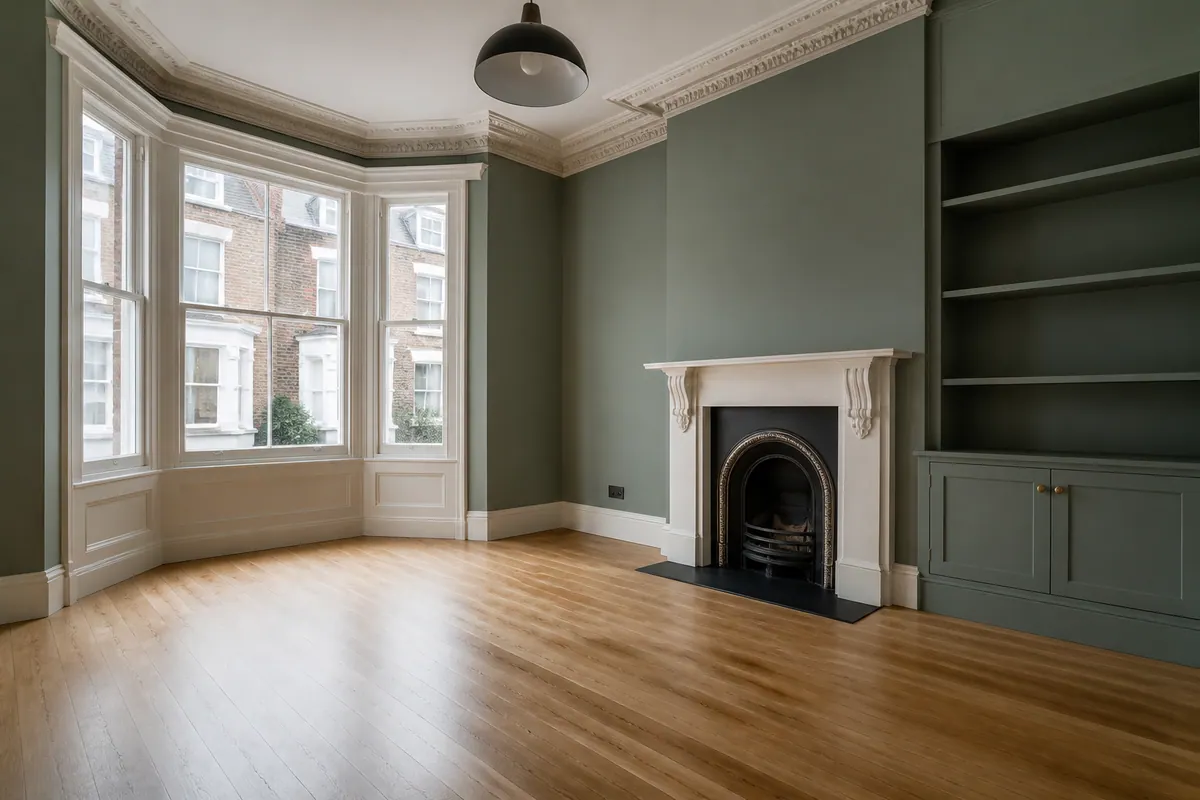
Illustrative renovation scene; no customer job or measured result is represented.
Kensington / the specific room brief
Decorative ledges deserve a separate look after sanding and painting.
This Kensington planning example centres on period-room refurbishment. Decorative ledges deserve a separate look after sanding and painting. The useful inspection route follows the reception room and its approach, with attention to moulding profiles and picture-rail tops.
Keep a note of old chips so they are not mistaken for removable residue. Keep any care notes for painted mouldings available when discussing the visible marks.
Carry equipment through already finished rooms without using them as storage. Returning pictures and furniture should follow the agreed surface review.
The dust route
Use the illustration to organise questions, not as an inclusive service checklist.
Look along flat ledges, not only at surfaces directly beneath the building work.
The doorway joins two cleaning zones; describe dust on both sides.
Radiator edges and accessible fittings should be part of the agreed room discussion.
The exit route may need attention even where no building work occurred.
Protect the new finish
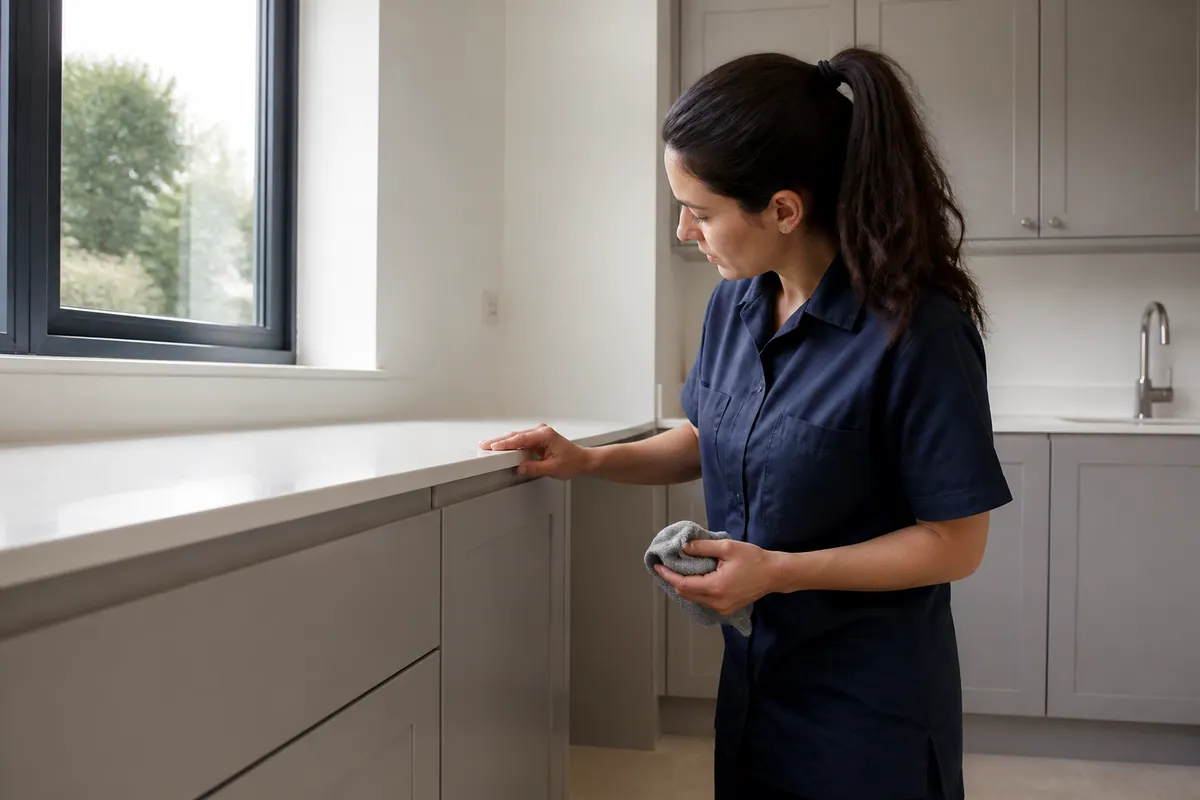
Illustrative surface review.
Start with the surface, then identify the deposit.
Separate loose dust from bonded material. Safe treatment depends on both the deposit and the finish, and specialist work may need another quote.
Confirm readiness with the installer where paint or sealant was applied recently.
Name the actual material; a stone-effect surface is not necessarily stone.
Explain which faces of the fitted units are accessible for the agreed clean.
At a glance
Service-area planning
Use the map to locate the Kensington service area, not an Alesta branch. Provide the actual address when asking about access and appointment availability.
For another nearby area, contact Alesta through the main after builders service to confirm coverage and availability.
Start with the work
Pick the nearest description and add the important differences when making contact. No automatic checklist is created.
A full refurbishment brief should identify finished areas, remaining obstructions and materials that cannot share one cleaning method.
Beyond the work zone
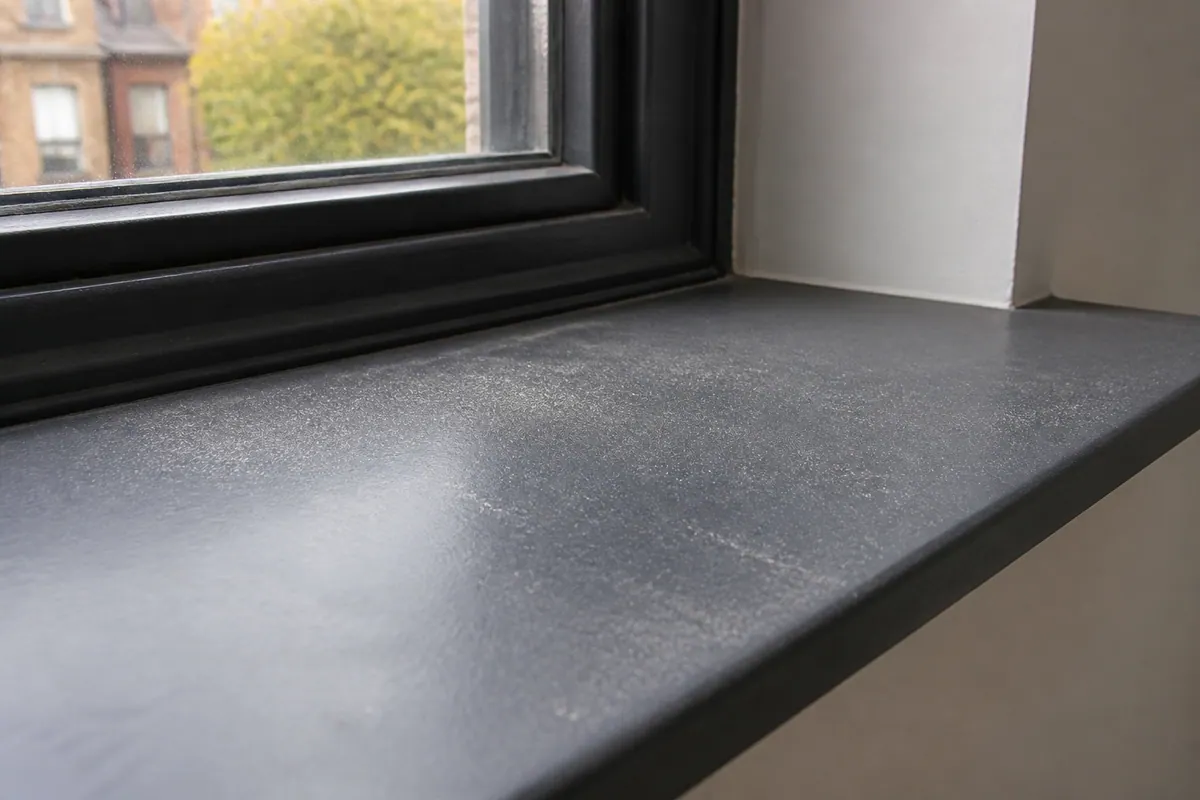
Include the quiet corners in the discussion.
The final removal of tools can leave a different trail from the installation itself. Check the exit route as part of the enquiry.
Explain which coverings remained in place and which surfaces are exposed now. Accessible tasks can then be agreed realistically.
Keep the proposed visit aligned with actual work completion, not simply the original renovation date.
A scoped quote
From £29/ hour
Discuss the actual brief against the published starting rate. Standard cleaning equipment and materials are included.
Explain the practical workload before accepting a total. Separate window requirements and unusual residue need their own consideration.
| Project | Pricing basis | What to describe |
|---|---|---|
| Smaller refurbishment | From £29/hour; scope confirmed | Surface list and visible dust distribution |
| Kitchen or bathroom work | From £29/hour; scope confirmed | Care notes for recently fitted items |
| Whole-property renovation | Work-specific price to be agreed | Condition across the complete room list |
| Commercial refurbishment enquiry | Discuss premises before a quote | Premises condition and suitability questions |
Based on Alesta’s published after builders cleaning rate. Building waste removal is quoted separately.
Different issues / different scope
| Post-build issue | Example | How it is approached |
|---|---|---|
| Fine dust | Settled deposits on exposed horizontal detail | Identify the material before selecting suitable cleaning. |
| Loose cleaning remnants | Ordinary dust rather than bulky materials | Coverage depends on the agreed cleaning tasks. |
| Adhesive or labels | An unidentified mark beneath a label | Confirm safe handling separately from ordinary dust removal. |
| Paint, plaster or cement spots | Hardened material at an installation edge | Assess first; complete removal may damage the finish. |
| Protective film | A manufacturer’s film on new cabinetry | Check installer instructions and confirm whether removal is included. |
Two separate jobs
A practical cleaning scope describes what can be reached and treated, not what must be carried away.
Timber offcuts and building materials are different from dust. Ask about a separate clearance scope.
Discuss building waste disposal ↗Different project briefs
Explain how the apartment will return to use and which routes carried tools.
List new fittings alongside their care notes, not under one generic surface label.
Describe accessible fixtures without assuming treatment of every grout mark.
Include connecting halls when deposits extend beyond the newly fitted areas.
Specify the renovation effects before adding any separate letting requirements.
An office enquiry needs confirmation of site access and the proposed cleaning scope.
A useful distinction
Builder stage
Cleaning stage
Room-by-room brief
Identify newly installed worktops and the surrounding suitable floor care, with residue assessed against its surface.
Explain the readiness of new sealants and the accessible fixture surfaces proposed for cleaning.
Check reachable frames and floors, and mention any dust inside storage rather than assuming it is included.
Explain the dust boundary across connected living areas, including any special surface-care notes.
Before the next property stage
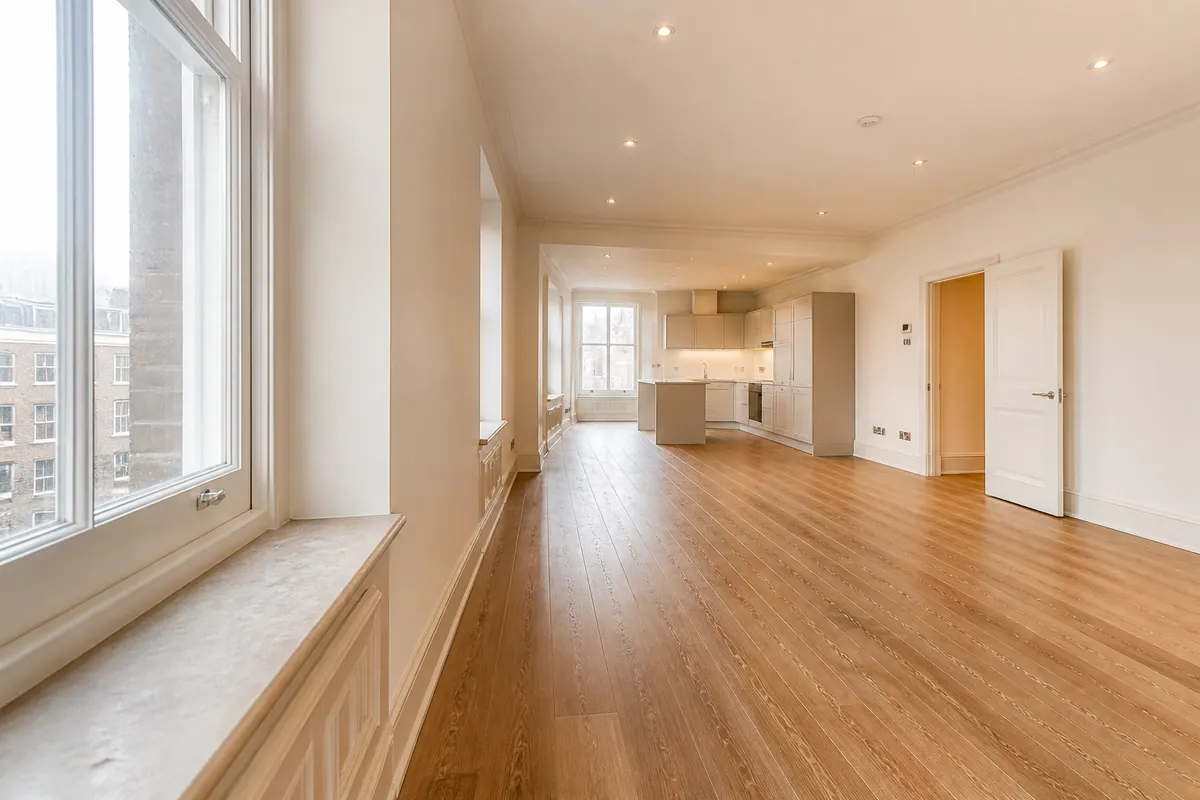
Make remaining deposits and obstructions clear.
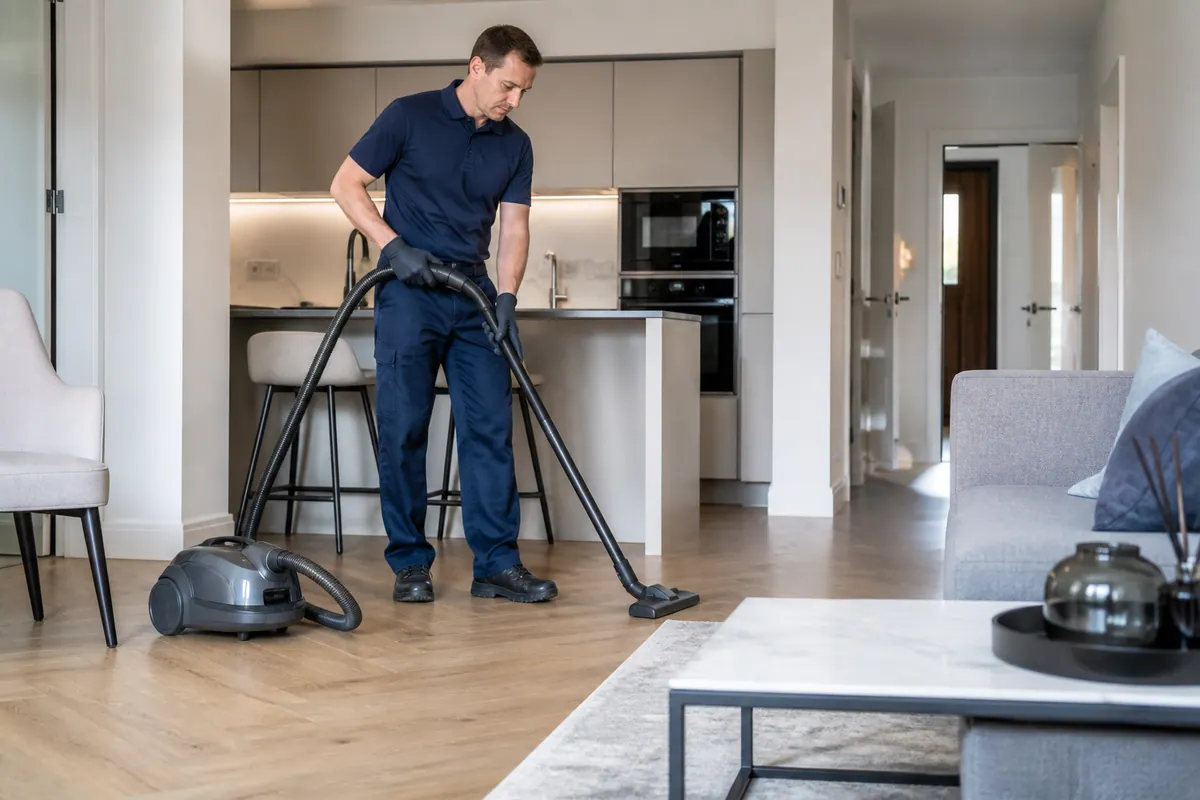
Clean the accessible details included in the agreed brief.
Keep specialist residue questions separate.
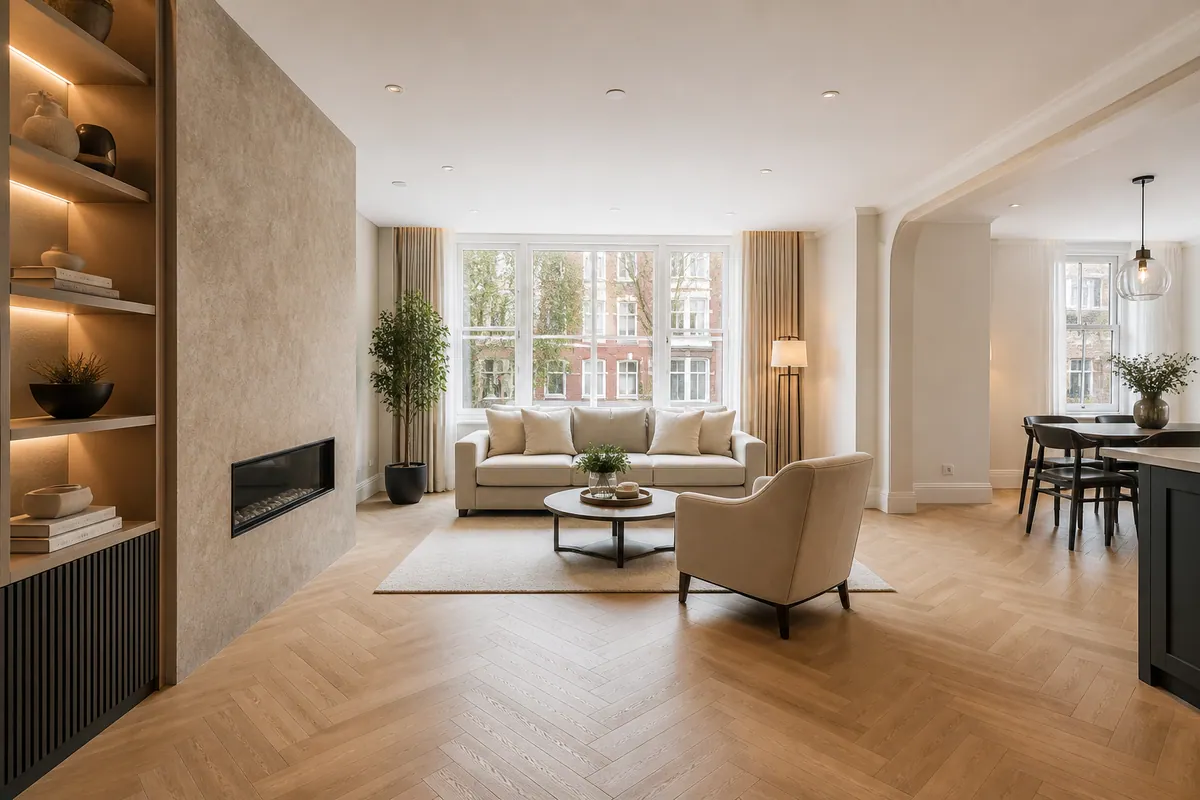
Use the review to inform the handover.
Different interiors illustrate the process rather than a guaranteed transformation.
Build your brief
Outline the work and the rooms it affected.
Use the summary as a note for a conversation; nothing is submitted and no appointment or quotation is created.
The output does not judge surface condition. Discuss its details directly, including separate waste and window requirements where relevant.
Discuss the brief: 020 3608 3976Who is planning the handover?
List the rooms being returned to use and who can explain the newly installed surfaces.
An owner or managing agent should identify the renovated areas and access arrangements before assuming a particular handover package.
Ask Alesta whether the specific project can be accommodated, including any site rules or coordination requirements.
Glass after renovation
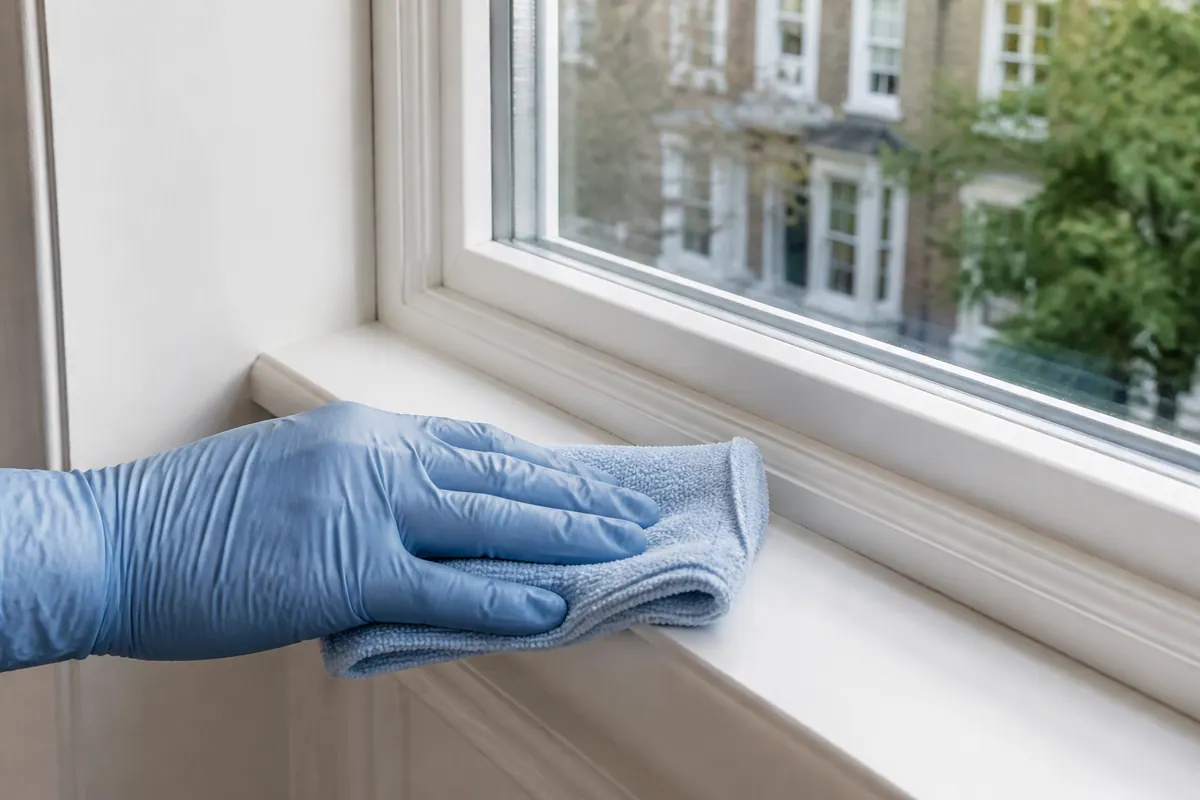
Tell Alesta where the glass is and how it can be reached; additional window work requires confirmation.
Hardened paint or cement requires assessment. A normal window-clean request cannot guarantee removal from every glazing surface.
Plan separate window cleaning ↗Before the appointment
An account of the actual room condition is more useful than a renovation label. Explain the dust and detail that remain once tools are out. Decorative ledges deserve a separate look after sanding and painting.
Give a contact who understands both building entry and the rooms being cleaned. That person should know what remains inaccessible. Carry equipment through already finished rooms without using them as storage.
Ask the supplier about appropriate care where the finish is unfamiliar. Alesta needs that information when reviewing the proposed surface work. Keep a note of old chips so they are not mistaken for removable residue.
Check the approach to the renovated room before deciding the boundary. Visible dust in another room is relevant, but its inclusion still needs agreement. Here, inspect the reception room and its approach.
£29/hour is a starting guide with materials and equipment, not a fixed fee for the completed renovation. The enquiry must establish required tasks.
A staged project needs clear room release dates. Discuss completed areas separately from active work so the proposed visit is not planned against an inaccurate completion date.
The hourly cleaning guide does not absorb waste collection. Identify what needs taking away and arrange the relevant scope before it blocks surface access.
Keep the additional surfaces distinct in the enquiry. Alesta can confirm availability and the appropriate scope without confusing them with the general finishing work.
Timing needs both the work list and readiness information. A dry-looking coating or small room does not establish how long the visit should take. Returning pictures and furniture should follow the agreed surface review.
Not every fitting mark is a cleaning task. If removal risks the coating, explain the limitation and consider the appropriate separate advice.
Your project / the final clean
Use the project details to start a quotation discussion, keeping difficult surfaces and separate services visible from the outset.
