
The return to an empty flat
Review the path into the living area as well as the room itself.
Marylebone · Separate retained features from new work
Separate retained features from new work.
Review what is cleaning residue and what belongs to the original finish.
An older surface may carry established marks alongside fresh renovation dust. For your Marylebone enquiry, describe the refurbished room around original features. Record existing stains before discussing treatment of recent splashes.
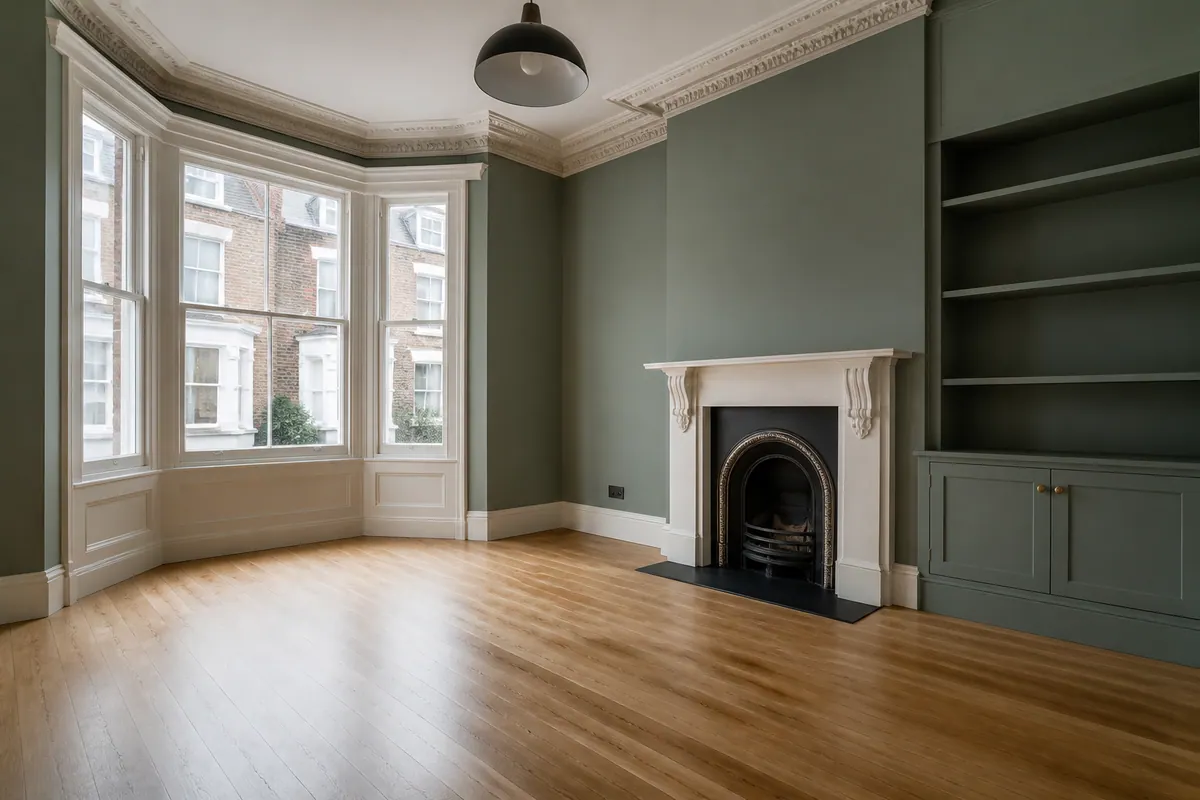
Illustrative renovation scene; no customer job or measured result is represented.
Different issues / different scope
| Post-build issue | Example | How it is approached |
|---|---|---|
| Fine dust | Deposits on reachable ledges and external faces | Agreed detail can form part of the finishing clean. |
| Loose cleaning remnants | Ordinary loose residue associated with cleaning | Discuss the extent alongside the other surface work. |
| Adhesive or labels | An unidentified mark beneath a label | Confirm safe handling separately from ordinary dust removal. |
| Paint, plaster or cement spots | Local deposits attached to the surface | Explain the marks before agreeing any treatment scope. |
| Protective film | Covering still attached to a fitted surface | Check installer instructions and confirm whether removal is included. |
Different project briefs
Review the path into the living area as well as the room itself.
External units and surrounding floor edges can need attention after installation.
Describe accessible fixtures without assuming treatment of every grout mark.
Use a room schedule to distinguish dust removal from specialist residue questions.
A rental handover needs an agreed post-build list, not an assumed tenancy package.
Set out commercial requirements for discussion, including access and work still outstanding.
Marylebone / the specific room brief
An older surface may carry established marks alongside fresh renovation dust.
This Marylebone planning example centres on refurbishment with retained features. An older surface may carry established marks alongside fresh renovation dust. The useful inspection route follows the refurbished room around original features, with attention to retained stone and adjacent new trim.
Record existing stains before discussing treatment of recent splashes. Keep any care notes for original stone surfaces available when discussing the visible marks.
Give shared-entry instructions and identify the person meeting the team. Review what is cleaning residue and what belongs to the original finish.
A scoped quote
From £29/ hour
Cleaning materials and equipment are included; confirm the current rate with the proposed work.
A quotation follows the condition and time required, not the heading on this page. Flag extra work early.
| Project | Pricing basis | What to describe |
|---|---|---|
| Smaller refurbishment | From £29/hour; scope confirmed | Surface list and visible dust distribution |
| Kitchen or bathroom work | From £29/hour; scope confirmed | New materials and safe access |
| Whole-property renovation | Individual quotation for the renovation | Released spaces and connecting routes |
| Commercial refurbishment enquiry | Confirm suitability before pricing | Proposed tasks and handover arrangements |
Based on Alesta’s published after builders cleaning rate. Building waste removal is quoted separately.
Before the appointment
Describe the project in terms of accessible surfaces rather than a promise that the property is “finished”. It helps to identify the actual priorities before discussing price or timing. An older surface may carry established marks alongside fresh renovation dust.
Do not rely on the postcode to explain access. Tell Alesta how the property is entered and which internal areas are available at the proposed time. Give shared-entry instructions and identify the person meeting the team.
The material needs to be identified before selecting a method. Share any installer instructions and distinguish bonded marks from loose dust; some treatments may be unsuitable or separately quoted. Record existing stains before discussing treatment of recent splashes.
Rooms outside the work zone can be discussed if deposits reached them. They are not automatically included, so name the affected surfaces and ask for the additional area to be scoped. Here, inspect the refurbished room around original features.
The starting price is £29/hour. An agreed room brief is needed to establish the work, and separate services are not implied by the guide. Equipment and cleaning materials are included.
Tell Alesta which trades are returning and what they will do. Dust-producing work after a clean may change the sensible sequence; do not assume later deposits are included in the visit.
Large offcuts and construction packaging are not ordinary cleaning residue. Give them a separate description so the appropriate collection scope can be discussed.
A separate request lets Alesta address limitations honestly. This is particularly important for bonded marks on newly installed glass.
Follow the instructions for any newly applied coatings before arranging their cleaning. Retained stone may have different care requirements from adjacent new trim. Explain which surfaces are ready and which still need installer advice when discussing the date.
A final review should distinguish untreated specialist residue from ordinary dust. Damage or staining may need a different service, not repeated cleaning.
Start with the work
Use a category as a starting point, not a promise that all listed work applies to the property.
Explain how the completed rooms connect, particularly where equipment crossed areas that were not themselves renovated.
Beyond the work zone
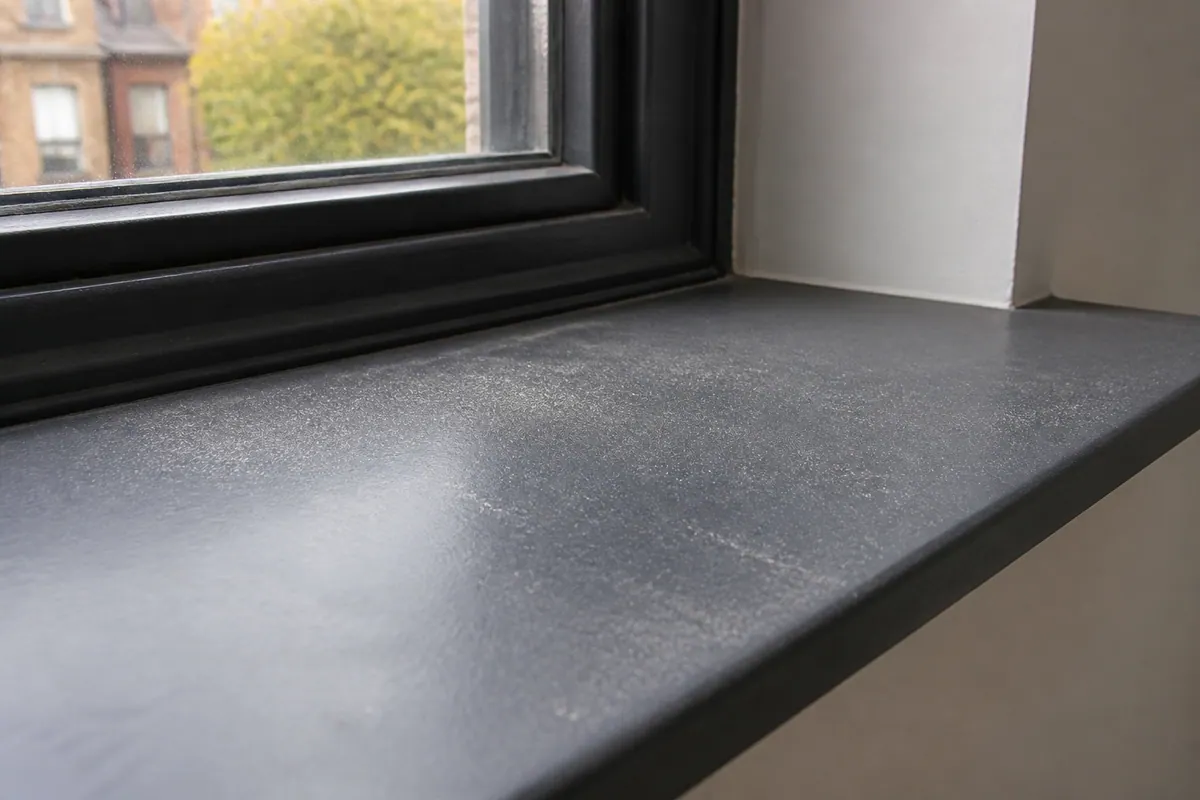
Check where the last tools were carried out.
Look at the last surface a contractor passes when leaving the room. That edge can help reveal whether the cleaning boundary should extend.
Surface-aware cleaning means lifting deposits with appropriate equipment rather than treating every room as an identical wipe-down.
The final clean should follow dust-producing work, with any remaining attendance explained in advance.
The dust route
This diagram suggests inspection points; it does not document a particular property.
Include the exposed tops and lips you want considered in the surface list.
The doorway joins two cleaning zones; describe dust on both sides.
Name the fixtures affected by the work so their material and accessibility can be assessed.
Track deposits into connecting spaces and ask for those areas to be priced explicitly.
Two separate jobs
The relevant task is cleaning reachable room features, not collecting the materials left beside them.
Waste collection needs its own account of material type, volume and access; it is not included automatically.
Discuss building waste disposal ↗A useful distinction
Builder stage
Cleaning stage
Room-by-room brief
Distinguish cupboard exteriors from contents and interiors; describe additional requirements before the scope is settled.
The bathroom list should identify grout residue rather than treating every pale deposit as loose dust.
Make the accessible bedroom detail explicit, particularly where renovation deposits reached a room that was otherwise protected.
The room may retain furniture; explain which surrounding surfaces remain reachable for the requested cleaning.
Protect the new finish
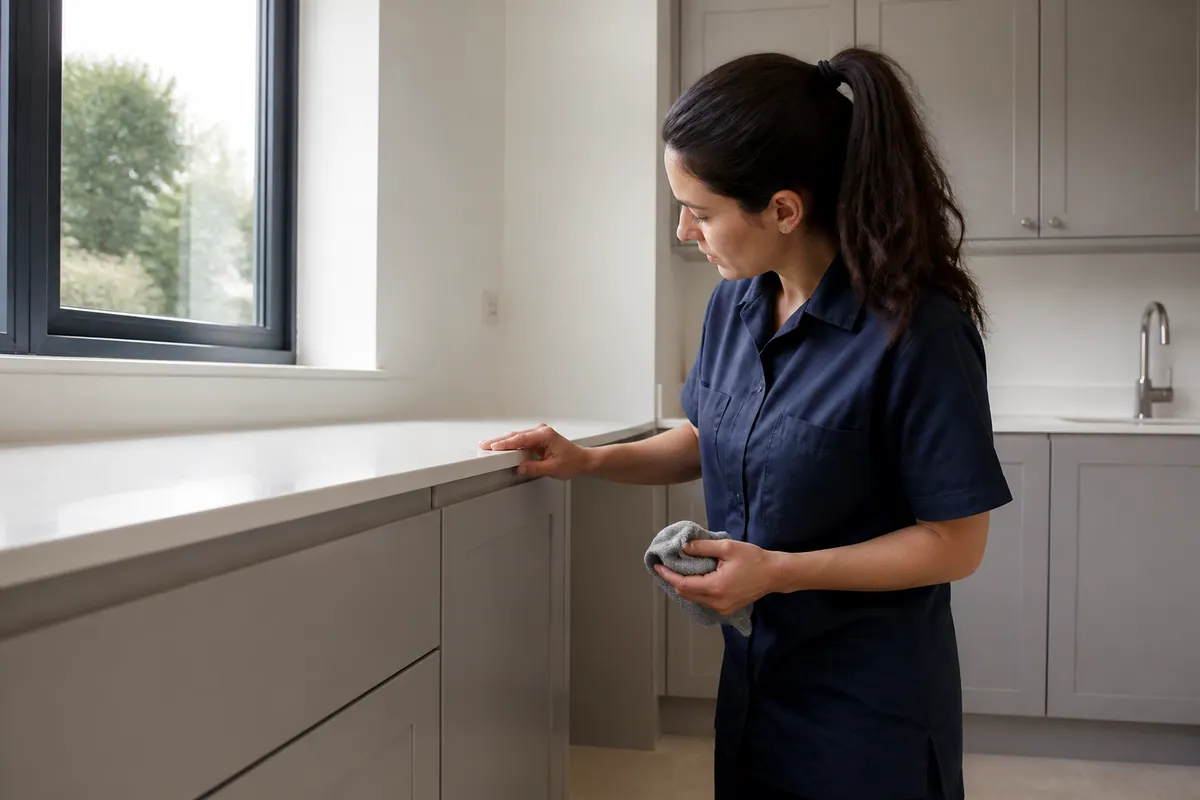
Illustrative surface review.
Manufacturer guidance matters more than a finish looking dry.
An apparently minor mark may sit on a sensitive coating. Check the surface specification before including removal in the request.
Different products can reach cleaning readiness at different times.
Provide floor or tile care notes alongside the room list.
Glass and coated metal require their own residue assessment.
From renovation to room use
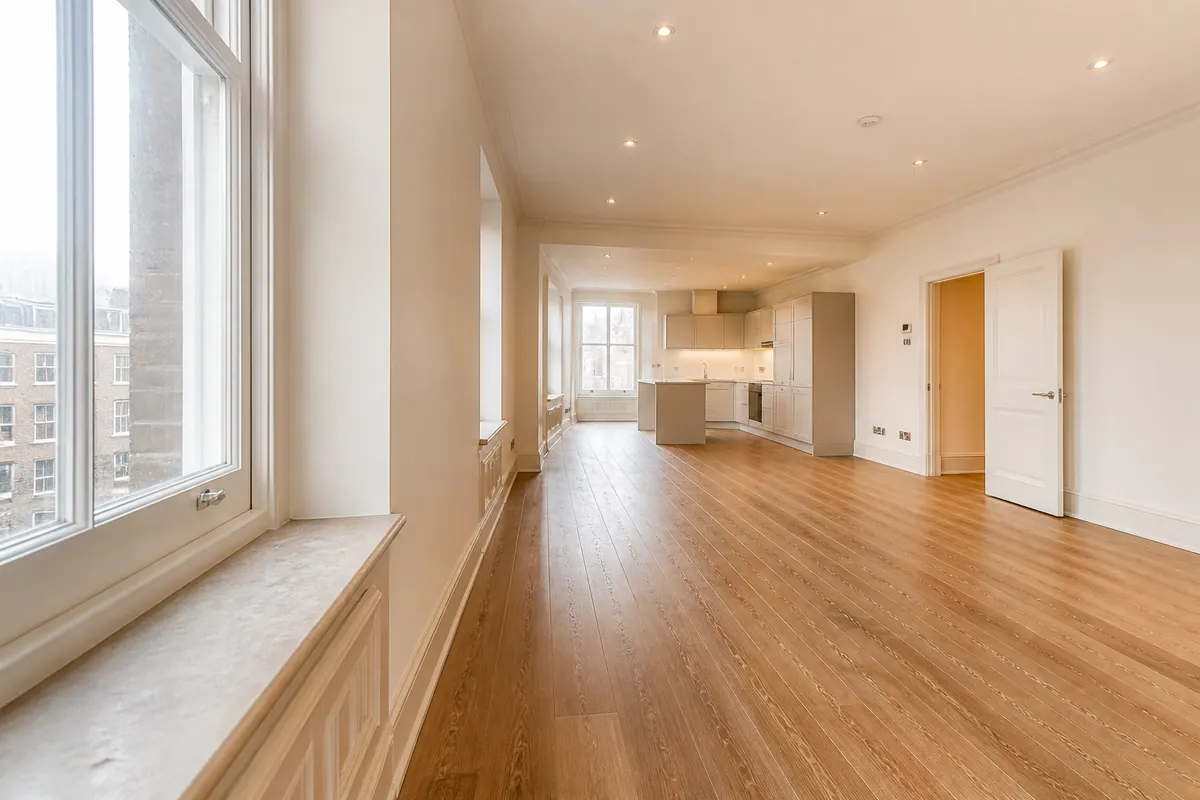
Confirm work completion before agreeing the cleaning date.
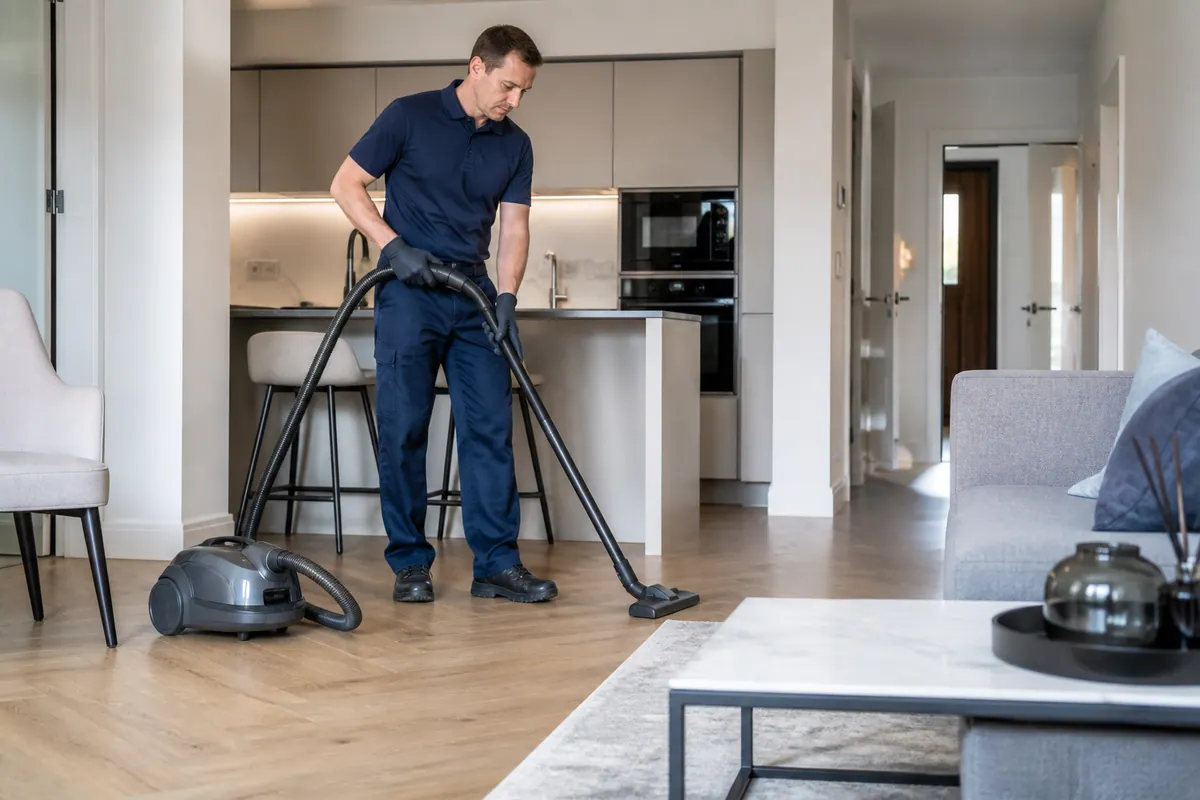
Clean the accessible details included in the agreed brief.
Compare completed detail with the agreed priorities.

Coordinate the intended return to the rooms.
The sequence is illustrative, not a before-and-after record of the same home.
At a glance
Build your brief
A few specifics make the scope easier to discuss.
No information is sent by the planner. It helps describe the work without offering an automatic price.
The proposed clean still needs confirmation against the property, especially where difficult residue or separate collection is involved.
Discuss the brief: 020 3608 3976Who is planning the handover?
Explain which parts of the home are ready to be released and what you plan to do with them after the cleaning review.
Identify the person releasing the property and separate renovation priorities from other letting requirements.
Describe remaining trades and site access, then ask about project coordination; contractor arrangements require confirmation.
Glass after renovation
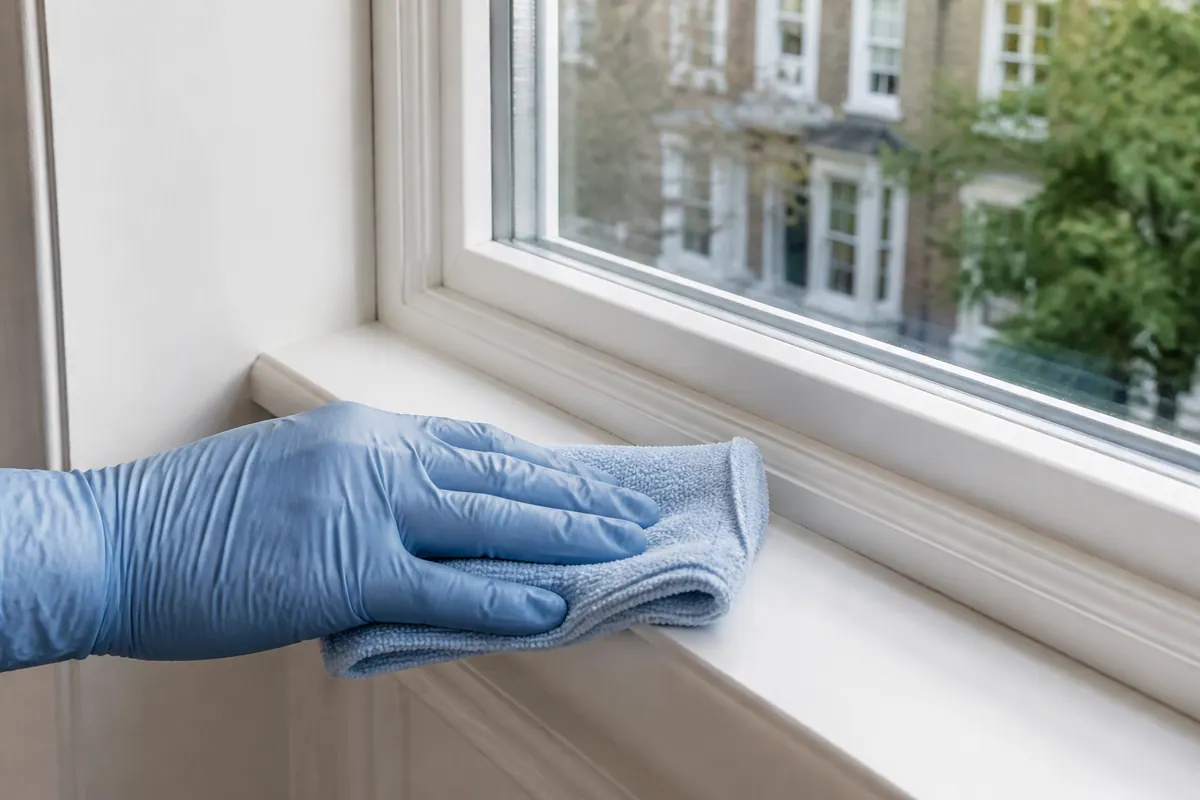
Specify the glazing you mean, including height and whether the request concerns its inside, outside or frame.
The deposit and glass finish both matter. Some construction marks may need separately assessed treatment.
Plan separate window cleaning ↗Service-area planning
Use the map to locate the Marylebone service area, not an Alesta branch. Provide the actual address when asking about access and appointment availability.
For another nearby area, contact Alesta through the main after builders service to confirm coverage and availability.
Your project / the final clean
Describe the completed work and the areas it affected, then ask Alesta to confirm the practical scope for your property.
