
Kitchen
Name the accessible kitchen detail before discussing timing. Film, labels or hard spots should not be assumed removable within ordinary dust work.
Stratford · Cabinetry detail within the refitted apartment
Cabinetry detail within the refitted apartment
A clear brief for occupying the refitted apartment.
A refitted apartment can combine kitchen detail with dust in the adjoining living space. For Stratford, list the exposed cabinetry and room edges together with the shared lift arrangements needed for equipment access.
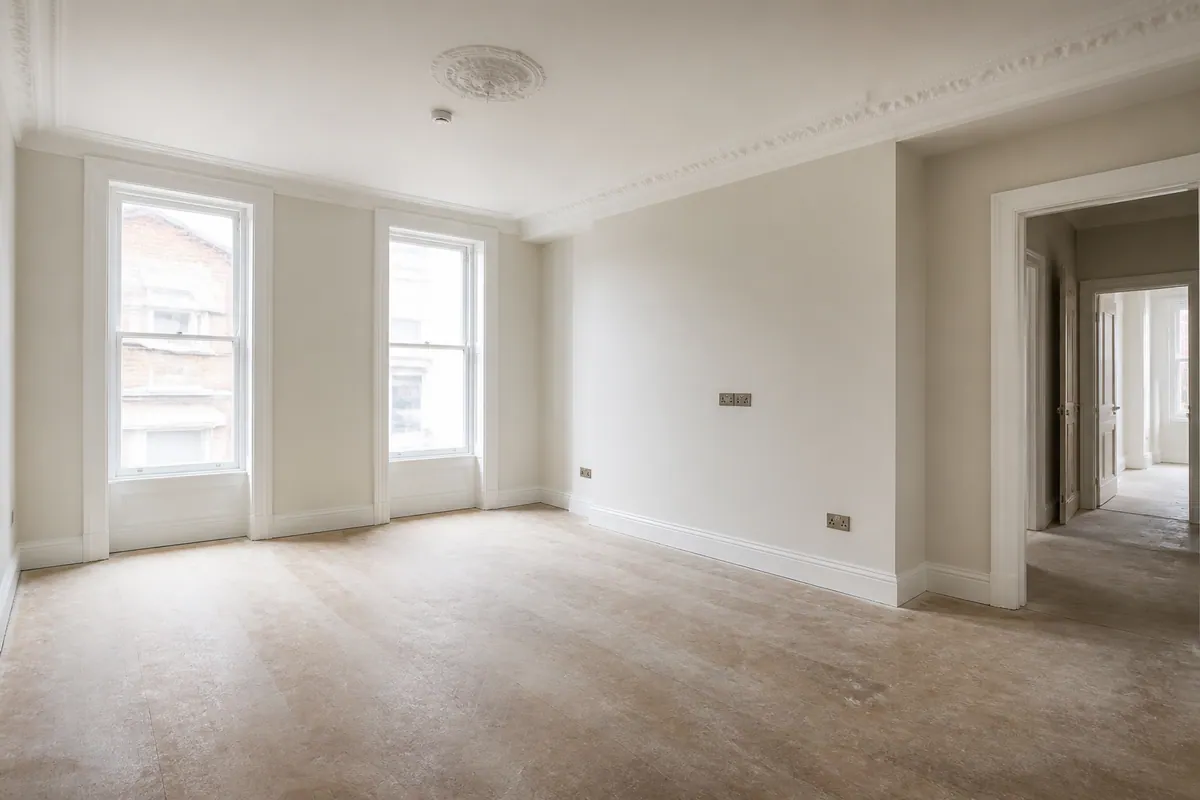
Illustrative photography, not proof of a cleaning result.
Prepare a conversation, not a booking
Collect the project basics before contacting Alesta.
The selections cannot identify which adjoining ledges carry deposits. Explain those when using the note to contact Alesta; it stays private and produces no booking or calculated quote.
Describe the living-area deposits beyond the units. The fitted-room category cannot define their extent by itself.
Talk through the room list: 020 3608 3976At your Stratford property
Inspect exposed cabinet edges before contents are put away.
Confirm shared lift access with the building contact and explain the route from it to the flat. That arrangement should be settled alongside the cleaning scope, not assumed on arrival.
Ask whether fitters need a final return to the kitchen or living area. The clean works best after those dust-producing activities have ended and finishes are ready.
Review external cabinetry and the agreed adjoining surfaces before the apartment is filled. Interior storage or appliance detail must be specified if wanted.
Name rooms, not an unlimited checklist
Name the accessible kitchen detail before discussing timing. Film, labels or hard spots should not be assumed removable within ordinary dust work.
Reachable sanitary detail may be included by agreement. Ask specifically about shower glass or other work beyond the named surfaces.
Explain whether furniture limits bedroom access. The proposed clean should not assume empty floor edges where belongings remain.
Check the room boundary where trades passed through. Name any living-area deposits that should be priced beyond the main renovation zone.
A sequence, not a completion guarantee
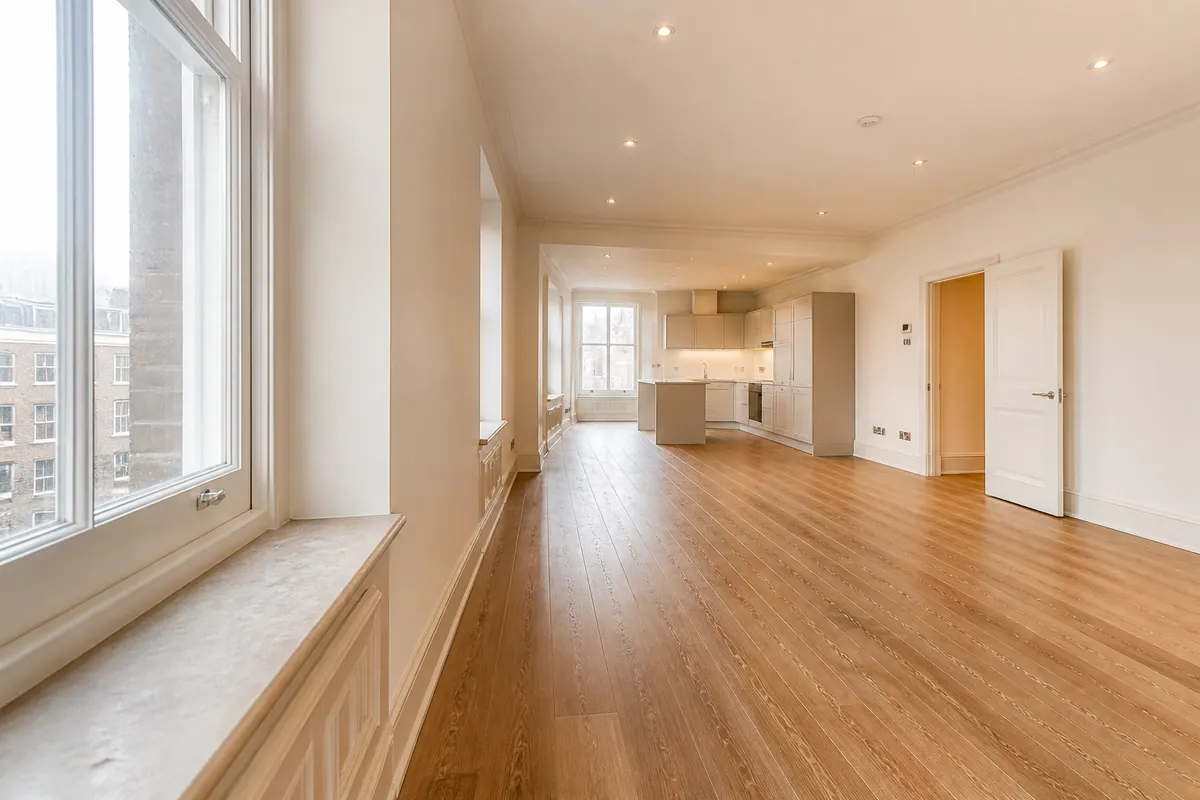
Identify the areas released after the last dusty task.
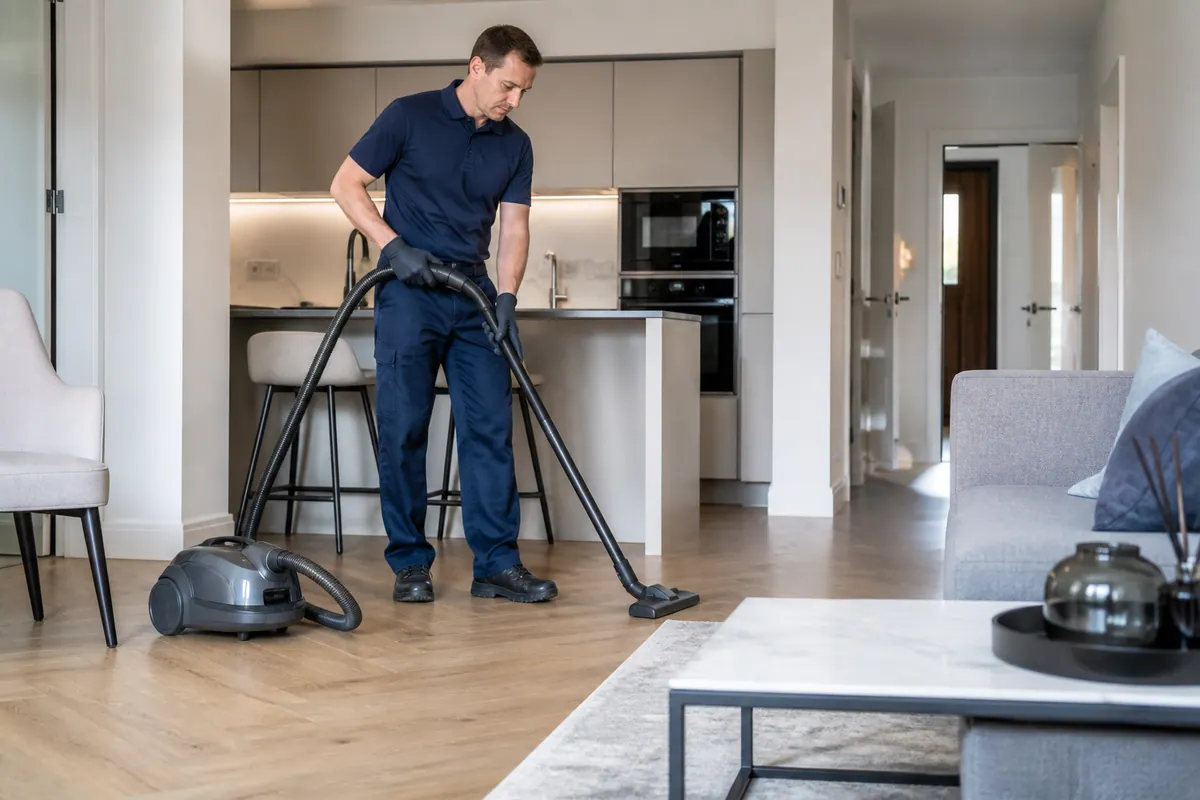
Clean the accessible detail without assuming specialist extras.
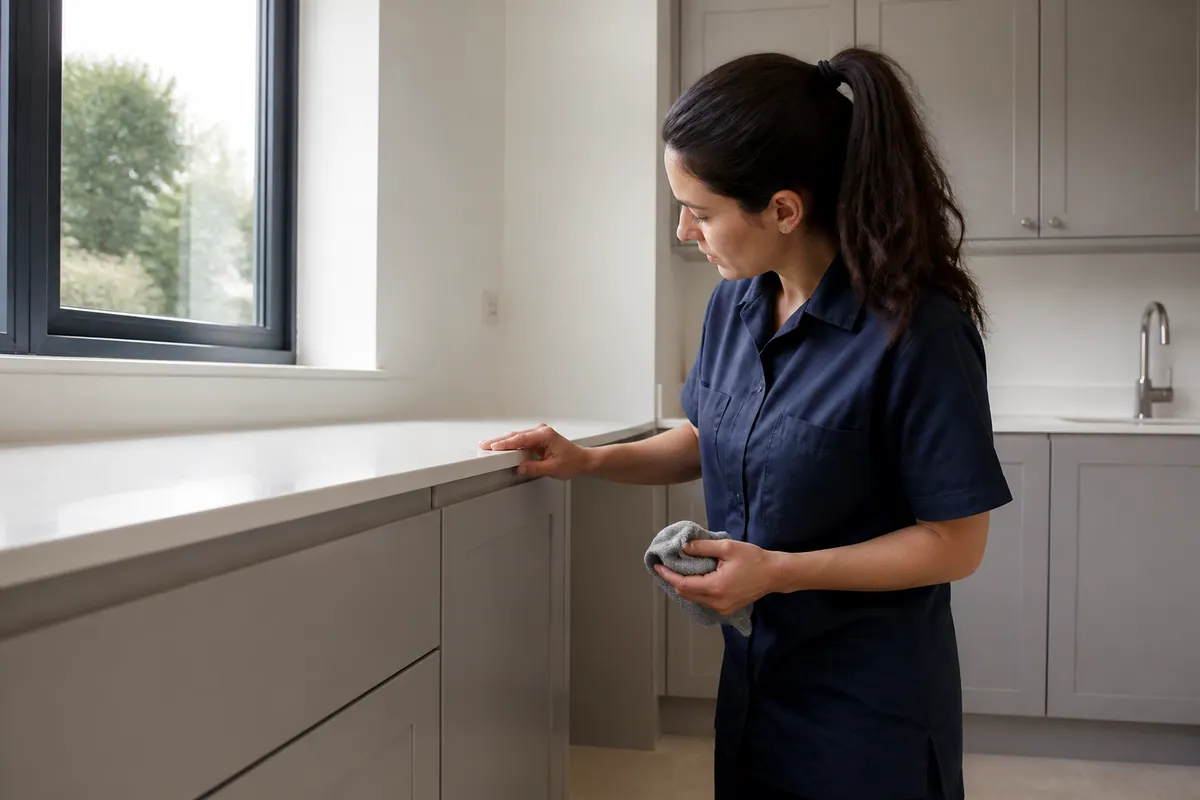
Note surfaces that remain outside the agreed access.
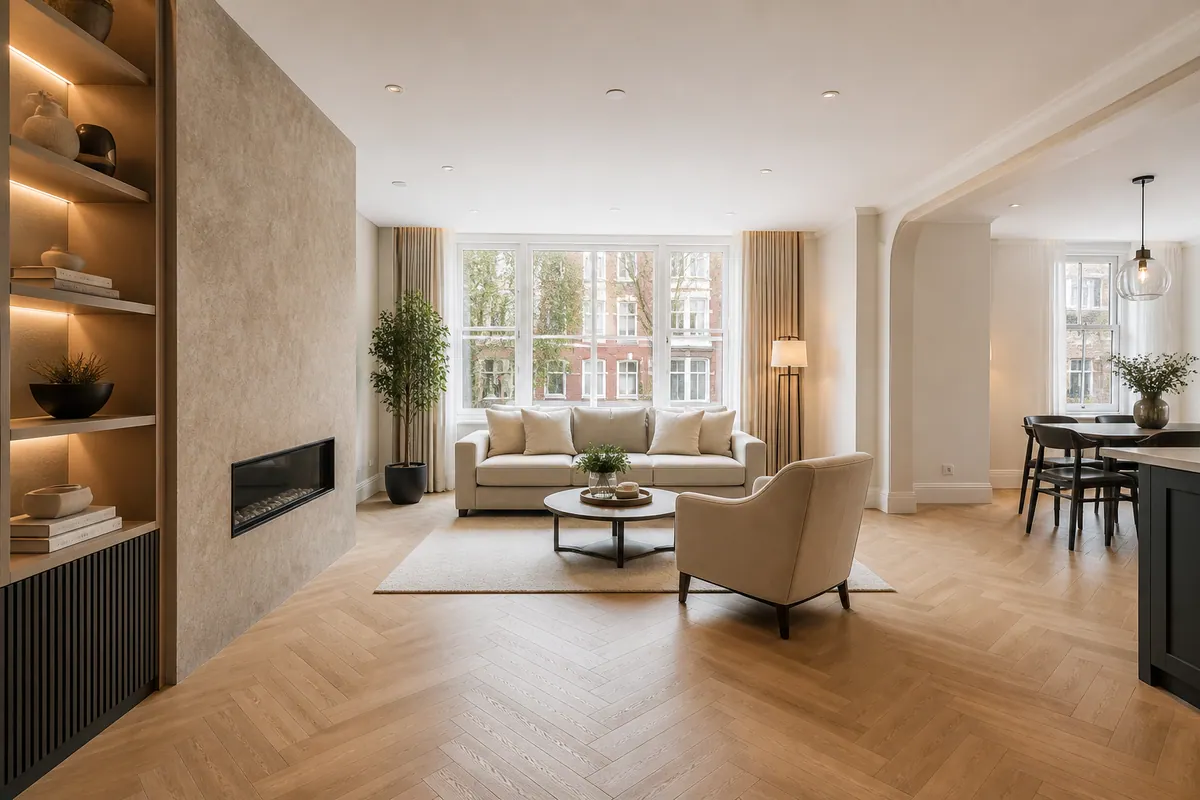
Separate the next property task from the completed clean.
The pictured stages are not a guarantee of the condition after treatment.
Quoting the Stratford work
From £29/ hour
Alesta supplies equipment and materials for the agreed cleaning; confirm the current price with the room information.
The extent of fitting detail can matter as much as the floor area. Additional services remain separate considerations.
| Project scope | Cost discussion | What informs the quote |
|---|---|---|
| Local interior works | £29/hour starting guide only | Condition of the cabinet ledges and adjoining living floor |
| A refitted wet room | £29/hour is the starting point | Readiness of new cabinetry surfaces |
| Multiple renovated rooms | Discuss an individual quotation | Room access before occupying the refitted apartment |
| Business refurbishment | Specific commercial quote required | Working areas and restrictions |
Based on Alesta’s published after builders cleaning rate. Building waste is a separate service enquiry.
Describe the Stratford work
The selection is a prompt, not a confirmed service package. Add the room condition and access information when making contact.
For a complete refurbishment, identify the priorities within each room rather than expecting a single identical checklist everywhere.
Inspect the affected route
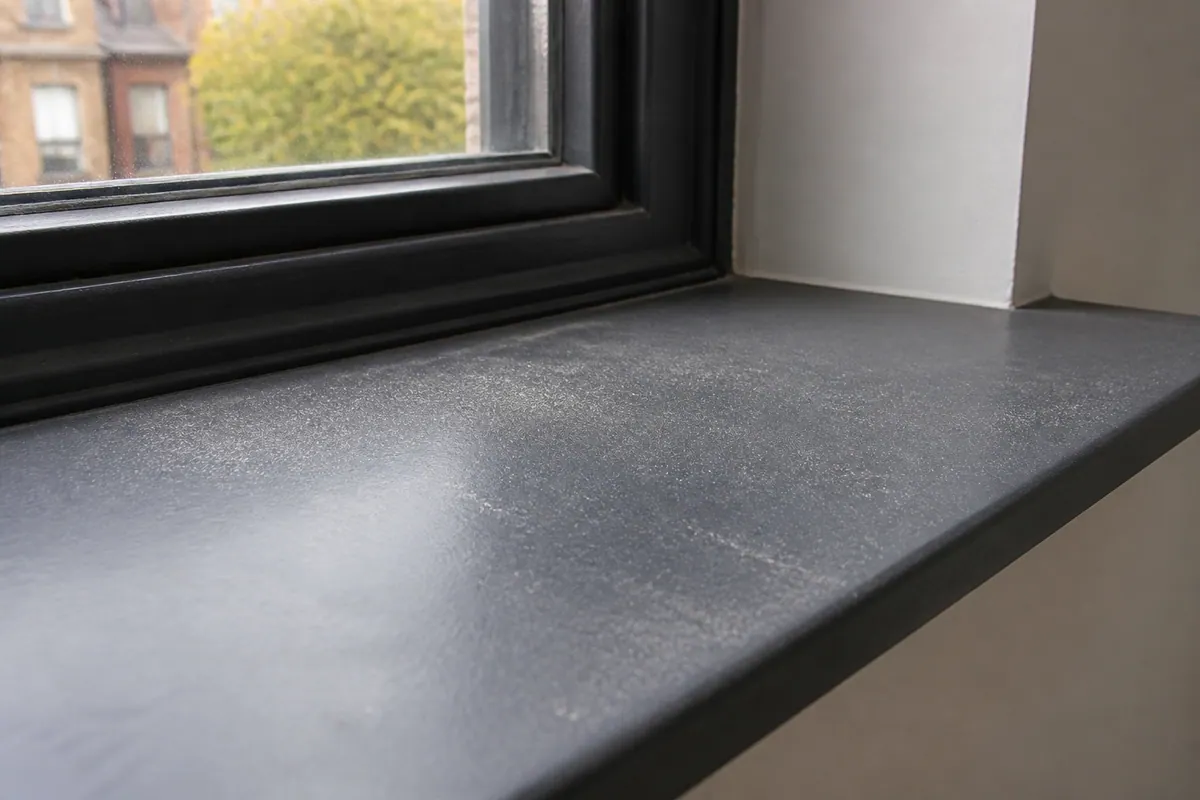
Include the edges in the first description.
Check ledges beyond the kitchen units and the adjoining living floor. The room list should follow the deposits visible after fitting, not only the footprint of the new cabinetry.
A room description is stronger when it names the ledges, fittings and floor edges involved. Those details help separate general dust from individual difficult spots.
Discuss any later dust-producing visit before fixing the cleaning sequence.
Draw the cleaning boundary
These categories organise the conversation. They do not promise that every pictured detail is included.
An external cabinet edge is different from an internal compartment. Explain the faces you want considered.
Follow the room’s perimeter and identify any sections blocked by possessions.
Sanitary areas can be discussed within the room brief, with material and readiness identified.
Adjoining spaces should be added by agreement where deposits are visible, not automatically because they connect.
Identify before treating
| Surface issue | Location | How to discuss it |
|---|---|---|
| Settled dust | cabinet ledges and adjoining living floor | Include the identified deposits by agreement. |
| Surface remnants | Loose remnants on surfaces | Ask about the small deposits described. |
| Possible sticky residue | Labels or marks beside new cabinetry surfaces | Check what the installer says about the material. |
| Plaster and paint spots | Isolated spots near the cabinet ledges and adjoining living floor | Assess bonded deposits before selecting products. |
| Remaining protective layer | Film over an installed face | Film may have a specific release instruction; ask first. |
Keep clearance outside the dust brief
Agree dust and fitting detail as cleaning tasks, with any resistant residue separately assessed.
A waste enquiry should explain volume, weight and collection access. The cleaning quotation cannot substitute for those details.
Ask about separate building waste collection ↗Different work leaves different detail
If rooms remain occupied, explain the boundary between daily use and renovation effects. Everyday housekeeping is a different request from this finishing stage.
Protective labels or film on new kitchen items need a responsibility check. Their removal is not automatically part of cleaning around the installation.
Sanitaryware can carry both loose deposits and installation damage. Explain what is visible without assuming every mark is safely removable.
A larger refurbishment can be divided into room priorities without inventing a fixed package. Describe both the dust distribution and the next intended use.
A handover deadline is worth discussing early, but timing still depends on condition and readiness. Do not assume a fixed-duration visit from the date alone.
Discuss the actual commercial task directly with Alesta. Contractor coordination is not assumed simply because the project is called a refurbishment.
Check the conditions for arrival
Before the clean
For the appointment
A finish is not just a colour
Illustrated material assessment.
The deposit cannot be assessed without the finish.
Cabinet surfaces may have protective coatings or installation residue. Identify them before treatment, and keep adjustment or damage questions for the installer.
Check the newest application before planning the method.
Keep floor and tile guidance available for discussion.
Record damage independently of removable deposits.
Brief answers, clear limits
Make the responsible contact clear
Keep the living area in view when inspecting kitchen fitting dust. The apartment’s new units may be the main project, but accessible ledges outside their footprint can still need a named scope.
Give the keyholder a clear refurbishment brief. A tenancy inventory and the finishing-clean agreement are separate documents.
Share the actual premises and task requirements for review. Do not assume specialist site attendance from the general service description.
Glazing is an explicit request
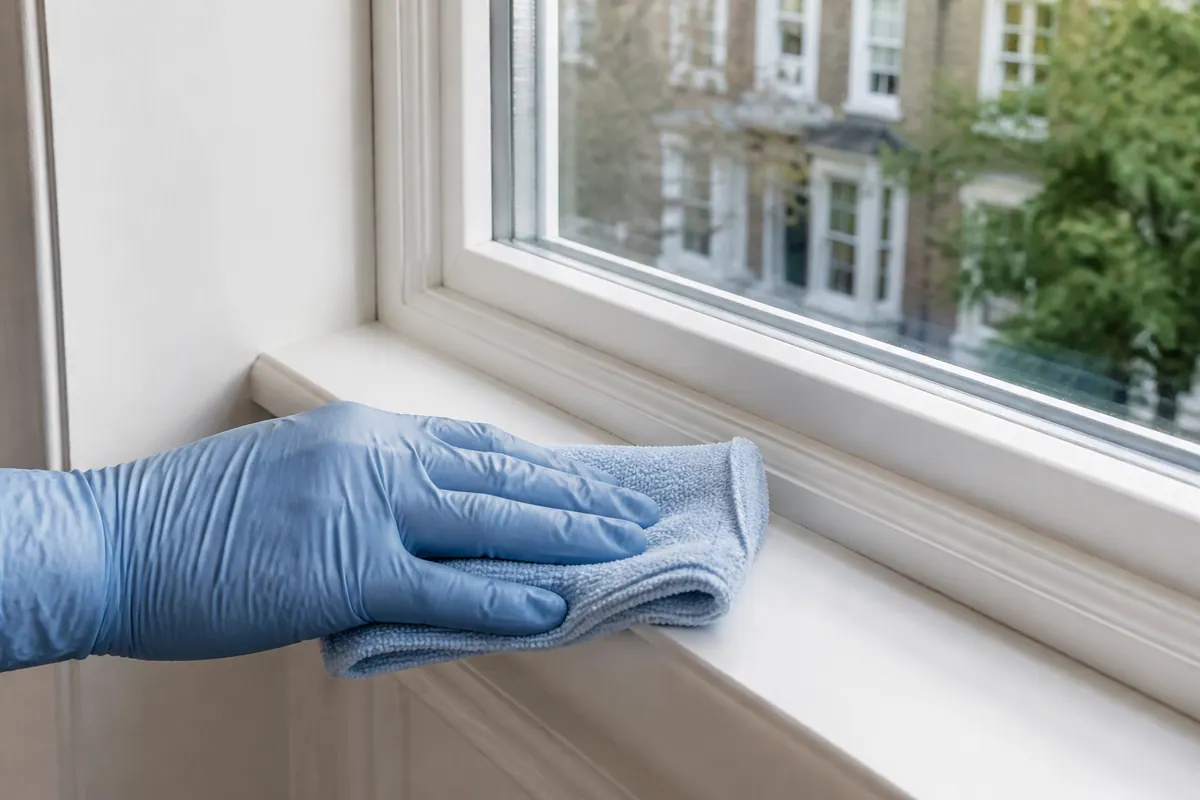
If windows beyond the new cabinetry are wanted, name them as part of an additional request. The living-area glass and its access are not automatically covered by describing a refitted apartment kitchen.
Glazing with building residue should be reviewed for a suitable method. A clean request does not override the manufacturer’s restrictions.
Ask about the window scope ↗Address and access
Use the service-area map to orient the request. Alesta needs your precise Stratford address and access arrangements to discuss attendance.
If your area is elsewhere, use the after builders service page to clarify the arrangements.
Questions for this project
List the renovated areas and any visible dust beyond them. For this project, cabinet ledges and adjoining living floor deserves a specific entry rather than an implied inclusion.
Check how equipment can be brought from the building entrance to the apartment and identify the contact who can clarify that route. Give the arrangements to Alesta before relying on a visit. The lift information supports access; it does not define the kitchen or living-area surfaces to be cleaned.
Any uncertainty about new cabinetry surfaces belongs in the enquiry. More aggressive removal is not a substitute for understanding the finish.
There is no automatic rule based on the doorway. Include relevant adjoining deposits in the room list and confirm their scope.
No fixed total follows from the hourly guide. Alesta publishes from £29/hour and includes cleaning equipment and materials; the proposed tasks still need agreement.
Name the exposed ledges and floor areas where deposits are visible beyond the fitted units. Explain what furniture remains so the accessible detail is clear. This is more useful than assuming the whole apartment is included because the kitchen opens into another space. Agree the extent before proceeding.
The contractor’s remaining materials need a different agreement from dust removal. Explain what is left before the visit is planned.
Additional glazing or carpet treatment may be arranged when suitable and available. Name the areas and any unusual residue clearly.
There is no standard duration covering every property. Dust, access and surface detail determine the work; drying guidance also affects when rooms can be used.
Some deposits cannot be treated safely without risking new cabinetry surfaces. Record the issue separately instead of assuming a stronger product must solve it.
Stratford / next conversation
Bring the room priorities and any uncertain marks to the first conversation. The aim is a clear scope rather than an assumed standard package.
