
Fridge Not Cold but Freezer Working: What the Pattern Usually Means
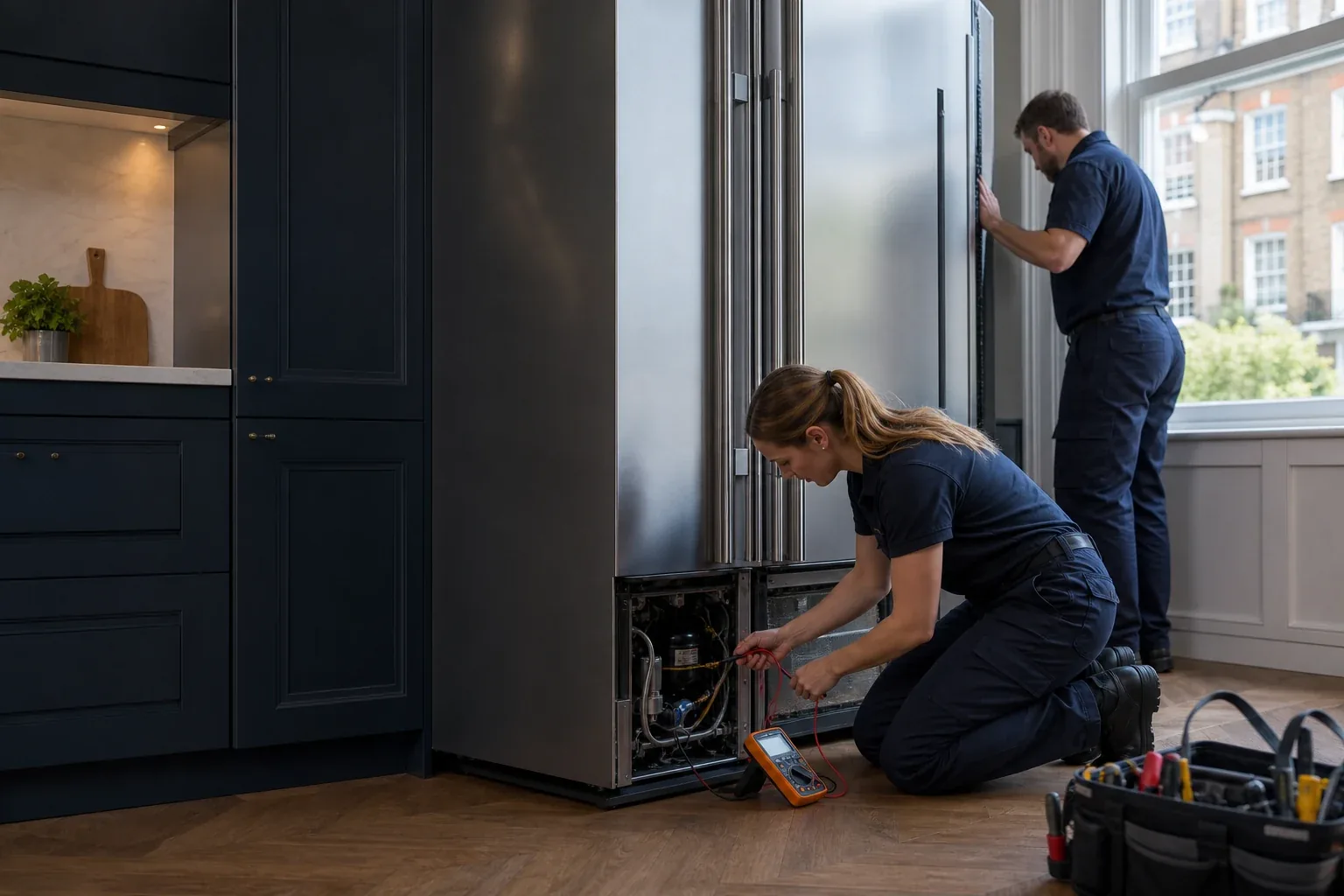
If the freezer is working but the fridge is warm, cold is being produced but may not be reaching or circulating through the fridge compartment. Common possibilities include blocked air vents, frost around the evaporator, a failed fan, a stuck damper, a sensor fault or poor airflow outside the cabinet. Protect perishable food first; do not wait for a repair while food sits above a safe chilled temperature.
Start with food safety, not the thermostat dial
Use an appliance thermometer if available. Keep the door closed and move high-risk food to another working fridge or a cool box with ice packs. The UK Food Standards Agency advises chilled food should be kept at 5°C or below in the fridge; follow its discard guidance when food has been too warm for too long.
Confirm the pattern over a few hours
Check whether the freezer is genuinely maintaining temperature rather than merely keeping already-frozen food hard. Listen for compressor and fan operation, note frost, and inspect the fridge vents without dismantling anything. A fridge lamp proves only that power reaches part of the appliance.
Record the make, model, displayed temperatures and error codes. Alesta’s fridge and freezer repair service can use that sequence to distinguish airflow, control and sealed-system faults.

Five checks that do not require removing a panel
- Move food away from internal vents and avoid overpacking.
- Confirm the door closes against the seal all the way around.
- Clean accessible external ventilation areas as the manual directs.
- Check the appliance has adequate clearance and is not beside a heat source.
- Review settings, holiday mode and recent power interruptions.
Do not turn the control repeatedly to maximum. If airflow is blocked by ice, a colder setting can lengthen compressor operation without restoring circulation.
What frost location can reveal
A sheet of ice on the freezer’s rear internal panel may indicate a defrost-system fault. Frost only around a door edge can point to poor sealing or a door left ajar. Do not chip ice with a knife, screwdriver or heat gun; puncturing hidden refrigerant pipework can ruin the appliance and create a safety problem.
A full manual defrost may temporarily restore airflow on some frost-free models, but it does not repair a failed heater, sensor or control. Follow the manufacturer’s shutdown and drainage instructions and keep food safely elsewhere.
The fan and damper possibilities
Many fridge-freezers move cold air from the freezer using a fan and controlled vent. A failed fan, jammed ice or stuck damper can leave the freezer cold and fridge warm. Some fans stop when the door opens, so casual listening is inconclusive. Do not defeat door switches or reach into fan openings.
Door seals: use paper as a clue, not a verdict
Close the door on a strip of paper at several points. Very loose grip or visible gaps suggest sealing trouble, but cabinet alignment and hinge wear can mimic a bad gasket. Clean the seal with the manufacturer-approved method and remove packages that obstruct closing. Torn or distorted seals need correct parts.
When the installation is the cause
Built-in appliances need designed ventilation paths. Dust, a blocked plinth grille or cabinetry changes can trap heat around the condenser. Freestanding units need the clearances in their manual. If the problem began after kitchen work or moving the appliance, check installation conditions before ordering a control board.
Repair clues worth giving the engineer
- Actual fridge and freezer temperatures
- Where frost forms
- Whether noises change when doors open
- Recent moving, defrosting or power cuts
- Compressor run pattern
- Error code and model number
A refrigerant leak or compressor issue can eventually affect both compartments. Those are not DIY jobs; refrigerant work requires appropriate competence and equipment. Use the broader appliance repair hub if more than one kitchen appliance is involved.
Repair or replace?
Age alone does not decide. Ask for the diagnosed component, parts availability, total repair cost, warranty and energy performance. A fan or sensor may be straightforward; cabinet insulation or sealed-system failure may change the economics. Do not authorise parts by guesswork.
The useful diagnostic chain is: protect food, measure both compartments, clear airflow, inspect seals and installation, then record frost and sound. If the freezer remains cold while the fridge warms, circulation and defrost components deserve focused testing.
Resetting power is not the same as diagnosing
After a brief outage, some appliances need a few minutes before the compressor restarts. Follow the manual and avoid rapid off-on cycling. If settings were lost, restore the recommended temperature rather than selecting the coldest value. A stable reading after several hours is more useful than repeatedly opening the door to feel the air.
If the appliance shares an extension lead, move it only in accordance with the installation instructions; refrigeration appliances should have a suitable permanent supply. Heat, discolouration or crackling at the plug or socket requires an electrician.
Prepare access for a repair without moving the machine
Remove food, shelves only if instructed, and items stored on top. Find the rating plate and proof of purchase. Explain whether the appliance is integrated and provide cabinet details. Do not drag it out: water lines, flooring and concealed cables can be damaged, and the engineer may need a planned two-person move.
Ask whether diagnostic fees, parts, return labour and disposal are included. If a part is unavailable, request the component number and diagnosis in writing before deciding on replacement.
After repair, verify recovery with measurements
Allow the appliance the time specified by the engineer or manual, then record temperatures without frequent door opening. Check that the compressor cycles, the fridge vent is clear and no new frost pattern develops. Return high-risk food only after safe temperature is established. If the original pattern returns, provide the new readings rather than describing the cabinet as simply “not right”.
Warm weather changes the urgency
A warm London kitchen, direct sun and frequent door opening raise cabinet temperature quickly. Minimise browsing, group necessary items before opening and do not pack vents with improvised ice. In cold weather, an appliance in an unheated garage may also behave outside its designed climate range. Check the climate class and installation limits in the manual; a fault that appears seasonal may be an unsuitable location rather than a failed thermostat.
If replacement is chosen, arrange lawful collection rather than leaving the old appliance outside. The waste-removal service is relevant only if it confirms that the appliance can be accepted and handled through the proper waste route. Remove food and defrost only according to collection instructions.
Record the temperature change as well as the sound.
