
Blocked Kitchen Sink: What to Try Before Calling a Plumber

For a blocked kitchen sink, remove standing water, clean the strainer and visible waste, then try a sink plunger. If the blockage is in a removable bottle trap and you can isolate the area safely, cleaning the trap may solve it. Stop if several fixtures are backing up, water appears in another appliance, the pipework leaks or caustic drain cleaner is already present.
The order matters. A kettle of boiling water, chemical cocktail or dismantled pipe can turn a manageable grease blockage into burns, damaged seals or a flooded cupboard. Begin with evidence: is the sink completely stopped, merely slow, or draining normally until the washing machine empties?
First decide whether the blockage is local
Run no more water than the sink can safely hold. Check the other bowl, dishwasher connection and nearby bathroom fixtures. If only one kitchen bowl is slow, debris near the strainer or trap is plausible. If both bowls fill, the restriction is beyond their junction. If a downstairs drain or toilet also gurgles, the shared waste route may be involved.
For a restriction confined to this fitting, Alesta’s sink and drain unblocking service is the most specific professional route. Describe which other outlets remain normal.
Clear the parts you can see
Put on gloves and lift out the basket strainer. Remove food, labels, coffee grounds and fat deposits without pushing them further down. Wipe the rim and overflow opening if accessible. Do not insert knives, wire or a rigid rod into the waste; these can puncture flexible sections or compact debris.
Scoop standing water into a bucket so later work is controlled. If the water contains drain cleaner, stop. Keep people away, ventilate and tell the plumber exactly which product and quantity were used.
Plunge the sink without pressurising another opening
Use a flat sink plunger, not a toilet plunger. Add enough water to cover the rubber cup, seal the overflow with a damp cloth and block the second bowl if there is one. Use controlled vertical strokes, then lift the plunger and see whether flow improves. Avoid violent force on old, loose or leaking pipework.
If one careful attempt changes nothing, do not continue for twenty minutes. Persistent pressure may separate push-fit joints beneath the sink. Check the cupboard for drips before moving on.
When cleaning the trap is reasonable
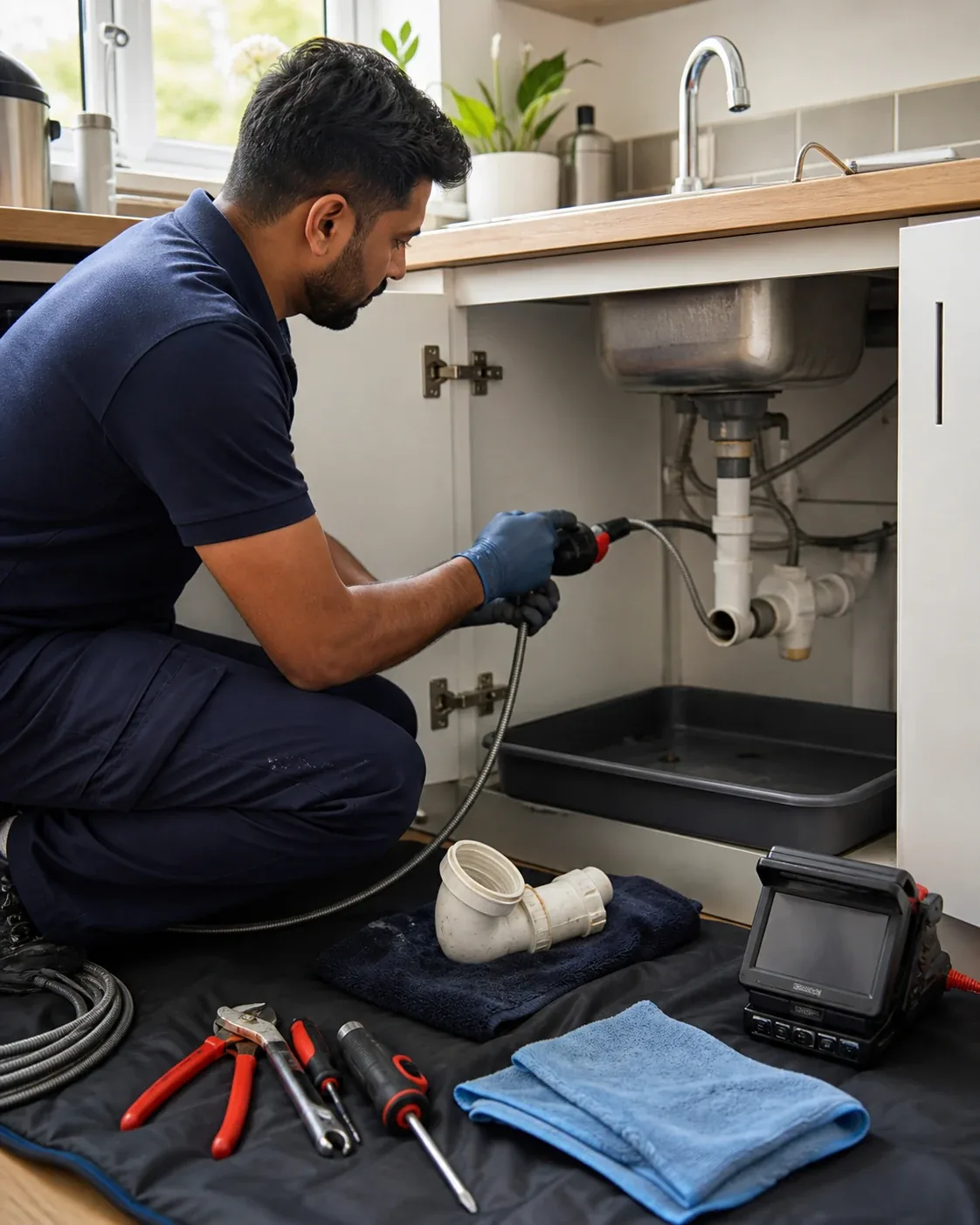
A visible plastic bottle or tubular trap may be user-removable, but only if you understand how it seals and there is no chemical hazard. Photograph the assembly. Put a wide bowl and towels underneath, wear gloves and loosen the trap by hand where designed. Expect the entire sink and trap contents to drain.
Remove debris, wash the removable section and inspect washers without stretching them. Reassemble squarely, hand-tighten as designed and run a small amount of cold water while watching every joint. Stop if a nut is seized, metalwork is corroded, alignment is strained or the leak continues.
Grease behaves differently from a solid object
Cooking fat cools on pipe walls and traps food particles. Hot tap water may move it a short distance before it solidifies deeper in the branch. Boiling water can damage some plastic pipework and risks scalding. Collect fats and oils in a container for appropriate disposal instead of washing them down with detergent.
A dropped cap or shard may lodge locally and needs retrieval, not dissolution. If an object fell in immediately before the blockage, tell the plumber; pushing it further can make access harder.
Why chemical drain openers complicate the visit
Strong alkalis or acids can burn skin and eyes, damage finishes and remain trapped in the waste. Mixing products can release heat or toxic gas. Never combine drain opener with bleach, descaler, vinegar or another brand. If one product has been used, keep its container and disclose it before anyone opens the trap.
The dishwasher clue
If dirty sink water enters the dishwasher, stop using both appliances. The shared connection or waste route may be restricted, or the hose may be arranged incorrectly. Do not run a dishwasher cleaning cycle to “push it through”. For an appliance that fails to pump out even when the sink drains normally, use the dishwasher repair service rather than treating it as an ordinary sink blockage.
Signs the problem is farther down
- Both bowls back up after the trap has been cleaned
- Water rises when the washing machine or dishwasher discharges
- Another fixture gurgles or smells
- The blockage returns within days
- There is leakage inside a wall, floor or lower property
If water rises specifically when laundry equipment empties, record the cycle and check the relevant washing-machine drainage fault route. In a flat, report shared-stack symptoms to the landlord or managing agent because several homes may be affected.
Prevent the same kitchen blockage
Scrape plates into food waste, use a strainer and wipe greasy pans before washing. Keep coffee grounds, flour, rice and fibrous peelings out of the sink. Clean the strainer routinely and investigate slow flow early. Enzyme maintenance products should be used only where compatible and exactly as labelled; they do not remove a solid obstruction.
What to tell the plumber
Give the start time, whether flow is slow or stopped, other affected fixtures, any object dropped, products used and visible pipe material. Send a photograph beneath the sink without dismantling anything. plumbing visit can then be prepared for a trap, branch waste or shared drainage problem rather than a vague “blocked sink”.
A sensible household attempt stays deliberately short: remove visible debris, plunge correctly and clean a genuinely removable trap only when no chemical is present. Beyond that point, preserving intact pipework is more valuable than escalating force.
A two-bowl sink can hide the real water level
Water may drain from one bowl into the other before rising visibly. Plug the second bowl during controlled plunging and watch both outlets afterwards. If the bowls share a shallow trap, the restriction may sit just beyond their junction. Do not assume the bowl that fills first contains the blockage.
Waste-disposal units, boiling-water taps and pumped appliances add electrical and mechanical hazards. Isolate and follow their manuals; never put a hand into a disposal unit, even when switched off. A plumber needs to know these are fitted before attending.
Leaks after a blockage are part of the same job
Built-up pressure can expose a loose washer or cracked trap. Dry the cupboard, place plain paper beneath every joint and run only a small test. The first wet spot reveals more than a cupboard full of water. If the leak is on a fixed pipe, a metal trap or a concealed section, stop and contain it rather than adding tape or sealant.
Photograph the joint and shut off use of connected appliances. A dry sink is inconvenient; a slow unattended leak can damage cabinetry and the flat below.
What professional unblocking should achieve
The visit should establish blockage location and cause, clear it with a method suited to the pipe, restore full flow and check joints for leakage. Ask whether camera inspection is justified for recurrence and whether the quote covers access or pipe repair. “Water now goes down” is useful, but recurrence prevention depends on knowing whether the cause was grease, an object, damaged pipe or shared stack.
