
Moving House Checklist: What to Do in the Final Seven Days

In the final seven days before moving, stop making broad plans and assign dated actions: confirm access and parking, finish packing by room, separate valuables, notify utilities, prepare meter and condition evidence, then protect one essentials kit that never enters the removal van. Leave genuine contingency time. A late key, lift restriction or unfinished cupboard causes more disruption than an imperfect label.
Seven days out: freeze the inventory
Walk every room, loft, shed, balcony and storage locker. Decide what moves, what is collected for disposal and what stays by agreement. Send the final inventory and photographs of awkward items to the mover. Adding a wardrobe on the morning can change vehicle capacity and time.
Confirm the date, crew, vehicle, addresses, floor levels, parking and contact numbers with Alesta’s London removals team. Read cancellation and waiting terms now, not at the kerb.
Six days out: finish the rooms you use least
Pack books, pictures, spare bedding, ornaments and seasonal clothes. Use small boxes for books and reinforced cartons for fragile items. Label the destination room and broad contents on two sides, but avoid advertising valuables. Keep screws with dismantled furniture in labelled bags attached securely to the relevant piece.
Five days out: solve access
Reserve lawful parking where required and give the mover the permit or bay details. Book lifts and loading docks; check move-hour restrictions and protective-cover rules. Measure tight doors, stairs and lifts against the largest pieces. Tell neighbours if access will be busy, without leaving security details publicly.
Four days out: make the address-change pass
Notify council tax, energy, water, broadband, insurers, banks, employer, schools and healthcare providers as applicable. Update electoral registration and driving or vehicle records through official channels. Arrange post redirection. Beware links in unsolicited “moving” messages; navigate to official sites directly.
Three days out: prepare appliances and food
Use food that will not travel and dispose of it responsibly. Follow manufacturer instructions for defrosting, draining and transporting fridges, washing machines and dishwashers. Gas and hard-wired electrical disconnection needs the appropriate competent trade. Tape is not a safe substitute for transport bolts or proper appliance preparation.
Two days out: create three no-load zones
First, a personal bag for identity documents, medication, keys, chargers, jewellery and payment cards. Second, an essentials box with kettle items, toilet roll, bedding, basic cleaning kit and simple tools. Third, a cleaning and evidence zone for the property after the van leaves. Mark all three clearly and tell the crew they do not load.
If packing remains badly behind, a professional packing service can focus on the remaining rooms. Do not hide unsealed boxes from the mover; ask for help before the loading schedule collapses.
One day out: photograph, charge and reconfirm
Charge phones and power banks. Photograph high-value items and existing property damage. Reconfirm key collection and release arrangements, building contacts, parking and the mover’s arrival window. Put paper copies of critical numbers with your personal bag.
Strip beds except those used overnight. Pack a clean set separately. Keep pet food, carriers and veterinary details together, and arrange a quiet safe place away from open doors.
Moving morning: use a fixed sequence
- Take final utility readings and clear photographs.
- Walk the property with the foreperson and identify fragile or non-load items.
- Keep children and pets away from carrying routes.
- Check cupboards, loft, shed and behind doors after each area empties.
- Photograph the empty condition and return keys as agreed.
- At the new home, direct boxes by room before furniture blocks routes.
The rental check-out layer
Use the inventory and photograph cleanliness after possessions leave. Arrange end-of-tenancy cleaning with enough drying and inspection time before key return. Do not overlap wet floor cleaning with movers carrying boxes.
Waste is not a last-minute van extra
Removal companies transport belongings; they do not automatically carry rubbish. Book licensed waste removal for discarded furniture and bags, and confirm what cannot be accepted. Never leave items on the pavement or in communal bin areas without permission.
If keys are delayed
Call the mover before the van arrives at a locked destination. Check waiting charges and whether safe temporary storage is available. Keep people, documents and medication with you. Do not ask a driver to block traffic while a legal or completion issue is resolved.
First hour in the new home
Photograph meter readings and existing condition, locate stopcock and consumer unit without altering them, check smoke alarms and inspect for urgent leaks or electrical damage. Build beds and establish one clean bathroom before opening decorative boxes. Check delivered items against the inventory before the crew leaves.
The final-week checklist works because it protects dependencies: inventory before vehicle choice, access before arrival, utilities before evidence, and essentials outside the load. Keep the plan dated and short enough to use.
Build a load order, not just a box list
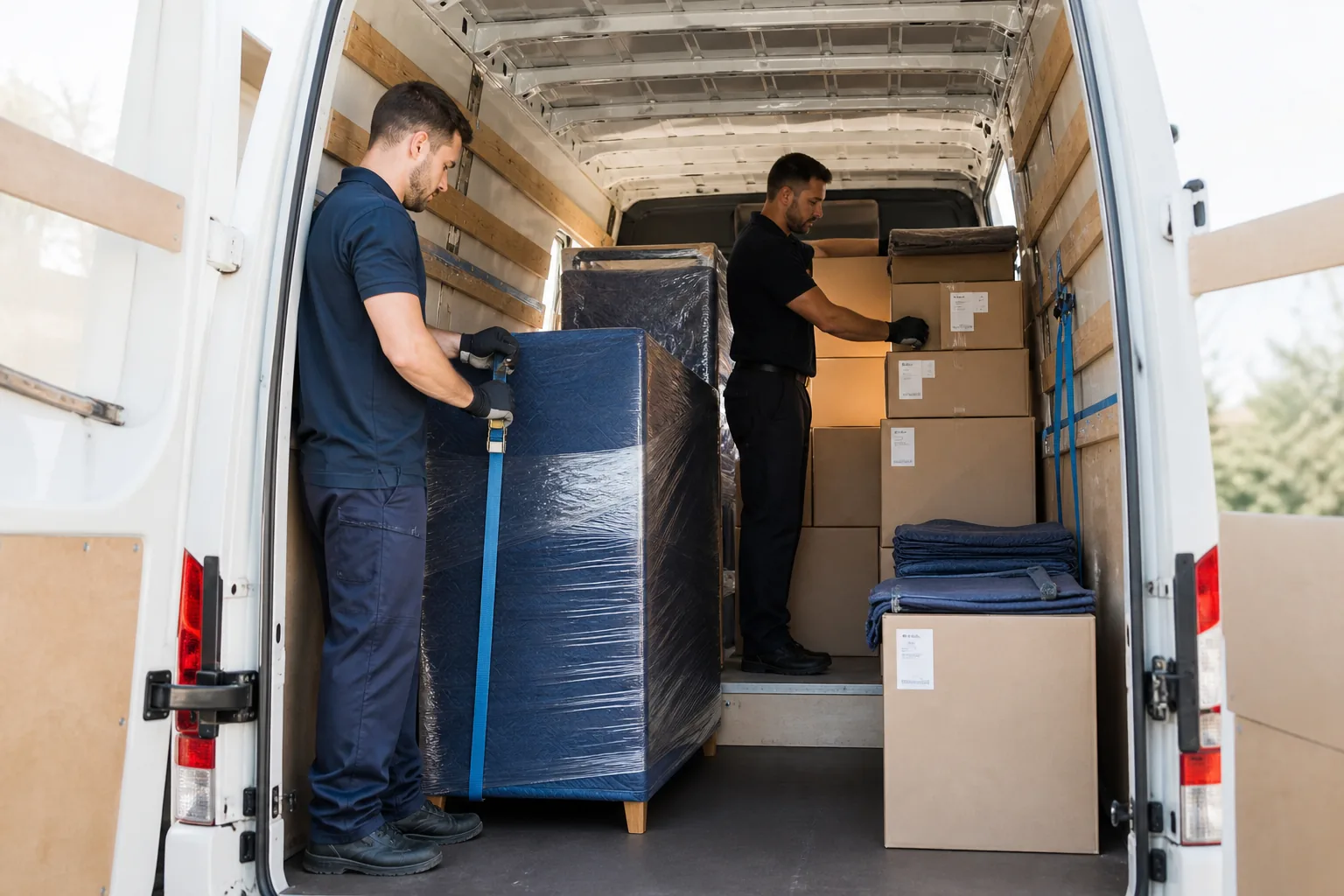
Items needed first should enter the van last where practical. Tell the crew about the essentials box, cot, work equipment and any furniture required immediately. Heavy and robust items form safe lower layers; fragile cartons need protected positions. The removal team controls loading for weight and safety, so discuss priorities rather than directing every placement.
Fragile and high-value items deserve separate terms
Declare jewellery, artwork, instruments, collections and unusually valuable electronics before the quote. Insurance may exclude owner-packed boxes or require valuations. Photograph condition and serial numbers. Personal documents, keys, medication and irreplaceable small valuables normally stay with you, not in a general carton marked “bedroom”.
Children and pets need their own move plan
Open doors, unfamiliar people and stacked boxes create escape and injury risks. Arrange care away from the property if possible. If not, designate a closed room with water, food and familiar bedding, then move its occupants once the main route is clear. Update microchip and tag details through the correct services.
The empty-house walk-through
Use a fixed route: upper rooms, cupboards, loft, bathroom, kitchen, meters, garden, shed and bins. Open every built-in storage area and look behind doors. Photograph each empty room from the doorway. Check windows and doors are secured, then return every key, fob and parking permit as agreed.
Contingency for weather and breakage
Keep floor protection, towels and spare bags accessible. Rain changes carrying routes and makes cardboard vulnerable. Do not wrap wet items in sealed plastic for long-term storage. If damage occurs, photograph it before repair or disposal and follow the mover’s reporting process within the stated time.
Keep drinking water and a simple snack outside the load. A delayed journey or missing kettle is easier to manage when basic needs are not packed at the back of the van.
