
New SMEG Oven Symbols Explained: A Practical Guide to Every Function
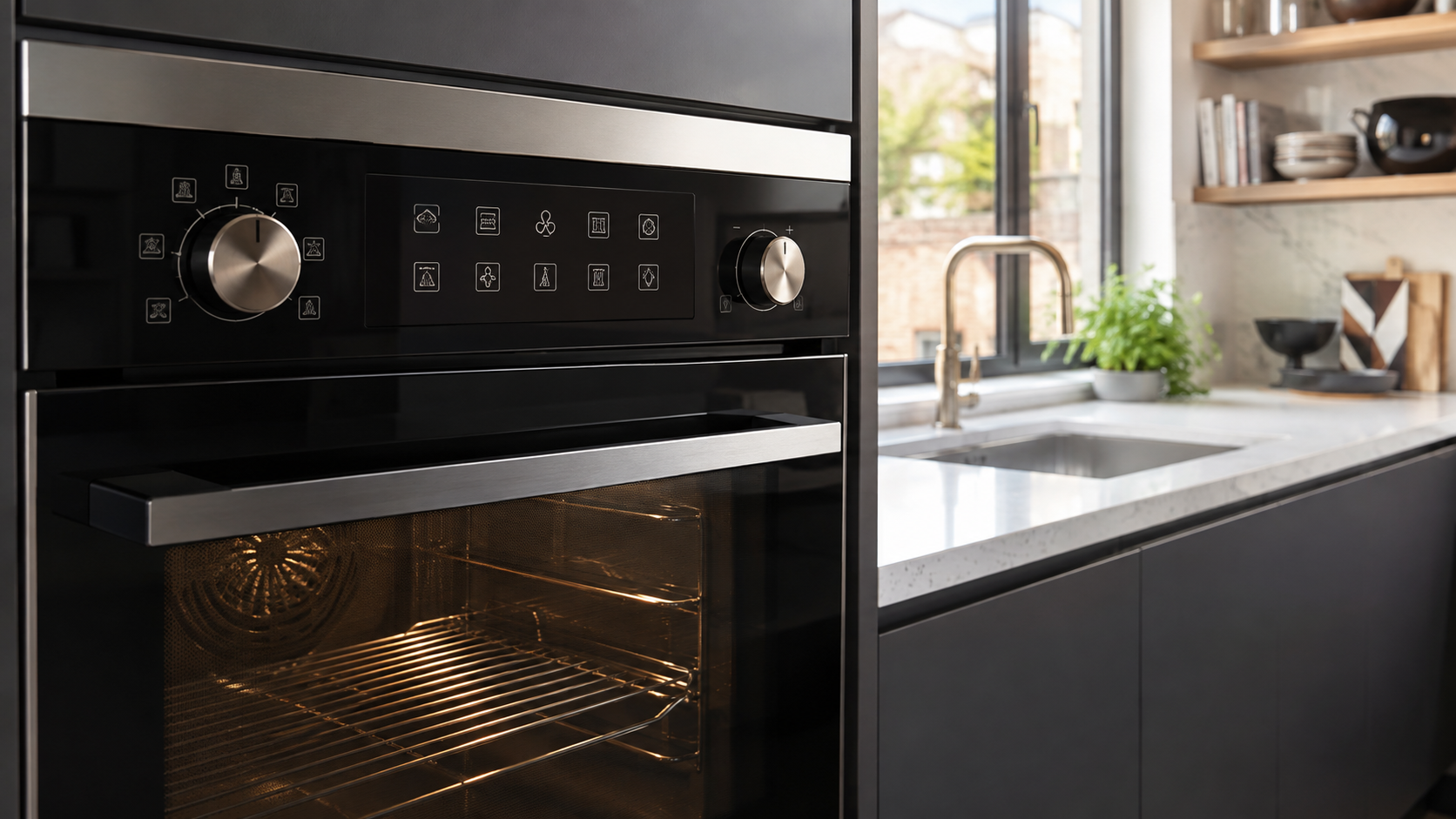
Modern built-in oven controls showing common cooking function symbols

SMEG oven symbols describe which heating elements, fan and specialist programmes are active. Match the symbol to the result you need rather than choosing the hottest setting.

Modern models may combine conventional heat, fan circulation, grilling, steam assistance and cleaning programmes on one selector. This guide explains what each family of symbols does, how shelf position affects the result and when a specialist function is genuinely useful. For repairs or an unreadable control panel, use a qualified appliance repair service.

Real SMEG oven symbols at a glance

These are official SMEG function icons. Your oven may show only some of them, so always confirm the programme set in the manual for your exact model.

Static SMEG oven symbol
StaticTop and bottom heat
Fan assisted SMEG oven symbol
Fan assistedTop and bottom heat with fan
Circulaire SMEG oven symbol
CirculaireRear element with fan
Turbo SMEG oven symbol
TurboTop, bottom and rear heat with fan
ECO SMEG oven symbol
ECOLower-energy single-shelf cooking
Large grill SMEG oven symbol
Large grillStrong heat from above
Fan grill SMEG oven symbol
Fan grillGrill heat circulated by fan
Base heat SMEG oven symbol
Base heatHeat from below only
Circulaire + bottom SMEG oven symbol
Circulaire + bottomFan heat with extra base heat
Pizza SMEG oven symbol
PizzaDedicated pizza programme
Defrost by time SMEG oven symbol
Defrost by timeTimed defrost programme
Proving SMEG oven symbol
ProvingLow-temperature dough proving

Symbol reference: official SMEG SF6301TN function list. Symbols vary by model and production series.

Read the symbol before choosing a temperature

Separate the function from the temperature. The icon selects how heat moves; the temperature controls intensity.

Treat the visible symptom as evidence rather than a complete diagnosis. Check the surrounding conditions, note when the issue appears and change one variable at a time. That gives you a useful comparison and avoids spending money on a remedy that does not address the cause. Photographs and short written notes are often more useful than memory when you later compare results or brief a professional. Before acting, compare the current condition with what normal should look, sound or feel like. Use the maker’s instructions and authoritative guidance where they exist. Internet shortcuts often omit model, material or tenancy differences. If two reliable sources appear to conflict, follow the more specific instruction for the exact product or legal arrangement and ask the responsible organisation to clarify the remainder.

  • Check the manual for the exact model
  • Identify the active element or fan
  • Preheat only when the recipe needs it

Conventional top and bottom heat

Two horizontal lines normally mean static heat from above and below, ideal for one-shelf baking, casseroles and traditional roasting.

A sensible plan separates low-risk household checks from work that needs training, test equipment or access to protected components. Complete only the checks you can perform without dismantling, bypassing safety features or using an unsuitable chemical. If the result is unclear, stop with the area in a safe condition and pass on the observations you have already collected. Think about who else uses the home. Children, pets, older residents, tenants and visitors may encounter a temporary hazard or undo a control measure without knowing it. Explain any restriction, label equipment that must not be used and keep routes, switches and shut-offs accessible. A technically correct step is not a safe plan if another person can unknowingly reverse it.

  • Use the middle shelf for balance
  • Allow full preheating for cakes
  • Move dishes only after the structure has set

Fan and Circulaire cooking

A fan alone may circulate unheated air for defrosting, while a fan inside a circle usually indicates a heated circular element for even multi-level cooking.

Good results depend on preparation. Clear enough space to work, protect nearby finishes and read the manufacturer or supplier instructions before starting. Set a realistic stopping point as well as a goal. Rushing the final stage commonly causes damage, leaves residue behind or hides information that would have helped identify a larger problem. Use tools and products for their stated purpose and inspect them before use. More force, more heat or more chemical rarely substitutes for correct technique. Protect adjacent paint, flooring, fabrics and electrical fittings, and never mix products unless the manufacturer explicitly permits it. Stop if the material changes colour, swells, cracks, becomes unusually hot or produces an unexpected smell.

  • Reduce recipe temperature where advised
  • Leave space around trays
  • Avoid covering fan vents

Grill, half grill and fan grill

A zigzag top line represents grilling; a shorter line uses part of the element, while fan grill circulates intense top heat around thicker food.

Judge the outcome after the area or item has returned to normal conditions. Moisture, heat, lighting and temporary cleaning marks can make an immediate result misleading. Recheck later, record anything that returns and compare it with the starting condition. A recurring pattern is a reason to investigate further rather than repeat the same short-term treatment indefinitely. Make the review specific. Decide what success means, when you will check it and which sign would trigger escalation. “Looks better” is less useful than a dry surface, stable fitting, clear airflow, normal cycle or written confirmation. If the improvement lasts only briefly, the underlying cause may still be present even though the immediate symptom has been cleaned, reset or moved.

  • Keep the door position specified by the manual
  • Use a grill pan
  • Watch high-fat food closely

Bottom heat and pizza functions

A lower line concentrates heat at the base. Pizza programmes often combine bottom heat with fan circulation for crisp dough without over-browning toppings.

Cost and convenience matter, but they should come after scope and safety. Ask what is included, what information could change the price and who is responsible for access, preparation and disposal. A clear written scope makes competing options easier to compare and reduces the risk of an attractive headline price becoming poor value once extras are added. When comparing paid help, ask each provider to respond to the same description and photographs. Confirm whether diagnosis, labour, materials, removal, parking and VAT are included. Check what happens if the first assumption is wrong. A professional answer should identify uncertainty openly and explain the next test, rather than guaranteeing a result before anyone has inspected the relevant conditions.

  • Preheat a suitable tray or stone
  • Use a lower shelf
  • Check the base before extending time

Eco, proving and low-temperature modes

Eco programmes manage elements to reduce energy use. Proving maintains gentle warmth for dough; plate warming is lower and is not a cooking programme.

For a London home, access can change the practical answer. Stairs, restricted parking, communal entrances, small lifts and close neighbours affect timing and safe working. Mention these details early. They may influence equipment, crew size or appointment length, and they are much easier to plan for than to discover after work has begun. Prepare access without creating new risk. Move only items you can handle safely, keep valuables and personal documents secure and tell the provider about alarms, pets, permits and restricted working hours. In flats, consider neighbours and communal rules. A few accurate access notes can prevent a failed visit, rushed lifting, unsuitable equipment or an avoidable dispute over waiting time.

  • Allow extra time in Eco mode
  • Cover proving dough
  • Never use warming mode for unsafe holding

Steam-assisted functions

Steam assistance supports oven spring, surface colour and moisture retention, but the reservoir, quantity and descaling routine vary by model.

Do not rely on a single rule of thumb when the condition varies from property to property. Use the guidance as a decision framework: observe, compare, take the lowest-risk useful action and review the result. This approach is slower than guessing for a few minutes, but it is much faster than correcting avoidable damage or repeating ineffective work. Households should adapt the sequence to the real pattern of use. A frequently used appliance, shared tenancy, busy family room or high-traffic entrance needs more frequent observation than an occasional-use space. Do not turn that variation into guesswork: set a baseline, note the next two or three uses and adjust only when the evidence consistently points in the same direction.

  • Use the stated water amount
  • Open the door cautiously
  • Dry the cavity after use

Cleaning symbols and fault signs

Pyrolytic, vapour-clean and catalytic systems work differently. Remove accessories only when instructed and never apply ordinary oven cleaner during a self-cleaning cycle.

Keep the final record with household documents where it can be found again. Product instructions, invoices, photographs and dates create a useful maintenance history. They help another resident or contractor understand what has already been tried and prevent the same uncertain diagnosis from starting again every time the symptom returns. After completion, restore guards, covers, furniture and stored items only when the area is ready. Dispose of waste through an appropriate route and wash reusable tools as instructed. Tell other occupants what changed and what must still be monitored. This final handover prevents a finished task from creating a new trip, moisture, fire, access or maintenance problem elsewhere in the home.

  • Read the cleaning chapter first
  • Ventilate the kitchen
  • Arrange repair for error codes or damaged seals

Frequently asked questions

Does every SMEG oven use identical symbols?

No. Symbol families are similar, but functions and permitted accessories vary by model. Use the product code to find the correct manual.

Why is food cooking unevenly on fan mode?

Crowded shelves, blocked airflow, unsuitable trays or an inaccurate temperature can all matter. Test one change at a time.

Can I use the grill with the door open?

Follow the model manual. Door position and cooling design differ, so a general rule is unsafe.

Practical next step

Photograph the control panel and model label, then create a short reference for the functions you use most. If temperature, fan operation or door sealing appears faulty, stop compensating with longer cooking and arrange professional diagnosis.

Comments are closed.

Chat