
One-Off Cleaning vs Regular Cleaning: Which Do You Actually Need?
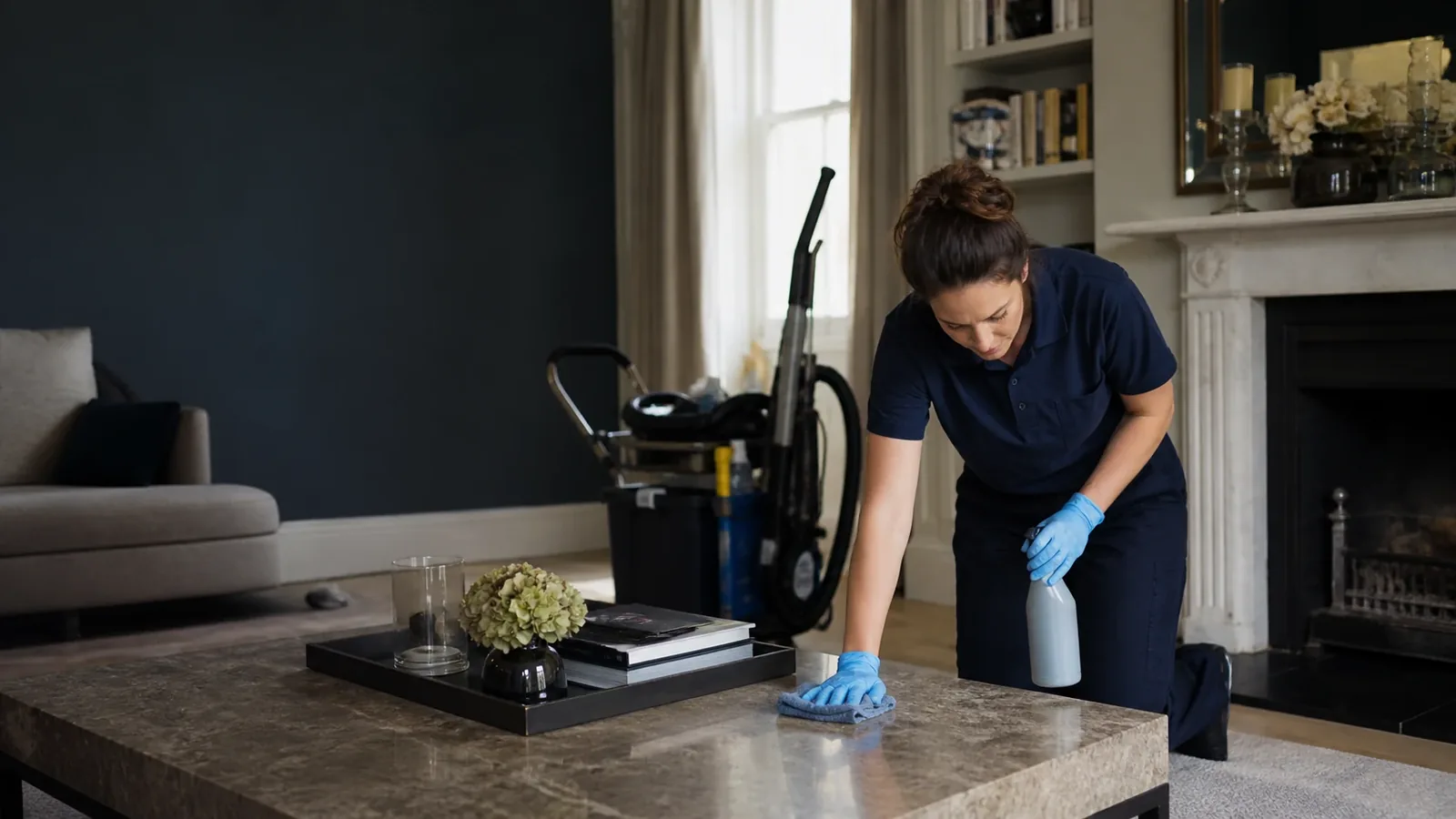
Choose regular cleaning when the home is broadly under control but needs consistent upkeep. Choose a one-off clean when there is a backlog, a particular deadline or a defined area that needs resetting. The services overlap, but they are priced and planned differently. Trying to fit years of limescale, grease and edge dust into a routine two-hour visit usually ends in rushed work and disappointment.
Make the decision from the current condition
Walk through the property and separate maintenance from recovery. Maintenance means wiping accessible surfaces, cleaning bathrooms and kitchens, dusting, vacuuming and mopping before dirt becomes stubborn. Recovery means built-up grease, heavy limescale, neglected skirting, cupboard interiors or many small detail jobs that have accumulated.
If most rooms need recovery, start with a one-off cleaning visit. Once the baseline is restored, regular appointments can preserve it. If only one room has a backlog, ask whether that room can be prioritised while the rest follows the normal routine.
The diary test: recurring need or a single deadline?
Weekly and fortnightly appointments suit households where dust, bathrooms and floors need predictable attention. They also work when limited mobility, long hours, children or pets make the routine difficult to sustain. A one-off booking suits pre-guest preparation, spring cleaning, post-illness recovery or a seasonal reset.
Moving out is a different brief. It often involves an empty property, inventory evidence and internal cupboards and appliances. Compare the required specification with end-of-tenancy cleaning rather than assuming any one-off visit includes it.

What changes between the first and later visits
A first regular-cleaning visit is often slower. The cleaner is learning access, surfaces, product restrictions and the household’s priorities. Edges and less visible areas may need a small reset before a stable rotation is possible. Ask whether the provider recommends extra time for the first appointment.
Later visits should become more predictable. Kitchens, bathrooms and floors form the core; periodic tasks can rotate. Good regular domestic cleaning is not a rigid identical performance each week. It responds to use while protecting the agreed essentials.
Compare scope, not service names
“Deep”, “spring”, “standard” and “one-off” are not universal specifications. Ask for a written task list. Check internal windows, blinds, skirting, high dusting, bed changing, ironing, inside cupboards and appliance interiors individually. Confirm whether products, cloths, vacuum equipment, parking and VAT are included.
Specialist extraction for carpets or sofas is not the same as vacuuming. Exterior high windows may need separate equipment. Fine renovation dust requires staged removal and repeated HEPA-filtered work; the right comparison is after-builders cleaning.
Three realistic household scenarios
A maintained two-bedroom flat
The bathroom, kitchen and floors need attention every fortnight, while occupants handle dishes and clutter. Regular cleaning fits because the task list is repeatable and the condition does not obstruct it.
A family home before relatives visit
Several rooms have edge dust, the kitchen needs degreasing and internal windows matter. A fixed-scope one-off booking is more honest than asking a routine cleaner to “do as much as possible” without priorities.
A home returning to routine
Book a reset, then move to a recurring schedule. This avoids paying regular-visit time for backlog month after month and gives the provider a clear baseline.
How frequency changes the result
Weekly cleaning limits build-up and leaves more time for rotating detail. Fortnightly service is often enough where occupants maintain spills and clutter between visits. Monthly bookings can work for low-use homes, but they may behave more like repeated one-offs if bathrooms, grease and pet hair build up substantially.
Do not choose frequency by property size alone. Two people in a large uncluttered home may create less work than a compact flat with pets, children and heavy cooking.
Preparing without “cleaning before the cleaner”
Put away confidential papers, jewellery and fragile items. Clear enough of the floor and worktops for cleaning to begin. Explain alarms, keys, pets, parking and surfaces that cannot take ordinary products. You are buying cleaning time, so using that time to sort personal belongings is rarely good value.
For a one-off, rank the tasks: must be done, useful if time permits, and out of scope. For regular work, agree the non-negotiable core and one rotating detail. This small distinction prevents misunderstandings.
How to judge value after the first appointment
Look at the agreed areas, not an imaginary whole-house standard. Were priorities completed? Were delicate finishes handled correctly? Was the timing realistic? If a task was missed, ask whether it was overlooked or the scope exceeded the booked time. Adjust the brief before changing provider solely on the basis of one ambitious list.
The deciding question is not which label sounds more thorough. Ask whether you are maintaining a workable baseline or rebuilding one. Regular cleaning preserves; one-off cleaning resets. Many households need both, but at different moments.
When one cleaner-hour is not one clock hour
Team bookings are often described in cleaner-hours. Two cleaners for two hours provide four cleaner-hours. This can reduce the time the home is occupied by the team, but not every task scales perfectly: only one person may fit in a small bathroom, and drying or product contact time cannot be halved. Confirm the calculation so that quotes using teams and solo cleaners are compared fairly.
A fixed one-off quote may avoid arguments about speed, provided the scope and condition are disclosed. An hourly recurring visit offers flexibility, but the customer must prioritise if the list exceeds the time.
Signs your recurring schedule needs changing
If every visit begins with the same heavy limescale, pet hair or kitchen grease, either the interval is too long or the allocated time is too short. If cleaners routinely finish early and invent low-value jobs, the interval may be shorter than necessary. Review the plan after the first month using actual outcomes.
Season also matters. Open windows, muddy entrances, pollen and school holidays change the workload. A useful service can temporarily vary priorities without turning every appointment into a renegotiation.
When to pause rather than add hours
Leaks, active mould growth, pest contamination, sharps or unsafe electrics need the correct remedial service before ordinary cleaning. Tell the company in advance. A domestic cleaner should not be expected to handle hazardous material hidden inside a broad request for a deeper clean. Resolving the source first protects both the cleaner and the finish.
Agree how changes are communicated
Confirm whether the same cleaner normally attends, how holiday cover works and how to amend a priority list. Decide what happens when access fails or someone is ill. Recurring service depends on small operational details: key handling, alarm codes and pet instructions should be documented securely rather than reinvented at every visit. For a one-off booking, nominate one contact who can approve scope changes. Clear communication protects paid time and makes the result easier to assess fairly.
