
Why Does My Washing Machine Smell? A Practical Fix-by-Fix Guide
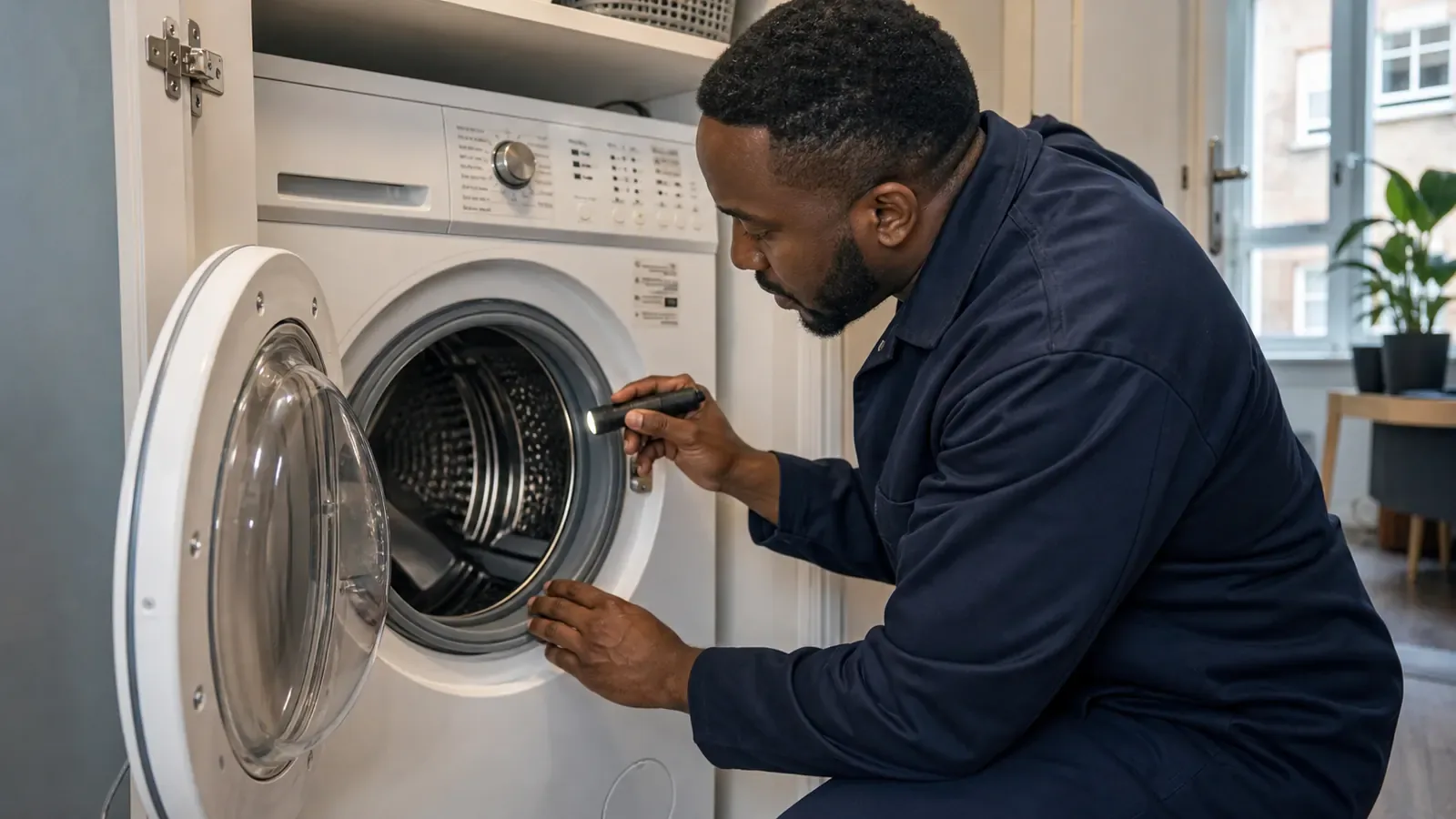
A musty washing-machine smell usually comes from damp residue in the door seal, detergent drawer, drum or filter. A sewage-like smell points more towards the drain connection, while a hot plastic, electrical or burning-rubber smell means stop the cycle and disconnect the appliance if it is safe to do so. Do not try to overpower the odour with extra detergent. That often adds to the film that caused the problem.
Before cleaning anything, identify the smell and the point in the cycle when it appears. Open the empty machine before running a cycle. Smell near the drum, drawer and lower filter flap without putting your face inside the appliance. Then note whether the odour becomes stronger while filling, heating, draining or spinning. That timing separates a cleaning problem from a drainage or mechanical fault.
Start by matching the smell to the likely source
| Smell | Most likely area to check | Immediate response |
|---|---|---|
| Musty or stale | Door seal, drawer, drum residue, wet laundry | Clean accessible parts and run the manufacturer’s maintenance cycle |
| Sour or rancid | Fabric softener and detergent build-up | Remove and wash the drawer; review dosage |
| Sewage or drains | Waste hose, standpipe, sink trap or stagnant filter water | Check visible drainage and stop if water backs up |
| Burning rubber | Belt, drum obstruction, overloaded drive system | Stop using the machine and arrange diagnosis |
| Hot plastic or electrical | Plug, socket, cable, motor or control component | Switch off and unplug only if the plug is cool and safe to reach |
If you cannot distinguish the smell, begin with the non-invasive cleaning checks below. Do not remove panels, tip the machine or reach beyond user-serviceable parts.
The four places that hold most odour-causing residue
1. The rubber door seal
Front-loading machines retain small amounts of water in the folds of the seal. Hair, lint, tissues and detergent collect there. With the machine off and empty, pull the lip back gently and inspect the full circumference. Remove loose objects, then wipe the rubber with a soft cloth and the cleaning solution permitted by the appliance manual.
2. The detergent drawer and its housing
Remove the drawer only as described in the manual. Rinse its separate inserts with warm water and use a soft brush on narrow channels. The cavity inside the machine also matters; thick softener can remain above and behind the visible drawer. Wipe only what you can reach safely and do not flood the housing.
Residue usually means the dosage is too high, the product is unsuitable for the water hardness or low-temperature cycles are not dissolving it fully. Measure detergent for the load and local water conditions rather than filling to the maximum line automatically.
3. The pump filter
A filter can hold lint, coins, hair grips and stagnant water. Before opening it, turn the machine off, unplug it, let hot water cool and read the model instructions. Put towels and a shallow container on the floor. Many machines release more water than expected when the cap is loosened; some provide a small emergency drain hose.
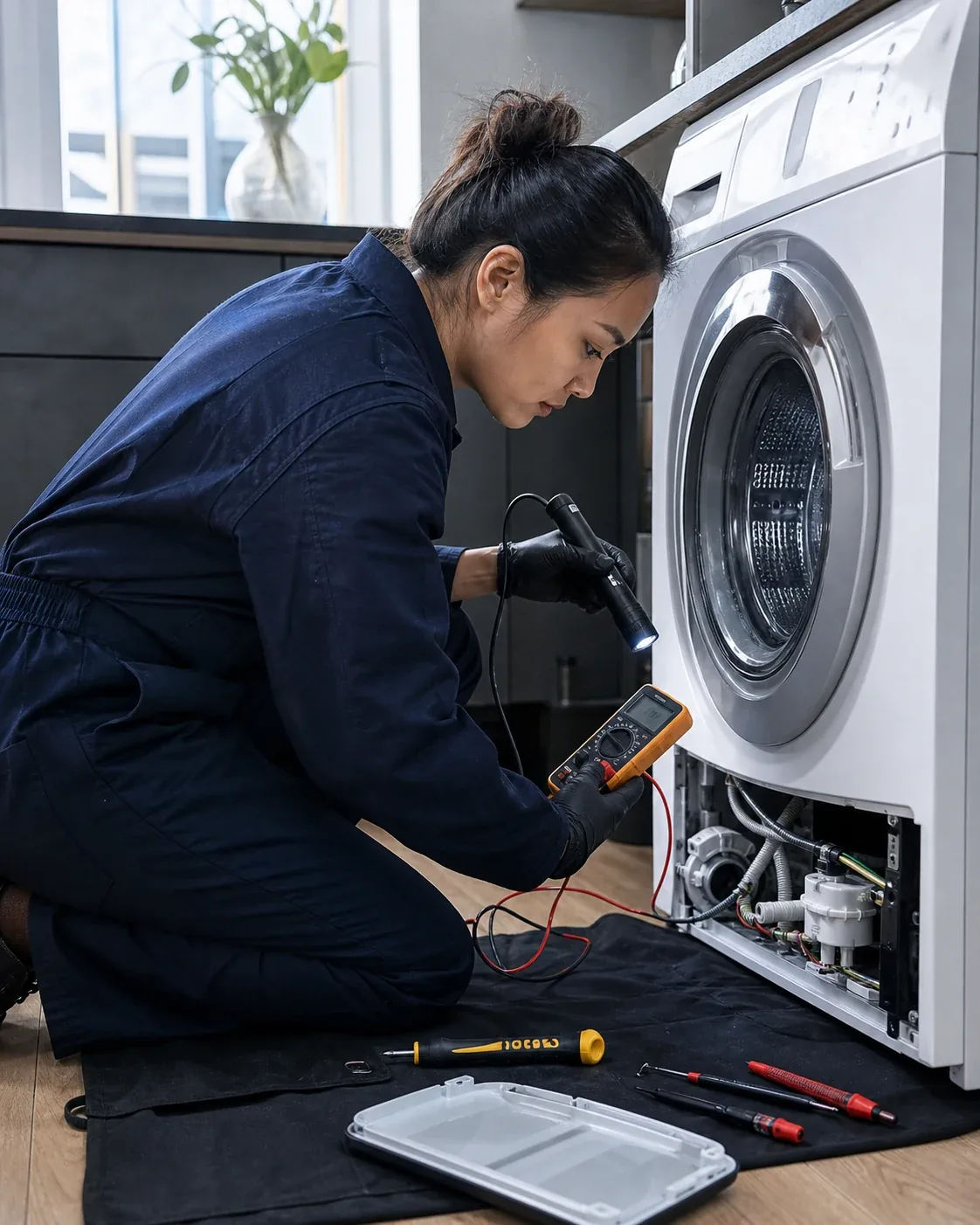
Clean the removable filter, inspect its seating for debris and refit it squarely. A cap that is cross-threaded or left loose can leak. If the filter is stuck, the pump chamber contains sharp material or the machine still cannot drain, stop rather than forcing it. Alesta’s washing-machine and washer-dryer repair service covers faults that go beyond routine filter access.
4. The drum and hidden outer tub
The stainless drum may look clean while residue remains in the outer tub, where it cannot be wiped by hand. Use the named Drum Clean, Tub Clean or maintenance programme for the model. Follow its instructions about temperature and whether a dedicated machine cleaner is required. Do not add laundry.
Never improvise by combining bleach, vinegar, descaler, ammonia or other cleaners. Some mixtures release dangerous gases; others attack seals and internal parts. One correctly dosed product used according to both labels is safer than an online “hack” assembled from several chemicals.
A sensible cleaning sequence
- Remove all laundry and check the drum for small objects.
- Switch off the appliance and clean the seal and door glass.
- Remove, wash, dry and refit the detergent drawer.
- Drain and clean the user-accessible pump filter according to the manual.
- Run the manufacturer’s empty maintenance cycle with the approved cleaner or method.
- When the programme finishes, wipe remaining moisture and leave the door and drawer ajar until dry.
- Run a normal load and check whether both the machine and clean laundry now smell neutral.
This order removes the visible reservoirs before the cleaning cycle circulates through the machine. Running repeated hot cycles without cleaning a clogged drawer or filter wastes time and may leave the source untouched.
When the smell is really coming from the drain
A sewage odour can travel back through a poorly arranged waste hose or a problem at the sink trap or standpipe. Look at the visible hose without pulling an integrated or heavy machine out by yourself. It should not be crushed, kinked or pushed an arbitrary distance into a standpipe. The correct height and insertion depth are model- and installation-specific.
If the adjacent sink drains slowly, gurgles or smells as well, the appliance may be revealing a wider waste problem. A sink and drain unblocking assessment is more relevant than repeatedly cleaning the washing-machine drum. Do not pour caustic drain cleaner into the appliance or its filter.
Odour that appears only while the machine empties also makes the filter, pump and waste route more likely than the door seal. Record any error code and whether water remains in the drum. That information shortens a repair diagnosis.
Why clean laundry can still smell stale
The machine is not always the sole cause. Laundry left wet in the drum develops an odour quickly. An overloaded cycle prevents adequate movement and rinsing. Too much detergent can remain in fabric, while too little may fail on a heavily soiled load. A programme chosen for speed rather than the textile and soil level can also disappoint.
Separate the tests. Wash a small ordinary load after cleaning the machine, remove it promptly and dry it fully. If only towels or sports clothing smell, review their wash instructions and loading. If every load smells as soon as the door opens, continue investigating the appliance.
Habits that prevent the smell returning
- Remove laundry soon after the programme ends.
- Wipe standing water and debris from the seal.
- Leave the door and dispenser ajar for ventilation when it is safe around children and pets.
- Measure detergent rather than estimating.
- Clean the drawer and filter at the interval in the manual.
- Run the machine’s maintenance programme when prompted or at the manufacturer’s recommended frequency.
- Check pockets so tissues and small objects do not enter the seal or filter.
Manufacturers including Samsung and LG specifically identify the seal, dispenser, drum-clean programme and debris filter as regular maintenance areas. The exact interval and cleaning product differ between models, so the manual takes priority over a generic schedule.
Stop cleaning and book a repair when…
Do not run another “test cycle” if there is a burning or electrical smell, smoke, sparking, a hot plug, repeated tripping, a significant leak or abnormal grinding. The same applies when the drum does not turn freely, the machine fails to empty or the smell returns immediately after a complete maintenance clean.
An appliance engineer needs the make, model, error code, stage of the cycle and a description of the smell. Mention any object found in the filter and any recent installation or plumbing work. For broader appliance options, the appliance repair hub helps identify the appropriate specialist.
Match the smell before treating it
Musty smells call for a methodical clean of the seal, drawer, filter and drum programme. Drain smells call for attention to the waste route. Burning smells call for the stop button, not another cleaning product. Identifying which of those three patterns you have is the difference between useful maintenance and delaying a real fault.
