
Workday access
If you are away at work, discuss keys and arrival before focusing on optional details. The cleaner still needs a definite list of the rooms in use.
Finsbury Park / Give the shared kitchen and bathroom a clear place
Keep communal upkeep ahead of unagreed extras.
When common rooms receive most of the daily use, start the conversation there. Name any private-room additions separately and agree the overall list before a recurring visit is arranged.
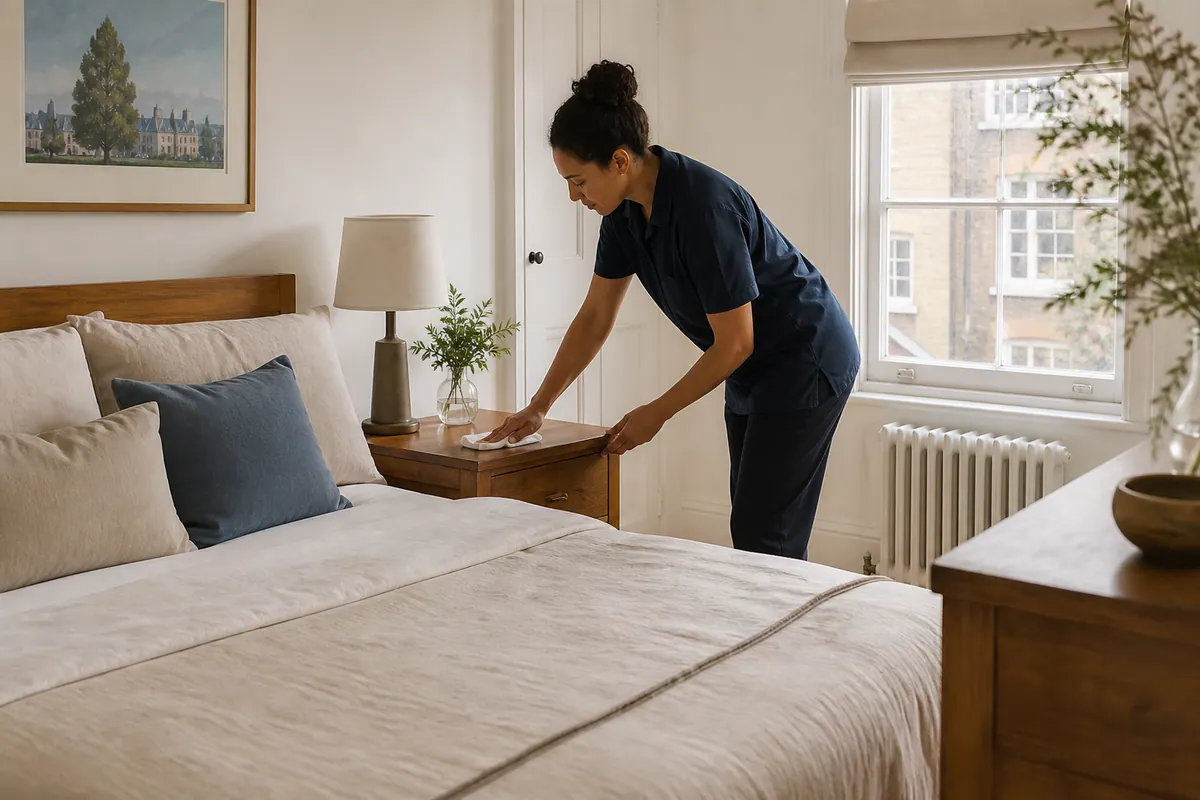
Kitchen · Bathroom
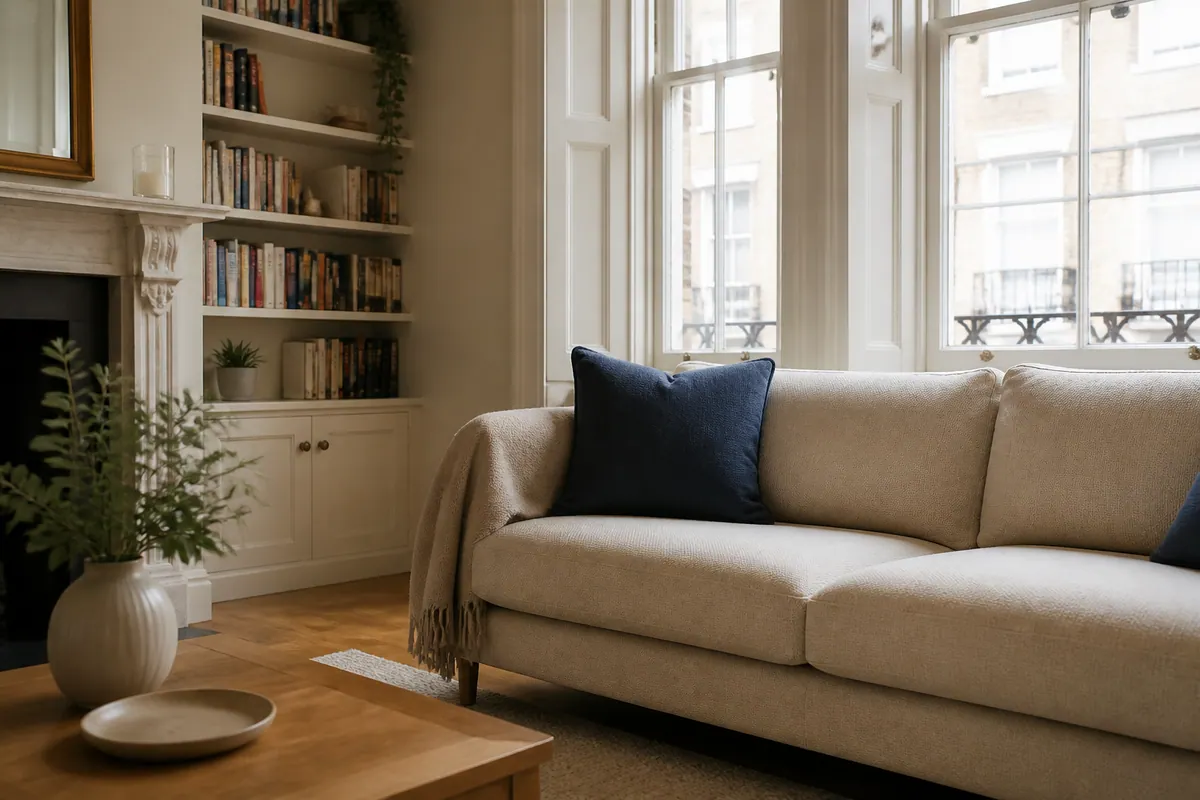
Living areas · Bedrooms
The short booking guide
A visit around everyday life
Different schedules call for clear arrangements, not assumptions about a particular kind of household. Explain the details that affect the proposed visit.
If you are away at work, discuss keys and arrival before focusing on optional details. The cleaner still needs a definite list of the rooms in use.
Busy family rooms should remain realistic for the time agreed. Put small belongings away so domestic cleaning does not become personal organisation.
An animal’s resting place can affect access to a room. Confirm where the pet will stay and which boundaries the visit needs to respect.
Home working requires a specific room or time instruction. A general note that someone is working may not explain what can be cleaned when.
For an occupied rented property, agree regular maintenance on its own terms. Moving-out requirements are not automatically included in that arrangement.
A managed-home contact should keep access and priority changes together. One agreed brief prevents the cleaner receiving different versions on the day.
Finsbury Park / a household scenario
Keep communal upkeep ahead of unagreed extras.
The rooms with the most traffic may not be the rooms with the most vocal requests. Agree the household essentials before allowing individual preferences to consume the visit.
For Finsbury Park, specify whether the service covers common spaces or named bedrooms too. The cleaner needs a definite instruction rather than an assumption based on open doors.
Each resident can prepare their belongings before arrival. A cleaning visit is easier to scope when the shared sink, worktop and floor route are genuinely accessible.
If the list expands, reconsider the time and cost with the team. Adding a private room should not silently displace the kitchen or bathroom the booking was intended to maintain.
First things first
The arrows change only this illustration. Use the result to explain a preference, not as proof that an existing booking or its available time has been altered.
The cost conversation
The service guide gives an hourly regular starting rate and a separate initial-visit figure. Confirm the actual rooms, time and supplied items instead of treating either as a complete package.
| Service | Price | Main factors |
|---|---|---|
| Regular domestic cleaning | From £20/hour | Minimum visit and interval, size, supplies, postcode and entry details |
| First / one-off domestic visit | From £90 | Room total, starting condition and the agreed first-visit priorities |
| Specialist / intensive scope | Quoted separately | Heavy soil or specialist surfaces, equipment and access constraints |
The quote depends on the work and its practical conditions: duration, interval, size, condition, products, access and parking. Extra or specialist tasks should be named so their effect can be explained before booking.
Turn preferences into a clear request
Use the options to explain the kind of domestic routine you want to discuss. They do not establish a price, reserve time or replace confirmation with the team.
The recurring essentials
Decide which everyday tasks the booking must serve before adding the interesting extras. The used kitchen, bathroom, accessible furniture and floors should retain their agreed place.
A detail belongs on the list only when it is named and there is room for it. If a selected task becomes substantial, discuss the effect on the rest of the work.
From kitchen to bedroom
Choose a room to see the distinctions worth making in your enquiry. Its condition, preparation and place in the visit affect the agreed scope as much as its size.
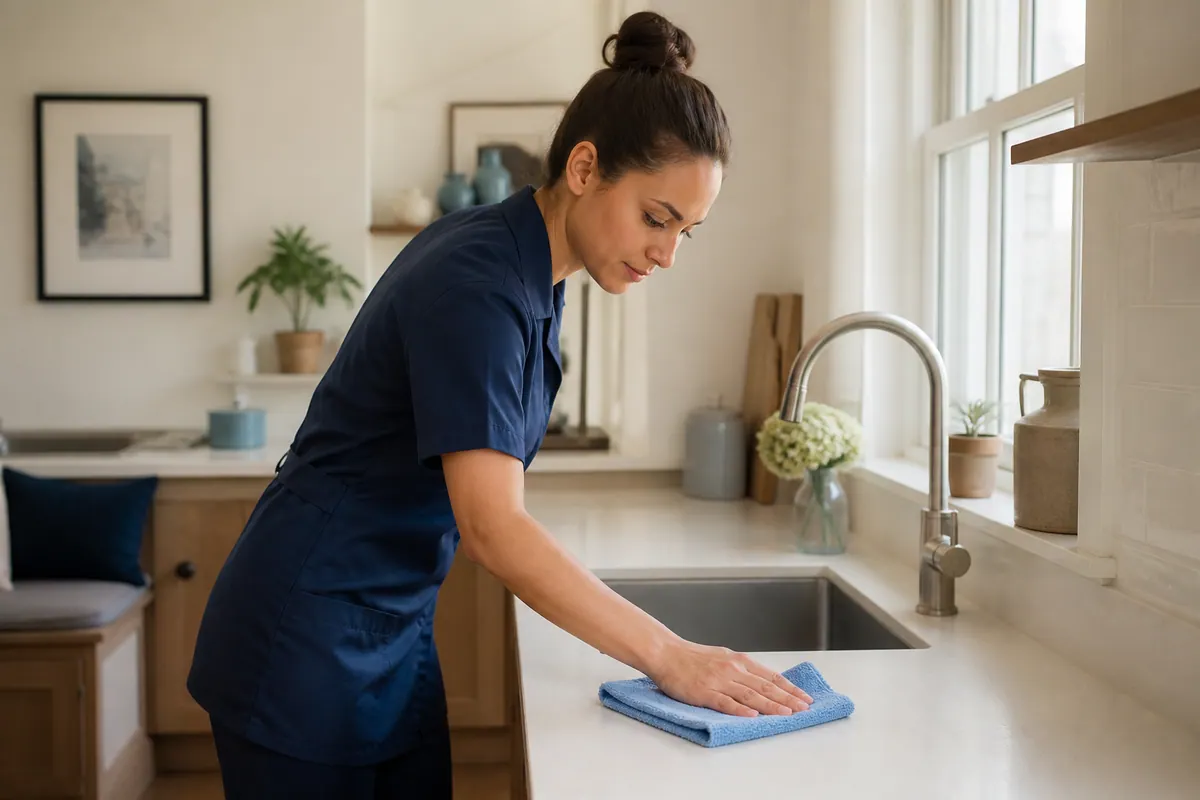
Kitchen
For the kitchen, discuss the sink, reachable worktops and splashback, then any cupboard fronts or appliance exteriors in scope. Detailed interior work is a different request.
Remove food and small personal items from the cleaning area; do not assume oven internals are covered.
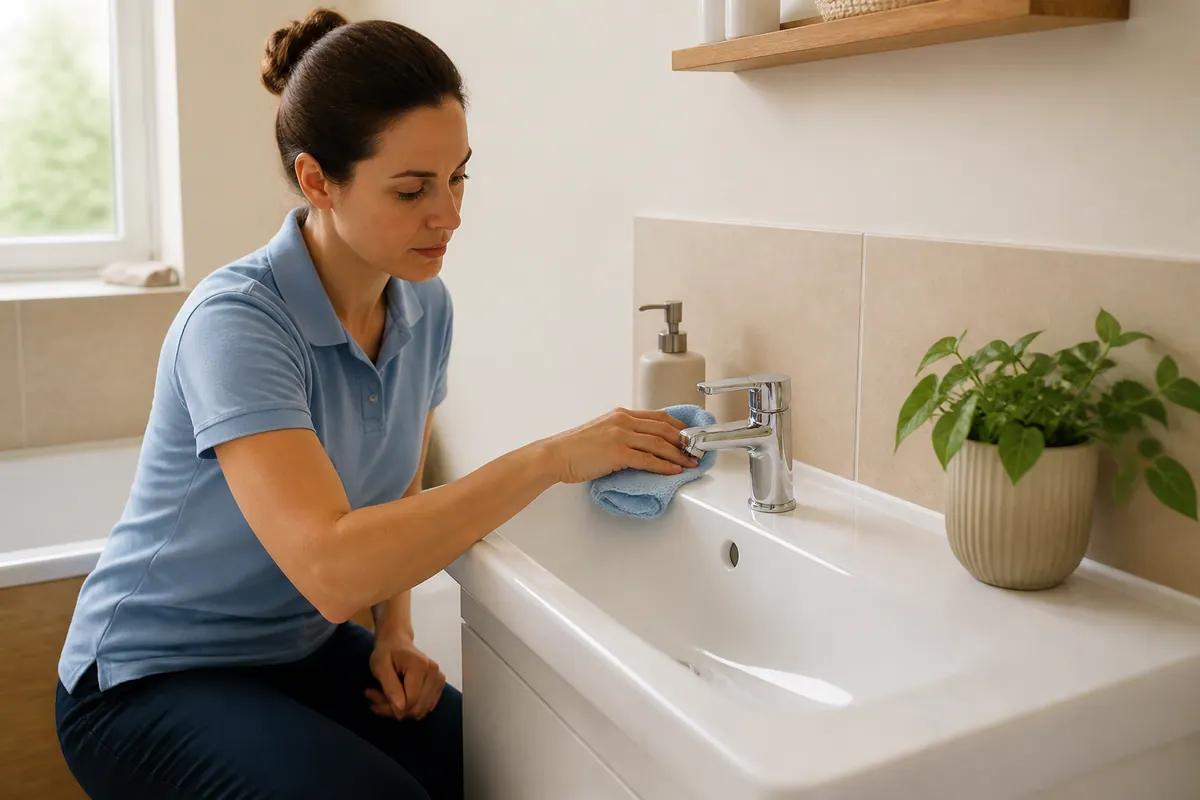
Bathroom
Taps, sanitaryware, mirrors, showers and reachable tiles form the bathroom discussion. Cleaning methods must suit the materials present, including any sensitive finish.
Identify existing seal or fixture damage rather than expecting upkeep to correct it.
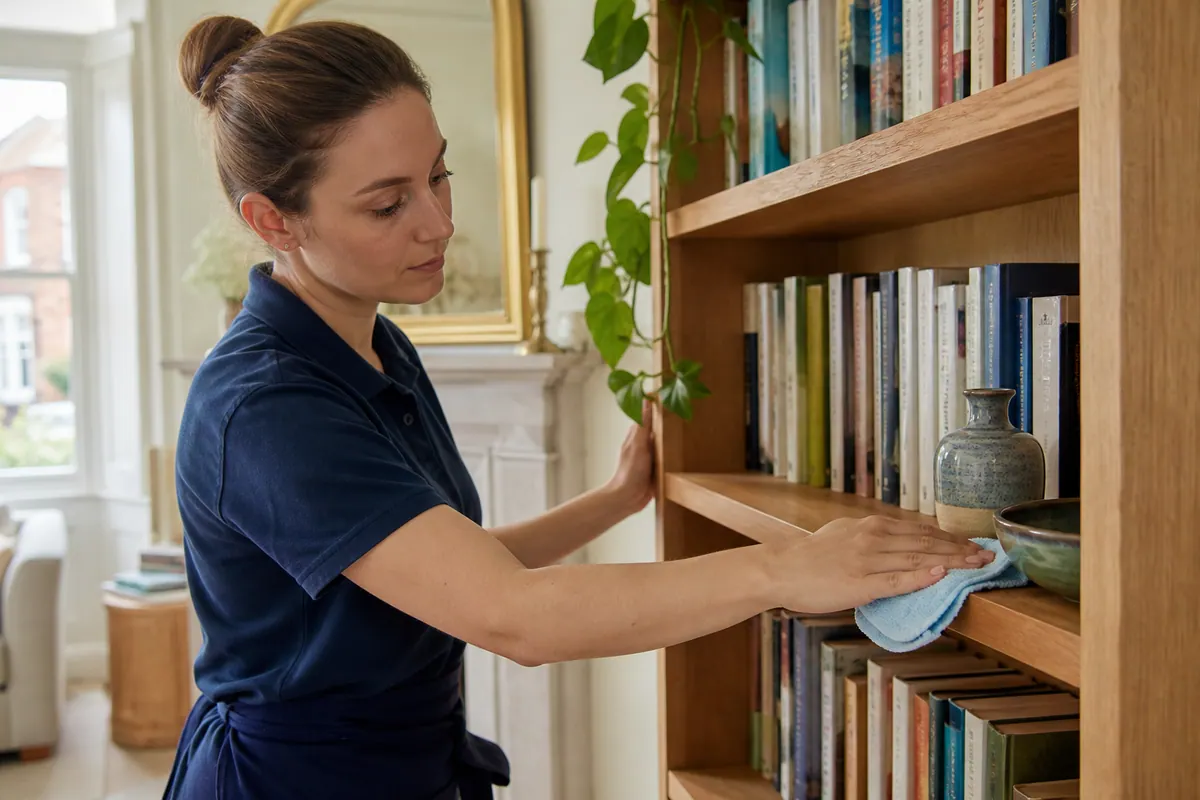
Living areas
Living areas need clear furniture surfaces and a usable floor route. The domestic scope combines dusting with vacuuming and compatible floor maintenance through the included area.
Personal collections should be prepared by the household, not rearranged to create access on arrival.
Bedrooms
The agreed bedrooms receive reachable surface care and floor maintenance. Confirm the individual rooms so private or occasional spaces are not presumed included.
Put medication and personal possessions safely aside and identify bedroom exclusions before arrival.
A schedule with a reason
Frequency is a planning choice, not a guarantee about how much can fit into a visit. Consider use and condition alongside the rooms and time being discussed.
| Planning point | Weekly | Fortnightly |
|---|---|---|
| Best suited for | Used spaces needing more frequent maintenance consideration | Spaces needing a periodic rather than weekly discussion |
| Core focus | A shorter cycle for the core room work | A longer cycle with different accumulation to consider |
| Priority planning | Retain a clear, repeatable list | Select carefully from the work needing attention |
| Visit scope | No assumed package or duration | No assumed package or duration |
At the beginning, there may be tasks that do not recur in the same way. Identify them for the first appointment and ask how they affect the time, rather than treating initial work as ordinary upkeep.
For subsequent visits, review what actually needs repeating. Keep new or additional requests explicit so the core routine remains realistic for the arrangement confirmed.
Methods follow materials
Do not rely on one product being suitable throughout the property. Tell the team about finishes, available instructions and damaged areas so routine care has a clear boundary.
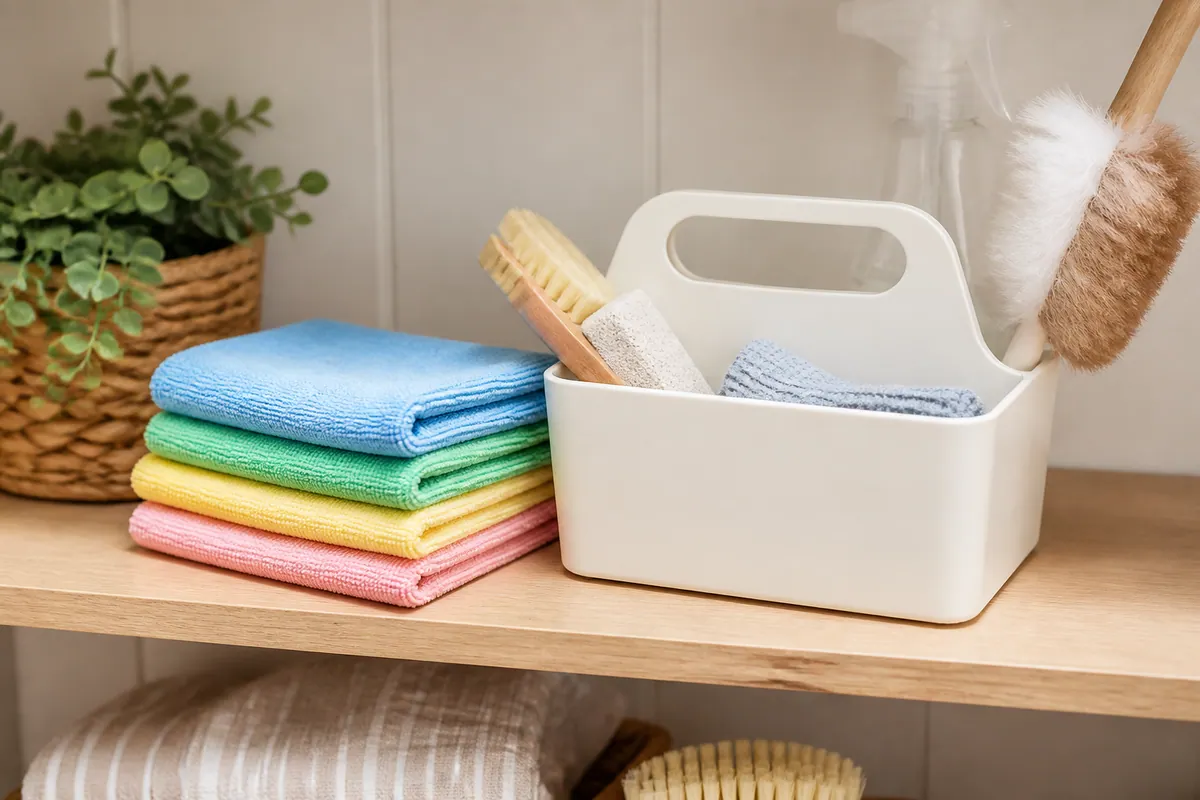
A stone surface should come with whatever care information you already have.
Describe whether you know the wood finish; do not assume all timber tolerates the same treatment.
Delicate lacquer needs to be identified, especially where furniture appears similar to other finishes.
Specify the exterior steel surface included rather than requesting an undefined appliance clean.
Existing paint damage is important information; ordinary upkeep cannot restore a coating.
A different task needs a different agreement
The room list should not imply specialist equipment or difficult access. Discuss restoration, high work and lifting separately, together with any service-specific requirements.
Extraction is a specialist carpet process, not another name for routine vacuuming.
An internal oven clean must be expressly discussed rather than inferred from exterior wiping.
Mould needs separate planning and assessment; it is not a standard rotating detail.
External glazing falls outside the everyday indoor maintenance route.
Post-construction cleaning addresses a different kind of residue from household use.
A separate intensive appointment may suit the initial need better than an overloaded recurring list.
From enquiry to upkeep
Begin with occupied rooms, present condition and any pets or work-at-home constraints. This gives the enquiry a practical starting point.
Choose the preferred interval and identify the essential tasks, with appointment availability still to be confirmed.
Settle the supplies and entry plan, including keys, alarms, parking and material guidance.
The visit follows the agreed core rooms using methods compatible with the surfaces involved.
At handover, review the priorities completed and anything needing more time, specialist attention or repair.
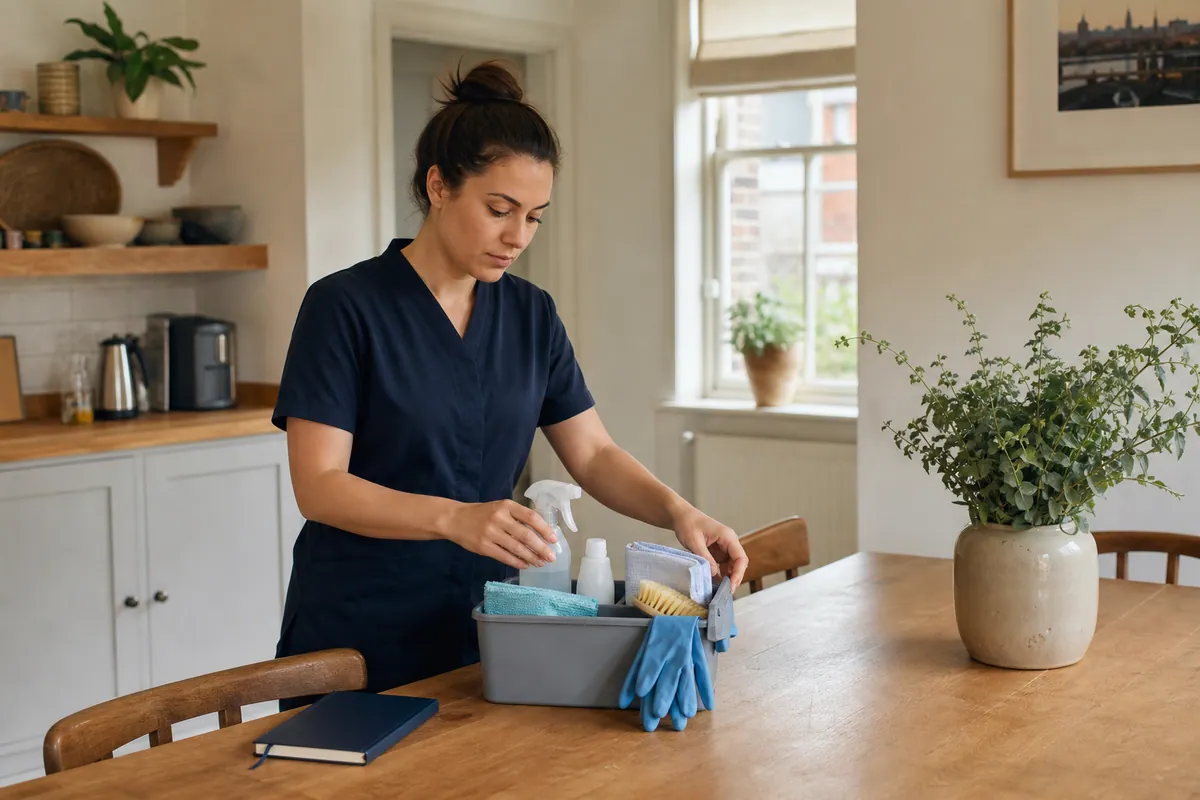
A prepared list of rooms and boundaries.
The agreed tasks addressed in a practical sequence.
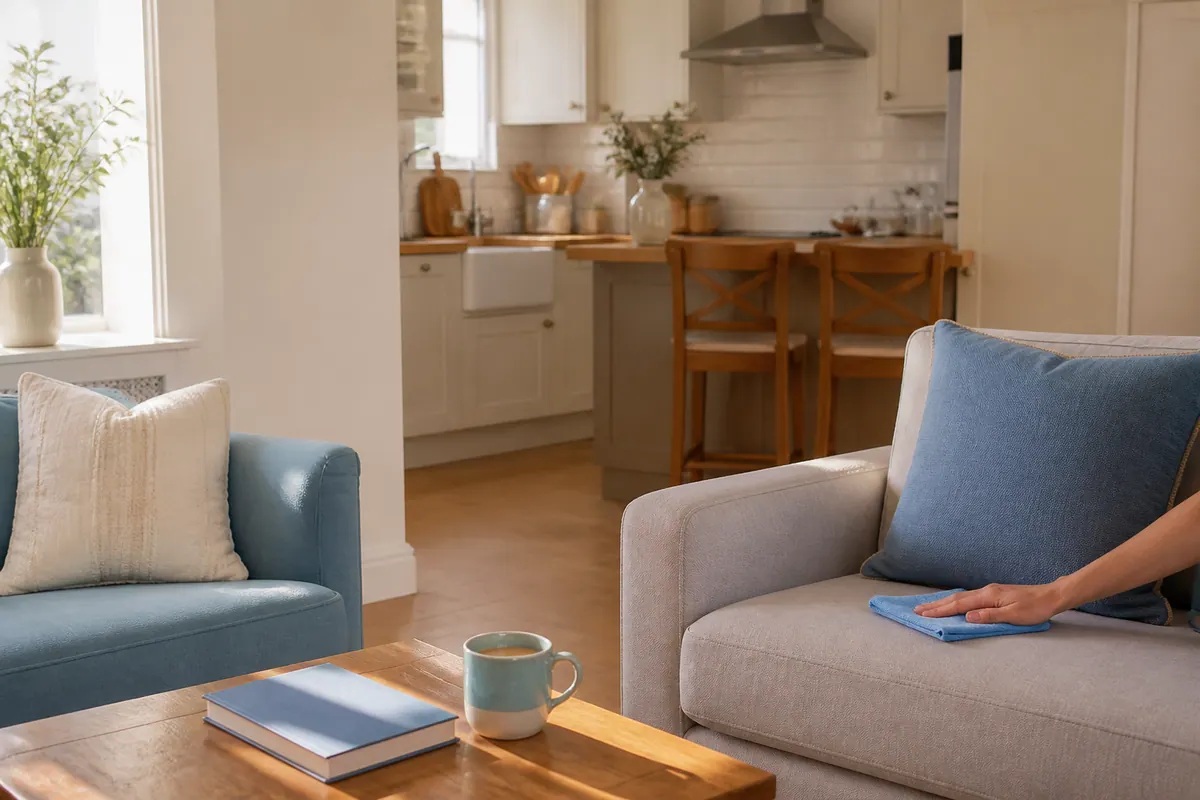
A clearer basis for the next maintenance visit.
Illustrative scenes show a possible routine, not a recorded customer result.
Access belongs in the booking
Decide how the cleaner receives and returns keys, keeping the details between you and the team.
If building staff are part of entry, check that the proposed arrangement is authorised.
Provide the alarm information required for arrival and departure through a private channel.
Arrange a place for pets and explain the doors or rooms affected.
Name the work area that stays occupied and the point when it can be handed over.
Known parking and loading restrictions should be raised while the visit is planned.
List spaces that remain private, including objects that must not be moved.
A realistic cleaning agreement includes both the room work and the way it can be reached. Confirm any specialist or additional requirement before assuming it belongs in regular upkeep.
Clarify the details
Discuss the communal areas receiving most use and agree their priority together. Private-room requests should then be named separately, so the cleaner is not left to decide between incompatible household expectations.
Use the nominated contact to communicate a current, shared version wherever possible. A changed request may affect time and scope, so it should be reviewed rather than treated as automatically included.
Regular care is advertised from £20/hour. Ask about the minimum booking, included supplies, interval and scope for your property, including access and postcode considerations, before treating that guide as a final quote.
Use, condition and time all matter. Explain the activity in the home and what you maintain between appointments, then discuss weekly or fortnightly options subject to postcode and schedule.
Yes, but communicate the change early when possible. Keep essential maintenance visible and ask whether the revised work calls for more time or a different service rather than silently expanding the brief.
The £90 figure is a starting rate for first or one-off domestic work, not a promise regardless of condition. Rooms, priorities and time are confirmed, with specialist requirements considered separately.
Explain them during booking and ask what supplies are included. Preferences and material-care guidance should be considered before work, with any known sensitive or damaged area identified.
Explain the affected room and timing beforehand. An alternative ready area or clear handover can be discussed, but do not assume the cleaner will interrupt work or add waiting time.
They are separately scoped services, not implied additions to kitchen or floor upkeep. Exterior appliance care and vacuuming can be discussed within the domestic list instead.
No; it is a page-based planning aid, not a booking confirmation. Share the relevant room choices, postcode and access arrangements directly when asking Alesta about availability.
Finsbury Park / enquiry area
When asking about Finsbury Park, include the postcode together with room use and access details. A suitable scope and schedule are discussed directly rather than assumed from a location page.
For the wider service scope, see Domestic Cleaning, or ask the team about your address.
The area map
The map can help orient the access conversation; it does not confirm coverage or timing.
Open map in a new tabFinsbury Park / the next conversation
Tell us about the rooms in your Finsbury Park home, their condition and the routine you want to arrange. Prioritise our shared spaces: share your preferred frequency and access details directly with the team.
