
Main maintenance tasks
- Kitchen working surfaces and sink care
- The bathroom work you have agreed
- Dusting where surfaces are reachable
- Included floors to be vacuumed
- Floor care with material guidance
Epsom / Rooms worth putting first
Let this week’s family use guide the order
An Epsom family routine can need a different leading room after a busier week. Explain the change before arrival while keeping the overall task list within its agreed limits.
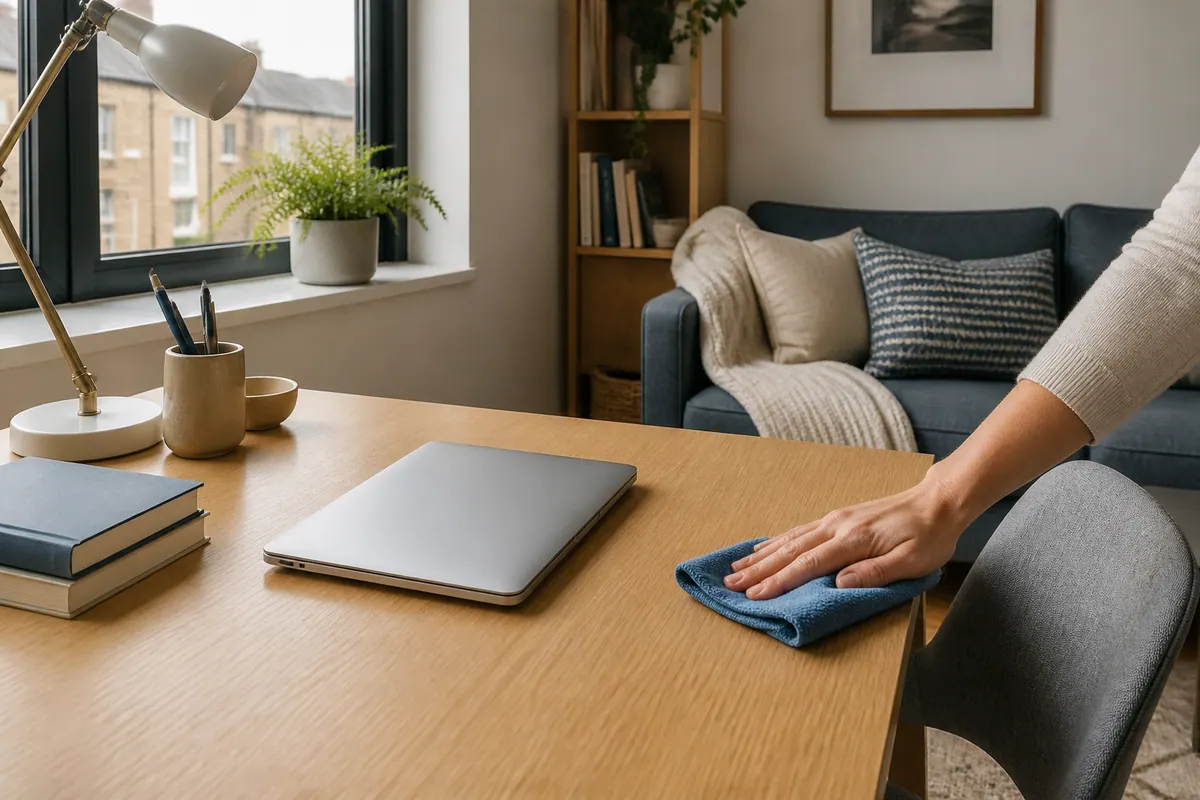
Kitchen · Bathroom
Living areas · Bedrooms
Routine planner
Start by describing the household rather than guessing how many tasks fit. The summary is a planning note, not a quotation.
Epsom / household planning
An Epsom family routine can need a different leading room after a busier week. Explain the change before arrival while keeping the overall task list within its agreed limits.
A changed order is worth discussing without assuming the whole appointment has become larger.
Prepare the affected room by putting loose belongings away. If the request includes another space or specialist task, raise that separately when reviewing the brief.
Describe the change in use and the accessible areas affected. A room becoming the priority does not necessarily mean every other task can remain unchanged.
Explain whether a request adds work or simply changes sequence. The team can then discuss the intended duration without discovering a larger list at arrival.

Essential upkeep
Start with dependable household upkeep; do not let a growing list of minor requests displace the essential areas.
Rotating tasks are useful only when they remain manageable. Discuss any larger addition before it becomes an expectation.
Room coverage
The tabs offer a useful way to describe ordinary care, while the actual coverage depends on your confirmed booking.
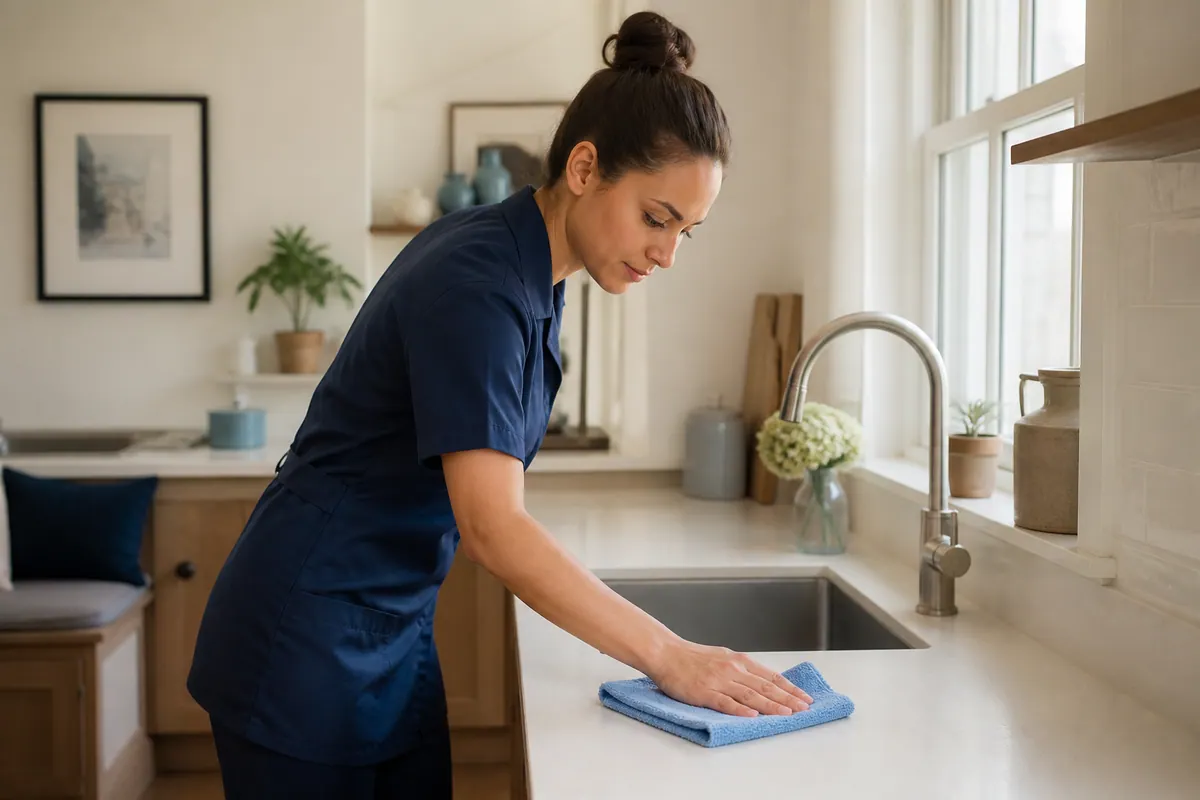
Kitchen
Specify the worktop and sink area, then identify the cupboard faces and appliance surfaces included in the available time.
Put food away and clear the agreed counters; an oven interior needs a separate cleaning request.
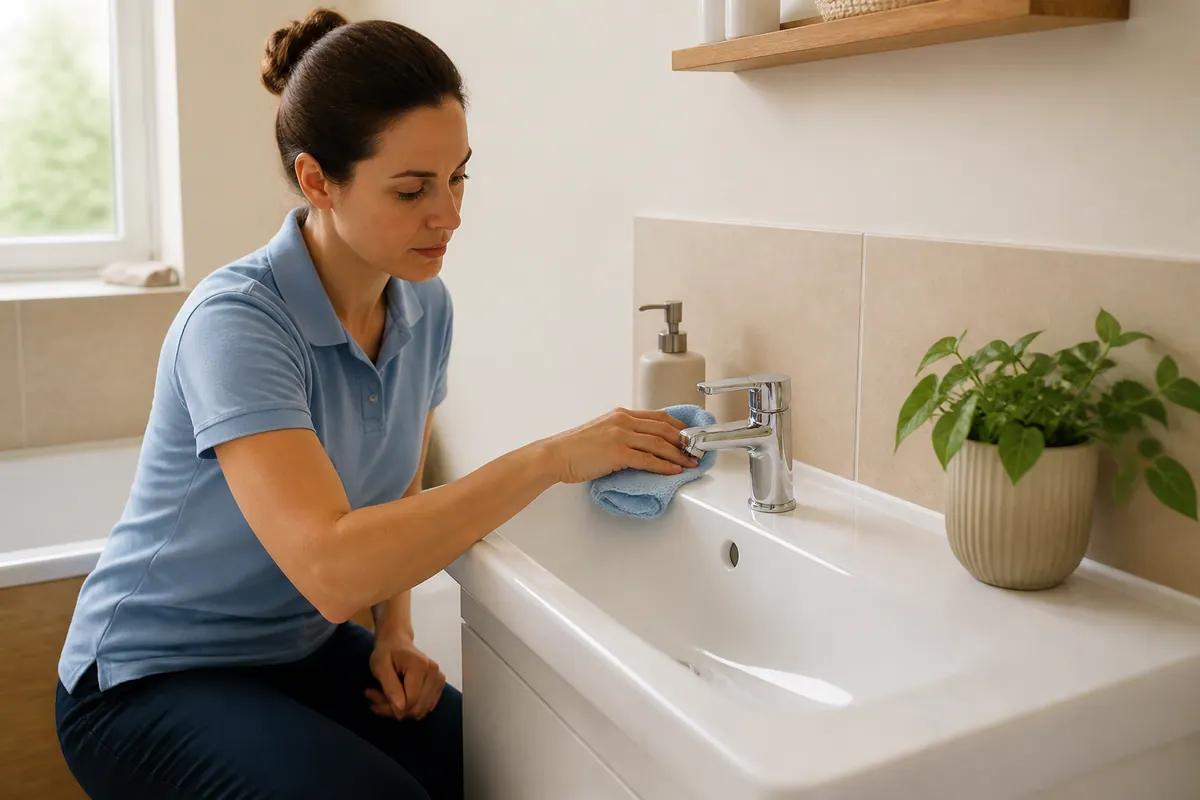
Bathroom
Bathroom upkeep can include sanitaryware, taps, shower surfaces, mirrors and reachable tiles, with material compatibility checked first.
Point out material restrictions and defective fittings at the outset, before the bathroom approach is settled.
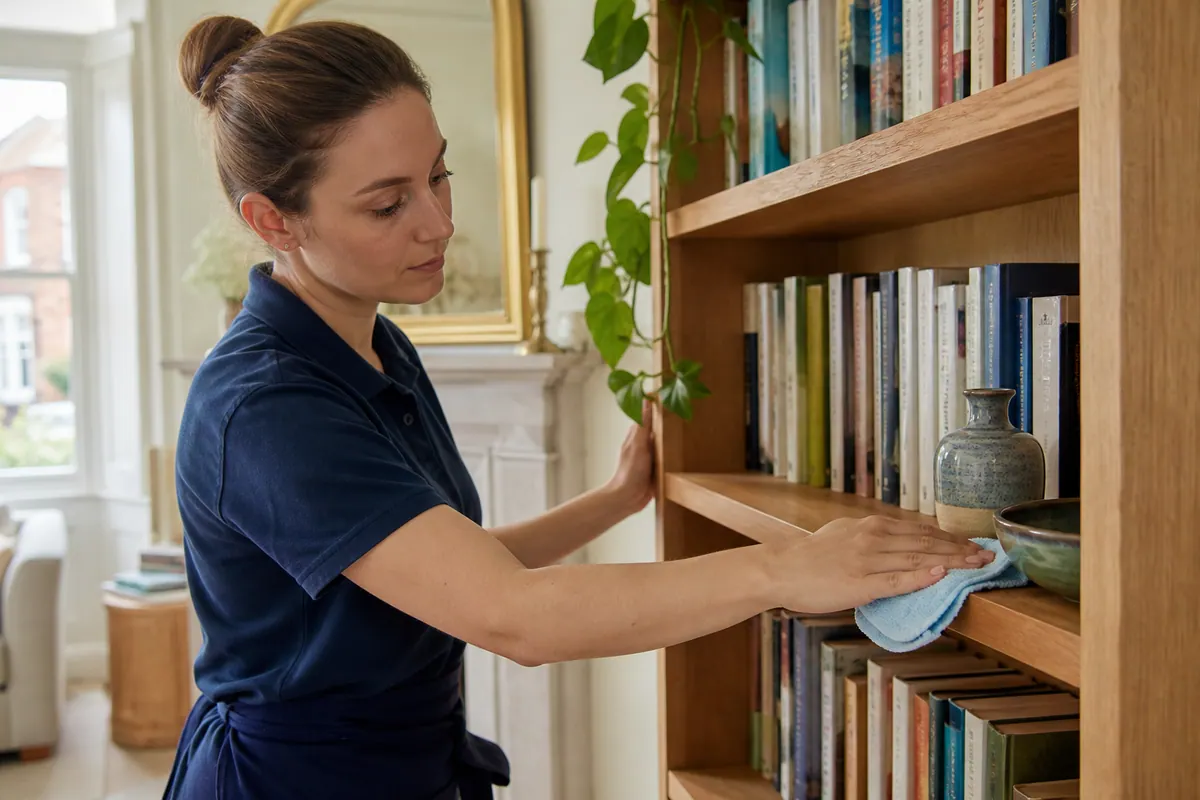
Living spaces
For living areas, establish the reachable dusting surfaces and floor route. Vacuuming and finish-appropriate cleaning follow the confirmed brief.
Decide where fragile and personal items will stay before the visit; a surface clean is not a storage arrangement.
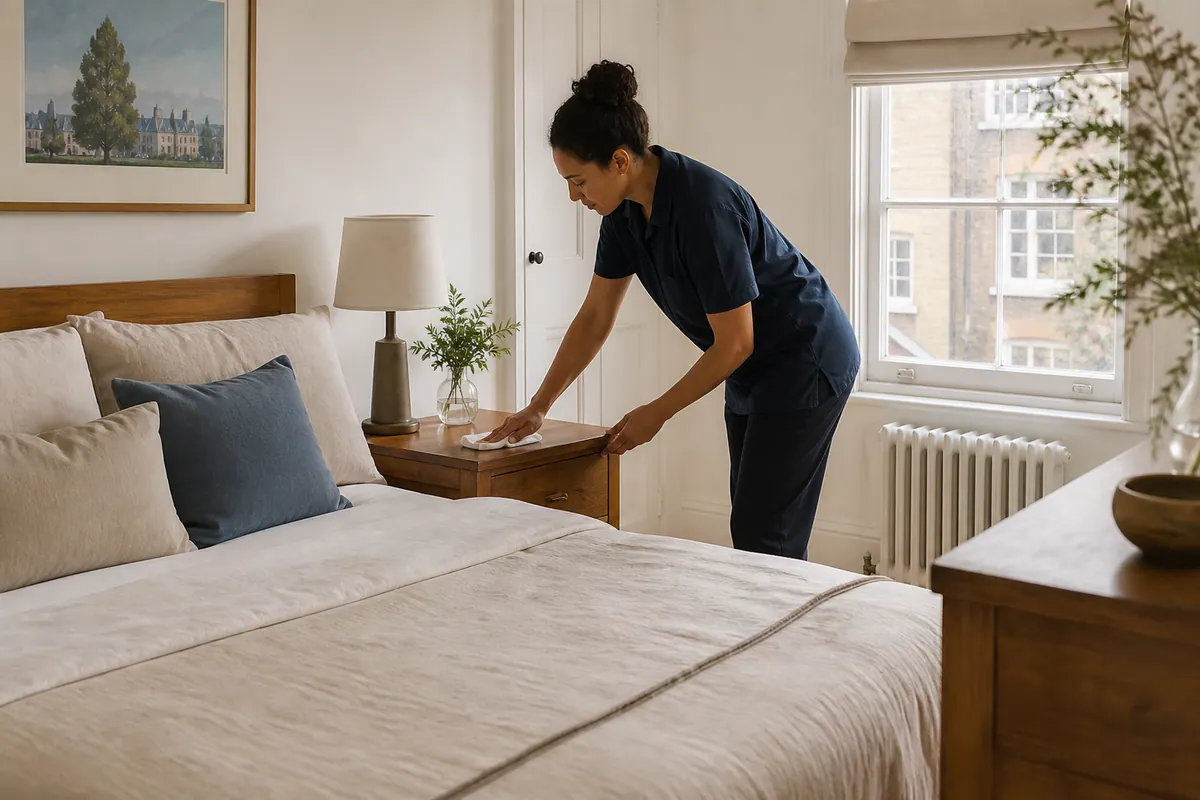
Sleeping rooms
Name the bedrooms you want covered, then describe their accessible surfaces and the floor cleaning needed within the visit.
Put medication and personal belongings away; mark any bedroom that should remain private.
Visit frequency
Choose an interval from actual room use and starting condition, not a rule that every home needs the same schedule.
| Planning point | Weekly | Fortnightly |
|---|---|---|
| Best suited for | Busy everyday spaces | A longer gap with planned priorities |
| Core focus | Follow the established core work | Review the workload created by the gap |
| Priority planning | Define a useful repeatable scope | Be explicit about competing priorities |
| Visit scope | Discuss coverage before the appointment | A separate scope discussion is needed |
A new routine should start with the condition that exists, not a maintenance estimate for a home already kept on schedule.
The established list stays useful only when new room use and added requests are communicated.
Household arrangements
Tell the team which arrangements apply to your home.
Name the areas you use after work and confirm how entry will happen during the booking.
Describe the family spaces that need upkeep and prepare the floors before asking for additional detail.
Agree the animal’s location before setting the room sequence, with clear instructions about closed doors.
A home office is not automatically available for cleaning. Establish the access window before arrival.
Clarify whether the instruction comes from the resident or an authorised contact; a future handover needs its own scope.
Use one agreed communication route for the room list and entry arrangements, particularly when several people are involved.
Material guidance
Point out the materials in the included rooms, including worn or sensitive areas, before an approach is agreed.
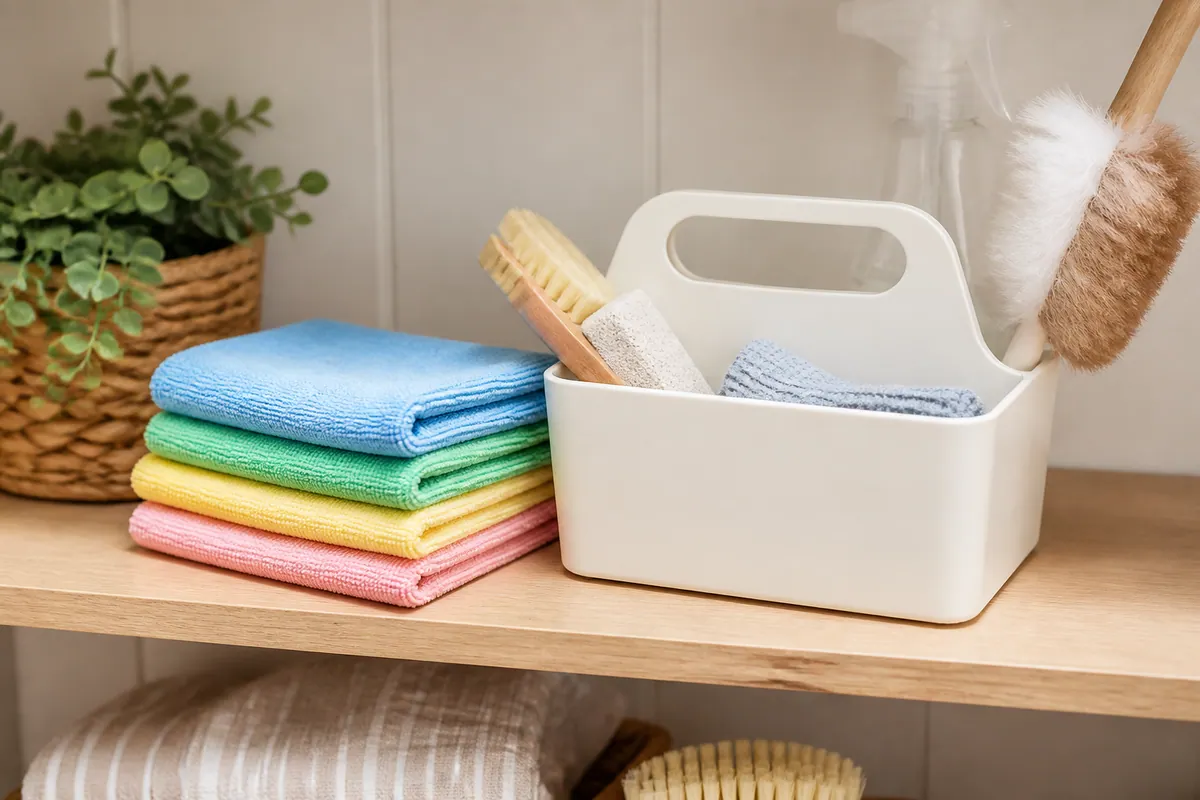
Ask for the approach to be matched to the known stone and its maintenance guidance.
Share timber-care guidance; the amount of moisture cannot be assumed suitable for every finish.
Explain which pieces are lacquered and whether their care instructions limit products.
List the accessible steel areas to be maintained without implying an internal appliance clean.
Show damaged or sensitive paintwork before the cleaner starts; routine care does not repair coatings.
Separate services
Do not fold a specialist job into the recurring list by calling it an extra detail. Its scope has to be checked separately.
Separate professional carpet extraction from the vacuuming included in an ordinary room brief.
The outside of an appliance and a detailed oven interior call for separate cleaning instructions.
Mould treatment needs its own planning; a domestic surface clean is not a treatment promise.
Outside windows should not be added as an assumed finishing task to a domestic appointment.
Do not use the ordinary recurring list as a substitute for cleaning after building work.
If the home needs substantial catch-up work, discuss a focused one-off scope before setting a routine.
Quick answers
Price guides
Ask what the proposed booking includes, not just which starting rate applies to it.
| Service | Price | Main factors |
|---|---|---|
| Regular domestic cleaning | From £20/hour | The scheduled interval, minimum visit, supplies and entry plan |
| First / one-off domestic visit | From £90 | The first room list, condition and agreed time |
| Specialist / intensive scope | An independent quote is needed | Heavy accumulated work and specialist access requirements |
A quotation reflects the time and condition involved, the amount of space, supply arrangements and access. Ask about the minimum visit too.
Task order
Arrange the example list into a useful enquiry outline; the team must separately confirm any change to a visit.
Booking process
Describe the condition of the included areas and any limits on when they can be entered.
Review the practical task list before confirming how often the household needs support.
Resolve the access route and supply arrangement while sharing relevant material instructions.
The planned sequence keeps attention on the included rooms and suitable cleaning methods.
Check how the priorities worked and identify requests needing another service or time allowance.
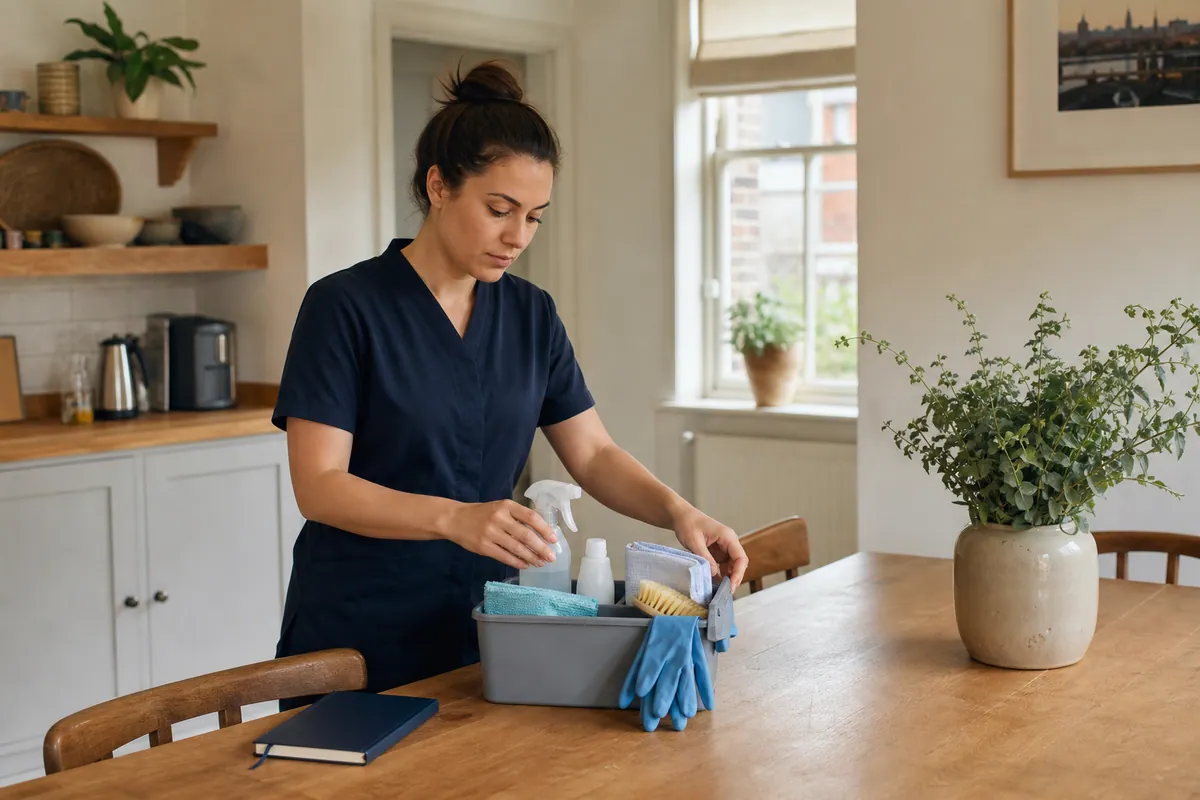
The intended scope made explicit.
Core maintenance follows the plan.
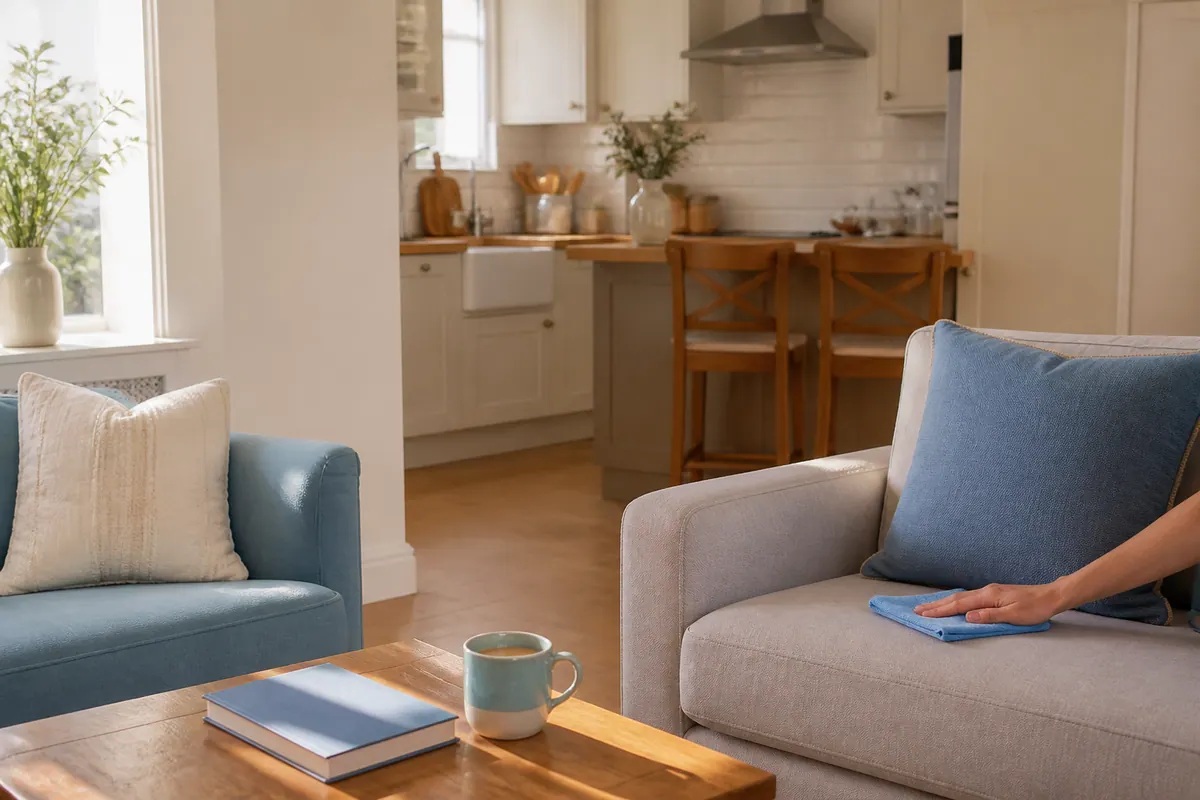
Keep the useful priorities in view.
These are illustrative home-care scenes, not a case study or a photographed customer outcome.
Practical access
Confirm a workable exchange of keys with the team and identify the person responsible.
If entry goes through a concierge, clarify the permissions and how the team reaches the flat.
Share necessary alarm instructions privately for both arrival and departure.
Agree the animal’s location before setting the room sequence, with clear instructions about closed doors.
A home office is not automatically available for cleaning. Establish the access window before arrival.
Tell the team about known parking or loading restrictions while arranging the booking.
Record which rooms are excluded and which possessions must remain undisturbed.
Confidence starts with knowing the included work and access plan, rather than an unqualified promise to clean everything.
Booking questions
Tell the team what needs to lead after the busy week. If the change adds a room or a separate service, discuss that expansion rather than presenting it as a simple reorder.
Put away personal items where you want them kept. Explain access restrictions so the prepared room list matches the actual visit.
The recurring guide begins at £20 per hour; first or one-off domestic care begins at £90. Ask for the full quotation and minimum booking.
The suitable gap depends on how the home is used, not simply its size. Discuss the planned workload before choosing a repeating timetable.
Yes, raise the new order in advance where possible. Any expansion beyond the original work should be confirmed separately.
The first appointment can involve catch-up work that will not recur. Agree those tasks and the necessary time before settling ongoing maintenance.
Confirm what is supplied for this appointment and share the relevant finish instructions. Do not assume all products in the house are suitable.
Set the office boundary directly with the team. The cleaner needs to know whether the room is out of scope or available at another point.
Treat extraction as an independent request, even if vacuuming the same room is included in the domestic list.
A plan still requires direct confirmation of availability and the complete brief. Check products, duration and entry before treating it as booked.
Epsom / local enquiry
Epsom bookings need the full postcode and the intended rooms. Explain the actual condition as well as the room count, so products, timing and the entry arrangement can be discussed together.
For the wider service scope, see Domestic Cleaning, or ask the team about your address.
Map reference
The area view supports your enquiry; availability must still be checked.
Open map in a new tabYour next step
Name the family area needing attention first. Keep optional tasks within the agreed time. Check the final arrangements before confirming.
