
Necessary household upkeep
- Accessible food-preparation surfaces and sink
- Bathroom tasks named in the brief
- Accessible dusting surfaces
- The agreed vacuuming route
- Compatible care for listed floors
Purley / An achievable weekly brief
Give the lived-in rooms priority
A larger Purley home does not need an assumption that every room receives identical attention at each visit. Separate the spaces used daily from rooms kept for occasional use.
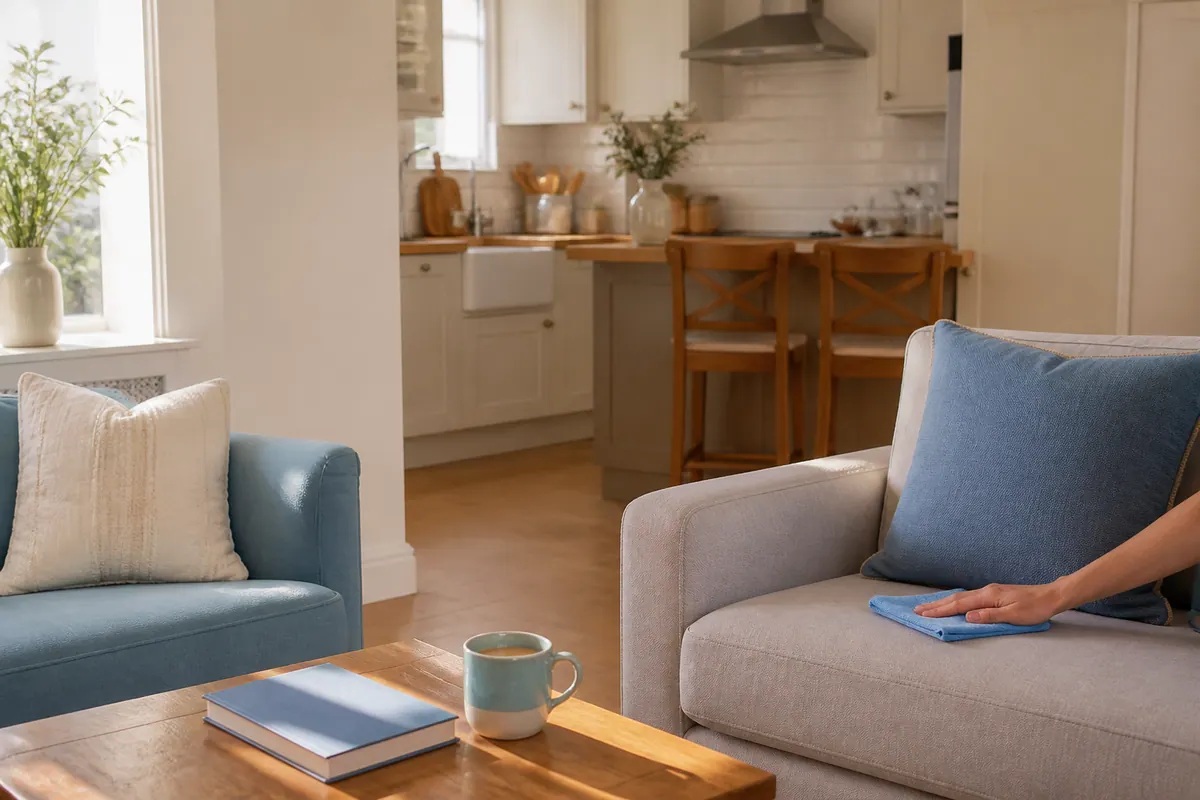
Kitchen · Bathroom
Living areas · Bedrooms
Routine planner
Use the proposed choices to explain the help you need, then check the real appointment details with Alesta.
Purley / household planning
A larger Purley home does not need an assumption that every room receives identical attention at each visit. Separate the spaces used daily from rooms kept for occasional use.
A chosen recurring area is a defined service, not a promise to cover the entire house each time.
If guests change which rooms are used, discuss the revised list beforehand. A new room can affect the visit even when the rest of the routine is familiar.
Use room names the household recognises and make exclusions explicit. The cleaner should not need to decide whether a spare room counts as part of the regular route.
When an occasional space is added, explain its present condition as well as its use. A room left out for several visits may have a different workload.
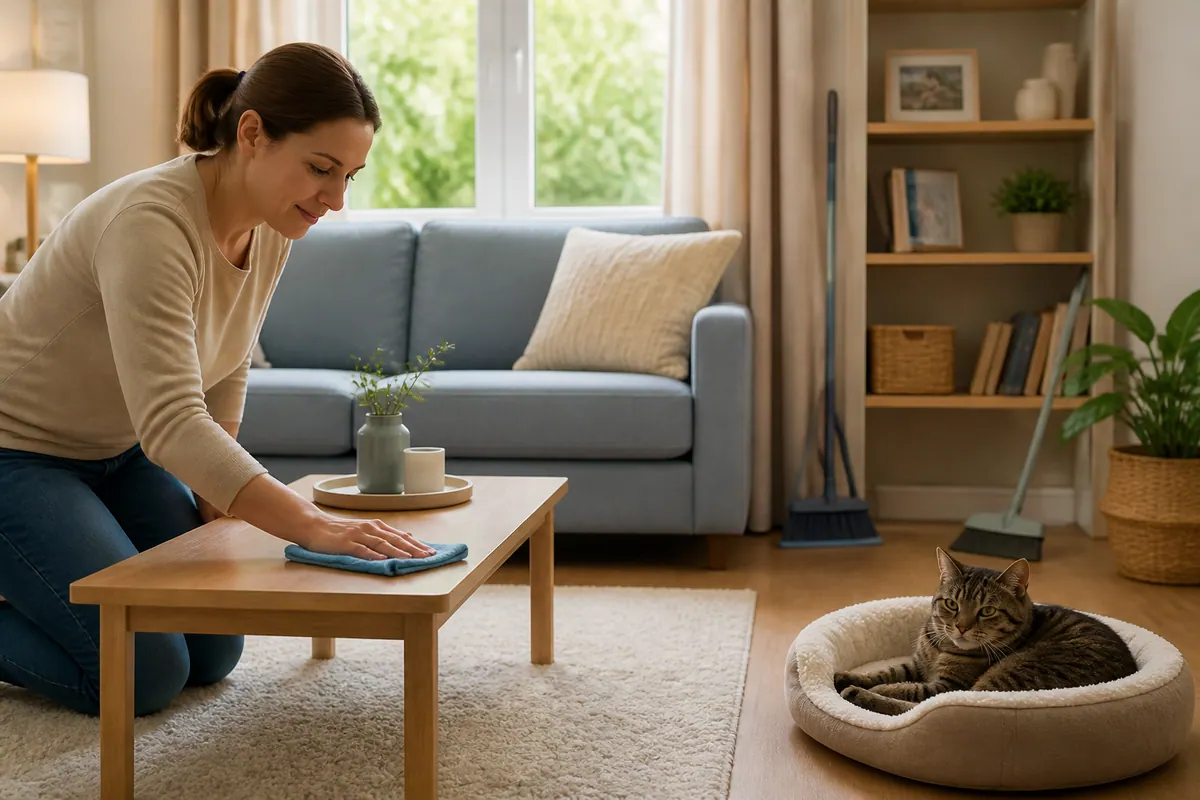
Essential upkeep
Start with dependable household upkeep; do not let a growing list of minor requests displace the essential areas.
Choose optional work deliberately rather than accumulating a second checklist beneath the main room requirements.
Room coverage
Room-by-room planning gives the enquiry useful detail. Tell the team which examples apply and which spaces are excluded.
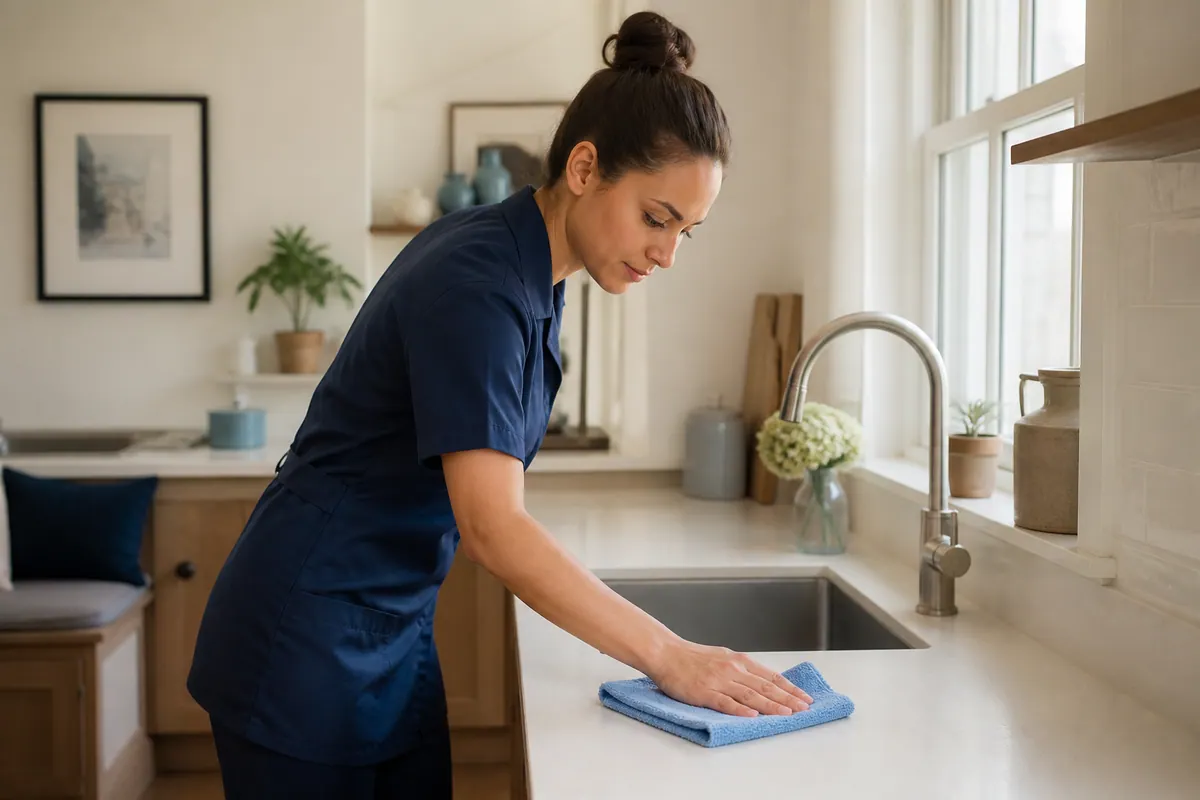
Kitchen
Identify the accessible sink, counters and splashback, plus any agreed cupboard faces and outside appliance surfaces.
Prepare the counters you want cleaned. Appliance exteriors and detailed oven interiors are different pieces of work.
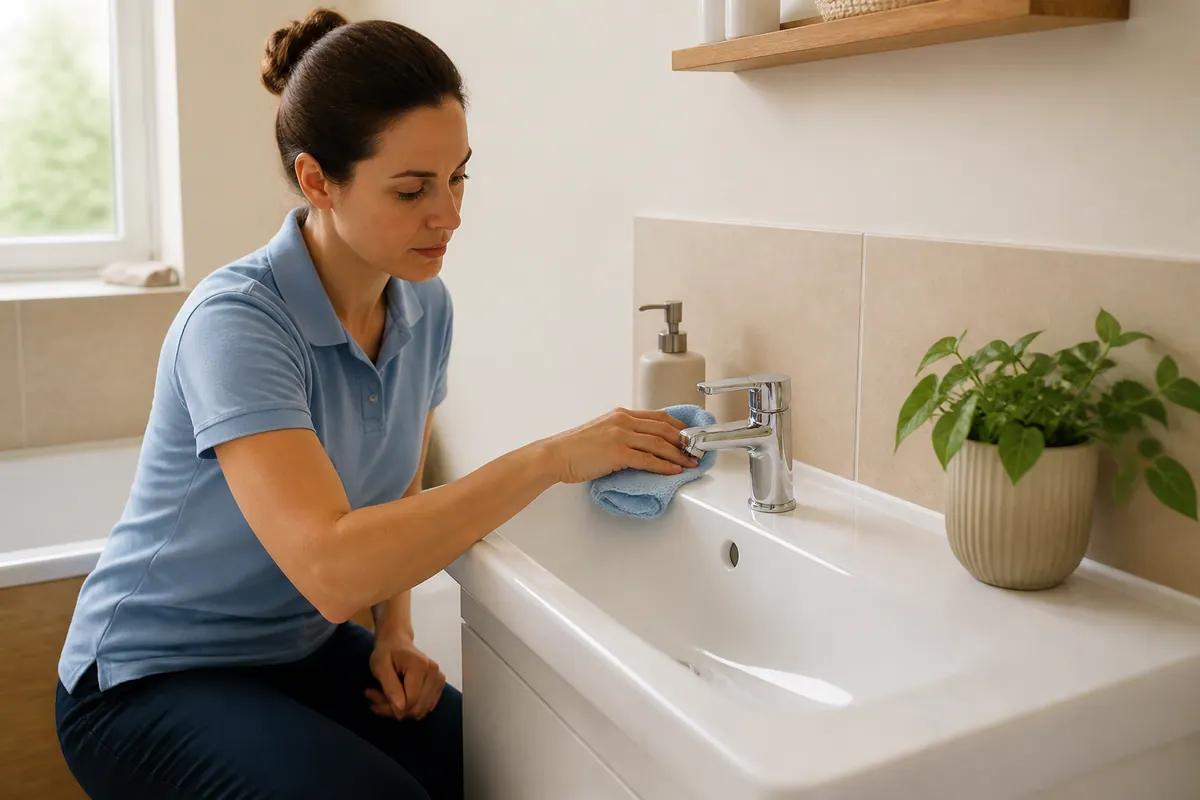
Bathroom
Name the bathroom fittings and accessible tiles you want maintained. Product choice must suit those materials, including the shower and mirrors.
Share the material instructions for sensitive areas and identify defects; a maintenance clean does not repair them.
Living spaces
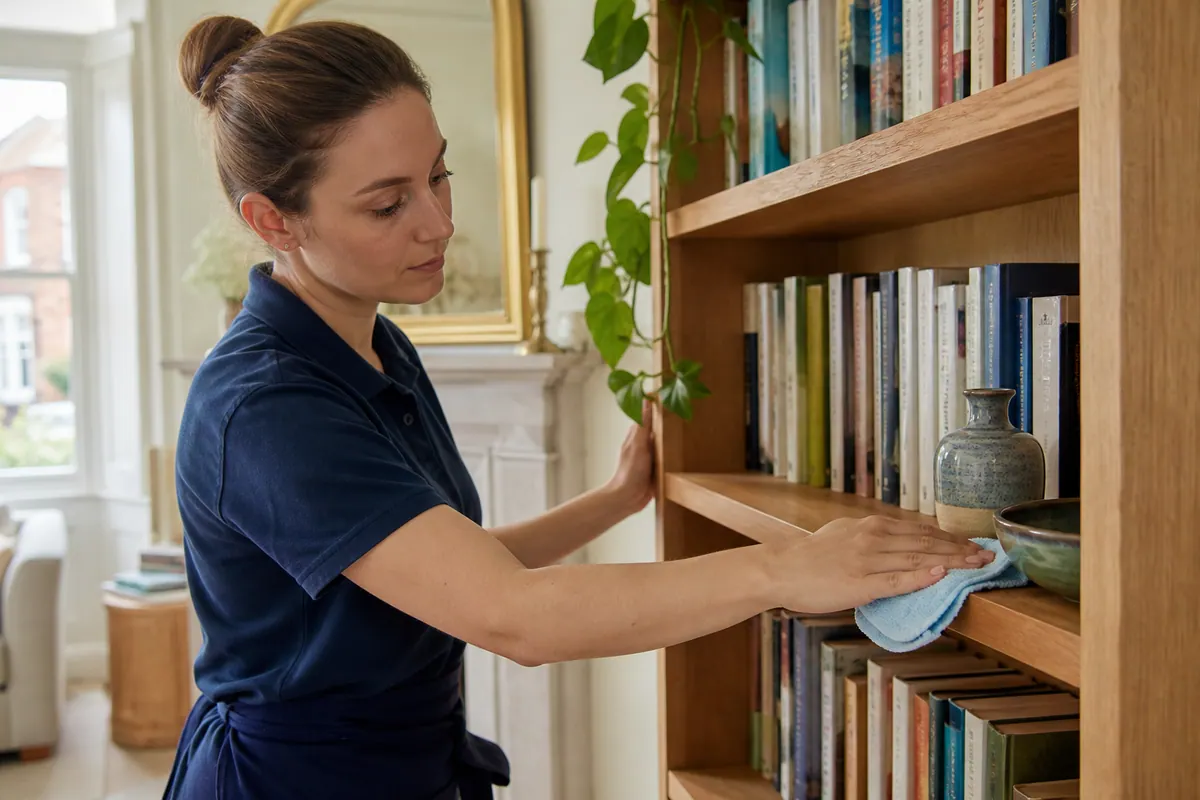
The living-room routine can maintain reachable dusting areas and the confirmed floor space with suitable care.
Do not make the cleaner decide where documents belong. Clear them away and identify delicate objects in advance.
Sleeping rooms
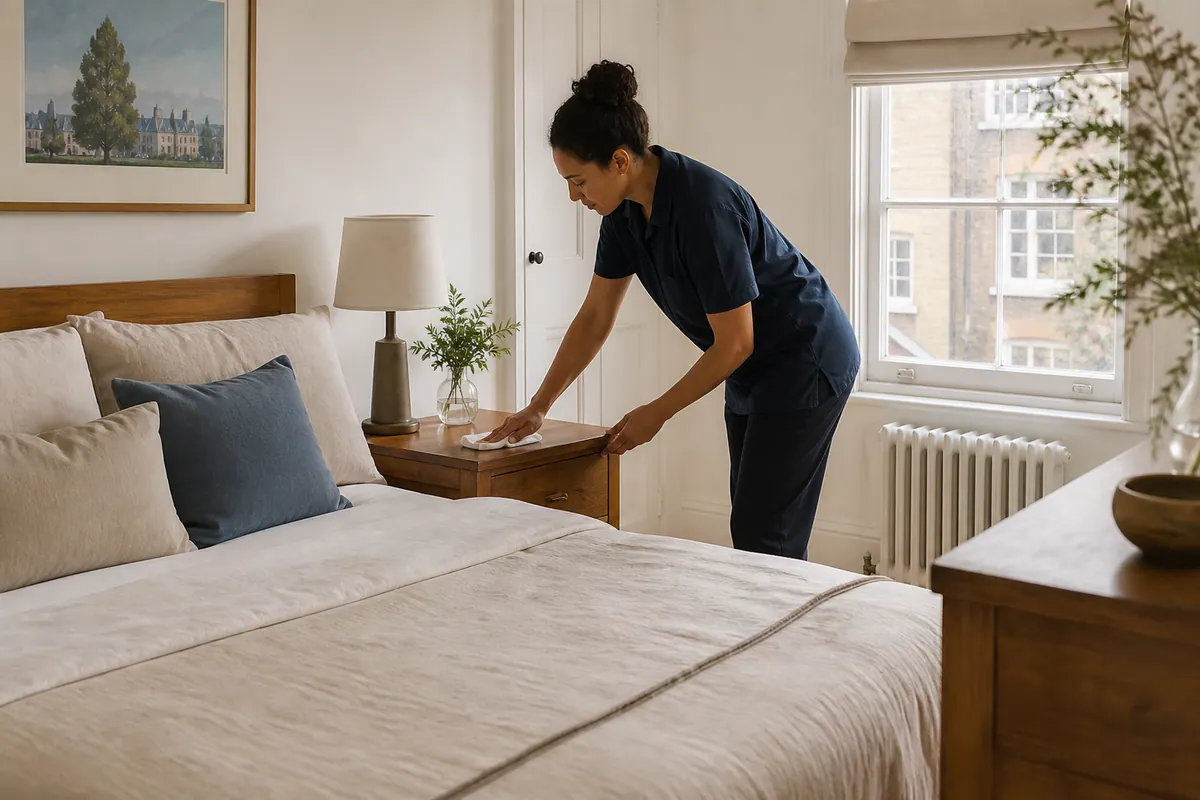
The bedroom list should identify accessible furniture surfaces and the floor area, not imply every private storage space is included.
Keep personal belongings secure and make the room boundaries explicit; a closed door should not require guesswork.
Visit frequency
Neither timetable is automatically best. Describe the rooms, their use and the condition the cleaner will encounter.
| Planning point | Weekly | Fortnightly |
|---|---|---|
| Best suited for | Frequently occupied rooms | Periodic support between household upkeep |
| Core focus | Keep the main room list consistent | Check what has accumulated since the visit |
| Priority planning | A concise list can guide repetition | Choose carefully when more tasks have built up |
| Visit scope | Confirm the scope before booking | The actual work must be agreed |
Begin with an honest description of the accumulated tasks. The first appointment may need additional time before a recurring pattern is practical.
When the routine becomes established, retain the useful core and discuss new requirements before they alter the workload.
Household arrangements
Tell the team which arrangements apply to your home.
For a visit during your workday, settle the entry plan and give the team a defined room instruction.
A household with children may have a changing room order, but the accessible kitchen and bathroom requirements still need definition.
Arrange a suitable place for pets and explain any door that must remain closed during the work.
Arrange room availability around work commitments instead of expecting the cleaner to judge when to interrupt.
Keep the resident’s ongoing maintenance distinct from a future tenancy handover, with approval for the included work.
A managed home benefits from a named decision-maker for access, room coverage and last-minute changes.
Material guidance
Describe delicate coatings, stone and timber when briefing the visit, so the method can be matched to the actual surface.
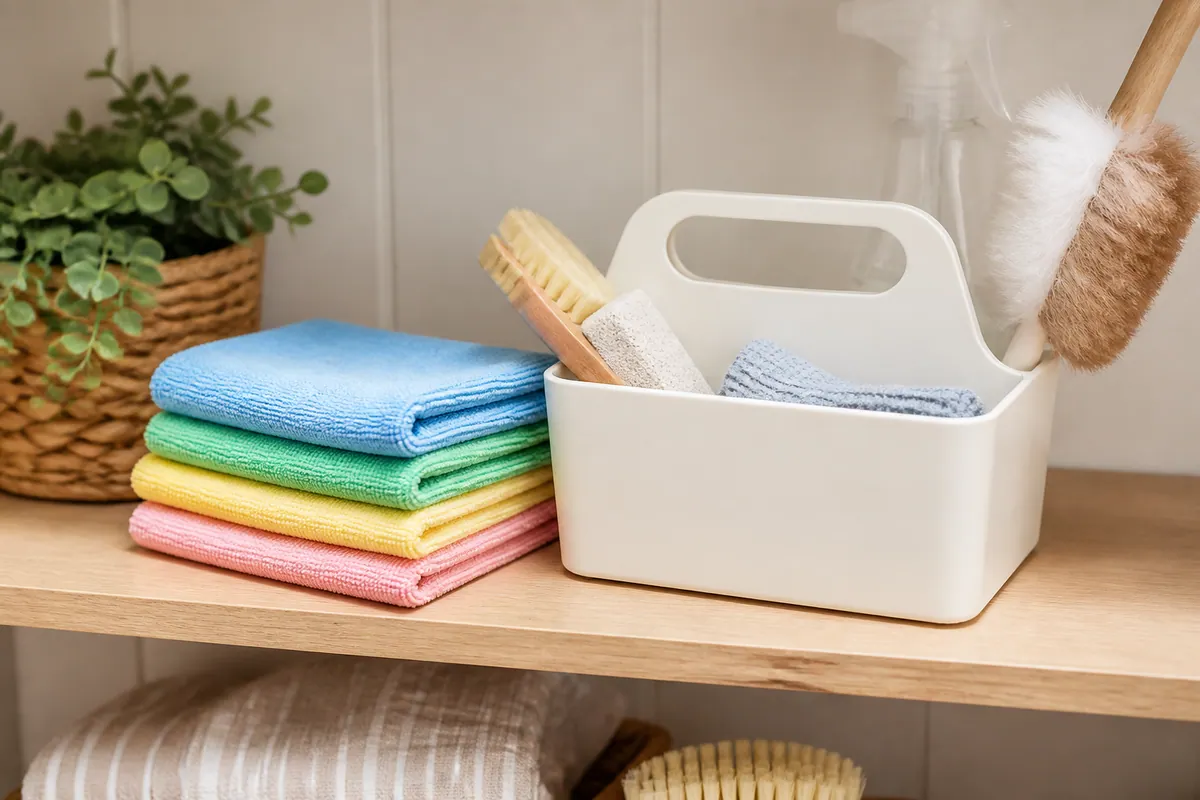
Give the cleaner the known care requirements for stone before agreeing the proposed products.
Make the timber finish clear so its care can be considered with the appropriate moisture level.
Identify lacquer in the room list so delicate furniture coatings receive a considered approach.
Specify the accessible stainless exterior and keep any inside-appliance requirement independently scoped.
Painted joinery can vary in condition; tell the team where the finish is sensitive or already damaged.
Separate services
A separate cleaning method or difficult-access request must be assessed, rather than assumed to fit ordinary upkeep.
Ask about extraction separately when a carpet needs more than ordinary vacuuming.
Do not infer an internal oven service from a booking that mentions appliance fronts.
Mould treatment needs its own planning; a domestic surface clean is not a treatment promise.
A room-cleaning list does not authorise exterior glazing work; check its separate scope.
A home following construction needs its residue assessed independently of normal domestic upkeep.
If the home needs substantial catch-up work, discuss a focused one-off scope before setting a routine.
Quick answers
Price guides
The rate guide is only the beginning; inclusions, minimum time and practical arrangements need checking.
| Service | Price | Main factors |
|---|---|---|
| Regular domestic cleaning | From £20/hour | Address, available time, frequency, room size and equipment |
| First / one-off domestic visit | From £90 | Present upkeep, room coverage and priority level |
| Specialist / intensive scope | Confirm a dedicated quotation | Different equipment, high areas or specialist treatment |
A quotation reflects the time and condition involved, the amount of space, supply arrangements and access. Ask about the minimum visit too.
Task order
Use the arrows to show the order you would like to discuss. This board cannot amend an appointment or allocate extra time.
Booking process
Set out the rooms needing help and mention any occupants or pets present during the work.
Agree which maintenance tasks matter most, then consider the weekly or fortnightly schedule.
Resolve equipment, material guidance and entry, including any alarm or parking instructions.
The defined room scope guides cleaning with compatible methods and accessible tasks.
Confirm the useful maintenance priorities and discuss anything that requires a different scope.
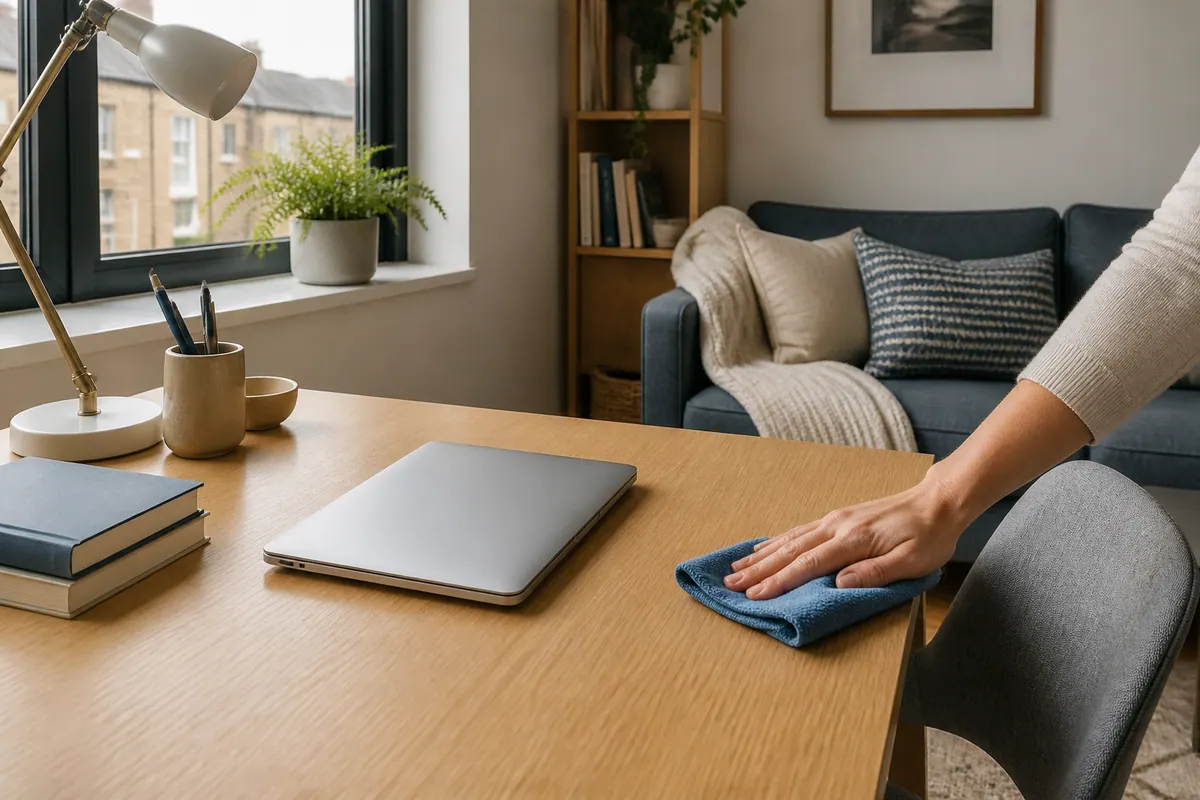
The household requirements explained.
Care follows the defined priorities.
Everyday upkeep with a defined scope.
Illustrative interiors accompany the process; no customer before-and-after claim is being made.
Practical access
A key collection plan must be confirmed rather than assumed from an address.
Ask the building contact how access is approved; do not assume a cleaner can simply be admitted.
Check what the cleaner needs to know about alarms when entering and leaving.
Arrange a suitable place for pets and explain any door that must remain closed during the work.
Arrange room availability around work commitments instead of expecting the cleaner to judge when to interrupt.
Check any parking or loading constraint that may affect the planned appointment.
Name private rooms and possessions that must stay untouched, with clear boundaries for the visit.
Confidence starts with knowing the included work and access plan, rather than an unqualified promise to clean everything.
Booking questions
Specify the rooms used regularly and identify the occasional ones. That distinction lets the quotation describe the intended footprint without promising equal attention to every space.
A domestic appointment should not depend on sorting your possessions. Leave the intended areas accessible and explain the entry plan.
Regular domestic work starts at £20/hour, not a fixed property total. The first/one-off guide starts at £90; check minimum time and supplies.
A fortnightly gap can leave a different workload from a weekly one. Describe the real maintenance needs when comparing them.
Tell Alesta which task should lead and identify any addition to the list. A new requirement needs its scope checked.
Describe the accumulated tasks separately. The initial clean can need more time than a visit maintaining an already established routine.
Check responsibility for equipment and products before confirming. Share material instructions and preferences so suitability is discussed, not assumed.
Tell the team the room’s availability and arrange a different starting area if needed. The restriction belongs in the agreed brief.
Extraction is outside the normal vacuuming brief. Describe the carpet requirement separately before expecting it in the appointment.
The team still needs to confirm your postcode, availability and complete task brief. The planner cannot reserve an actual appointment.
Purley / local enquiry
Purley bookings need the full postcode and the intended rooms. Rooms, present condition and access all belong in the booking conversation. The planner cannot confirm a cleaner for a chosen day.
For the wider service scope, see Domestic Cleaning, or ask the team about your address.
Map reference
The area view supports your enquiry; availability must still be checked.
Open map in a new tabYour next step
Distinguish daily rooms from spare spaces. Review the list when occupancy changes. Send the room priorities when you enquire.
