
Workday access
If you are away at work, discuss keys and arrival before focusing on optional details. The cleaner still needs a definite list of the rooms in use.
Hampstead / Routine care with a clear boundary around wear
Distinguish household dirt from an ageing finish.
Older timber or coated furniture may have marks that cleaning cannot repair. Point out known wear and share care instructions, then agree a domestic routine for the accessible rooms without promising restoration.
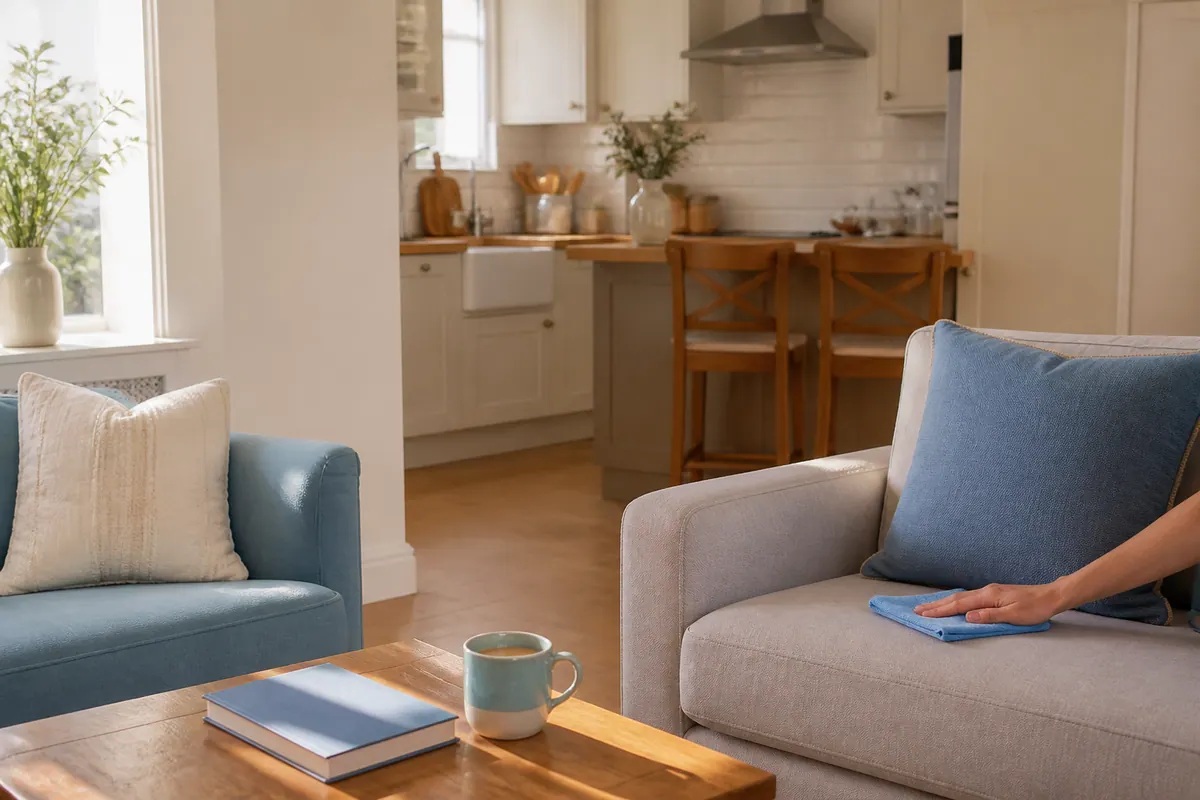
Kitchen · Bathroom
Living areas · Bedrooms
A visit around everyday life
Different schedules call for clear arrangements, not assumptions about a particular kind of household. Explain the details that affect the proposed visit.
If you are away at work, discuss keys and arrival before focusing on optional details. The cleaner still needs a definite list of the rooms in use.
Busy family rooms should remain realistic for the time agreed. Put small belongings away so domestic cleaning does not become personal organisation.
An animal’s resting place can affect access to a room. Confirm where the pet will stay and which boundaries the visit needs to respect.
Home working requires a specific room or time instruction. A general note that someone is working may not explain what can be cleaned when.
For an occupied rented property, agree regular maintenance on its own terms. Moving-out requirements are not automatically included in that arrangement.
A managed-home contact should keep access and priority changes together. One agreed brief prevents the cleaner receiving different versions on the day.
Everyday cleaning, explained
Hampstead / a household scenario
Distinguish household dirt from an ageing finish.
A worn edge or damaged coating is not necessarily dirt. Naming the condition before cleaning helps prevent the visit being judged against a repair expectation it was never arranged to meet.
For Hampstead, describe the finish and the rooms where it appears. Do not assume that all older woodwork needs one method or that the material can be identified by appearance alone.
Remove delicate belongings from the areas included in dusting. An accessible piece of furniture can be discussed without handling every ornament or opening storage.
The regular plan remains household maintenance. If a surface needs specialist attention, keep that work distinct while the agreed kitchen, bathrooms and floors receive their own care.

What the starting figures mean
The guide distinguishes regular upkeep from the first or one-off appointment. The actual agreement must confirm time, minimum visit and what is supplied for the home.
| Service | Price | Main factors |
|---|---|---|
| Regular domestic cleaning | From £20/hour | Confirmed frequency and minimum visit, property size and supply/access needs |
| First / one-off domestic visit | From £90 | Starting state, number of rooms and the priority level agreed |
| Specialist / intensive scope | Quoted separately | Separate service needs, difficult access or intensive equipment requirements |
Explain room count and condition together with frequency, equipment needs and access. Parking and extra tasks may affect the quotation, so check the inclusions rather than assuming a fixed duration from the starting figure.
A practical sequence
Explain what needs attention, who will be home and which areas can be reached.
Agree the frequency discussion and the core task order rather than presenting an unlimited checklist.
Make access, supplied equipment and sensitive surfaces part of the same booking conversation.
The included rooms receive maintenance suited to their surfaces and agreed priorities.
Check the result against the brief, noting work needing another service or a different amount of time.
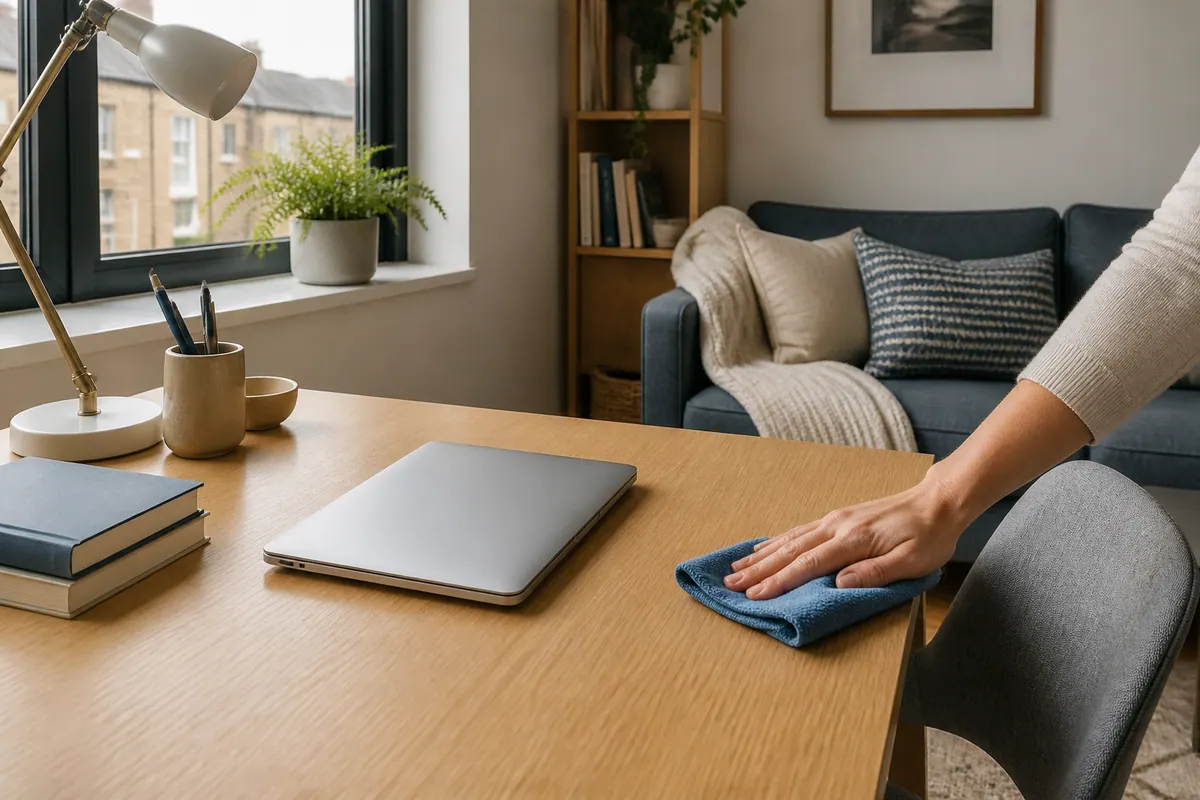
The starting condition described honestly.
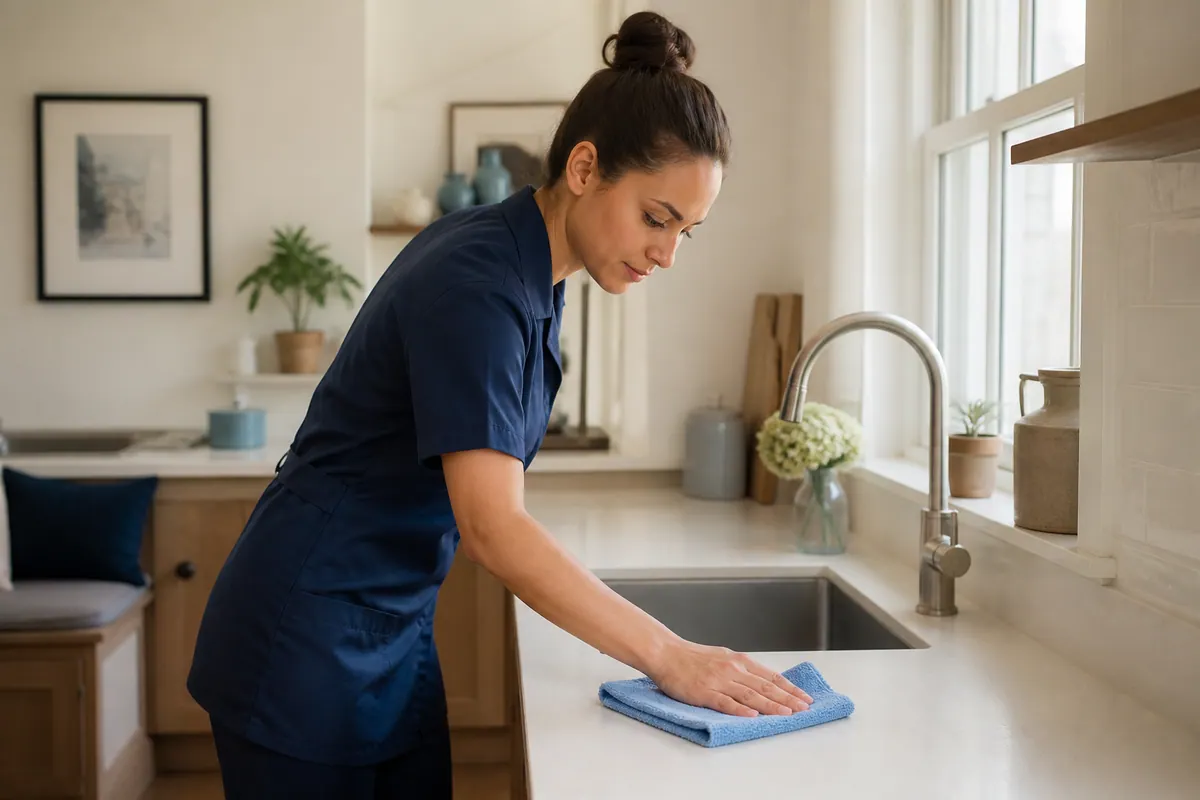
A planned sequence through accessible rooms.
An agreed reference for ongoing care.
The photographs are illustrative scenes, not documentation of a completed customer job.
A closer look indoors
A kitchen or bedroom on a list still needs a defined scope. These examples help separate accessible household cleaning from storage, specialist equipment and tasks not agreed.
Kitchen
Accessible kitchen work may cover the sink, work surfaces, splashback and agreed exterior cupboard or appliance areas. Distinguish these everyday tasks from a deep appliance service.
Prepare the area by clearing food and belongings. Internal oven cleaning is separately scoped.
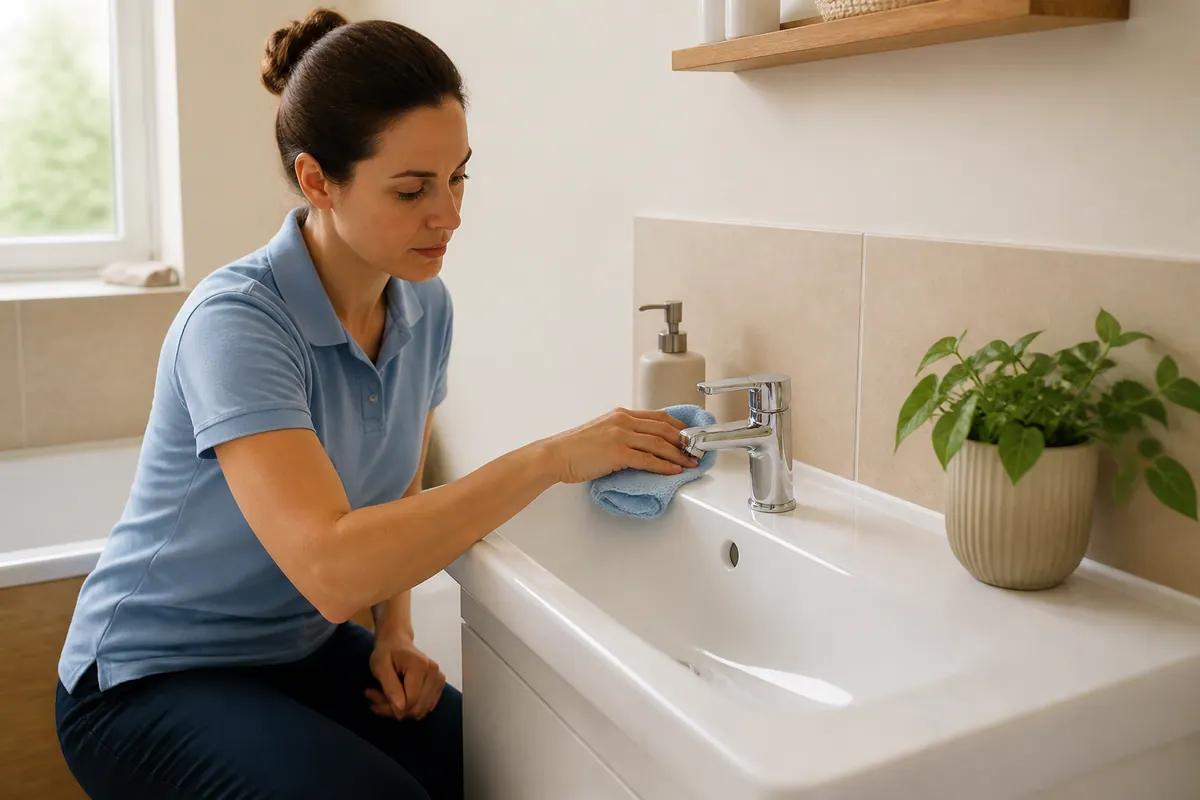
Bathroom
Taps, sanitaryware, mirrors, showers and reachable tiles form the bathroom discussion. Cleaning methods must suit the materials present, including any sensitive finish.
Identify existing seal or fixture damage rather than expecting upkeep to correct it.
Living areas
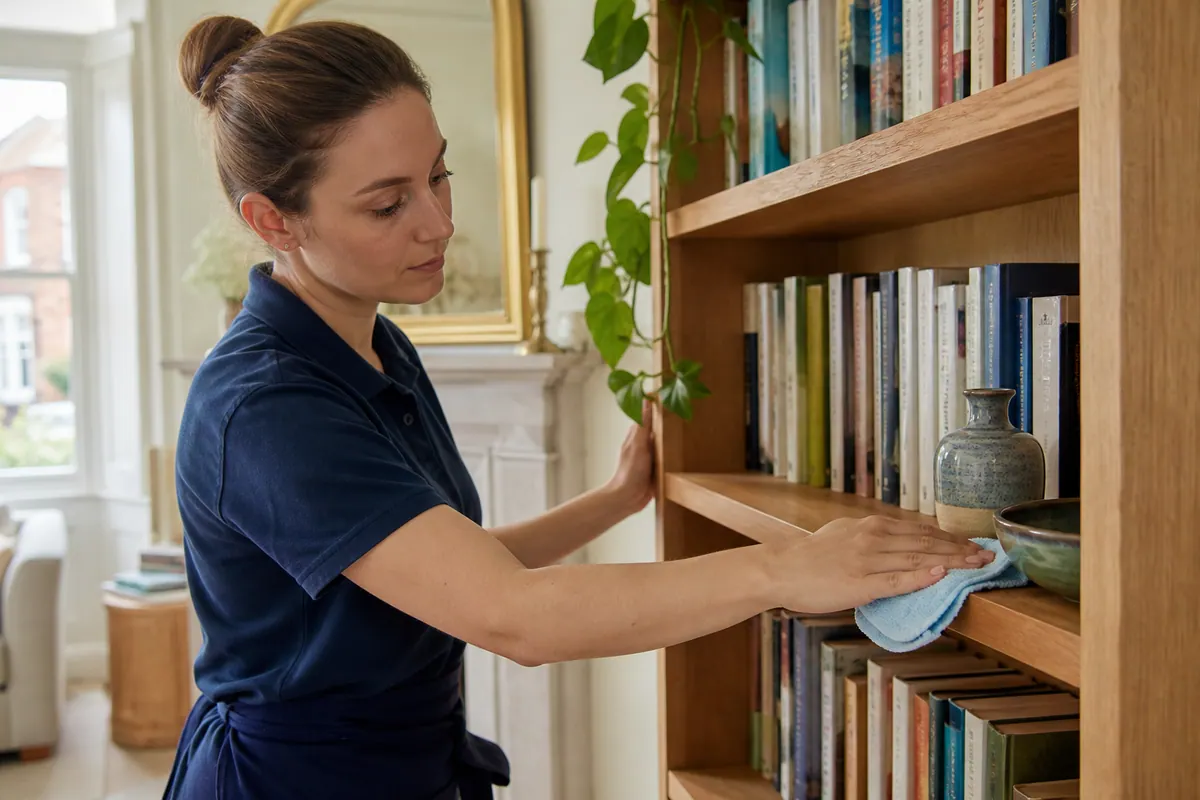
Dust reachable furniture before attention moves to the agreed living-room floors. Vacuuming and suitable floor cleaning belong within a prepared, accessible space.
Keep fragile objects and papers safely elsewhere; identify any furniture or belongings that should not be moved.
Bedrooms
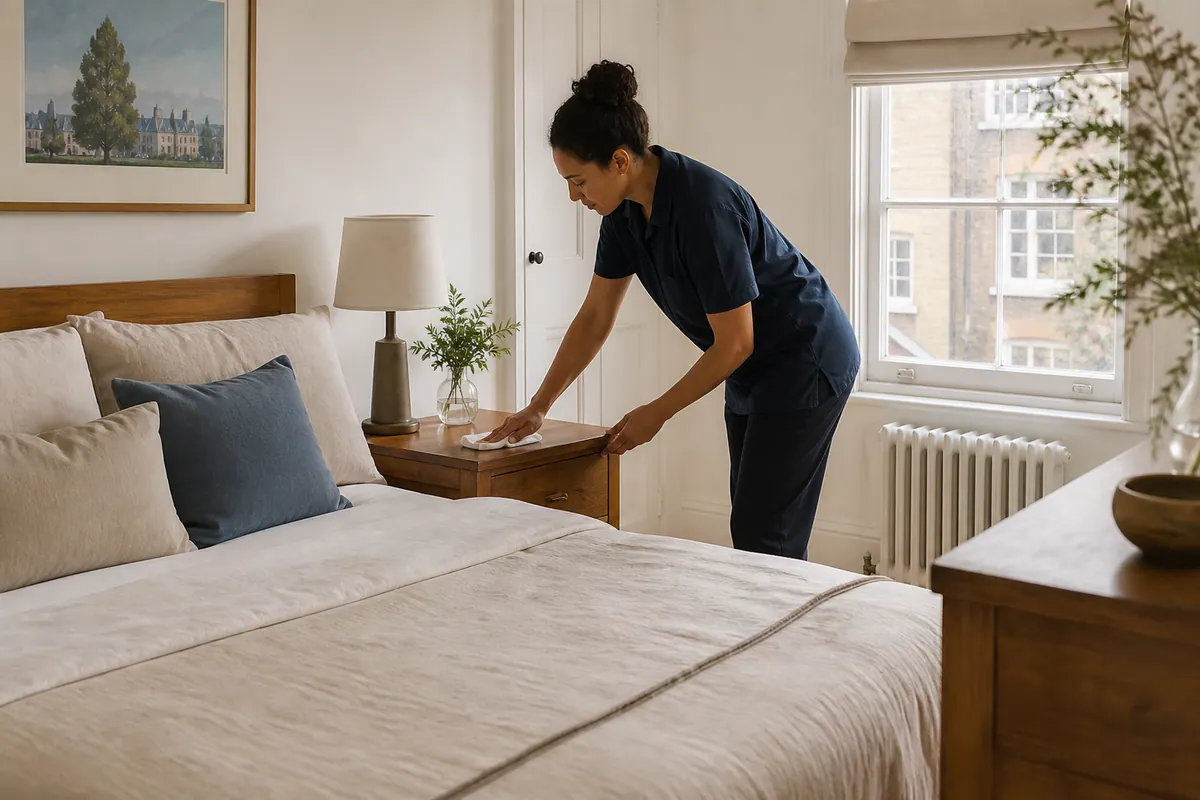
Accessible surfaces, dusting and floors can be included for the bedrooms you name. A room kept out of use need not automatically enter every recurring visit.
Secure medication and other private belongings, and confirm any door that should remain closed.
Between one visit and the next
A longer gap can change the work waiting in the used rooms. Discuss that practical difference, together with available time, before deciding whether weekly or fortnightly visits make sense.
| Planning point | Weekly | Fortnightly |
|---|---|---|
| Best suited for | Households considering frequent upkeep support | Households considering an every-other-week routine |
| Core focus | Maintain a defined list through the used rooms | Review the same essentials after a wider gap |
| Priority planning | Small recurring priorities kept visible | More time between visits may change task priorities |
| Visit scope | Agree inclusions and duration directly | Agree inclusions and duration directly |
The starting visit may need to do more than preserve an existing baseline. Explain the current condition and agree which tasks lead, without expecting a regular maintenance duration to cover every backlog.
When the routine settles, use the agreed essentials as the reference. Changes in occupation, condition or room use still need to be raised rather than absorbed by default.
Choose what you want to discuss
The controls help make a domestic enquiry specific. They can describe your preference but cannot confirm duration, cost or a space in the schedule.
What returns, what rotates
Start with the household surfaces and floors that need repeated care. Occasional detail work is a separate decision, even when it sits in the same room as a recurring task.
Name the detail and its location when discussing the visit. That makes its scope clearer than adding a general instruction to be thorough everywhere.
Material information matters
Share existing care guidance and identify known damage. Stone, wood and coated surfaces can respond differently to moisture or products, even when they are in the same room.
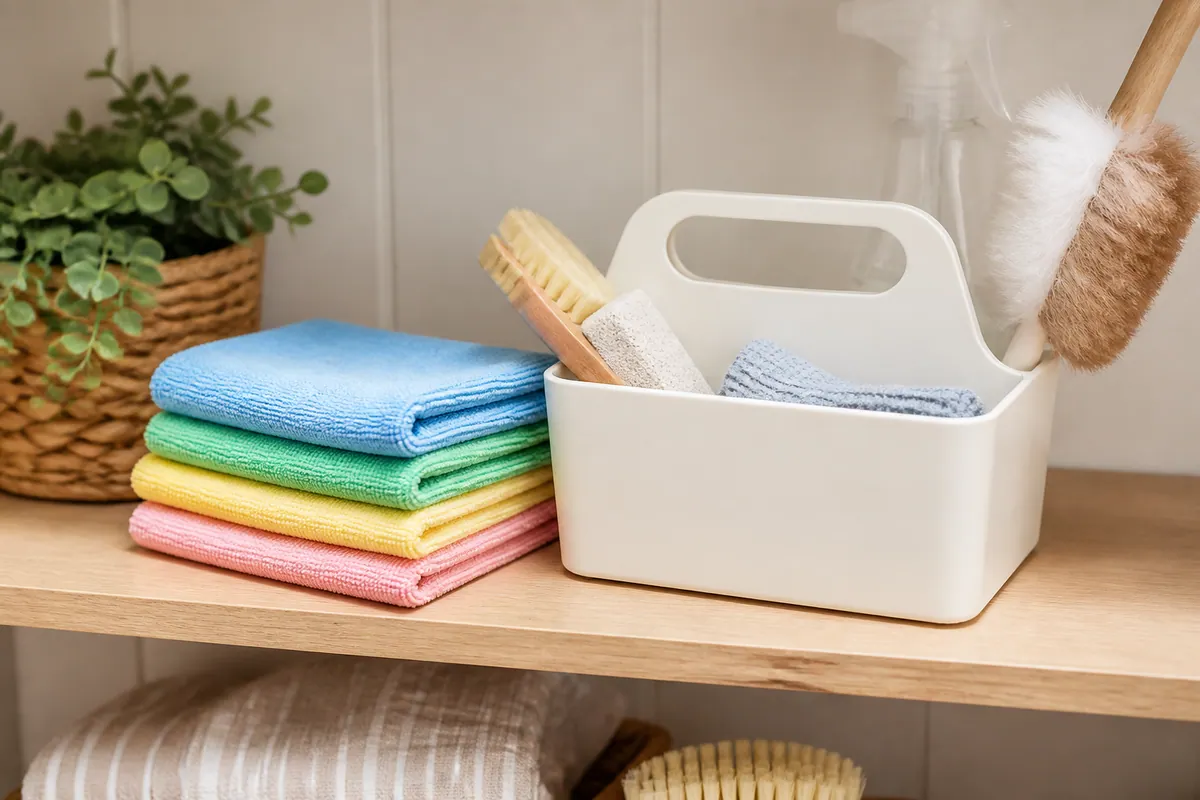
Name the stone if known and provide any manufacturer’s care guidance.
Timber needs its finish identified before a method or moisture level is assumed.
Point out lacquered furniture so its coating is considered during dusting and cleaning.
Agree the stainless-steel exterior area; internal appliance work is a different scope.
Show flaking paint or damaged fittings before work, not as a cleaning expectation afterwards.
The order for your conversation
Try a different arrangement using the arrows. It changes the example only, not the service booked, so take the proposed order into your conversation about the actual visit.
Arrival without assumptions
Confirm who provides the key and how it is returned; keep those instructions in direct communication.
Check whether building staff can authorise entry rather than assuming they will handle it.
Explain the alarm procedure needed for a complete arrival and leaving arrangement.
Discuss the animal’s location and internal boundaries before the cleaner starts moving between rooms.
Identify the occupied workspace and when it may be released for cleaning.
Tell the team about any known restrictions affecting parking or unloading.
Keep exclusions specific: a private room or item should not depend on a guessed boundary.
The visit works from the tasks and access agreed. If the brief includes something beyond household maintenance, clarify it in advance instead of relying on an unlimited checklist.
Keep the service boundaries useful
Domestic care does not include everything found inside a home. Explain specialist tasks, restoration, high access or heavy lifting so the right scope can be considered.
A carpet’s routine vacuuming and its professional extraction are separate cleaning tasks.
Detailed oven interiors are not included merely because the kitchen is a priority.
Mould treatment needs its own assessment and should not be assumed within a wipe-down.
Exterior windows require arrangements distinct from accessible indoor glass.
Construction residue belongs in a post-building discussion with its own requirements.
A substantial reset can be considered as a separate one-off request rather than an unlimited regular clean.
Make the arrangement clear
Point out the exact area and any existing care guidance, distinguishing wear from dirt. That gives the maintenance brief a clearer boundary without expecting the cleaner to diagnose or restore a damaged finish.
No. Age alone does not identify the finish or its response to moisture and products. Share what you know and discuss suitable care, with restoration kept outside ordinary domestic cleaning.
Homes and visits differ. A confirmed quotation needs the minimum visit, room scope, frequency, supplies and practical access details; the starting rate does not establish an all-inclusive household package.
Use, condition and time all matter. Explain the activity in the home and what you maintain between appointments, then discuss weekly or fortnightly options subject to postcode and schedule.
Mention the request before arrival wherever possible. A new detail or room may change the workload, so its effect on the core list and time should be agreed rather than assumed.
It may, particularly where regular upkeep has lapsed. First or one-off domestic work starts from £90; the actual room list, condition and priorities determine what is agreed for that appointment.
The supply arrangement is confirmed as part of the booking. Explain preferences and any care instructions you have, particularly for sensitive or damaged finishes, before products are assumed suitable.
It can be discussed in advance. Give the exact room and quiet period involved, with an alternative available area or handover point; preferred timing remains subject to the agreed appointment.
Only through a specific separate agreement. Those tasks differ from exterior kitchen wiping and ordinary vacuuming, with their own process and requirements.
Provide the postcode and practical household information when contacting the team. Weekly, fortnightly or first-visit availability is checked against the schedule; the area page does not promise a reserved slot.
Hampstead / enquiry area
For Hampstead, send the postcode and describe the included rooms, condition and entry plan. The team confirms the available arrangement for that address; the map is an area reference, not a booking guarantee.
For the wider service scope, see Domestic Cleaning, or ask the team about your address.
Location reference
Use the map as a reference when explaining the approach to your home.
Open map in a new tabHampstead / the next conversation
Tell us about the rooms in your Hampstead home, their condition and the routine you want to arrange. Discuss careful routine upkeep: share your preferred frequency and access details directly with the team.
