
Who should arrange work on shared gutters?
The person or organisation with authority for the relevant exterior section should approve it. Responsibility and access permission need to be clear before any communal or connected roofline is included.
Rainwater routes · access · clear scope
Where a roofline, garden route or exterior area is shared, practical arrangements matter as much as visible debris. Gutter cleaning in Blackheath can remove leaves, moss, silt and everyday build-up from accessible channels agreed for the visit. Reachable outlets are included only where confirmed, and permission, damaged fittings, concealed downpipes, drainage and specialist access remain separate considerations.
Quick answers
The person or organisation with authority for the relevant exterior section should approve it. Responsibility and access permission need to be clear before any communal or connected roofline is included.
A tenant can make an enquiry, but approval may still be needed from the landlord or managing party. Confirm responsibility before arranging access or accepting a scope for exterior work.
Any run depending on that route may have to remain outside the visit. Access arrangements should be confirmed beforehand so the agreed work reflects areas that can actually be approached.
No. The relevant opening should be named in the agreement. Loose debris there may be removed when accessible, while the downpipe interior and underground connection remain separate.
No. It can follow overflow, but a leaking connection, past event or unrelated water source may leave a similar mark. Current channel contents and component condition still need consideration.
A useful enquiry identifies the building, affected elevations, access contact, controlled areas and approving party. It should also distinguish routine debris from any reported damage or internal pipe concern.
Local property context
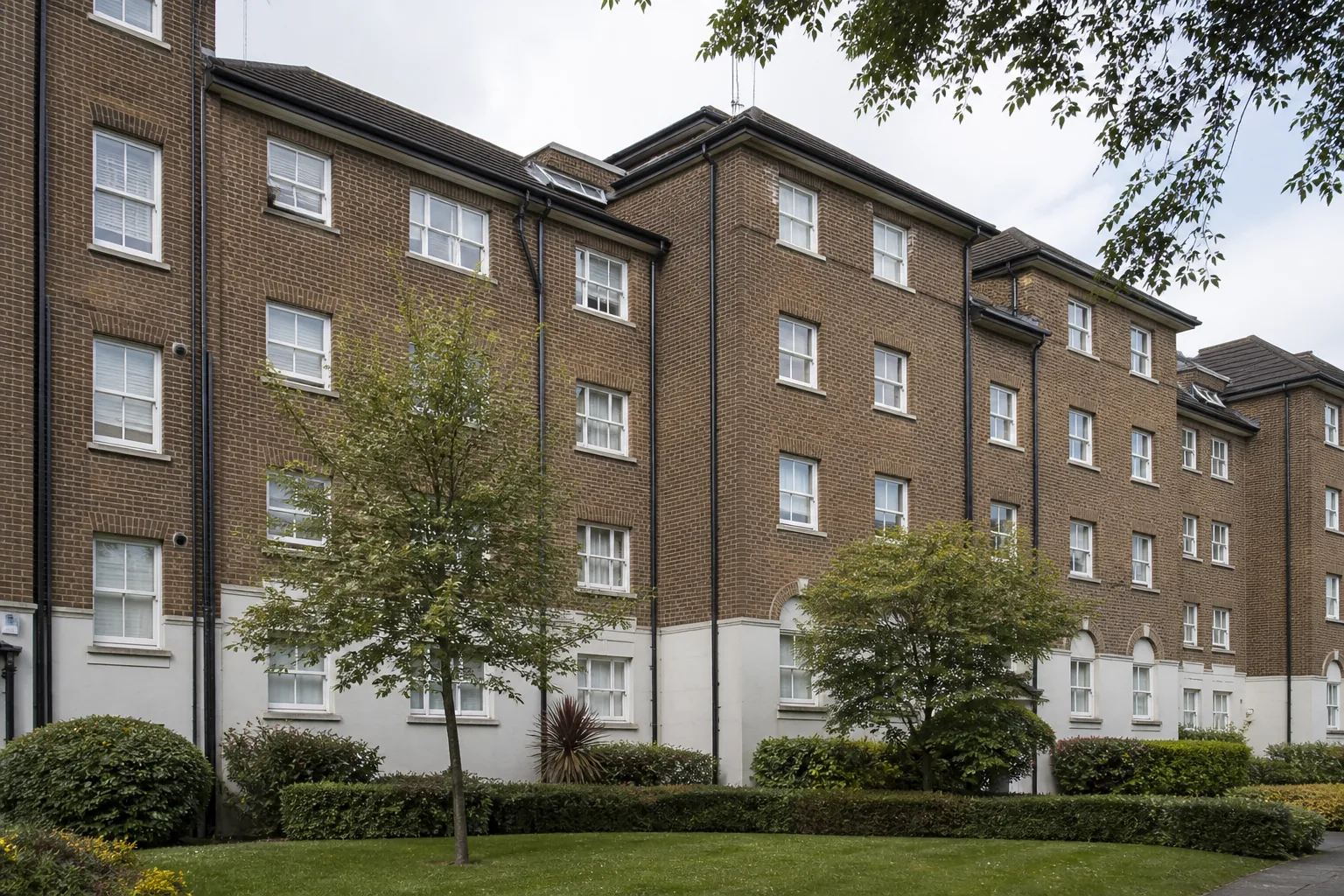
A Blackheath address may be solely occupied, divided into flats, rented or overseen by a managing party. Those possibilities are conditional, but they can change who approves exterior work and who can open shared areas. Before booking, establish responsibility for the affected gutter and whether the route crosses communal or neighbouring space. If the channel continues across more than one part of a building, describe the exact section in question. Clear authority prevents an enquiry about one overflow point from becoming an undefined request for the whole roofline.
Access should also be considered at the time the visit is intended to happen. A side gate may be locked, a courtyard may have limited space, or a rear elevation may sit above an addition. Parking controls or shared entrances can affect arrival without deciding whether the gutter itself is reachable. Explain known restrictions, arrange necessary permissions and keep the requested areas clear where appropriate. The final scope covers only the channels that can be accessed and have been agreed; any different arrangement needed for another section is assessed separately.
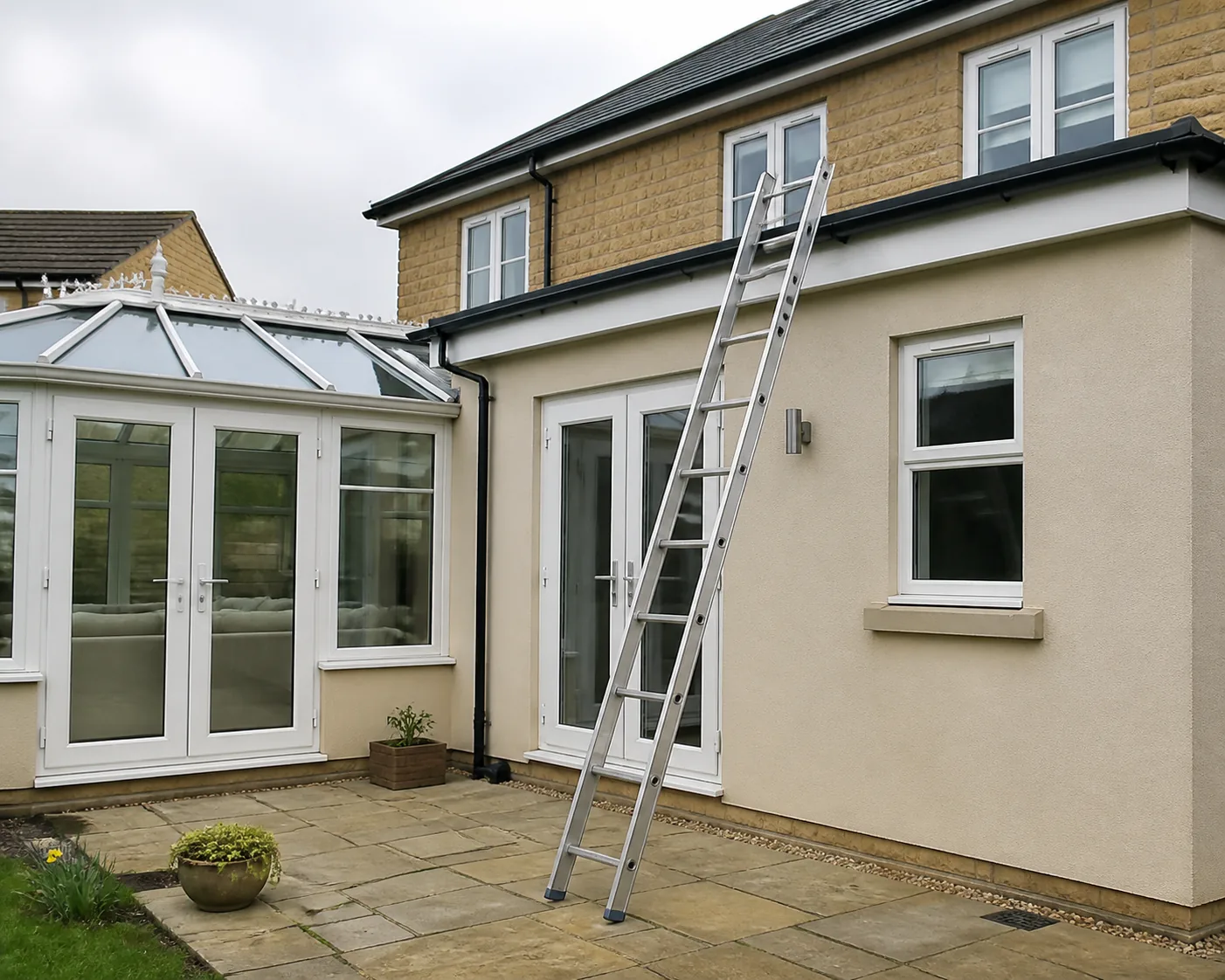
Reachability depends on each side of the actual building. Courtyards, lower roofs, railings, planting, boundary lines and shared routes may alter the available approach. Permissions should be in place before the visit, while any unusual access requirement receives separate consideration.
| Property situation | Access or gutter consideration |
|---|---|
| Converted house | Confirm which occupier or manager controls the exterior section and access to communal areas. |
| Terraced property | A continuous roof edge and rear route may involve boundaries that need to be understood. |
| Rented home | The tenant, landlord or agent should establish who can approve the requested work. |
| House with an enclosed garden | Gate arrangements, available space and anything beneath the eaves may affect rear access. |
Common causes
Organic debris can hold moisture and collect finer sediment, especially where leaves settle against an outlet or corner. Clearing the accessible channel restores space for rainwater, but it does not establish what is happening inside a concealed pipe or beneath ground.

Wet leaves can settle into layers and slow water moving towards an outlet.
Loose roof moss can collect in the channel and hold other material in place.
Small twigs can bridge narrow points and trap lighter debris behind them.
Loose surface material may wash down from the roof during wet weather.
Older material can become dense and reduce the channel available for runoff.
Fine deposits can gather beneath larger debris and close to an outlet.
Structured service guide
| Part | May be included | Not implied |
|---|---|---|
| Authorised accessible channel | Removal of routine loose debris | Work across an unapproved boundary |
| Specified reachable outlet | Clearing material at the mouth | Opening the concealed downpipe |
| Damaged gutter component | Cleaning around it if suitable | Repair or replacement |
| Drain or pipe below ground | No routine gutter action | Drainage clearance |
Structured service guide
| Reported issue | Cleaning response | Separate response |
|---|---|---|
| Leaves packed at a corner | Remove accessible material | None unless a fault appears |
| Overflow at a union | Clear any backing-up debris | Assess the seal if leaking continues |
| Section pulling from the fascia | Do not treat clearance as a cure | Review supports and fixing |
| Quiet outlet after the mouth is clear | Channel task is complete | Investigate the hidden route |
Structured service guide
| Information | Purpose |
|---|---|
| Approving person or organisation | Confirms authority for the work |
| Named roof edges and levels | Defines the requested extent |
| Keys, gates and communal routes | Supports workable access planning |
| Visible debris and reported symptoms | Separates clearance from faults |
| Outlet openings requested | Sets the limit at the channel connection |
Structured service guide
| If this applies | Question to settle | Result |
|---|---|---|
| The gutter crosses several occupancies | Who controls the connected section? | Agree precise boundaries before work |
| The rear route is communal | Will authorised entry be available? | Confirm the route or exclude that elevation |
| A neighbour's land is involved | Has direct permission been granted? | Do not assume access |
| A lower roof blocks an upper run | Can the channel be suitably approached? | Assess that run separately |
A clear service sequence
Seasonal context
Autumn may bring more leaves, yet settled grit, moss and wind-blown fragments can appear at other times. Shared or managed properties still benefit from condition-led decisions. Reports of overflow, visible accumulation and earlier problem points can help the responsible person choose when to arrange a check.
Nearby trees, roof moss, gutter shape and exposure can all affect how quickly material accumulates. A visible symptom is more useful than applying one fixed timetable to every address.
Blackheath service area
Nearby gutter-cleaning pages
Before booking
It covers routine leaves, moss, silt and loose material in accessible channel runs named in the agreement. Reachable outlet openings can be included where specified. Repair work, concealed downpipe clearance, drainage and separately arranged access do not form part of that routine service.
A gutter may continue past an occupancy or ownership boundary even though the concern appears in one place. The person booking should only authorise sections within their control, with any wider communal work agreed by the appropriate party.
Only with clear permission and an agreed route. A neighbouring space must never be assumed available. Explain the boundary issue early so the relevant run can be included, excluded or considered under another access plan.
Identify the exact elevation and point first, then check who controls the corresponding exterior channel. A local report can guide attention, but it does not establish the extent of work or give authority for every connected section.
No. It may stop water backing up when loose material is the cause, but damaged unions, cracks, displaced channels or poor fall require separate attention. Cleaning cannot seal, replace or reposition a defective component during the visit.
The route, gate, available ground, lower structures and items below the roof edge all matter. Provide access details before booking and arrange entry for the agreed time. A rear channel is included only if it can be reached suitably.
Loose material at an accessible outlet mouth can be cleared when that action is agreed. The visible opening is not the full downpipe, so continued poor discharge may indicate a concealed issue needing separate assessment.
No. Channel cleaning and reachable outlet attention stop before underground or surface-water drainage beyond the gutter system. A concern at courtyard or ground level needs an appropriate separate drainage enquiry under its own agreed scope.
Use the building's observed pattern rather than a universal date. Reports after rain, visible organic build-up, surrounding vegetation and earlier accumulation can guide timing. Separate elevations may need review at different intervals through the year.
The selected elevations, levels, channel lengths, access controls, debris condition and specified outlets all contribute. The quotation should name those limits and leave repairs, concealed pipes, drainage and any unconfirmed roof edges for separate assessment.
Discuss the actual roofline
A meaningful quotation needs the chosen elevations, approximate channel extent, roof levels, access arrangements and likely debris. Time spent coordinating controlled areas may also affect planning. Component repairs, pipe investigations and below-ground drainage are not bundled into routine clearance.
