
Is annual cleaning always the right schedule?
No. Accumulation depends on the individual roof, surrounding growth, exposure and previous problem points. Use visible condition and rainwater behaviour to decide when each run deserves attention.
Rainwater routes · access · clear scope
Gutters around the same home do not necessarily need attention at the same time. In Sidcup, a shaded run may gather moss and sediment while another catches leaves or stays relatively open. Cleaning removes ordinary loose build-up from the accessible channels agreed for the visit. Reachable outlet openings can be included, but faults, hidden downpipe restrictions, drainage and separate access requirements need individual assessment.

Local property context
A Sidcup home may have one side near planting, another exposed to wind and a lower channel serving an extension or porch. These are conditional examples, yet they show why a blanket timetable can be misleading. Note which run filled first on previous occasions and where rainwater escaped. Safely visible moss, leaves or plant growth can support the decision to arrange cleaning. A clear-looking section does not always prove good flow, but there is little value in assuming that every roof edge has accumulated the same amount at the same pace.
Condition-led planning still requires a defined appointment. Name the elevations to be considered, their levels and any reachable outlet openings you want included. Describe gates, side routes, conservatories, lower roofs or restricted ground beneath them. If several people share responsibility for the building or access, settle permission in advance. The confirmed task is the removal of routine loose debris from channels that are both selected and accessible. Damage, persistent poor discharge and restrictions beyond an outlet remain different concerns, even when they are discovered alongside a cleaning need.
A repeat visit does not guarantee identical access conditions. Plant growth, stored items, gates and changes around an extension can alter the approach. Describe the present layout for every requested side so inclusion rests on current property conditions rather than an earlier assumption.
| Property situation | Access or gutter consideration |
|---|---|
| Home beside established planting | Nearby growth may influence the debris pattern on particular runs, but the visible condition should guide timing. |
| Terraced house | Rear access and the authorised limit of a connected channel may need clarification. |
| Property with several roof heights | Upper and lower channels can collect at different rates and require separate access decisions. |
| Managed or rented home | The responsible party should approve exterior work and arrange entry to any controlled route. |
Visible clues
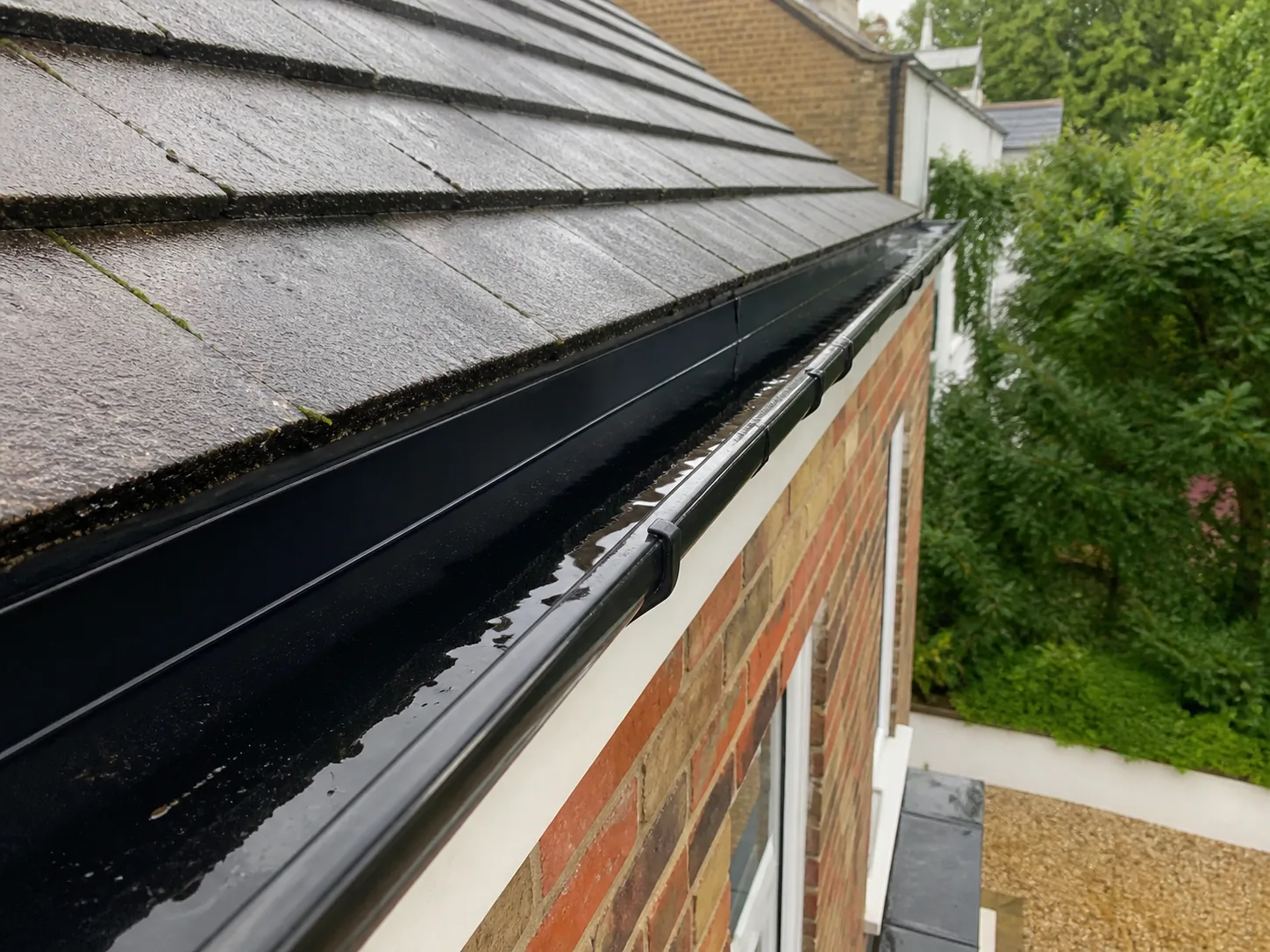
Visible growth, a rim of debris, overflow from one point or staining below an edge may indicate that attention is due. Water retained in a clear channel or leakage through a joint can instead suggest fall or component issues that routine removal will not solve.
Structured service guide
| Item | Routine response | Limit |
|---|---|---|
| Selected accessible channel | Remove loose leaves, moss, silt and fragments | Only named runs are covered |
| Reachable outlet mouth | Clear local loose build-up if agreed | No work along the hidden pipe |
| Visible gutter component | Clear contents around it where suitable | Repair is a distinct task |
| Ground drainage route | No action in routine clearance | Requires a drainage assessment |
Structured service guide
| Sign | Clearance may address | Separate possibility |
|---|---|---|
| Plants growing from retained material | Remove loose contents from the run | No repair shown by growth alone |
| Spill over a debris-filled edge | Reopen available channel space | Capacity issue if it continues |
| Leak directly beneath a joint | Relieve any debris-related backup | Seal or fitting failure |
| Water sits in an empty-looking section | Lift remaining fine silt | Incorrect fall or sagging |
Structured service guide
| Factor | Relevance |
|---|---|
| Problem runs versus every elevation | Sets the intended coverage |
| Channel length and roof level | Indicates the extent and access review |
| Current debris depth and type | Shapes the expected clearing work |
| Routes and conditions below eaves | May differ since an earlier visit |
| Outlet mouths named in advance | Defines any agreed outlet attention |
Structured service guide
| If a run is affected by | Useful cue | Planning response |
|---|---|---|
| Nearby deciduous growth | Visible leaf collection after fall | Check that elevation's condition |
| A mossy roof surface | Fragments gathering in the channel | Arrange clearance when build-up warrants it |
| A sheltered corner | Persistent damp silt or seedlings | Treat the local run on its own cycle |
| Earlier outlet overflow | Water escaping again during rain | Include the run and reachable mouth for review |
A clear service sequence
Quick answers
No. Accumulation depends on the individual roof, surrounding growth, exposure and previous problem points. Use visible condition and rainwater behaviour to decide when each run deserves attention.
Yes. Shelter, roof moss, nearby planting and channel shape can affect separate elevations differently. A selected run can be requested without automatically including all remaining sides.
It shows that retained material is present around that spot, making a cleaning enquiry sensible. It does not reveal whether the outlet, downpipe or components have an additional problem.
Yes. A porch or extension channel has its own debris, outlet and access conditions. Identify it separately from the upper eaves so the required work is not ambiguous.
It can remove silt occupying the channel, but water may remain because of poor fall, a low section or restricted discharge. Those causes require a suitable separate assessment.
Note which elevations filled quickest, where overflow appeared and whether any access condition has changed. That history helps target the enquiry, though present conditions still determine the agreed scope.

Seasonal context
Leaf fall can be an obvious trigger, though spring growth, roof moss and fine sediment also contribute. Review the gutters after conditions that historically produce accumulation at that address. One recurring problem area may justify attention without automatically setting the same schedule for the whole building.
Nearby trees, roof moss, gutter shape and exposure can all affect how quickly material accumulates. A visible symptom is more useful than applying one fixed timetable to every address.
Sidcup service area
Nearby gutter-cleaning pages
Before booking
Routine cleaning removes accessible leaves, loose moss, silt and similar everyday debris from the channels selected in the agreement. Reachable outlet openings may be covered where stated. Repairs, concealed downpipe work, below-ground drainage and unusual access are assessed apart.
Consider safely visible accumulation, plants in the channel, recent overflow and how quickly that run has filled before. Avoid climbing to inspect it. If the concern is uncertain, describe the ground-level signs and property layout when making the enquiry.
They can face different planting, wind, shelter and roof surfaces, and may have different slopes or outlet positions. These influences vary by address. One elevation's condition therefore should not be used as proof of what is happening elsewhere.
Yes, where that run is clearly identified, accessible and accepted as the visit scope. Other channels are not included by implication. Mention any connected lower section or outlet that should also receive consideration before the date.
No. Debris can return, but overflow may also stem from damaged fittings, poor alignment or a restriction below the outlet. Report the present symptom and its location so the next response is not based only on elapsed time.
The rate of return can help inform future checks, especially on the affected elevation. Routine gutter cleaning removes loose moss already in the channel; it does not treat the roof surface or guarantee that further fragments will not arrive.
Only loose debris at an accessible outlet mouth is considered, and only when agreed. The concealed pipe length is outside channel clearance. If discharge remains poor after the mouth is open, the pipe or drainage route needs separate assessment.
Mention new planting, stored items, building work, locked routes or additions beneath the eaves. A channel reached on an earlier occasion is not automatically accessible now. Current information helps decide which elevations can reasonably enter the agreement.
No. They support normal rainwater movement, but damp can arise from roofs, walls, plumbing, ventilation or ground conditions. Gutter cleaning is relevant only when accumulated channel material contributes to overflow; it is not a general damp remedy.
The number, length and level of requested runs, access at each side, present build-up and specified reachable outlets all contribute. Adding a garage or extension changes the extent. Repairs and work within pipes or drains require separate consideration.
Discuss the actual roofline
Cost is shaped by the chosen runs, their extent and heights, current accessibility, likely accumulation and agreed work around reachable outlet mouths. Treating selected problem sides may differ from covering every elevation. Repairs, concealed pipe clearance and drainage assessment are separate matters.
