
Leaves
Wet leaves can settle into layers and slow water moving towards an outlet.
Rainwater routes · access · clear scope
The place where water appears is not always the place where its route is restricted. For gutter cleaning in Greenwich, start by identifying the affected run, outlet and timing of the symptom. Accessible agreed channels can be cleared of leaves, moss, silt and routine debris. Damage, obstructions deeper within a downpipe, underground drainage and special access remain separately assessed work.
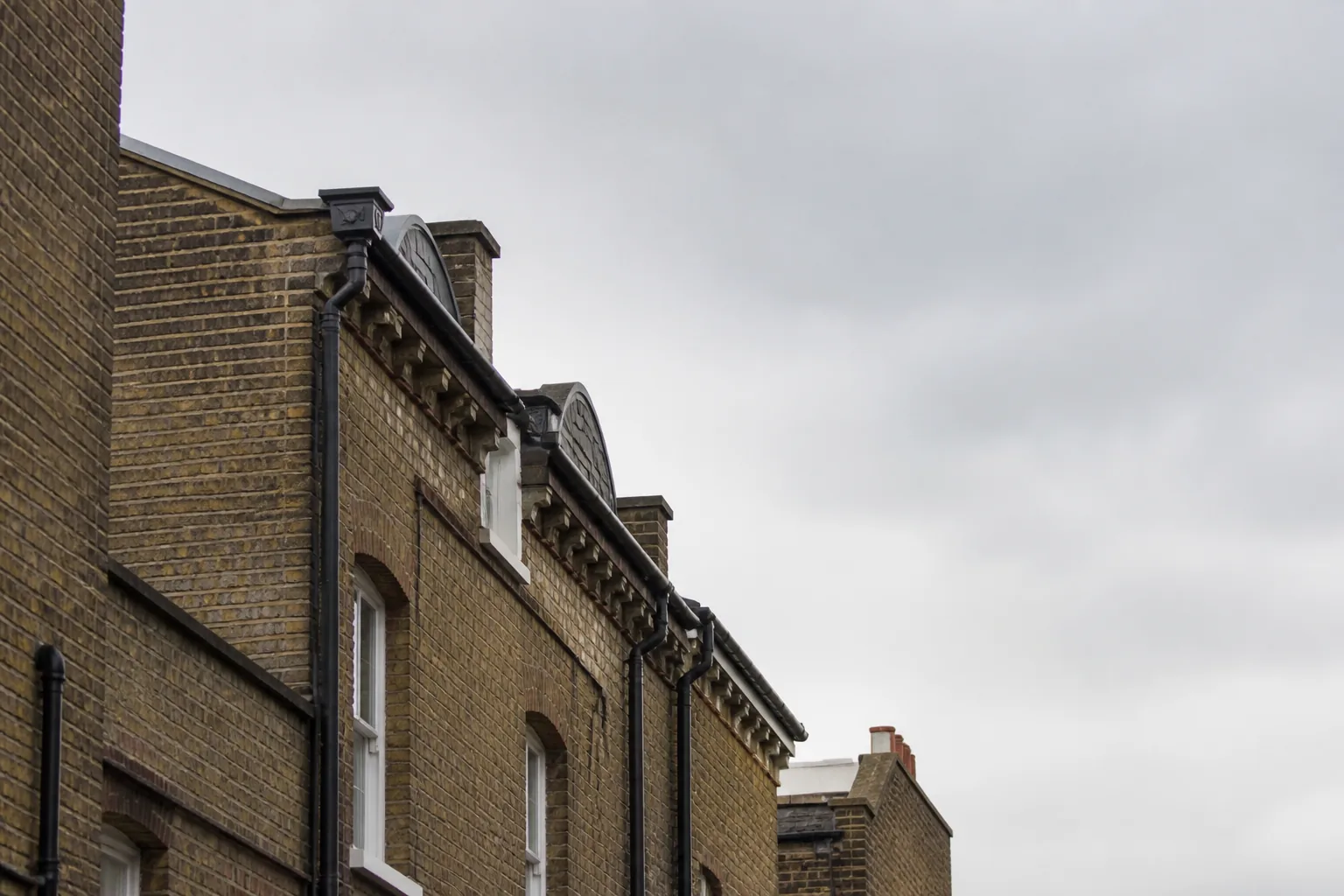
Visible clues
Water crossing an edge, growth inside the channel, damp marks below one point or slow emptying after rain can indicate a concern. Their location helps with the enquiry, but the cause may be debris, a damaged fitting, alignment or a concealed restriction.
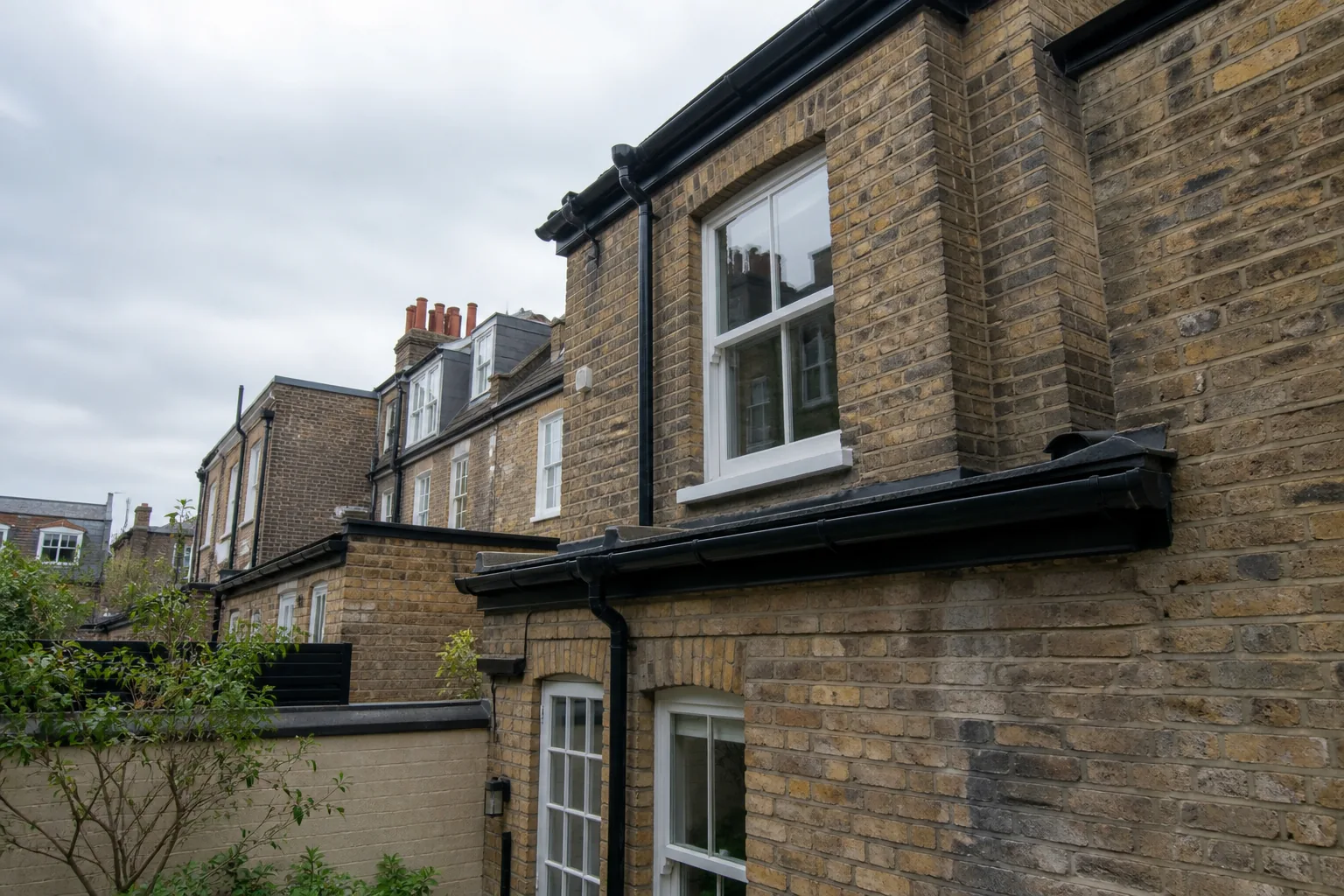
Local property context
At a Greenwich property, a homeowner may notice water over the front rim, a drip beneath a connection or unusually little discharge from a pipe. Each observation raises a different question, and none proves a blockage by itself. Note whether the symptom begins in light or heavier rain, whether it is concentrated near an outlet, and whether leaves or growth can be seen safely from the ground. This description helps select the relevant channel without relying on assumptions about the building or treating every water mark as current overflow.
The rainwater route continues from the open gutter through an outlet, downpipe and connection at ground level. Routine cleaning addresses only accessible channels named in the agreement and reachable outlet openings where confirmed. A visible mouth can be clear while material remains lower in the pipe, and a flowing pipe does not rule out a leaking gutter component. If clearing loose build-up does not resolve the reported behaviour, the next enquiry should follow the remaining symptom. Repeated cleaning is not a substitute for repair or drainage assessment.
A symptom visible from outside does not guarantee access to the channel. Different heights, roof terraces, lower additions, enclosed spaces, railings and boundaries may affect the approach at some properties. Each requested run is assessed from the actual layout before inclusion.
| Property situation | Access or gutter consideration |
|---|---|
| Home with mixed roof heights | Match each reported symptom to its channel level so access and scope can be reviewed accurately. |
| Property with a roof terrace | The terrace layout, drainage responsibility and relationship to nearby gutters need clarification. |
| House with a side return addition | A lower structure may have its own run and alter access to the original eaves above. |
| Flat in a managed block | The responsible party should identify the affected elevation and arrange required access permissions. |
Structured service guide
| Route stage | Routine cleaning | Separate assessment |
|---|---|---|
| Accessible agreed channel | Remove leaves, moss, silt and loose debris | Repair its shape or fittings |
| Reachable outlet mouth | Clear loose build-up where included | Investigate lower pipe sections |
| Concealed downpipe | Not within channel cleaning | Locate or clear an internal restriction |
| Ground connection | Not included | Review drainage performance |
Structured service guide
| Symptom | Cleaning may help when | Another issue may be |
|---|---|---|
| Water crosses the front edge | Loose material has reduced channel space | Capacity, fall or outlet flow |
| Drip beneath a union | Debris is backing water up | Failed seal or displaced fitting |
| Water remains in one spot | Silt occupies the low area | Alignment or support problem |
| Little discharge below | The reachable mouth is covered | Restriction in pipework or drainage |
Structured service guide
| Detail | Planning value |
|---|---|
| Exact overflow point | Identifies the likely run |
| Roof edge and outlet requested | Defines the cleaning boundary |
| Levels and structures below | Informs the access decision |
| Amount and kind of build-up | Indicates clearing effort |
| Continued symptoms after earlier work | May point beyond routine cleaning |
Structured service guide
| Where applicable | What to establish | Why |
|---|---|---|
| A roof terrace adjoins the concern | Who controls the relevant drainage? | Separates permissions and systems |
| Several roof heights are visible | Which level produces the symptom? | Keeps access and scope precise |
| An addition lies beneath the eaves | Is the upper run suitably reachable? | Avoids assuming inclusion |
| A managed block is involved | Who can approve and provide entry? | Confirms authority before booking |
Common causes
Small pieces of moss can trap leaves, seeds and grit until water has less room to move. Build-up often looks uneven and may sit close to an outlet rather than filling the whole run. The accessible loose contents can be removed within the agreed scope.
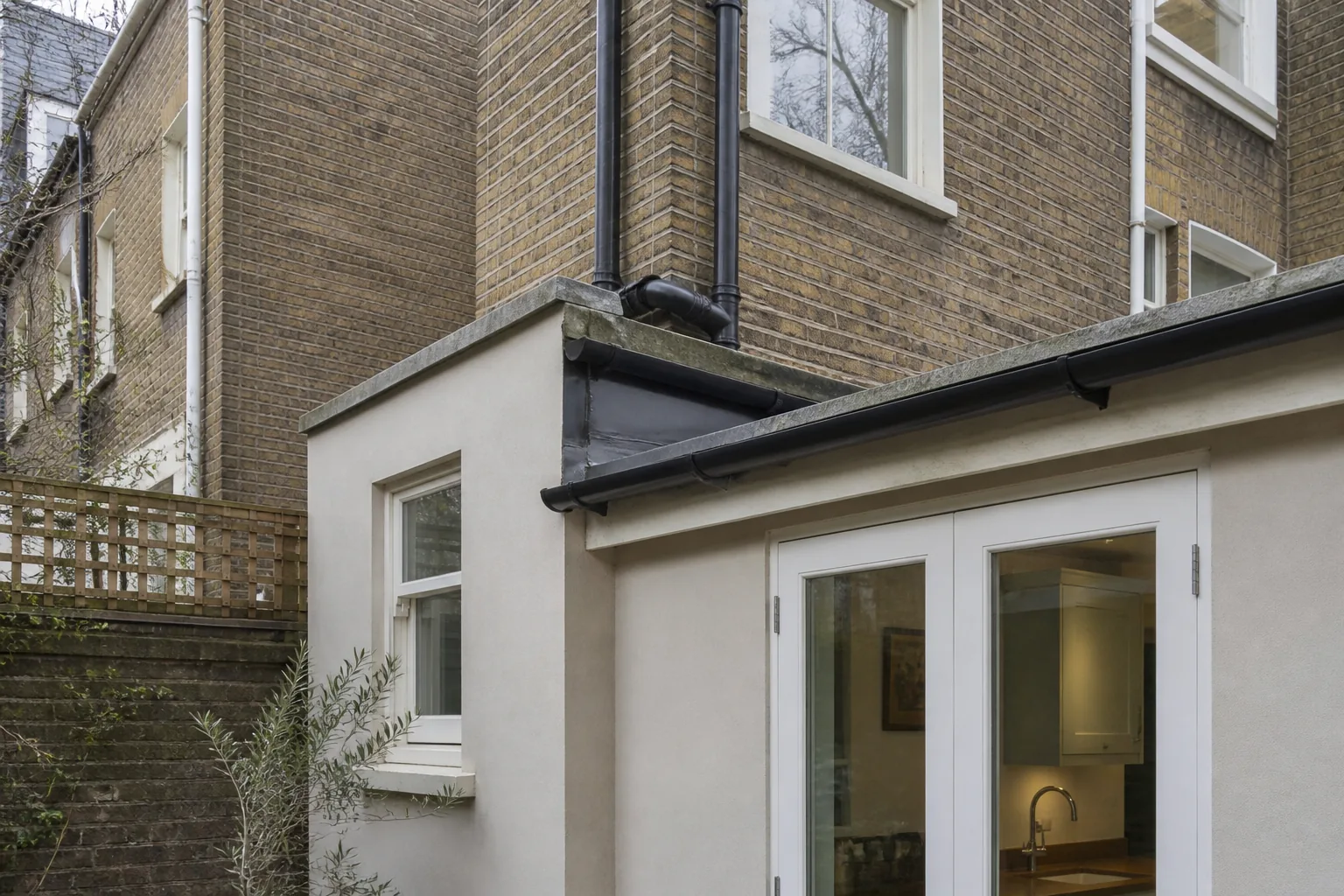
Wet leaves can settle into layers and slow water moving towards an outlet.
Loose roof moss can collect in the channel and hold other material in place.
Small twigs can bridge narrow points and trap lighter debris behind them.
Loose surface material may wash down from the roof during wet weather.
Older material can become dense and reduce the channel available for runoff.
Fine deposits can gather beneath larger debris and close to an outlet.
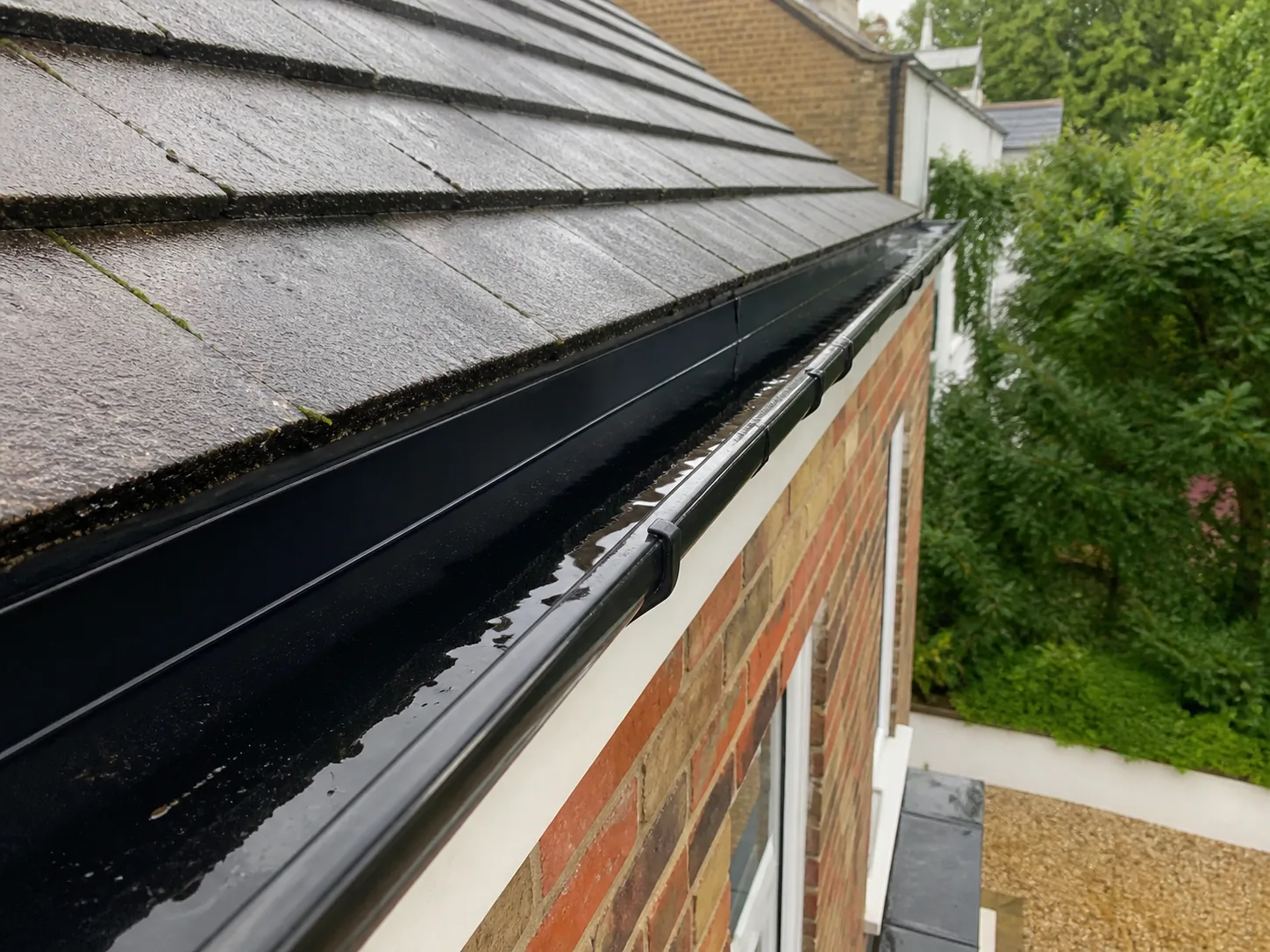
Seasonal context
Leaves may be conspicuous after autumn fall, whereas silt and moss can accumulate gradually. Heavy rain often reveals a restriction that lighter showers did not expose, but it can also reveal capacity or component issues. Timing should respond to the property's condition and history.
Nearby trees, roof moss, gutter shape and exposure can all affect how quickly material accumulates. A visible symptom is more useful than applying one fixed timetable to every address.
Quick answers
Note the exact edge or joint where water appears, when it begins, and whether the downpipe seems to discharge. Only observe from a safe ground position and avoid assuming the cause.
Yes. Fine silt may reduce depth, an outlet may be locally covered, or a fitting or pipe concern may be present. A ground view does not show every part of the route.
No. The routine task stops at agreed accessible channels and reachable outlet openings. Any suspected problem at ground level or below requires a separate drainage assessment.
Some property layouts may connect channels before discharge. Explain the visible arrangement without assuming internal flow. The agreed cleaning scope should name each run and any reachable opening involved.
A partial restriction may only overflow when more water arrives, although limited capacity or alignment can behave similarly. The timing adds useful context without establishing a diagnosis.
Repairs are not part of routine debris removal. A cracked channel, leaking union, loose bracket or displaced pipe should be considered separately, even if nearby material also needs clearing.
Greenwich service area
Nearby gutter-cleaning pages
Before booking
The agreed work removes ordinary leaves, moss, silt and loose debris from accessible selected channels. Reachable outlet mouths can be attended to when included. It does not cover repairs, concealed downpipe restrictions, underground drainage or unassessed access arrangements.
Material may reduce capacity along the run, or water may back up from a restriction nearer the outlet. A low point, incorrect fall or damaged section could also direct the spill elsewhere. The location alone does not confirm debris.
A full channel can force water around a sound connection, while a worn seal or displaced union can leak even when the route is clear. Cleaning addresses the first possibility only where debris is present; repair addresses the fitting.
It can be included with the affected channel when agreed and accessible. Removing loose material from the mouth does not clear or inspect the entire downpipe. Persistent poor flow below that point needs separate investigation.
Give their positions by elevation, level and nearby feature, such as a corner or outlet. Mention whether each mark is new, changes during rain or accompanies visible debris. Avoid assuming that every mark shares one cause.
Do not attempt a height-based inspection yourself. Explain the property layout, visible symptom and known restrictions, and provide safe ground-level images if possible. Inclusion still depends on assessment of the actual access and requested run.
No. The visible behaviour can be influenced by rainfall, connections and where water enters the system. If the outlet opening and channel are clear but discharge remains concerning, the concealed pipe route needs separate assessment.
No. Clear channels support normal rainwater movement, but damp has many possible causes involving roofs, walls, plumbing, ventilation or ground conditions. Cleaning is relevant only where gutter overflow or leakage is genuinely contributing to the present problem.
Watch the property's own collection pattern, visible material and rainwater behaviour. Nearby vegetation, roof moss and sheltered corners may affect how soon debris returns. There is no reliable single interval for every elevation or address.
The symptom helps identify which runs and outlets may need attention, while length, level, access and debris determine the proposed cleaning effort. Repairs, internal pipe work, drainage and separate access plans are priced under another assessment.
Discuss the actual roofline
Cost depends on the roof edges chosen, total accessible length, separate levels, surrounding space, quantity of material and agreed outlet work. A focused request with clear symptoms can be more precise than asking for every gutter. Fault finding and repairs require another scope.
