
Leaves
Wet leaves can settle into layers and slow water moving towards an outlet.
Rainwater routes · access · clear scope
A rainwater system continues beyond the open channel, but routine gutter cleaning has a defined boundary. At a Bexleyheath property, leaves, moss, silt and loose debris can be removed from accessible agreed runs, with reachable outlet mouths included when specified. Blockages deeper inside downpipes, failed fittings, underground drainage and any access needing separate planning require their own assessment.

Structured service guide
| Stage | Routine gutter work | Separate action |
|---|---|---|
| Accessible agreed channel | Remove routine loose build-up | Repair its fall or components |
| Reachable outlet mouth | Clear loose contents when specified | Trace a restriction below the opening |
| Downpipe interior | Outside the channel-cleaning scope | Assess or clear concealed pipework |
| Underground connection | Not included | Arrange drainage investigation |
Structured service guide
| What is seen | Cleaning may do | Other response may be needed |
|---|---|---|
| Leaves cover part of the run | Remove the accessible material | No repair indicated solely by debris |
| Loose silt covers the outlet mouth | Clear the opening if reachable and agreed | Review pipe flow if symptoms continue |
| A union leaks in light rain | Remove nearby build-up where suitable | Repair the connection |
| A channel visibly bows | Reduce debris load if appropriate | Assess alignment and supports |
Structured service guide
| Detail | What it defines |
|---|---|
| Named elevations and roof levels | The selected channel coverage |
| Approximate run lengths | The amount of open gutter involved |
| Routes, ground and structures below | Access at each chosen side |
| Visible loose contents | The anticipated clearing effort |
| Outlet mouths expressly requested | The agreed end point of routine work |
Structured service guide
| If the property has | Ask | Why it matters |
|---|---|---|
| Several outlets | Which one lies nearest the symptom? | Focuses the relevant run without diagnosing |
| Channels at two levels | Which level spills or shows debris? | Separates scope and access |
| A shared downpipe | Who controls the connected sections? | Confirms authority for agreed work |
| An enclosed side route | Can entry and working space be arranged? | Determines whether that elevation is includable |
Common causes
A channel obstruction often develops when leaves or twigs catch first and finer moss or silt settles around them. At an outlet, even a compact layer can interrupt entry. Removal applies to loose material that is accessible, not to a suspected plug inside hidden pipework.
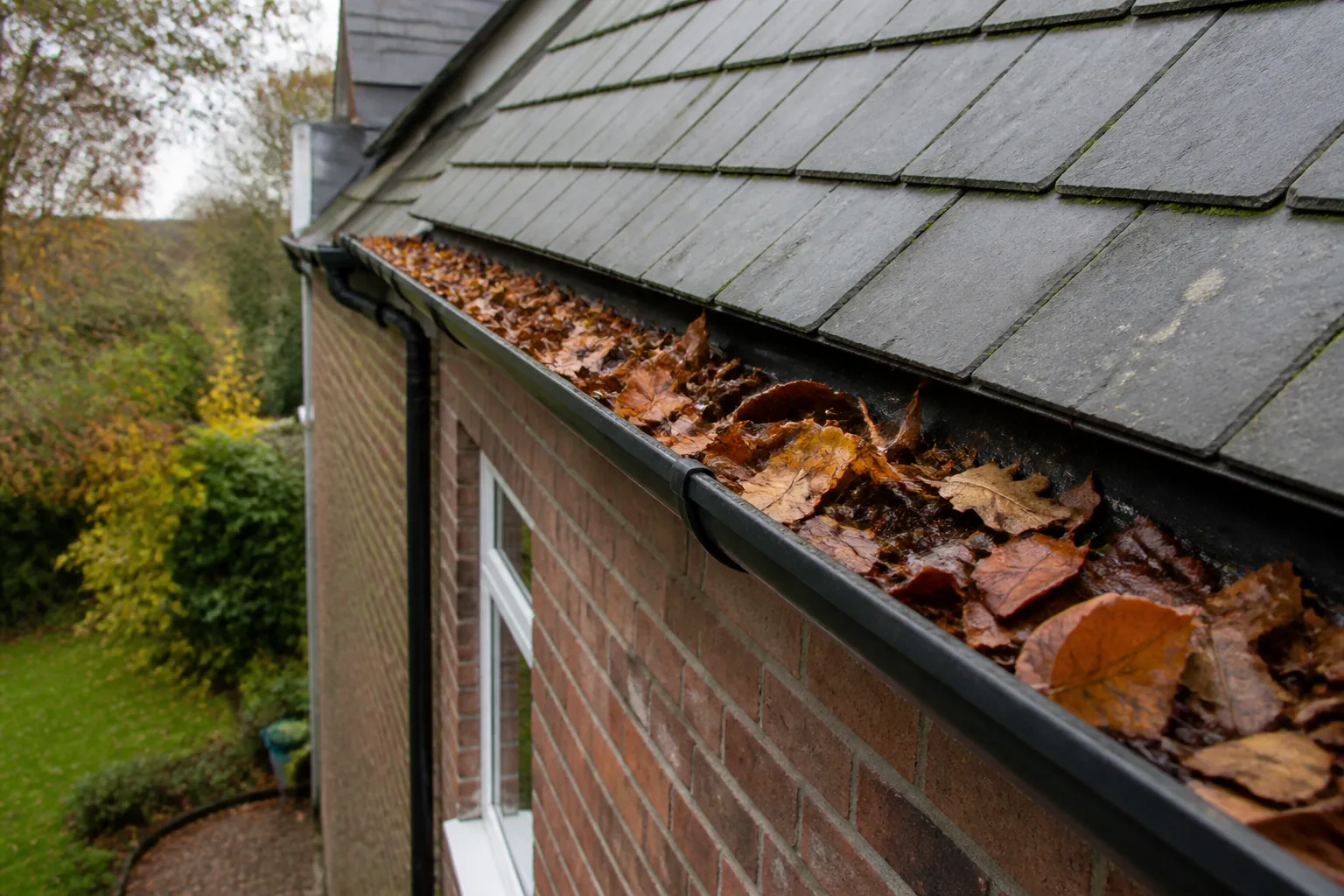
Wet leaves can settle into layers and slow water moving towards an outlet.
Loose roof moss can collect in the channel and hold other material in place.
Small twigs can bridge narrow points and trap lighter debris behind them.
Loose surface material may wash down from the roof during wet weather.
Older material can become dense and reduce the channel available for runoff.
Fine deposits can gather beneath larger debris and close to an outlet.
Local property context
For a Bexleyheath enquiry, begin at the place where the symptom can be seen. Water crossing the front edge may accompany broad accumulation, while a spill concentrated beside an outlet may follow a local debris pocket. Little discharge at ground level can raise a question about the downpipe, although rainfall and system layout also affect what is visible. State the elevation, roof level and nearest outlet or joint. This creates a useful description without pretending that observation from below can locate a hidden obstruction or confirm a component fault.
Then separate the work by part of the system. The open gutter channel can receive routine clearance where it is selected and accessible. Loose material at a reachable outlet mouth can be included expressly. The pipe interior and its connection below ground are concealed stages requiring different assessment, while splits, failed unions and poor alignment are repair issues. Property layout still matters: a lower roof, narrow side way, boundary or enclosed rear area may alter access. Each applicable condition should be explained before the visit rather than inferred from the postcode.
Front and rear runs can present entirely different working conditions. Additions, canopies, conservatories, fences, planting and controlled routes may affect reachability. Confirm the required sides and permissions beforehand; any section needing a different access arrangement sits outside ordinary assumed scope.
| Property situation | Access or gutter consideration |
|---|---|
| House with several downpipes | Identify the outlet nearest the symptom rather than treating every discharge route as one concern. |
| Property with a side return | Available width, gates and boundaries may determine whether that elevation can be included. |
| Home with a lower rear roof | The lower channel and original upper run need separate descriptions and access decisions. |
| Shared or managed building | Authority for connected channels and access to communal areas must be established in advance. |
Seasonal context
Leaves can cover an outlet quickly in autumn, while moss and fine roof sediment may arrive during other wet or windy periods. Pay attention to the property's recurring collection points and rainwater behaviour. The system's hidden parts should not be assumed clear or blocked from season alone.
Nearby trees, roof moss, gutter shape and exposure can all affect how quickly material accumulates. A visible symptom is more useful than applying one fixed timetable to every address.
Quick answers
It stops at the accessible agreed channels and any reachable outlet mouths expressly included. Concealed downpipes, underground connections, component repair and separate access arrangements sit outside routine clearance.
Yes, when the opening is reachable and included in the agreement. Loose leaves or silt can be removed there, but this does not mean the full downpipe is cleared.
No. Rainfall, connections and where water enters can affect visible discharge. If the open channel and mouth are clear but concern remains, the concealed route needs separate assessment.
No. Debris around the crack may be removable if access and condition allow, but restoring the channel is repair work. The visible damage should be raised before booking.
It helps relate a local overflow to the relevant channel section and discharge point. That information focuses the enquiry without claiming that the cause lies at or below the outlet.
No. Underground flow lies beyond routine gutter work. A concern at the downpipe base, drain or connection requires a separately suitable drainage assessment rather than additional channel clearing.
A clear service sequence
Bexleyheath service area
Nearby gutter-cleaning pages
Before booking
It removes routine leaves, loose moss, silt and other everyday debris from accessible channels specified for the visit. A reachable outlet mouth can be included where agreed. Repairs, concealed pipe clearance, underground drainage and special access planning remain separate.
The outlet is the opening where water leaves the channel; it can sometimes collect loose material that is reachable from the gutter. The downpipe carries water below that point and is largely concealed, so internal restrictions need another assessment.
Yes. Leaves or silt may cover the mouth, the pipe below may be restricted, or channel fall and capacity may contribute. Clearing accessible material is a sensible defined task when present, but persistent overflow needs further consideration.
A union seal may have failed, a section may be split, or alignment may direct water towards the rear edge. Fine sediment can also be hard to see from below. Cleaning only addresses accessible loose contents, not those repair causes.
Describe every relevant run and the visible symptom on each. Their exact connection should not be assumed from ground level. The cleaning agreement can name accessible channels and the reachable mouth, while concern within shared pipework remains separate.
It should be reported, but concealed pipe investigation is not an automatic extension of gutter cleaning. The appropriate next step depends on the symptom, access and pipe arrangement, so it may require a distinct assessment and scope.
State where it appears, whether it coincides with rain, and the nearest channel, joint, outlet or pipe. Avoid assuming the gutter is responsible, because roof, wall, plumbing and ground sources can create water or damp in similar places.
Give the route width, gate arrangements, boundaries, ground conditions and any fixed structure beneath the eaves. Also confirm required permission. These facts help assess that side without treating access at another elevation as a reliable guide.
Use safely visible debris, earlier outlet build-up and overflow during rain as prompts. Nearby planting, roof moss and exposure may affect the pace at a particular address. Different runs can warrant review at different times of year.
The routine quotation covers the named channel extent, levels, access conditions, debris and agreed reachable mouths. A suspected internal blockage, failed component, below-ground issue or separately arranged access changes the service required and is assessed outside that price.
Discuss the actual roofline
A useful price reflects the specific accessible runs, approximate lengths and levels, surrounding access, expected loose material and any agreed reachable outlet mouths. Investigation inside downpipes, remedial work on fittings, underground drainage and separate access planning are not folded into routine channel clearance.
