
Leaves
Wet leaves can settle into layers and slow water moving towards an outlet.
Rainwater routes · access · clear scope
A gutter may look open in one place while material gathers near its outlet or in a quieter corner. For Ruislip homes, the service defines the accessible runs first, then removes routine leaves, moss and silt from those agreed channels. Reachable outlet mouths can be included. Concealed downpipes, underground drainage, damaged components and specialist access are assessed separately.
Visible clues
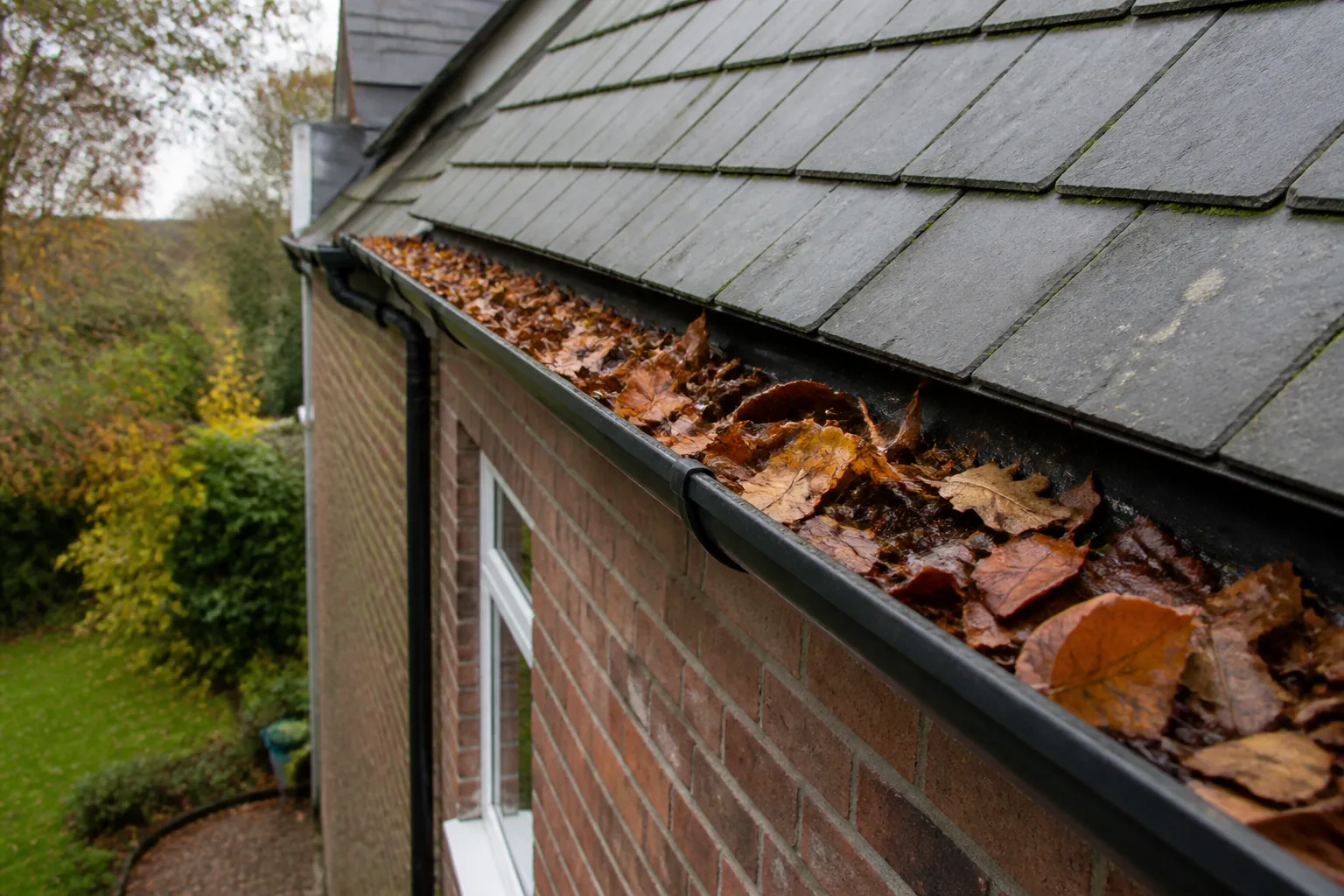
Water circling an outlet, spilling from a particular edge or leaving a trail beneath the channel can indicate reduced capacity. Little visible discharge may also merit attention. These signs should be located carefully, because pipe restrictions, faulty joints and poor channel fall can produce overlapping symptoms.
Local property context
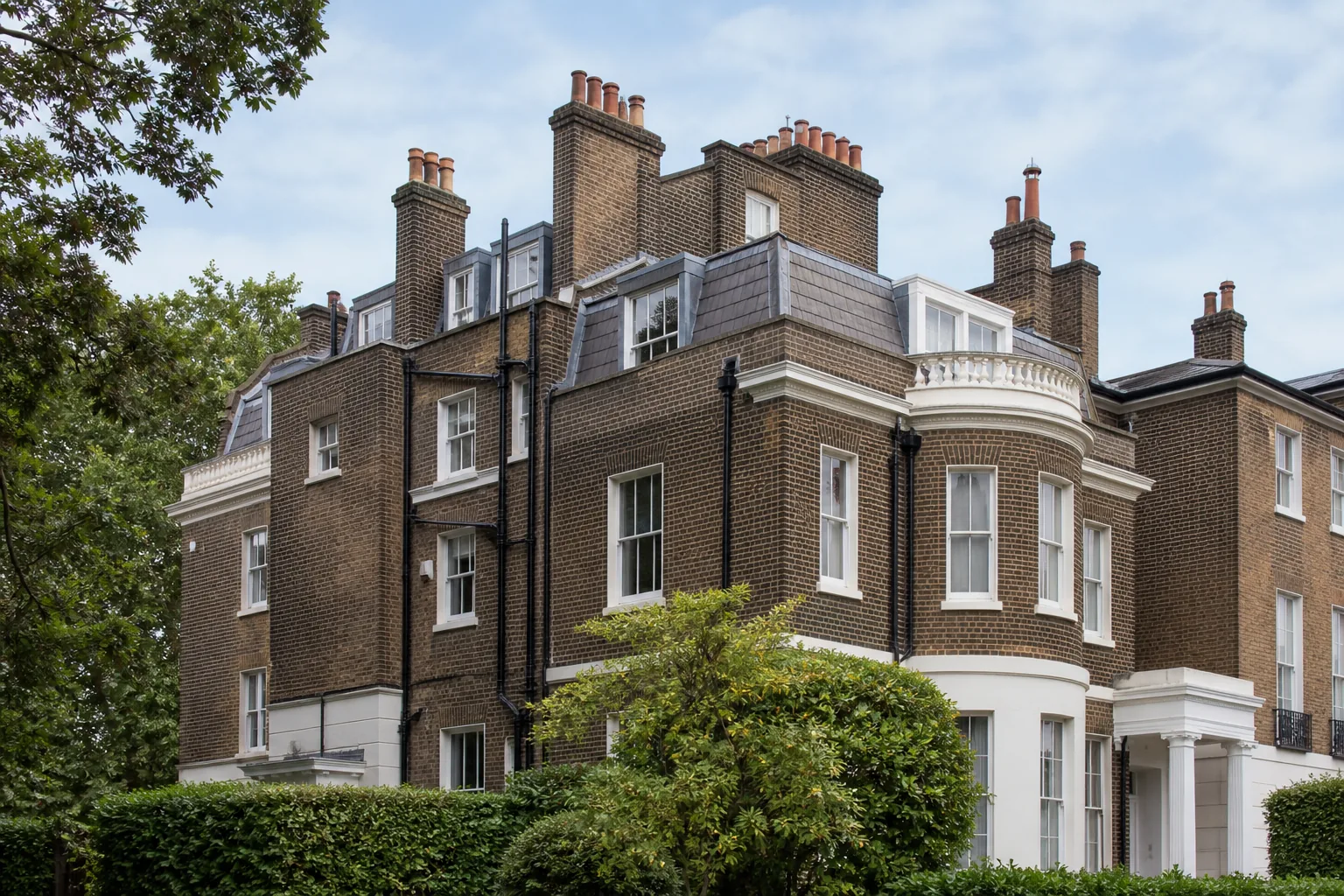
At a Ruislip property, water may spill near a downpipe, cross the front edge midway along a run or appear at a connection. Each position raises different questions, although none supplies a diagnosis by itself. Some homes may also have separate lower channels around a porch, garage or addition, while others may not. The enquiry should identify the relevant elevation, roof level and outlet position, then note any access restriction beneath it. This address-led description is more useful than assuming the whole roofline has the same problem.
Routine clearance deals with material inside accessible agreed gutters: leaves, loose moss, silt and similar debris. If included, a reachable outlet mouth can be freed of surface build-up where the channel meets the pipe. The scope stops there. A restriction concealed farther down, a poorly discharging underground connection, a cracked component or a channel that no longer falls correctly needs separate assessment. This distinction matters because an overflow may have more than one cause, and removing channel debris cannot guarantee that every downstream route or fitting is sound.
An outlet corner may be above a gate, addition, narrow side route or planted area. Conditions beneath the rest of the run can differ again. The planned scope includes only channels and reachable mouths assessed as accessible. If another access arrangement is required, it is considered separately before confirmation.
| Property situation | Access or gutter consideration |
|---|---|
| Semi-detached home with side access | The side route may help reach a rear elevation, but gates, width and surfaces still need checking at the actual property. |
| House with a shared downpipe arrangement | The route and agreed boundary should be understood before work, particularly where channels from more than one area converge. |
| Property with a front canopy | Its outlet may be separate from the principal roof drainage, so symptoms at the two levels should not be combined. |
| Home with mature planting nearby | If foliage reaches a roof edge, debris may vary by elevation; no rate of accumulation should be assumed without seeing the address. |
Structured service guide
| Location in the route | Included action | Not implied |
|---|---|---|
| Accessible gutter run | Remove ordinary loose debris | Correction of fall or damaged supports |
| Reachable outlet mouth | Clear surface build-up when agreed | Clearance of the full downpipe |
| Concealed pipe section | No routine channel work | Diagnosis without separate assessment |
| Underground drain | Outside the service | Any below-ground clearance |
Structured service guide
| Clue | When cleaning is relevant | When another response is relevant |
|---|---|---|
| Material surrounds the outlet | The opening and channel are accessible | Restriction continues below the mouth |
| Water escapes at mid-run | Silt or leaves occupy the channel | A low point or split remains |
| Persistent drop at a joint | Back-up is caused by nearby debris | The connection needs repair |
| Weak discharge near ground | No conclusion from channel cleaning alone | Pipe or drainage assessment is needed |
Structured service guide
| Factor | Question | Quote relevance |
|---|---|---|
| Affected run | Which elevation and level shows the concern? | Defines the channel extent |
| Outlet involvement | Is the reachable mouth part of the request? | Adds agreed detail to the task |
| Approach space | What lies beneath the corner and run? | Determines accessibility |
| Nature of symptom | Is debris visible or is damage suspected? | Separates cleaning from further assessment |
Structured service guide
| If this is present | Clarify | Resulting boundary |
|---|---|---|
| If two runs share an outlet | Which channels are accessible and agreed? | Include named runs only |
| If the outlet sits above a canopy | Can the corner be approached safely? | Decide inclusion after access review |
| If discharge is poor at ground level | Is the concern inside or beyond the pipe? | Refer concealed routes separately |
| If an adjoining area is involved | Has access and responsibility been arranged? | Limit work to authorised sections |
Common causes
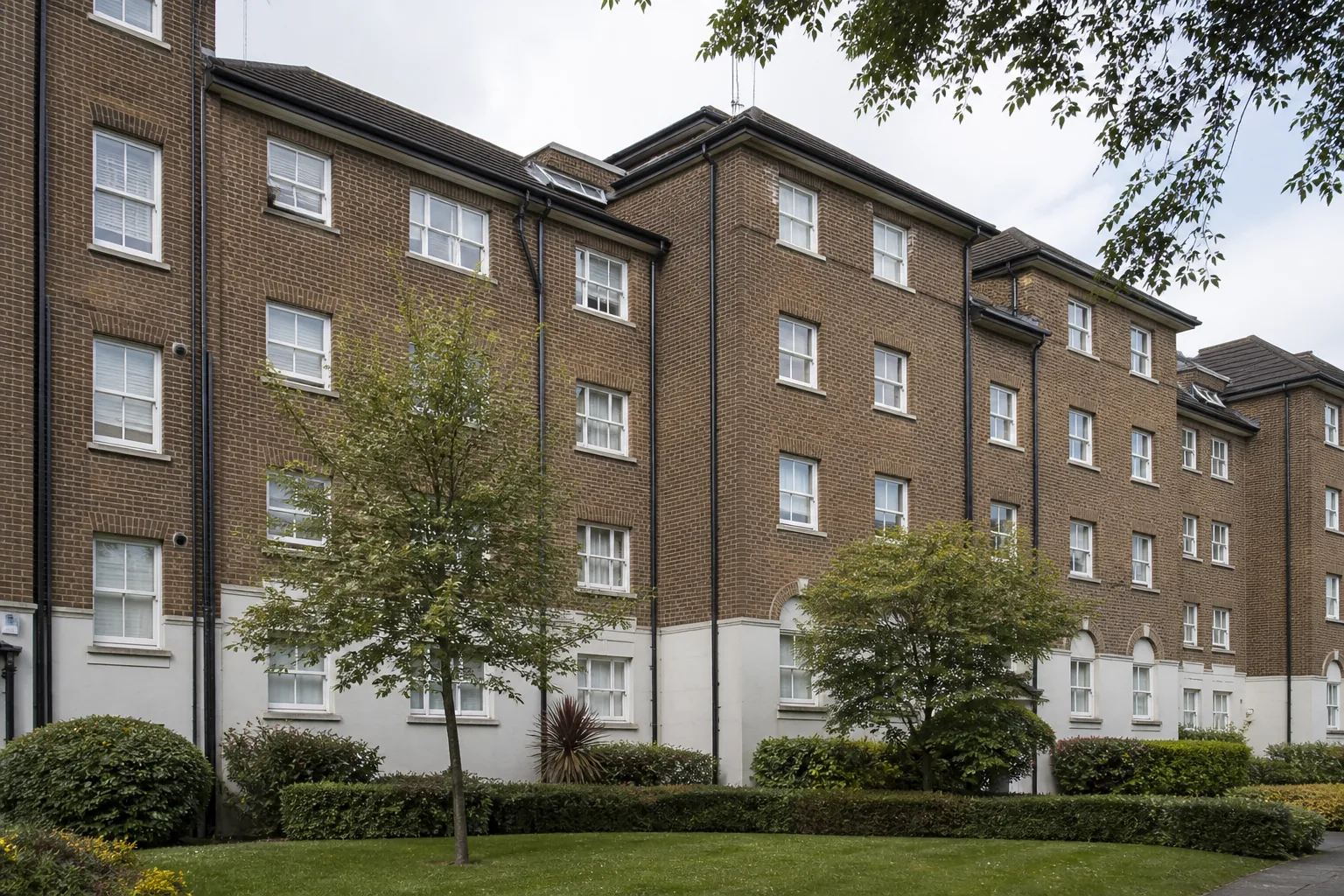
Debris rarely forms an even layer. Fine silt can settle under moss, leaves can bridge an outlet, and small fragments may collect behind a connection. Clearing the accessible channel and an agreed reachable mouth addresses those visible restrictions. It does not amount to clearing or testing the full pipe below.
Wet leaves can settle into layers and slow water moving towards an outlet.
Loose roof moss can collect in the channel and hold other material in place.
Small twigs can bridge narrow points and trap lighter debris behind them.
Loose surface material may wash down from the roof during wet weather.
Older material can become dense and reduce the channel available for runoff.
Fine deposits can gather beneath larger debris and close to an outlet.

Seasonal context
Outlet areas can collect sudden leaf fall, whereas a shallow bed of silt may develop over a longer period. Exposure and nearby vegetation can differ from one side of a home to another. Maintenance is best prompted by actual build-up, past trouble spots and water behaviour rather than a universal calendar date.
Nearby trees, roof moss, gutter shape and exposure can all affect how quickly material accumulates. A visible symptom is more useful than applying one fixed timetable to every address.
Quick answers
It can be when reachable and expressly agreed as part of the relevant channel. The service removes loose material at that opening, but does not extend automatically down the pipe.
Fine silt or material near an outlet may not be obvious from ground level. Equally, the problem may be damage or a concealed restriction, so appearance alone should not determine the remedy.
Not within routine gutter-channel cleaning. A concern below ground needs a separate drainage assessment, even when poor discharge appears connected to a downpipe serving the roof.
Its position helps identify the relevant run, corner, joint or outlet and the access area beneath it. That makes the proposed cleaning scope more precise without claiming a confirmed cause.
It may remove debris that restricts movement, but persistent pooling can relate to channel alignment or support. Those physical conditions need a separate repair assessment rather than more cleaning.
Each run and its route towards the shared outlet should be identified. Accessible loose material can be removed within the agreement, while responsibility boundaries and concealed connections require separate clarity.
Ruislip service area
Nearby gutter-cleaning pages
Before booking
Accessible agreed gutter channels are cleared of leaves, loose moss, silt and routine fragments. Reachable outlet mouths may be included where stated. The service excludes repair work, hidden downpipe restrictions, underground drainage and any specialist access not separately assessed.
The flow of water can carry leaves, moss pieces and silt towards the opening, where larger material may catch and hold smaller particles. Channel shape also matters. If restriction continues inside the pipe, that deeper section requires separate assessment.
It may be possible once the agreed limits, access and responsibility are clear. Channels or pipes serving adjoining areas should not be treated as automatically available. The quote should identify only the accessible portion properly arranged for the visit.
Fine sediment may remain, or the cause could be a deeper pipe restriction, damaged joint, low point or inadequate alignment. Routine cleaning addresses accessible channel debris. Any continuing symptom should guide a separate assessment instead of assuming the same treatment needs repeating.
That depends on the porch projection, roof material, channel height and approach around it. A description or distant view may not settle accessibility. The outlet is included only if the property-specific review supports it and the work is agreed.
It can mean backed-up water is reaching the connection, but the joint itself may also be open, cracked or poorly seated. Clearance can remove nearby debris; it cannot repair the fitting. Persistent leakage belongs in a separate repair discussion.
The reachable opening can be cleared when included, but no guarantee can be made about the concealed pipe beneath it. If water still does not move away as expected, the downpipe or lower drainage route may need further assessment.
Access across or from adjoining land requires prior permission and practical arrangement. It cannot be presumed as part of booking. Without an agreed route, that elevation may need to be excluded or considered under a separate access plan.
Loose moss already lying within an accessible agreed channel can be removed. General roof treatment, scraping or work on fixed roof material is not part of gutter cleaning. Any broader roof concern needs its own suitable enquiry.
State the elevation and roof level, where water gathers, whether discharge is visible and what sits below the outlet corner. Safe ground-level photographs during dry conditions or rain can help clarify the symptom and surrounding access.
Discuss the actual roofline
A quote takes account of the specified runs, their length and level, the outlet openings included and access around each affected area. Ground-level images that show both the roof edge and wider elevation are helpful. Deeper pipework, drainage below ground, repairs and specialist access carry separate assessment and pricing.
