
Can the overflowing side be cleaned on its own?
Yes. One accessible elevation can form the agreed task when it is clearly identified. The roof level, length, outlet position and space below still need to be considered before inclusion.
Rainwater routes · access · clear scope
Overflow is easier to address when it is linked to a particular roof edge and outlet. For a Hillingdon home, we can clear leaves, loose moss, silt and ordinary debris from accessible channels agreed in advance. A reachable outlet may be included by agreement, while damaged guttering, restrictions deeper in a downpipe, underground drainage and specialist access are assessed separately.
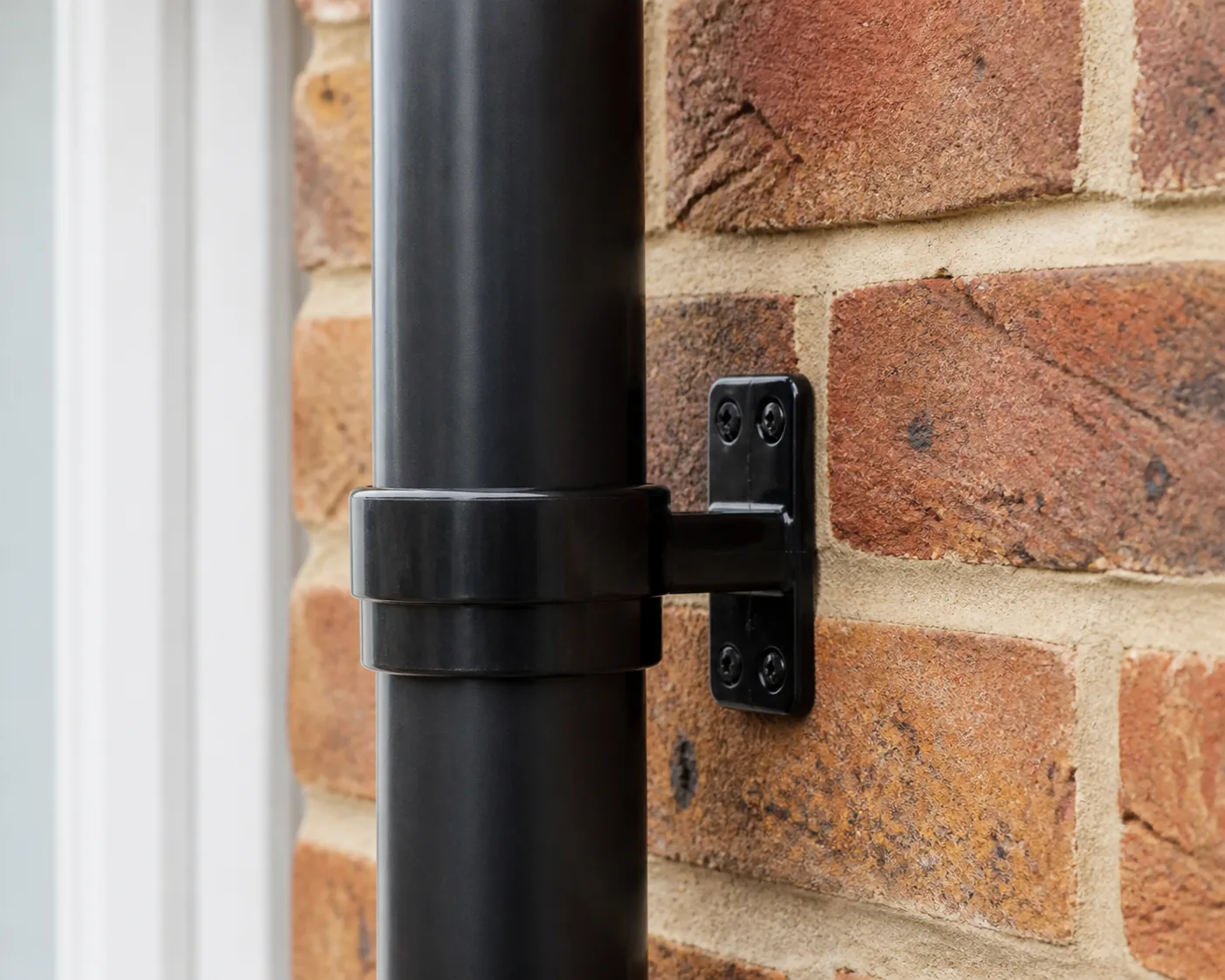
Local property context
A Hillingdon property may have one uncomplicated eaves line, several levels around an addition, or a short channel over a porch. The actual address determines the arrangement. Start by noting where water appears during rain: midway along a run, beside a connection or at the outlet end. It also helps to identify the elevation and anything directly below it. These observations connect the concern to the relevant channel without assuming that every side of the home has the same condition or access.
A spill point is a clue, not a diagnosis. Leaves and moss may reduce the available channel, but water can travel before it becomes visible. A joint could leak, the gutter may sit unevenly, or a restriction may continue below the reachable outlet. The cleaning scope therefore covers routine loose material inside accessible agreed runs. Physical faults, concealed downpipe sections and drainage beneath ground level remain separate. If more than one issue is present, each can then be considered on its own merits.
The area below each requested run matters as much as the roof level. A porch, rear structure, narrow side route, planted bed or boundary can change what is accessible. Inclusion is confirmed against the property, and any requirement beyond the agreed approach receives a separate access assessment.
| Property situation | Access or gutter consideration |
|---|---|
| House with a small front canopy | The canopy may carry its own short channel while also occupying space beneath the main eaves, so the two runs need separate access decisions. |
| Home with a side return | A side gutter can be affected by a close wall, gate or boundary even when the front elevation has open space. |
| Property with a stepped rear roofline | Upper and lower channels may discharge through different outlets and should be identified individually before the scope is agreed. |
| Address with a shared approach | Permission and practical availability must be settled if the relevant channel can only be approached through an adjoining or communal area. |
Visible clues
Water crossing the front lip, staining beneath one section, growth visible in the channel or a quiet outlet during rainfall may justify a check. A gap at a joint or an obvious change in the channel line can produce similar symptoms and should be raised as a possible repair matter.
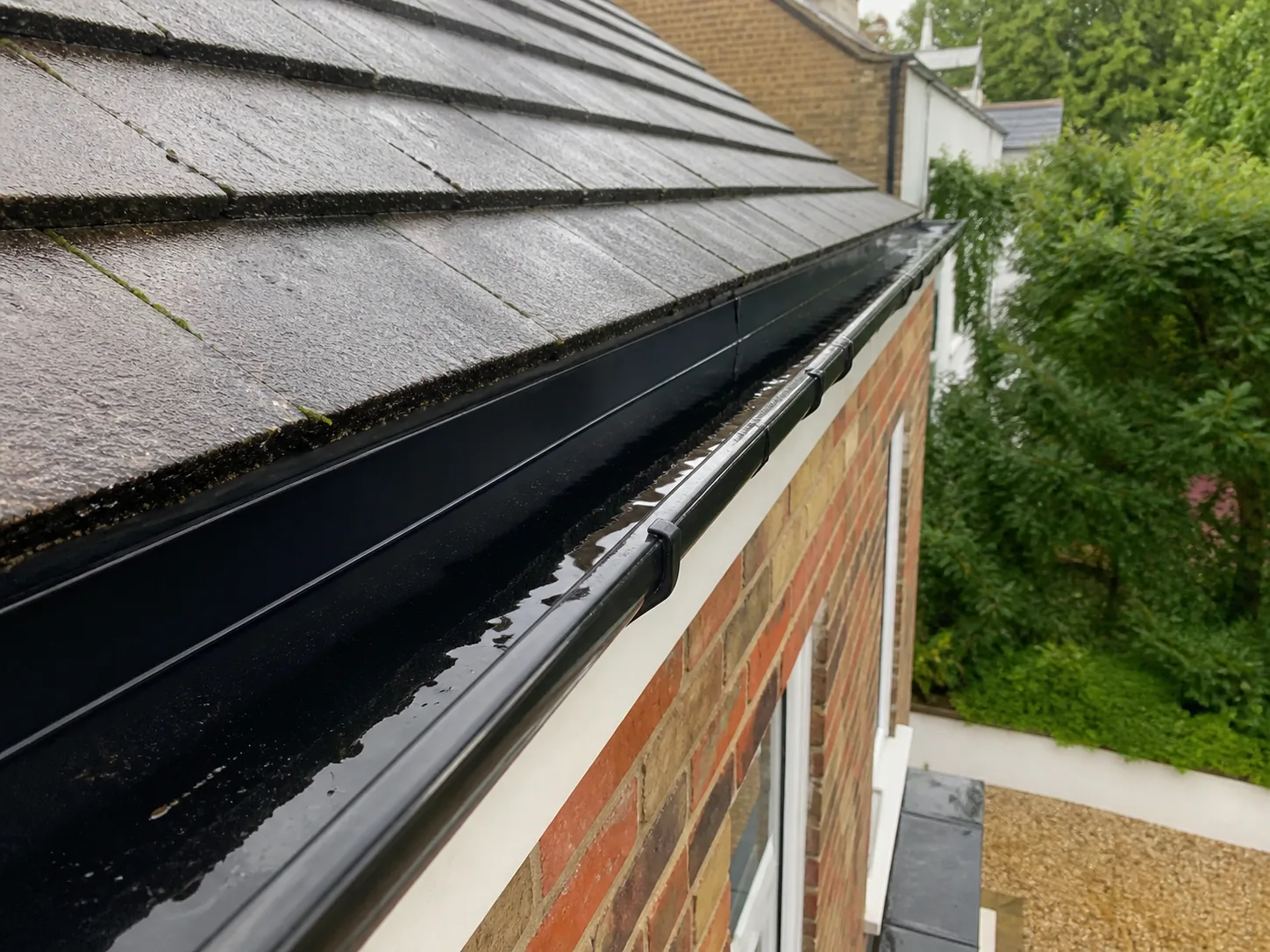
Structured service guide
| Part of the rainwater route | Routine clearance | Separate requirement |
|---|---|---|
| Named accessible channel | Remove common loose build-up | Correct damage, support or alignment |
| Agreed reachable outlet mouth | Lift debris from the opening | Investigate the pipe below |
| Exterior gutter surface | Not part of internal clearance | Arrange washing separately |
| Drain below ground | Outside gutter cleaning | Request an appropriate drainage assessment |
Structured service guide
| Observation | Cleaning may address | Another assessment may address |
|---|---|---|
| Leaves visible over the lip | Loose material occupying the run | Any damage hidden beneath |
| Water escapes beside a union | Build-up backing water towards it | A failed seal or fitting |
| Outlet corner fills first | Material covering the reachable mouth | A deeper pipe restriction |
| One section remains low | Debris if access is suitable | Fall, brackets or channel shape |
Structured service guide
| Information | What it clarifies | Effect on planning |
|---|---|---|
| Affected elevation | Which channel relates to the symptom | Defines the requested extent |
| Upper or lower level | The position above surrounding ground | Supports the access review |
| Outlet location | Whether a reachable mouth is involved | Adds a specific agreed task |
| Space beneath the eaves | Structures, boundaries and routes | Can change which run is included |
Structured service guide
| If the address has | Question to resolve | Possible scope decision |
|---|---|---|
| A porch beneath the main gutter | How far does it project below the eaves? | Assess upper and lower runs separately |
| A stepped rear addition | Which level carries the reported overflow? | Name each relevant channel |
| A tight boundary at one side | Is suitable authorised space available? | Include or omit that elevation |
| A shared approach | Will permitted access be available? | Confirm the route before booking |
A clear service sequence
Quick answers
Yes. One accessible elevation can form the agreed task when it is clearly identified. The roof level, length, outlet position and space below still need to be considered before inclusion.
The service can remove leaves, loose moss, silt, small twigs and similar debris from the accessible channels named in the quote. Unusual or fixed material needs separate consideration.
No. Material may cover the mouth, but alignment, a damaged fitting or a restriction farther down can appear similar. The position of the spill simply helps direct the assessment.
Routine gutter cleaning may include loose debris at an agreed reachable opening. It does not extend automatically through the concealed pipe, which requires a separate assessment if flow remains poor.
Yes. Backed-up water and a failed joint can both cause leakage there. Cleaning may address nearby debris, but resealing or replacing the connection is repair work.
Use views taken from safe ground positions that show the whole affected elevation, the roof level and the area underneath. Include a closer view only when it is safely obtainable.

Seasonal context
Wind may bring a sudden fall of leaves to one elevation, while loose roof moss and fine deposits often accumulate more slowly. Sheltered and exposed runs at the same address can behave differently. Previous spill points and current visible build-up offer better timing cues than a universal calendar date.
Nearby trees, roof moss, gutter shape and exposure can all affect how quickly material accumulates. A visible symptom is more useful than applying one fixed timetable to every address.
Hillingdon service area
Nearby gutter-cleaning pages
Before booking
The agreed accessible channels are cleared of routine leaves, loose moss, silt and small fragments. Reachable outlet mouths can be included when specified. Repairs, deeper downpipe work, underground drainage and separately assessed access arrangements are outside the ordinary cleaning scope.
Debris may have reduced capacity at that point, or water may be backing up from farther along the run. A low section, split or open joint can look similar. Clearance removes accessible loose material; persistent escape needs further assessment.
Possibly, but the porch projection, material, channel height and surrounding space all affect the access decision. It should not be promised from a simple property description. The upper run is included only after those address-specific conditions are reviewed.
A crack is a repair issue even if loose material is also present. Cleaning will not seal it or restore the section. Its condition may affect whether nearby clearance is suitable, so the damage should be mentioned before the task is agreed.
No. A reachable opening is attended to only when it connects to an included run and forms part of the agreement. No assumption is made about inaccessible mouths or restrictions extending down inside the pipe.
Yes. A mark may remain from earlier overflow, so it does not prove that the same issue is active now. Its location is still useful alongside current rain behaviour, visible debris and any signs of a leaking fitting.
Share its approximate layout and any gate, wall or stored items when enquiring. The available working area must be considered for that elevation. If the approach is unsuitable, the side run may be excluded or assessed under another plan.
No. The routine task concerns loose material within accessible agreed channels and specified outlet mouths. Washing exterior gutter faces, fascia boards, soffits or walls is different work and should not be inferred from a channel-cleaning booking.
That can point to a restriction farther inside the downpipe or beyond its discharge. Those concealed and below-ground routes are not resolved by cleaning the open channel. The remaining symptom should guide an appropriate separate assessment.
Identify the affected side and level, describe when and where water appears, and share safe ground-level photographs. Mention porches, extensions, tight routes, locked gates or shared access so the proposed channel scope reflects the actual property.
Discuss the actual roofline
A quote reflects the number of selected runs, their approximate extent and levels, agreed outlet openings and the usable surroundings beneath them. Ground-level photographs can help explain the layout. Repairs, hidden pipe restrictions, below-ground drainage and any separately assessed access provision are not folded into routine channel clearance.
