
Door repair cost?
Condition and the appropriate method determine the quotation.
BARNET · INTERNAL DOOR ADJUSTMENTS
Internal doors with the right scope.
A catching door deserves a check of its hinges, frame and clearance before material is removed. Describe when the fault started and whether other work recently changed the room.
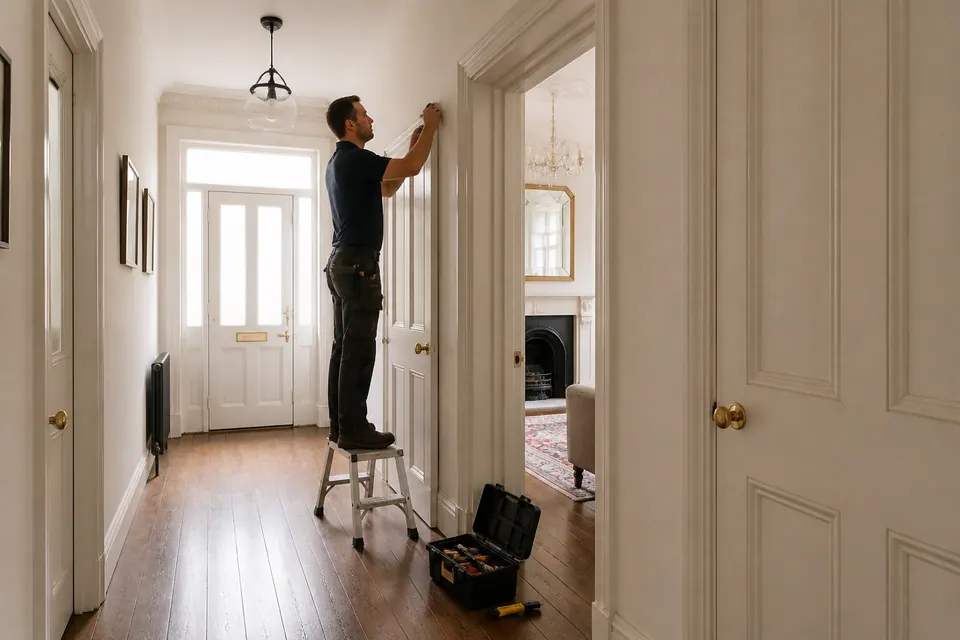
BARNET IN PRACTICE
Internal doors with the right scope.
For a Barnet home, a new floor covering or replaced hinge can alter how an internal door sits. Flag fire-rated or specialist doors so a general adjustment is not assumed to cover work needing different expertise.
A replaced hinge or new floor covering provides useful history, but it does not establish the repair. Show how the door now sits within its frame and where contact occurs.
Identify fire-rated leaves and specialist mechanisms before requesting adjustment. Material removal should not be assumed merely because an internal door no longer closes comfortably.
Explain when the catching first appeared · Mention recent hinge or floor changes · Show clearance around the closed door · Identify specialist or fire-rated doors upfront
START WITH THE TASK
Furniture assembly should not block the doorway being assessed.
02 ↗Check storage depth against the door’s swept area.
03 ↗Record recent hinge or flooring changes with the fault.
04 ↗Keep TV brackets away from opening-door contact.
05 ↗Show accessories attached near handles and frames.
06 ↗Include damaged screw positions in timber photographs.
QUICK JOB FINDER
Furniture assembly should not block the doorway being assessed.
Explore this service ↗QUICK ANSWERS
Condition and the appropriate method determine the quotation.
Ordinary minor adjustments differ from specialist door work.
Label each opening and its particular symptom.
Agree who supplies materials. Check compatibility before ordering replacements.
The reviewed faults and mechanisms shape the time required.
Furniture assembly is available. List assembly independently of the door repairs.
Include wall and load information separately.
Confirm permission before alteration or material removal.
DIFFERENT ROOMS, DIFFERENT BRIEFS
Distinguish flat entrances from ordinary room doors.
Show older hinge recesses and painted edges.
State who authorises changing the door.
Identify affected openings by floor and room.
Mention specialist closers in work areas.
Check any building-specific fire-door responsibilities.
Homeowner? Prioritise everyday faults.
Landlord or manager? Authorise the repair scope.
Tenant? Obtain permission for alterations.
CLEAR BEFORE YOU BOOK
Record hinge movement, latch behaviour and the point where the door catches.
Small furniture assembly remains a separate product-based guide.
State screen and bracket details for any unrelated mounting request.
| Task | Pricing basis | Guide |
|---|---|---|
| Repair or fitting | Alignment and condition of the door assembly | Quotation |
| Small furniture assembly | Small supplied furniture model | From £30 |
| Several small jobs | Door assessment plus individually listed fittings | Combined scope quotation |
| Complex mounting | Screen loading and supporting surface | Assessment quotation |
Small-item assembly source: Alesta’s furniture assembly page . Other work: individually quoted.
An alignment assessment is different from replacing damaged timber or specialist hardware. Include the door type, recent changes and finish expectations before assuming a simple adjustment price.
BUILD A REALISTIC LIST
Select the door concerns for review without committing to trimming or replacement. This checklist does not confirm suitability for general handyman work.
| Situation | A practical next step |
|---|---|
| Familiar task | Do not remove material from a catching door before the cause is assessed. |
| Multiple or awkward jobs | Distinguish a loose handle from a door that has shifted in its frame. |
| Uncertain mounting | A worn screw position needs review before relying on another tightening. |
| Regulated or specialist work | Flag any fire rating, secure locking system or suspected structural movement. |
WALK THROUGH THE PROPERTY
ROOM NOTES
Living-room TV mounting should account for doors opening towards the screen.
Service details ↗| Job type | Example | Property area | Service |
|---|---|---|---|
| Assembly | Build a supplied small cabinet | Clear space beyond the doorway | Furniture assembly |
| Mounting | Fit an agreed wall accessory | Outside the handle’s sweep | Fittings |
| Adjustment | Assess a catching door | Internal frame and threshold | Door repair |
| Timber work | Review damaged timber edging | Door surround requiring repair | Carpentry |
FROM SMALL FIX TO FINISHED JOB
Describe when the catching first appeared.
Show recent flooring or hinge changes.
Identify specialist mechanisms before arranging work.
Assess the door before choosing an alteration.
Review closure and any agreed finish.
A JOB, MADE VISIBLE
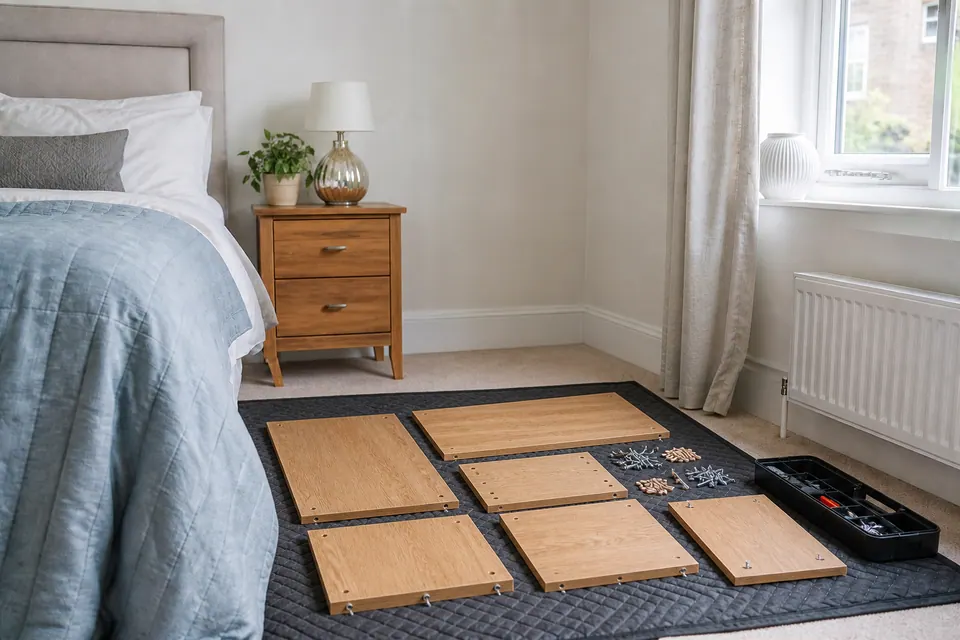
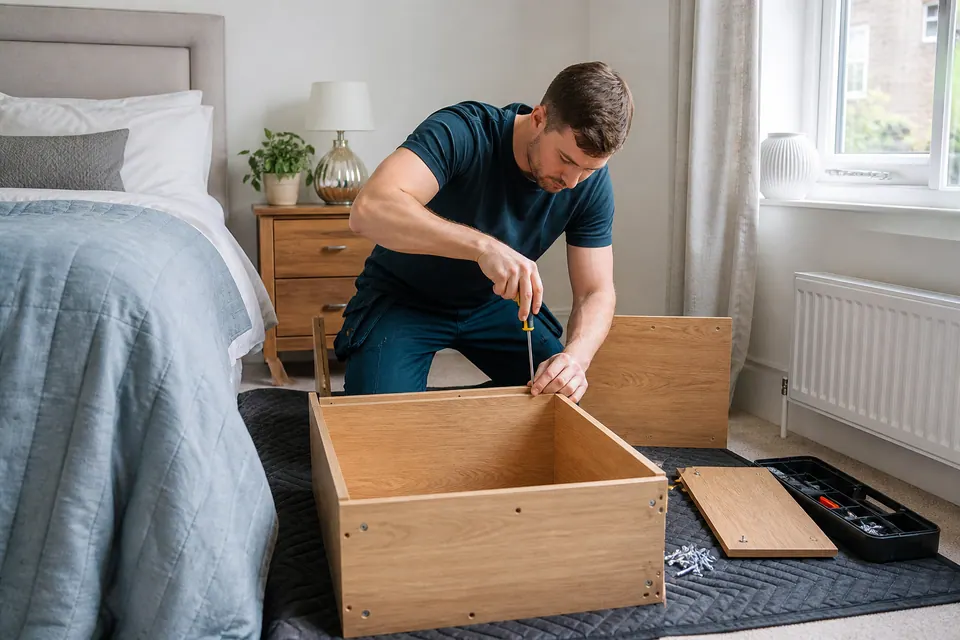
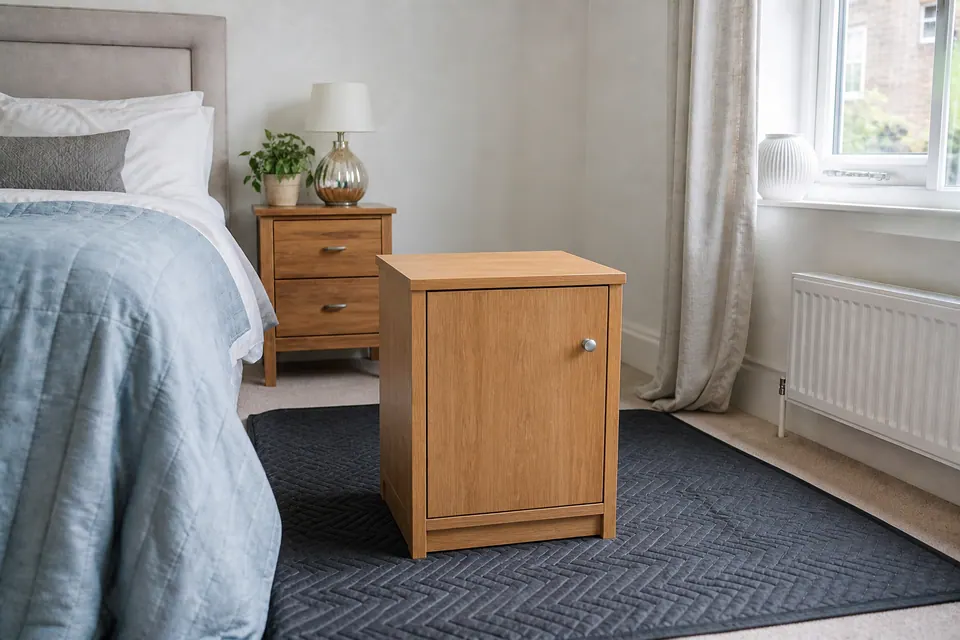
Illustration only; not customer evidence.
PLAN THE ARRIVAL
Give the Barnet address and identify every affected doorway. Explain which routes need to stay usable during the visit.
Interactive area map
THE DETAILS OF YOUR VISIT
Not automatically. The door’s alignment, hinges and actual clearance need assessment first.
Yes. Its specification and installation history may help explain the changed movement.
No. Fire-rated or specialist assemblies may need a different service and scope.
Photograph that point and the whole closed door rather than guessing which edge should be removed.
A handle fault and a clearance fault are different symptoms; describe both if present.
Flag it separately so appropriate locksmith or specialist requirements can be considered.
Discuss the fault and intended finish first rather than obscuring relevant condition information.
Show that damage; the task may require more than hardware adjustment.
Only where explicitly included. State the finish you expect after any agreed work.
TURN THE LIST INTO A PLAN
Send the change history, closed-door view and close-ups of the contact point and hardware.
Images illustrate typical handyman tasks.
