
Private front-lock change
A change can restore control where old copies remain a concern. Measurements, function and required tenant or owner keys set the part and quantity.
Front route · side gate · rear door · landlord key set
A rented terrace or flat conversion may be entered from more than one direction. A Balham key change should follow the authorised route from front to rear, showing which doors belong to the tenancy and which remain shared with the building.
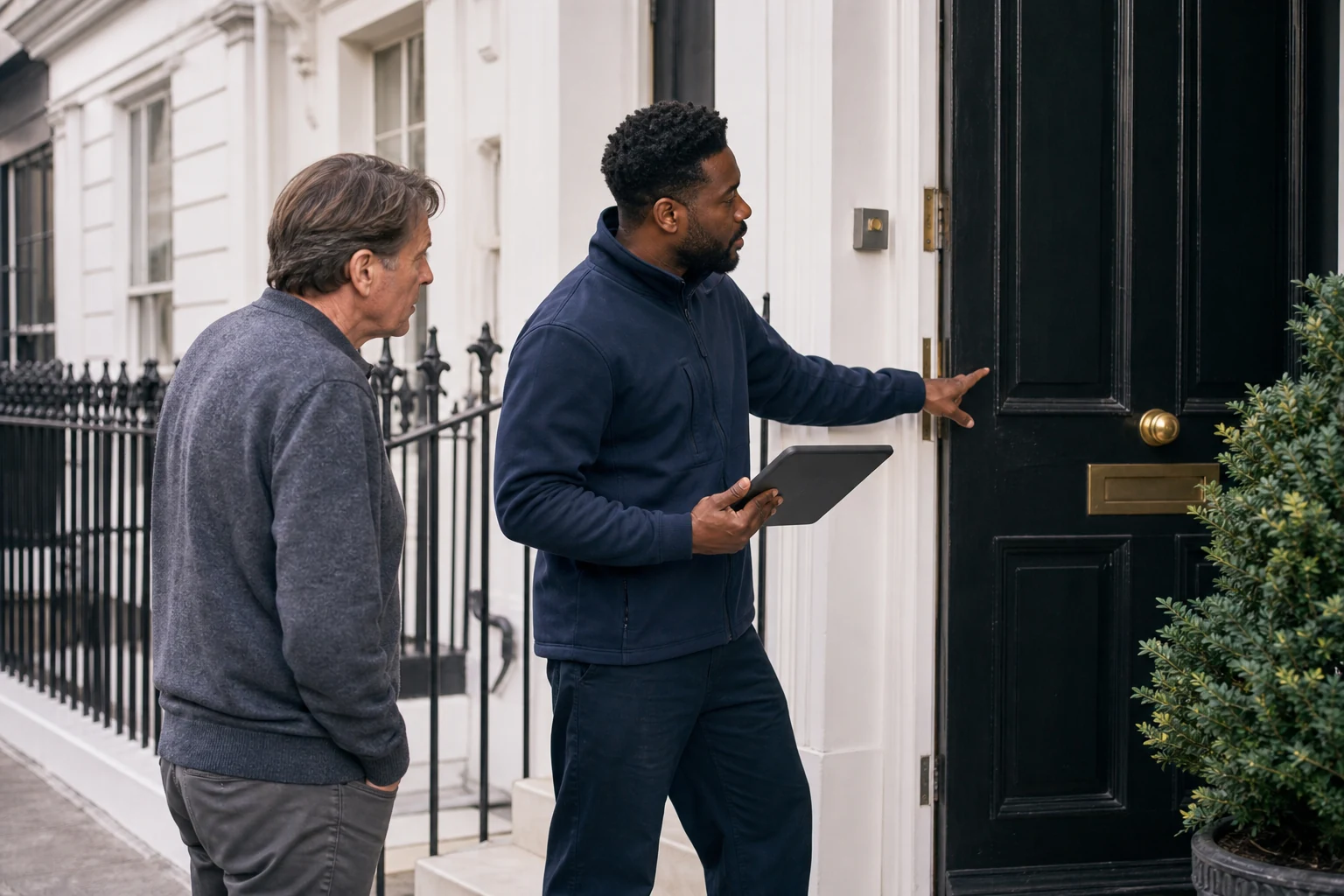
Route inventory
At a tenancy transition, attention often stays on the main front-door key. Yet a side gate, rear UPVC door, basement entrance or converted-building street door may provide another route. List every entrance the occupier is entitled to use and state whether it is private, shared or controlled by the owner.
Do not assume all keys on the bunch belong to the tenant’s dwelling. A communal key may serve neighbours; a side-passage key may remain under building control; a garden-office key may relate to space outside the tenancy. Confirm these boundaries with the landlord or managing agent. The goal is an accurate route inventory, not the maximum number of lock replacements.
| Route point | Control question | Record needed |
|---|---|---|
| Communal street entrance | Does the building or the dwelling own the lock? | Managing contact and authorised communal copies |
| Private front door | Which tenant, owner and agent users retain entry? | Returned, missing and newly required keys |
| Side gate or passage | Is it private, shared with neighbours or used for services? | Every affected user and the party approving alteration |
| Rear or patio door | Is it part of the dwelling and does its lock work reliably? | Key copies plus separate mechanical fault notes |
| Outbuilding or storage door | Is the space included in the tenancy? | Owner instruction and named users |
Walk the route safely
An authorised person can identify keys through normal use at the relevant doors. Stop if a key resists, the handle feels likely to fail or the door must be forced against its frame. Label uncertain keys instead of repeatedly trying them. Do not enter a neighbour’s garden or shared passage without permission merely to reach the rear face.
Record mechanical problems on their own list. A rear multipoint door that requires lifting is a repair enquiry even if every copy is accounted for. A front cylinder may work perfectly while the owner still chooses a key-control change. Combining the route inventory with a fault register prevents one task from hiding the other.
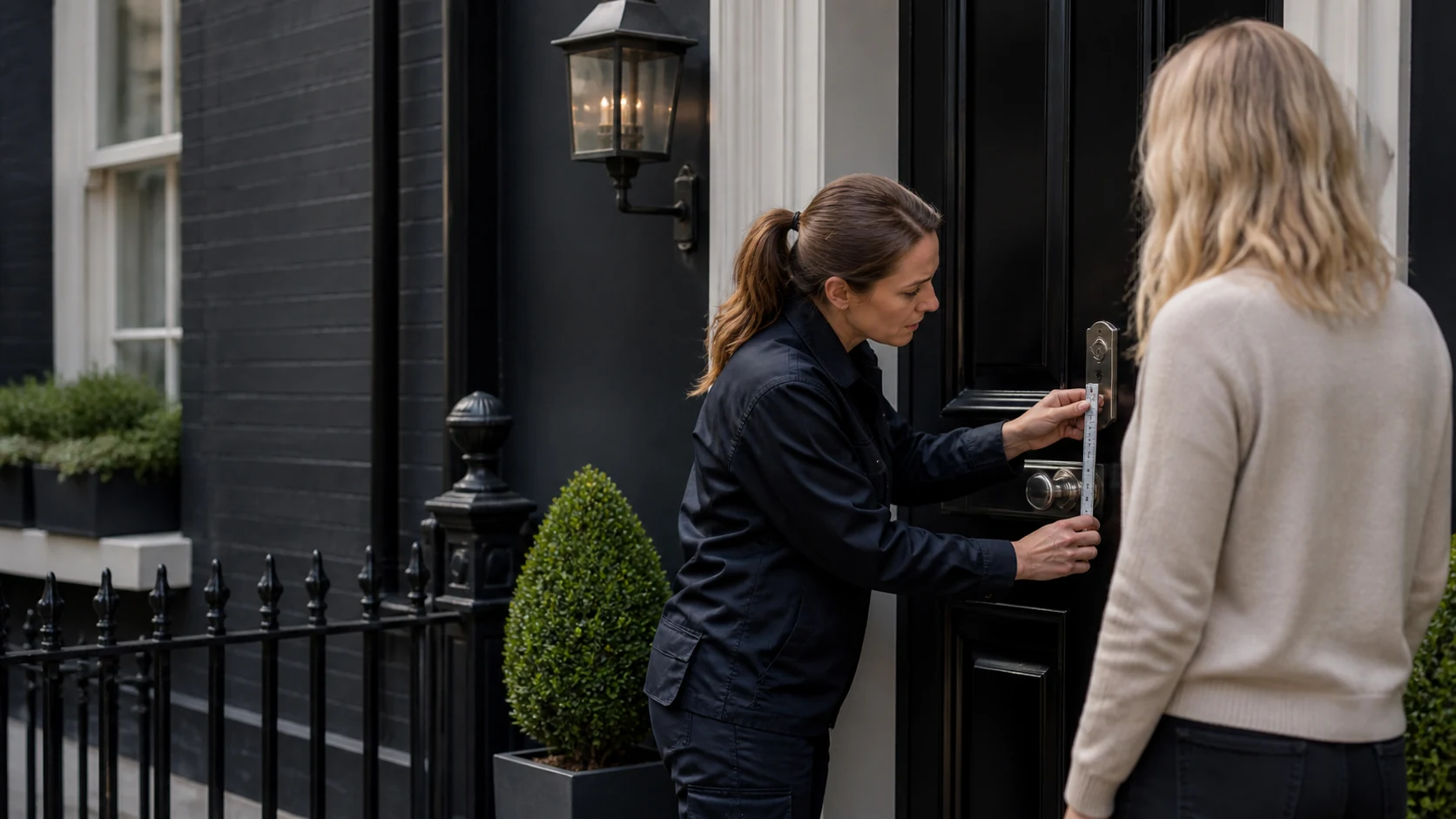
Route event to decision
| Event | Immediate record | Decision to make |
|---|---|---|
| Front-door key not returned | Which private entrance it opens and whether it identifies the address | Owner-approved key-control change at that door |
| Side-gate key is missing | All properties or services using the passage | Shared-owner decision rather than unilateral tenant work |
| Rear-door keys are complete but lock is stiff | Operation open and closed without force | Mechanical assessment independent of key distribution |
| Unknown key remains on the inventory | Safe testing by an authorised person and any existing label | Identify, retain or dispose after its purpose is confirmed |
| Tenant is locked out but rear route exists | Whether that route is lawful, safe and actually accessible | Verification and opening plan without unsafe entry attempts |
| Outbuilding was excluded from handover | Tenancy boundary and owner instruction | Remove it from the scope or arrange a separate authorised change |
Locksmith work along the route
A change can restore control where old copies remain a concern. Measurements, function and required tenant or owner keys set the part and quantity.
A UPVC or timber rear door is assessed by its own operation. Cylinder, mechanism, handles, alignment and frame are not decided by the key inventory.
The locksmith checks the person’s right to enter and the state of the relevant door. An alternative route should be used only when it is authorised and safe.
Retain the pieces and stop turning the fragment. Extraction can be followed by a lock test before a repair or access change is chosen.
Garden rooms and storage need a confirmed tenancy or owner boundary. Do not include them solely because their keys were found with the house set.
Flat-conversion entrance locks stay with the freeholder or managing agent. The private tenancy instruction should record that exclusion.
Price by route line
There is no reliable Balham area price for a route inventory. The quote depends on each actual door, lock, labour, method, parts and key quantities. A landlord should be able to see which entrance and recipient each cost belongs to.
| Scope line | Evidence required | Handover result |
|---|---|---|
| Private front entrance | Hardware, tenancy authority and key-control objective | Specified lock or cylinder with counted tenant and owner keys |
| Rear entrance | Present operation, door type and included repair | Mechanical functions tested plus keys where changed |
| Side or shared gate | Ownership, users and written approval | Only authorised work, communicated to everyone affected |
| Lockout | Identity route, door state and opening boundary | Entry plus any separately approved post-opening work |
| Outbuilding | Included space, hardware and authorised users | Separate key set and door record |
| Making good | Existing door, frame and finish condition | Locksmith work distinguished from joinery or decoration |
If an unlisted rear door or damaged frame appears during attendance, pause. Add it only after the owner receives the finding, revised scope and price. A whole-property instruction should not be inferred from a single front-door booking.
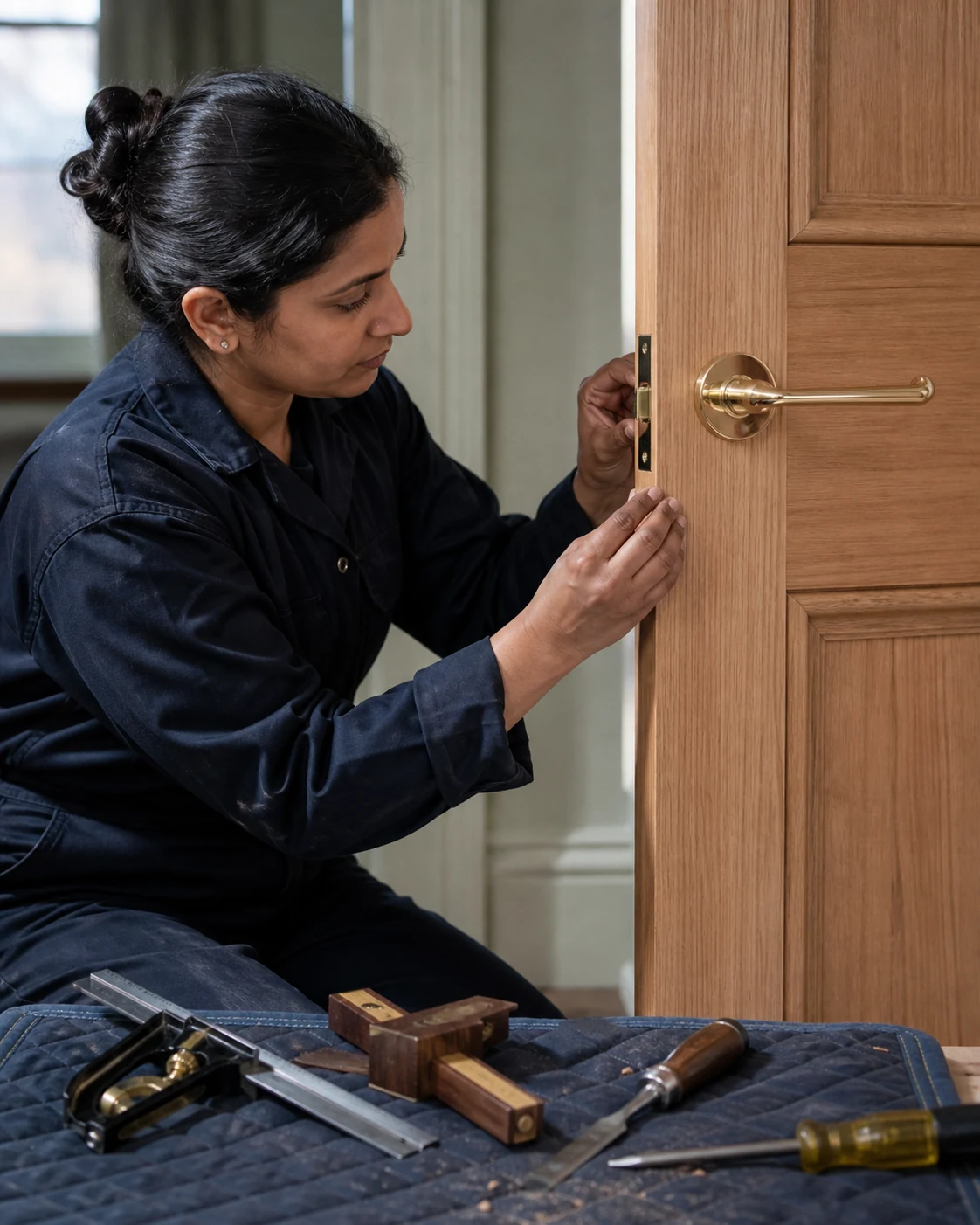
Balham property context
A terraced home may have a private side return or no external side route at all. Describe how the rear door is reached and do not promise outside access that crosses neighbouring land. If the garden or extension is included in the tenancy, add its locks to the owner-approved inventory.
In a converted house, the front door can be communal while a basement or garden entrance serves one flat. The layout does not prove ownership. Check the lease or management arrangement through the responsible party before changing a gate or shared lock.
Rented properties also need an agreed owner-copy position. The locksmith supplies the approved number; the tenancy and management process decide who retains them. Keep that administrative decision distinct from technical advice about the hardware.
Route-complete handover
Test every worked-on door from the correct side, including closing, latching, locking and unlocking. Count the key set for that route point before moving to the next. Return shared keys to the building contact and give private sets to the named tenant, owner or agent.
Record doors left unchanged, unknown keys not identified and repairs assigned to another trade. The handover should show a usable route from front to rear without implying that every entrance now uses new hardware.
Balham key-route FAQ
Yes as part of the authorised route inventory, but a working rear lock does not automatically need replacement. Record its keys and condition separately.
Only after confirming ownership and authority from everyone responsible. A passage can serve neighbours, services or another flat.
Tell the locksmith before attendance. Work should use the authorised internal route and record any limitation on reaching the external face.
The owner or agent should define retained access under the tenancy arrangement. The locksmith hands over the agreed quantity to named recipients.
No. Mechanical condition and key distribution are different issues. The door, frame, lock and connected parts need assessment.
Only gently by an authorised person at relevant doors. Stop at resistance, label uncertainty and never force a key into a cylinder.
Only if the space is included and the owner authorises it. Keep its key set and quote line separate from the home.
List every door worked on or left unchanged, test normal operation and count keys to tenant, owner, agent and building recipients.
Nearby locksmith pages
Walk the key route from front to rear
Send the Balham address, route inventory, returned and missing keys, mechanical faults and authorised owner or agent contact.
