
Alignment and keep review
The door is compared in open and closed positions. Adjustment is considered only after the relationship between leaf, hinges, locking points and keeps is understood.
Door position · handle travel · key turn · secure close
A rear UPVC door is best described as an operating cycle, not as one “broken lock”. For a Wandsworth terrace, converted flat or apartment, record what happens as the door closes, the handle lifts and the key turns, then leave the mechanism assembled for assessment.
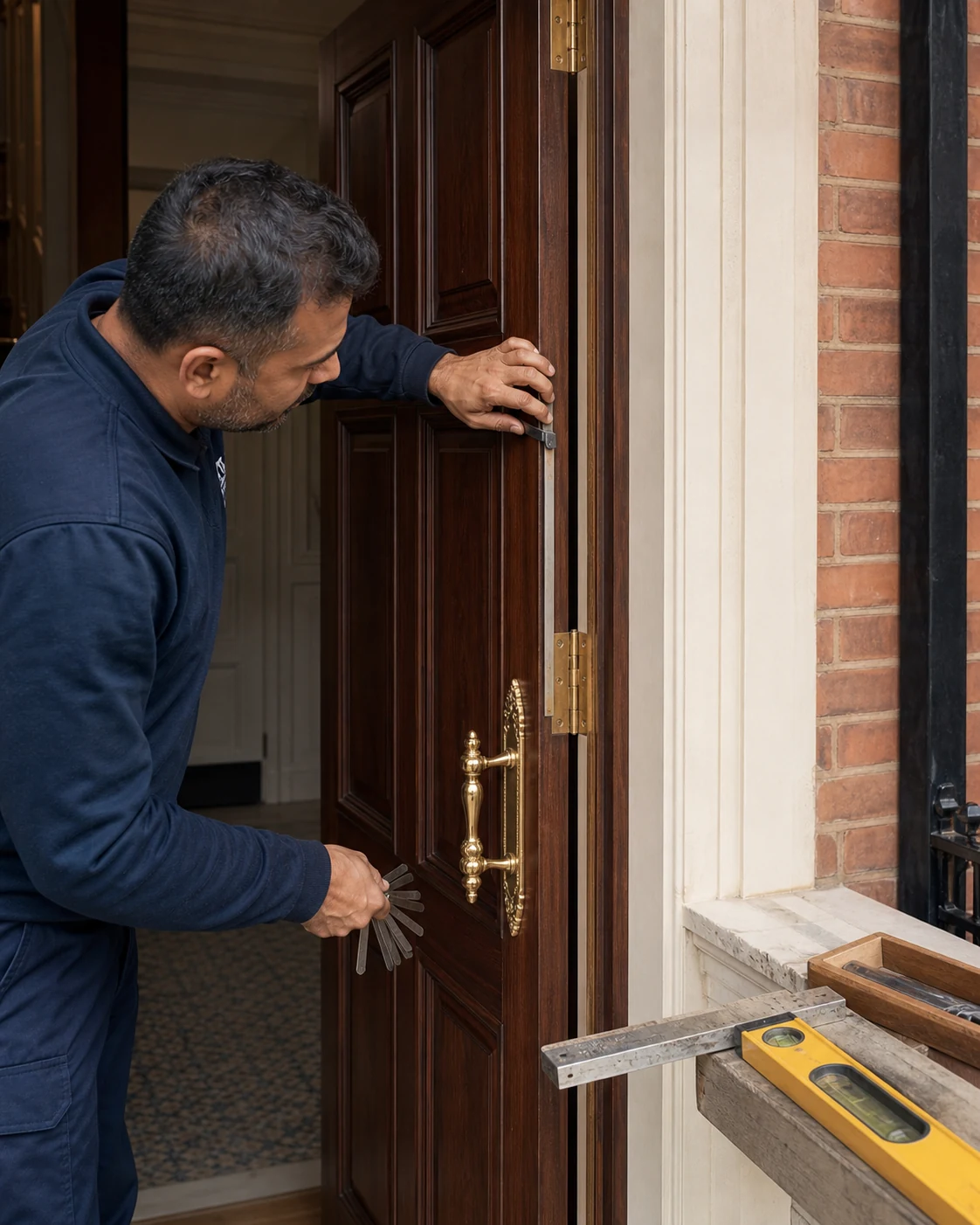
Operating-cycle record
“The rear door will not lock” can mean that the leaf will not meet the frame, the handle will not rise, the key will not turn after the handle lifts, or the key turns while the door remains unsecured. Each observation leads to a different first check. A euro cylinder, handle set, gearbox, full multipoint strip, hinges and frame keeps interact, so replacing the most visible piece without testing the cycle can miss the fault.
Only compare open and closed operation when the door can be handled safely and without force. If the handle feels as though it may break, stop. Do not loosen keeps, remove the cylinder or spray an unknown lubricant into the mechanism. Write down the last normal use, what changed and whether the issue is constant. That short record is more useful than naming a part from an online photograph.
| Stage | Safe observation | What remains to be assessed |
|---|---|---|
| Approach to the frame | Whether the leaf closes freely or needs lifting, pulling or pressure | Hinges, frame contact, keeps, obstruction and general alignment |
| Handle lift | Travel, resistance, return and whether hooks or rollers appear to engage | Handles, spindle, gearbox, strip and pressure against keeps |
| Key turn | Whether a sound key enters and turns after the handle is raised | Cylinder condition, gearbox state and whether the mechanism reached its locking position |
| Locked state | Whether the door is actually retained without excessive movement | Engagement of locking points and frame hardware |
| Unlock and release | Key return, handle movement and normal opening | Complete reliable cycle rather than a one-direction test |
Rear-door access
A garden or balcony-side door can be awkward to inspect if the only external route is locked, shared or reached through another dwelling. State whether the door is currently open or closed and whether both faces are accessible from your property. Do not climb fences, cross a neighbour’s garden or promise access through a communal area without permission.
In a terrace with a rear extension, explain the route from the main entrance to the door and clear furniture or stored items nearby. In a converted flat, establish who owns the rear entrance and whether other occupiers rely on it. For an apartment, check concierge or management rules before arranging access to any terrace or shared external space.
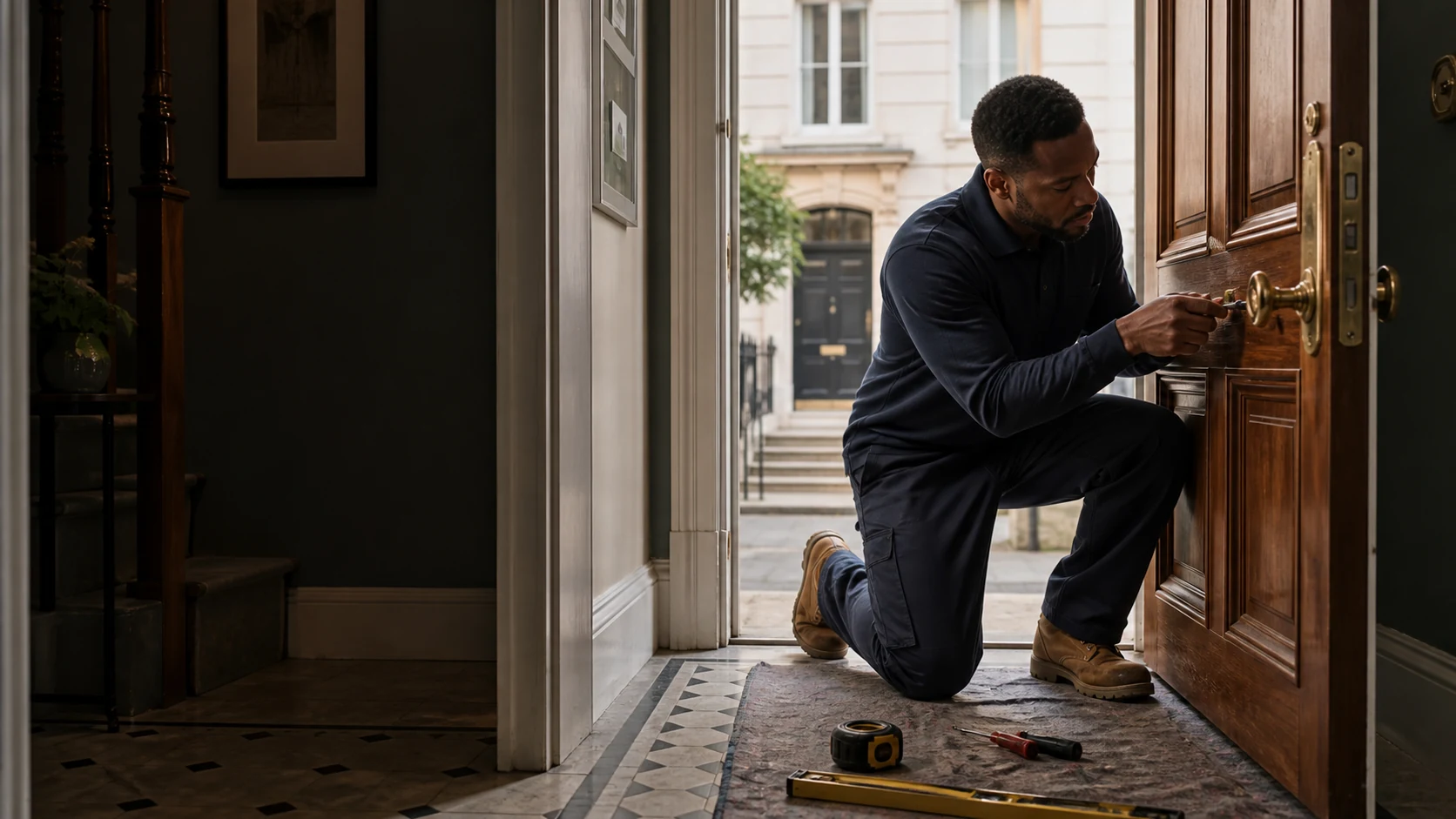
Component evidence
| Observed combination | Useful action before attendance | Why one part cannot be assumed |
|---|---|---|
| Handle lifts open but not when closed | Leave the door unforced and report where it contacts the frame | Keep pressure or alignment may affect otherwise moving hardware |
| Handle moves but key will not complete the turn | Stop before force damages the key or connected mechanism | Cylinder, gearbox position and multipoint engagement all matter |
| Key turns but handle no longer drives the strip | Keep the door in its safest available state and limit use | Spindle, handles, gearbox and strip need direct inspection |
| Door locks but handle does not return normally | Note the return position without repeatedly cycling it | Handle spring, spindle and internal mechanism can produce similar behaviour |
| One locking point catches at the frame | Do not file or move the keep; photograph the visible contact | Door position and full-strip movement must be checked together |
| Cylinder or key is visibly damaged | Discontinue use and retain the key without attempting removal work | Local cylinder damage may coexist with mechanism resistance |
Repair choices
The door is compared in open and closed positions. Adjustment is considered only after the relationship between leaf, hinges, locking points and keeps is understood.
Loose or poorly returning handles can be examined with the connected gearbox. Matching fixing centres and spindle arrangement matters before replacement.
A damaged cylinder or key-control need may justify a measured change. Cylinder replacement does not repair a failed multipoint gearbox or misaligned door.
The central mechanism can be identified through measurements and strip details. A similar-looking case should not be ordered solely from the handle position.
Hooks, rollers and other locking points form a full system. Part identification, availability and door condition guide repair or replacement.
Hinge, frame, panel or structural damage can sit outside mechanical lock work. The locksmith should state the limitation and coordinate a separate door scope where needed.
Quote after identification
Wandsworth does not determine a fixed UPVC repair price. The quotation depends on the actual door, access, investigation, labour and compatible parts. A useful proposal explains whether it covers assessment, adjustment, a named component or a complete mechanism.
| Scope line | Information required | Completion boundary |
|---|---|---|
| Assessment | Operating-cycle notes, door position, photographs and access | Which components and alignment points will be checked |
| Adjustment | Measured contact, hinge condition and keep engagement | Adjustment included without promising repair of worn hardware |
| Local component | Confirmed cylinder, handle, spindle or gearbox details | Exact part, labour and interaction with retained components |
| Full strip | Dimensions, locking-point layout, door preparation and availability | Replacement extent, frame keeps and excluded door repairs |
| Key supply | Required users and agreed quantity | Number handed over and treatment of old keys |
| Final operation | Safe access to both sides and normal user sequence | Closing, lifting, locking, unlocking and handle return tested |
If dismantling reveals a different mechanism or damage outside the accepted work, request an explanation and revised option. The pressure to secure a rear door should not become permission for undefined parts or unrelated building work.
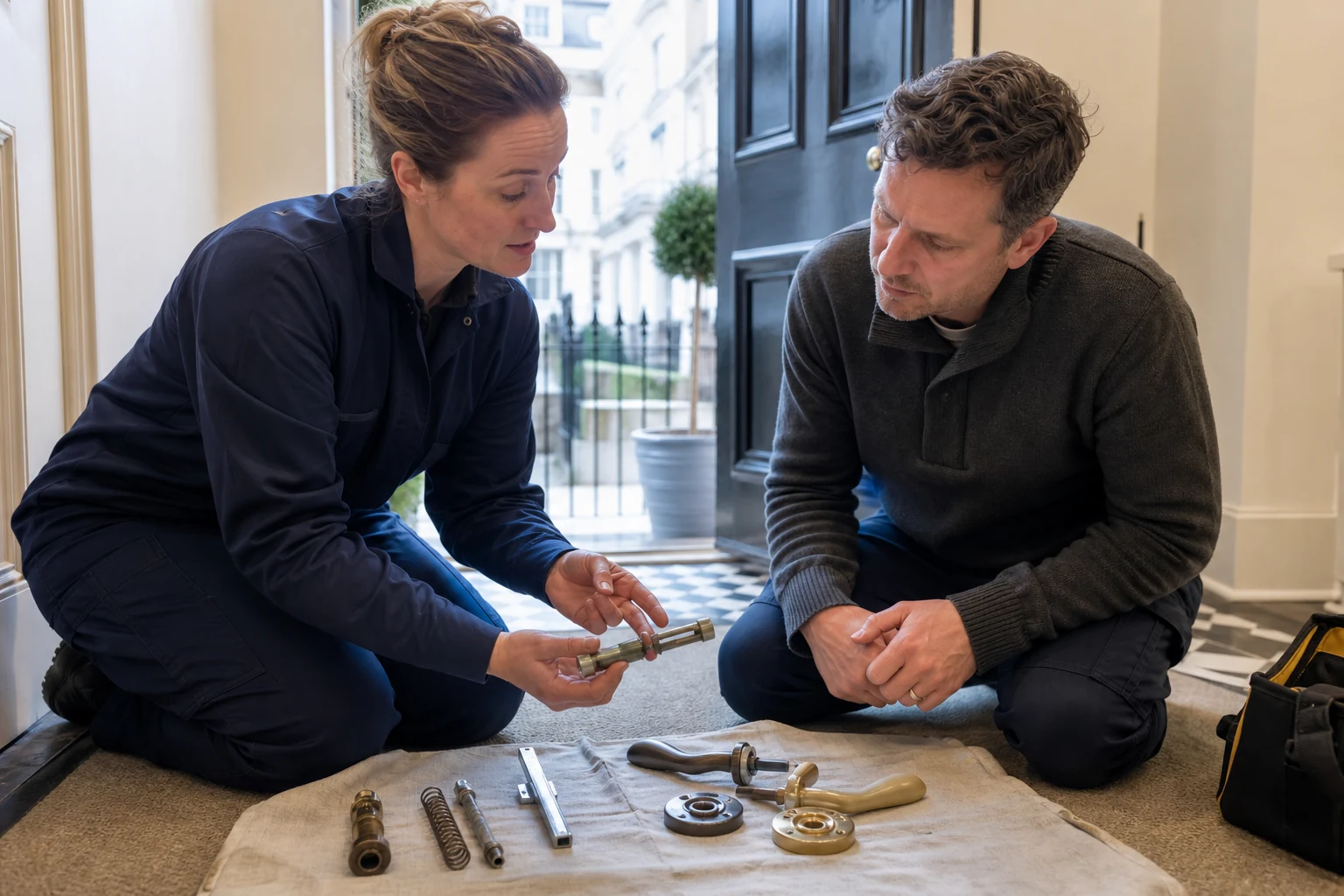
Wandsworth property context
A terrace may have a garden door reached through the main home, while a rear extension changes the distance and available working space. Clear the internal route and identify any newly finished surfaces near the mechanism. The extension’s age does not establish which parts serve the door.
In a converted property, a rear door or garden gate may be private to one flat or shared. Confirm that boundary before approving a change. A resident should not alter a shared escape or security route on the assumption that it sits beyond their rooms.
Managed riverside apartments can add concierge procedures and balcony or terrace restrictions. Tell management about contractor access and confirm the safe working area. A locksmith assesses mechanical lock components; powered building access, glazing and structural balcony-door issues may need other responsible providers.
Test the whole cycle
At handover, the authorised user should close the door normally, lift the handle where designed, turn the key, confirm secure retention, unlock and open it again. The result should not depend on a hidden shove, lift or pull that was absent from the agreed design.
Count keys and record any retained component or outstanding door issue. If weatherproofing, hinges, panel repair or decoration remains outside the lock scope, allocate it clearly. A successful key turn is only one part of a usable rear entrance.
Wandsworth UPVC door FAQ
A complete test shows whether the mechanism returns and releases normally. A door that secures but will not reliably reopen is not a finished outcome.
Stop forcing it and state whether this occurs with the door open, closed or both. The connected handle, gearbox, strip and keeps need assessment.
Yes when the cylinder is the identified issue or key control is the goal and the remaining system works correctly. It will not cure unrelated mechanism resistance.
No. Their positions are evidence of how the door currently meets the frame. Unplanned movement can obscure the fault or reduce security.
Tell the locksmith before attendance. The access limitation may affect identification, safe working and the ability to complete operational tests.
Not reliably. Measurements, edge-strip details and the mechanism arrangement are usually needed before a compatible part is chosen.
Only if explicitly quoted. Mechanical lock components, hinges, panels, glazing and structural door repair can require separate scopes.
Check normal closing, handle lift, key turn, secure retention, unlocking, release and handle return with the locksmith and authorised user present.
Nearby south-west coverage
Use the page matching the actual address and door arrangement.
Describe the complete door sequence
Send the Wandsworth address, rear-door route, open and closed behaviour, safe photographs and authorised contact.
