
Authorised lockout opening
The locksmith checks the person’s connection to the relevant room or dwelling. A housemate’s ability to open the main door does not authorise entry elsewhere.
Occupant roster · shared front door · private room · agreed key issue
In a shared house or converted flat, “our keys” can refer to several groups with different rights. A Clapham key-control brief should map the people to the entrances they may use before any cylinder or room lock is changed.
Occupant-access map
A housemate may be authorised to use the main house door but not another person’s locked room. Residents of one converted flat may share the street door with neighbours while their internal entrance remains private. A landlord may retain an authorised key under the tenancy arrangement but cannot be treated as present consent for every access event. The locksmith needs a clear map, not an argument between occupants.
Create one row per entrance. Name the current authorised user group, the person who controls changes and the copies known to exist. If one resident is leaving, identify whether their key opens only a private room, the whole shared home or a communal building door. This allows a proportionate response and prevents a private dispute from being transferred to a shared entrance.
| Entrance layer | People normally authorised | Approval to confirm |
|---|---|---|
| Communal converted-house door | Residents of several separate flats and authorised building users | Freeholder or managing agent for any system change |
| Shared dwelling front door | Current household and agreed owner or agent holders | Landlord or authorised household instruction within the tenancy |
| Self-contained flat door | Occupants of that dwelling plus approved owner access | Owner, tenant and agent roles for lock work |
| Private bedroom or study | Named room user where such a lock is authorised | Whether the tenancy and door permit the requested alteration |
| Rear or side entrance | Household, another flat or building users according to layout | Ownership and every user affected by a key change |
Record the access event
At the end of a tenancy, record which keys were returned and which doors they operate. If a copy is missing, say that it is unaccounted for; do not accuse a former occupier of retaining it without evidence. If a set is stolen, record whether it identifies the address and which entrance it can open. If current occupants disagree about access, pause the change until the person with proper authority gives a clear instruction.
Hardware condition is a separate track. A stiff main lock may need repair even when key control is satisfactory. A bedroom key that snapped can require extraction without changing the shared front door. Keep all fragments, photographs and existing copies grouped by entrance.

Access event to next action
| Event | Evidence to gather | Proportionate route |
|---|---|---|
| One housemate moves out and returns all keys | Returned copies, doors operated and owner’s next-tenancy plan | Update the roster or arrange a planned private change if desired |
| Main-house key is missing | Whether it identifies the property and every current user who needs access | Owner-approved change focused on the exposed dwelling entrance |
| Former occupier held a communal key | Building system owner and controlled-copy records | Refer the common entrance decision to management |
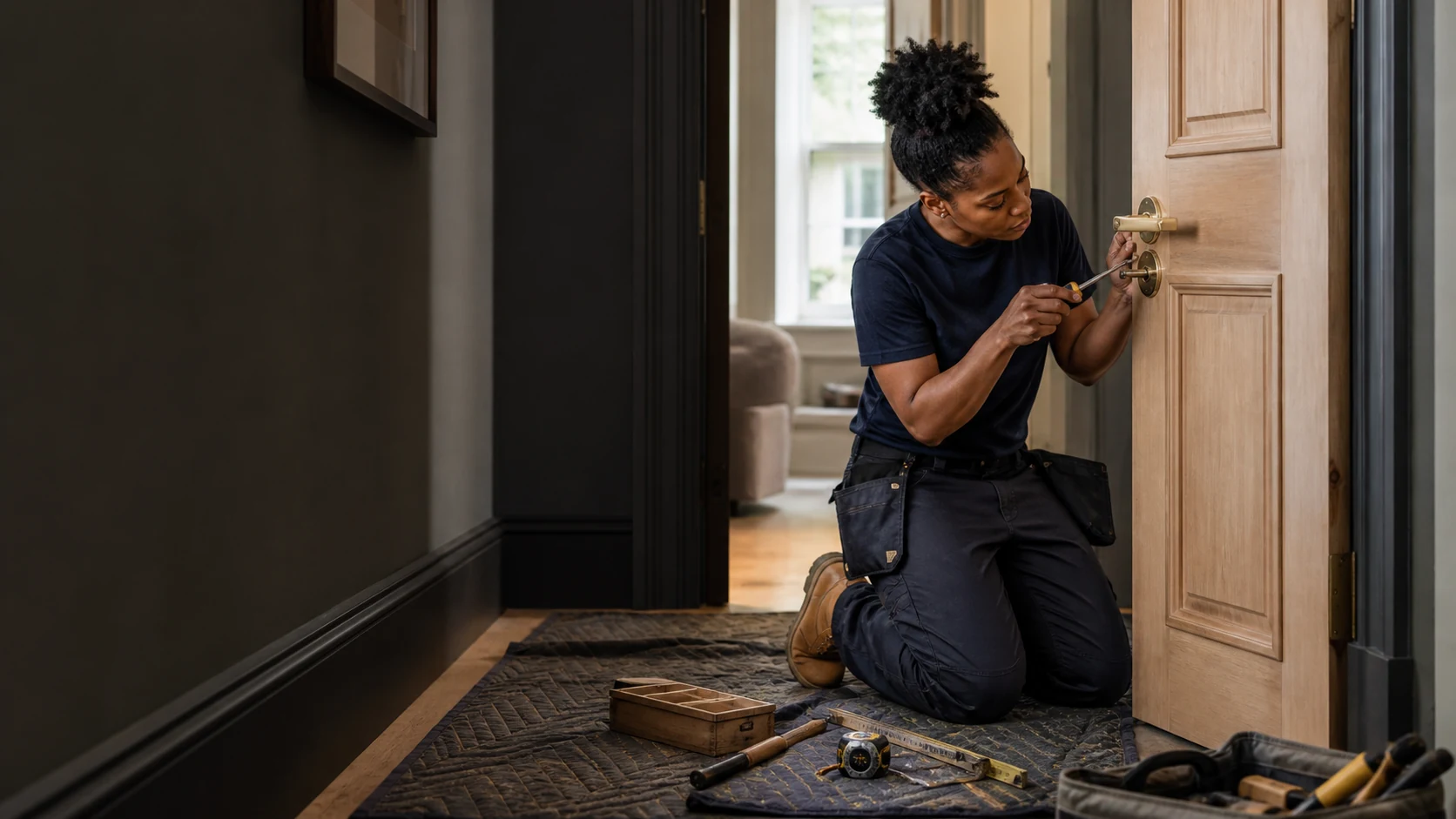
| Current resident is locked out of a private room | Identity, tenancy position and authority for that room | Authorised opening without altering unrelated household locks |
| Broken key remains in the shared front lock | Door state, fragment position and another sound key if available | Extraction and operation check before any key-control decision |
| Occupants disagree about excluding a user | Clear owner or lawful management instruction | No alteration until authority is resolved outside the locksmith visit |
Locksmith work within the roster
The locksmith checks the person’s connection to the relevant room or dwelling. A housemate’s ability to open the main door does not authorise entry elsewhere.
A cylinder or lock can be changed for the authorised dwelling boundary. Compatible dimensions and the new recipient list guide the hardware and copies.
A faulty household lock can be assessed for repair independently of who holds keys. Door alignment and connected hardware remain part of the mechanical diagnosis.
Extraction can restore access while preserving a sound lock. The reason for breakage and the remaining key-control risk are reviewed afterward.
Converted-house street doors may require managing-agent authority and consideration of every flat. One shared-house resident should not commission that change alone.
Split timber, failed hinges or frame damage may need another trade. Locksmith work and making good should be stated separately.
Quote the roster and door together
Clapham does not create a standard locksmith price. The quote depends on the entrance, lock, method, parts, labour and access. In a shared home, it should also say exactly how many copies are supplied and who receives them.
| Scope item | Booking input | Completion evidence |
|---|---|---|
| Relevant entrance | Communal, shared dwelling, flat, room or rear door | Only the authorised door included in the work record |
| Opening | Occupant identity, authority and present door state | Method completed and any sacrificed component identified |
| Hardware change | Measurements, required function and owner approval | Installed part and old-key effect explained |
| New key issue | Named current occupants, owner and agent quantities | Copies counted to each authorised recipient |
| Repair | Observed mechanical fault and door condition | Operational result kept distinct from the roster change |
| Shared-building limitation | Managing contact and common-door exclusions | Unchanged communal system recorded clearly |
If examination reveals a different lock or damaged door, the approving owner should receive the finding and revised option. A resident may meet the locksmith, but that does not automatically grant authority to accept every extra part or permanent alteration.

Clapham property context
The common street door may serve several independent flats. Inside one flat, a group of tenants may share another front door. These two groups overlap physically but not necessarily in authority. Put communal and dwelling keys on different rows and involve the correct owner for each.
Some shared homes also use room locks. Before changing one, confirm that the door and tenancy arrangement permit it and that the requesting person is entitled to control the room. A locksmith should not decide occupancy rights based on who is present at the time.
Rear doors can add another shared route, particularly where gardens or side passages serve more than one unit. Identify every user before changing key control. Property layout informs the roster; it should not be reduced to a generic “shared house” label.
Roster handover
Test the changed or repaired door, then distribute labelled sets to the agreed people. Do not leave all copies with whichever housemate happens to be home unless the owner has authorised that handover. Return common keys to building custody and document any spare retained by the agent.
If an occupant was intentionally excluded under a valid instruction, the locksmith records the work without becoming the keeper of the household dispute. Any unresolved authority question should remain outside the technical completion note.
Clapham shared-home FAQ
Only with the appropriate landlord, owner or agreed household authority. Every authorised occupant still needs access after the change.
Not merely because both people share the house. The locksmith needs a clear lawful basis for entry to that particular room.
Record the missing copy, the door it operates and whether it identifies the address. The owner can then make a proportionate key-control decision.
The authorised owner or manager should give a recipient list covering current occupants and any approved retained copies. The quote should state the quantity.
No unless the two are part of an authorised linked system. A common street door remains under the building’s separate control.
Yes, subject to authority and lock condition. Extraction, repair and changing future access are still separate decisions.
Resolve the authority through the landlord, owner or appropriate legal route before changing locks. The locksmith should not adjudicate the dispute.
Count labelled sets to named residents, owner and agent recipients. Keep communal keys and private-room keys in their own records.
Nearby south-west pages
Choose the local page matching the actual address and household arrangement.
Map people to doors before changing keys
Send the Clapham address, entrance layers, current occupants, key event and person authorised to approve the change.
