
Stop adding force
A stiff key or handle is a warning to pause. Continued pressure can snap a key or turn a serviceable fault into damaged hardware.
Key · handle · latch · frame
When a door becomes difficult, describe which movement fails before asking for a replacement. A key that binds, a handle that drops and a latch that misses the keep point to different checks, even when the final symptom is “the door will not lock”.
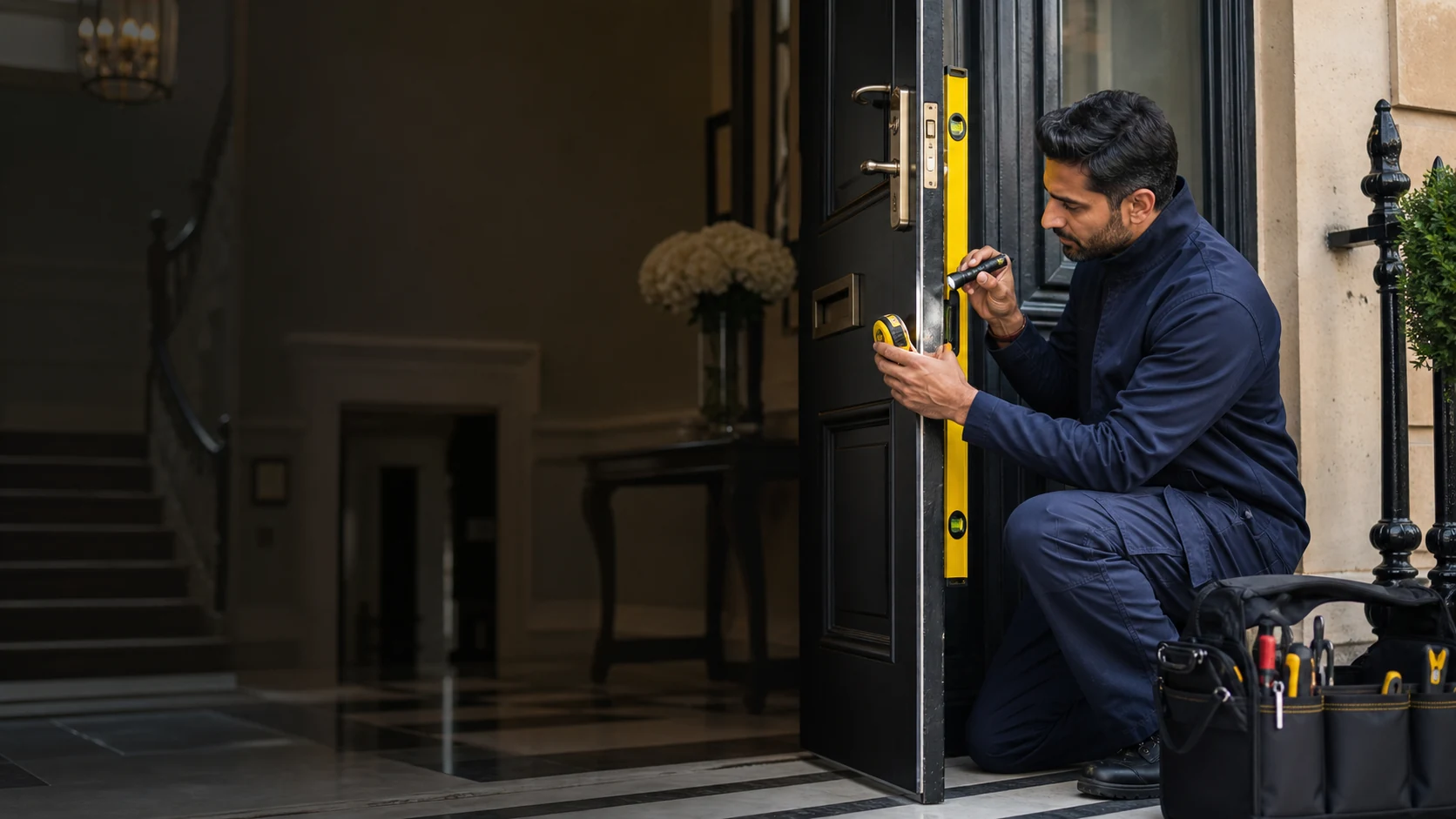
Fault-first booking
The order of events matters. Say whether the key enters fully, whether it turns, whether the handle must be lifted and whether the door has to be pushed or pulled. If the door is already open and can be kept safe, note whether the mechanism behaves differently away from the frame. Do not create this comparison by closing a door that may trap you outside.
A lock face gives only a partial view. Timber doors can move against their frames; multipoint doors connect the cylinder, handles, gearbox, strip and keeps; a rim lock has inside and outside components; and a communal entrance may include a closer or electrical release. Inspection distinguishes these relationships before a repair or part is promised.
| Observed symptom | Keep note of | Why assessment is needed |
|---|---|---|
| Key enters but will not turn | Door open or closed, spare-key result and pressure on the door | Cylinder condition, key wear and frame pressure can feel similar to the user |
| Handle lifts only with extra force | Whether lifting the door changes it and where the leaf meets the frame | Multipoint mechanism and alignment need to be considered together |
| Latch does not meet the keep | Visible gap, hinge movement and whether the problem changes with weather or use | The lock may be serviceable while the door position has altered |
| Handle is loose or does not return | Movement on both sides and whether locking remains possible | Handles, spindle and internal mechanism may contribute differently |
| Key snapped during ordinary use | Fragment position, key condition and door state | Extraction, opening and replacement are separate possible stages |
| Lock operates but the frame is split | Safe photographs of leaf, frame and keeps | Security may require both locksmith work and a defined door repair |
Do no extra damage
A stiff key or handle is a warning to pause. Continued pressure can snap a key or turn a serviceable fault into damaged hardware.
Do not remove handles, cylinders, faceplates or multipoint strips. Loose pieces and altered positions make the original symptom harder to assess.
If safe and the door is open, a sound spare can be useful context. Do not keep cycling different keys or lock yourself out to reproduce the fault.
Include the door in its frame, both hardware faces, the edge and keeps. A macro image of the keyway alone cannot show alignment or construction.
Keep the full key and note where it broke. Avoid glue, magnets, drills or improvised tools inside the keyway.
Keep others away from a loose, forced or insecure entrance. Use emergency services where there is immediate danger rather than relying on a routine appointment.
Door systems
On a timber door with a mortice lock, the case sits within the door edge and meets a keep in the frame. A night latch uses an internal case and outside cylinder. On many UPVC and composite doors, lifting the handle operates several locking points through a long strip. Each arrangement needs its own measurements, compatible parts and tests.
Names are useful for preparation, not remote certainty. Send photographs and any legible markings, but do not order a replacement from appearance alone. The locksmith needs to confirm door thickness, backset, case dimensions, handing, cylinder length or multipoint identification as relevant. If the door itself is binding, permanent reliability can depend on addressing that cause rather than fitting another lock into the same conditions.

Repair or replace
| Finding at the door | Repair route may include | Replacement becomes relevant when |
|---|---|---|
| Misalignment affects an otherwise functioning lock | Correcting the relationship between leaf, keeps and mechanism within the agreed trade scope | Wear or damage also prevents the hardware from operating reliably |
| Loose compatible handle set | Securing or renewing the affected handle components after the mechanism is checked | The set is damaged, incompatible or cannot provide dependable operation |
| Broken key without internal damage | Extraction and testing with a sound authorised key | The keyway or lock is damaged, or key control must also change |
| Failed component in a multipoint system | Replacing an identifiable compatible component where the rest is serviceable | The mechanism is not sensibly repairable or compatible parts cannot be established |
| Security outcome has changed | Retaining sound hardware where it still meets the requirement | Known key control, operation or documented specification no longer meets the authorised need |
Repair is not automatically cheaper, and replacement is not automatically better. The sensible comparison includes labour, compatible parts, door condition, expected operation and the customer’s security objective. No area-based price is invented here.
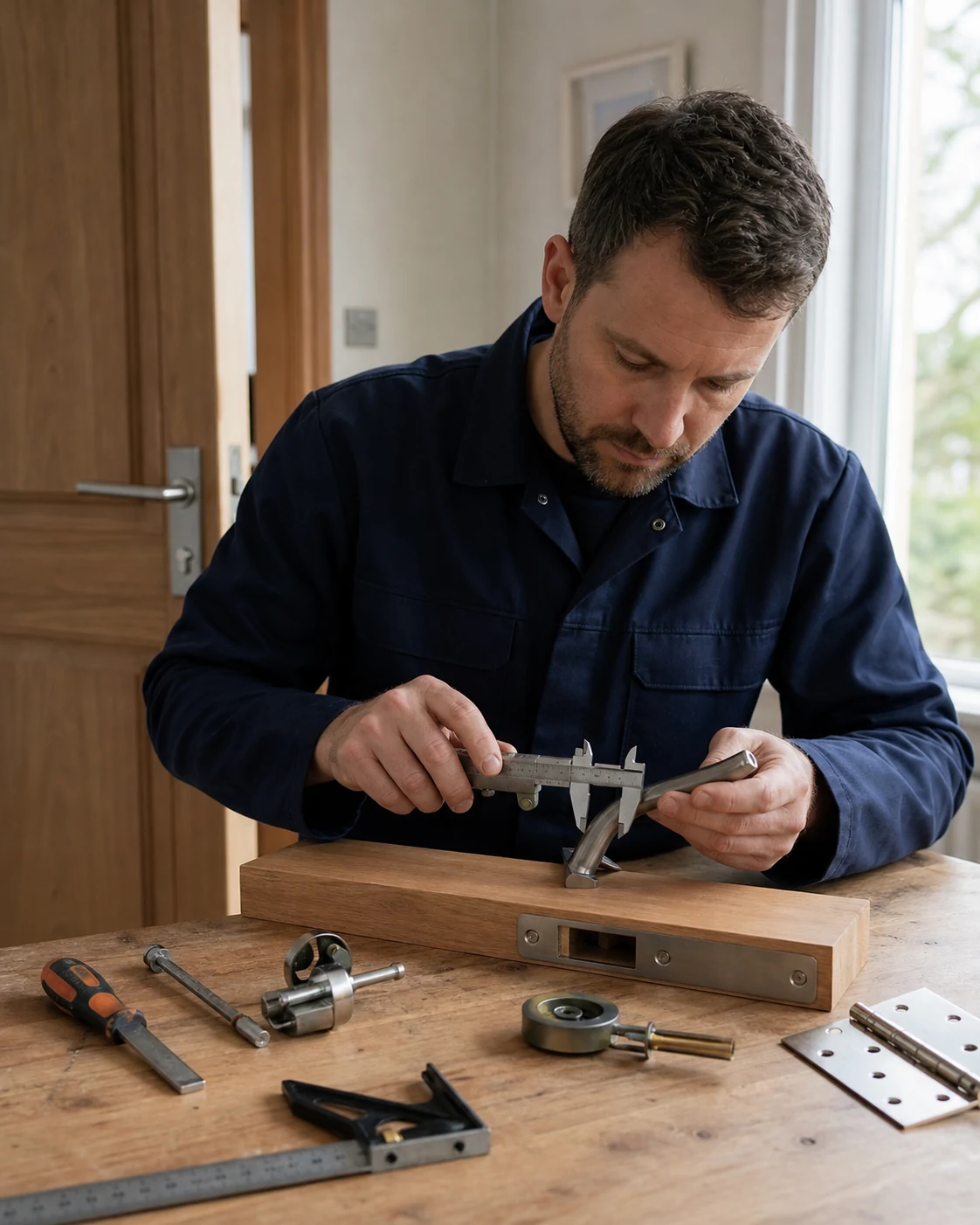
Kentish Town access context
Kentish Town contains terraced homes, properties divided into flats, accommodation above commercial premises and entrances reached from the rear. These are planning contexts, not claims about the hardware. Give the exact doorway and explain whether it belongs to the home, all occupants of a conversion or a business-residential route.
A basement or upper flat may have a separate entrance while meters or common controls remain elsewhere. A rear gate can be the only route to a garden door, but the gate key holder may not be the customer. Above-shop accommodation can rely on access available only during agreed hours. Arrange these facts before attendance so the locksmith can reach the failed door, the relevant control point and both sides where lawful.
Recent decoration or fitted joinery should be flagged because it can limit access to screws, keeps or lock cases. Ask who may approve disturbance and who will handle later making good. The fault finding should remain electrical-free unless an intercom or powered release is genuinely part of the complaint; that element may require building management or an electrician.
| Setting | Detail to establish | Effect on the visit |
|---|---|---|
| Victorian or later timber-fronted terrace | Door and frame operation, previous alterations and all external entrances | Helps distinguish hardware fault from movement or repair to the door |
| Flat conversion | Private door, communal door and responsible person for each | Prevents one flat’s instruction being applied to shared hardware |
| Home above a shop or office | Residential entrance, available hours and any route through commercial space | Ensures lawful access to the correct unit |
| Rear or basement entrance | Gate keys, steps, lighting and ability to reach both sides of the door | Shapes safe access and the equipment route |
| Managed common entrance | Mechanical lock, closer, fire-door and electronic-release boundaries | Shows whether another authorised service or decision-maker is needed |
From diagnosis to scope
The locksmith checks normal key, handle and door movement without relying on force or assumptions.
The lock, connected hardware, alignment and frame are considered in a sensible sequence.
Repair, adjustment, replacement or referral is tied to the finding and desired security result.
Closing, latching, locking, unlocking and handle return are checked where relevant.
The written scope should identify labour, agreed parts, supplied keys, access assumptions, exclusions and responsibility for door or frame restoration. If the first visit is investigation only, ask what evidence will be reported and how a later repair is approved.
Kentish Town locksmith FAQ
Pressure between the door and frame may be relevant, but that is not a remote diagnosis. Stop forcing the key and have the lock, keeps, hinges and closing position assessed together.
Not necessarily. Handle components, spindle, gearbox or another connected part can affect return. The actual system should be identified before replacement is specified.
Different hardware has different requirements, and the stiffness may come from alignment rather than the keyway. Avoid unsuitable products and ask for the cause to be assessed.
Leave the fragment where it is, keep the other piece and do not add glue or tools. Say whether the door is open or closed and whether anybody is unable to enter or leave.
Often that is possible when the fault is identifiable, compatible parts exist and the remaining hardware is serviceable. Reliability and the required security outcome still guide the recommendation.
Send the whole door in its frame, both sides of the lock and handle, the edge hardware and the frame keeps. Include rear-route or shared-entry details where they affect access.
The freeholder, managing agent or other authorised building party should decide. Common doors can also involve fire-door, closer and electronic access responsibilities.
No. Identification, concealed damage, access or part requirements may make diagnosis a separate stage. Ask for findings and the later proposal to be set out clearly.
The door state, system, access, timing, assessment, labour, parts and exclusions all matter. Compare the same scope rather than relying on an unsupported area price.
Nearby coverage
Use contextual service pages for the fault itself and nearby pages for existing area guidance.
Describe the movement that fails
Send the Kentish Town entrance, door material, key and handle sequence, safe photographs and authority details before any part is selected.
