
Residential lockout
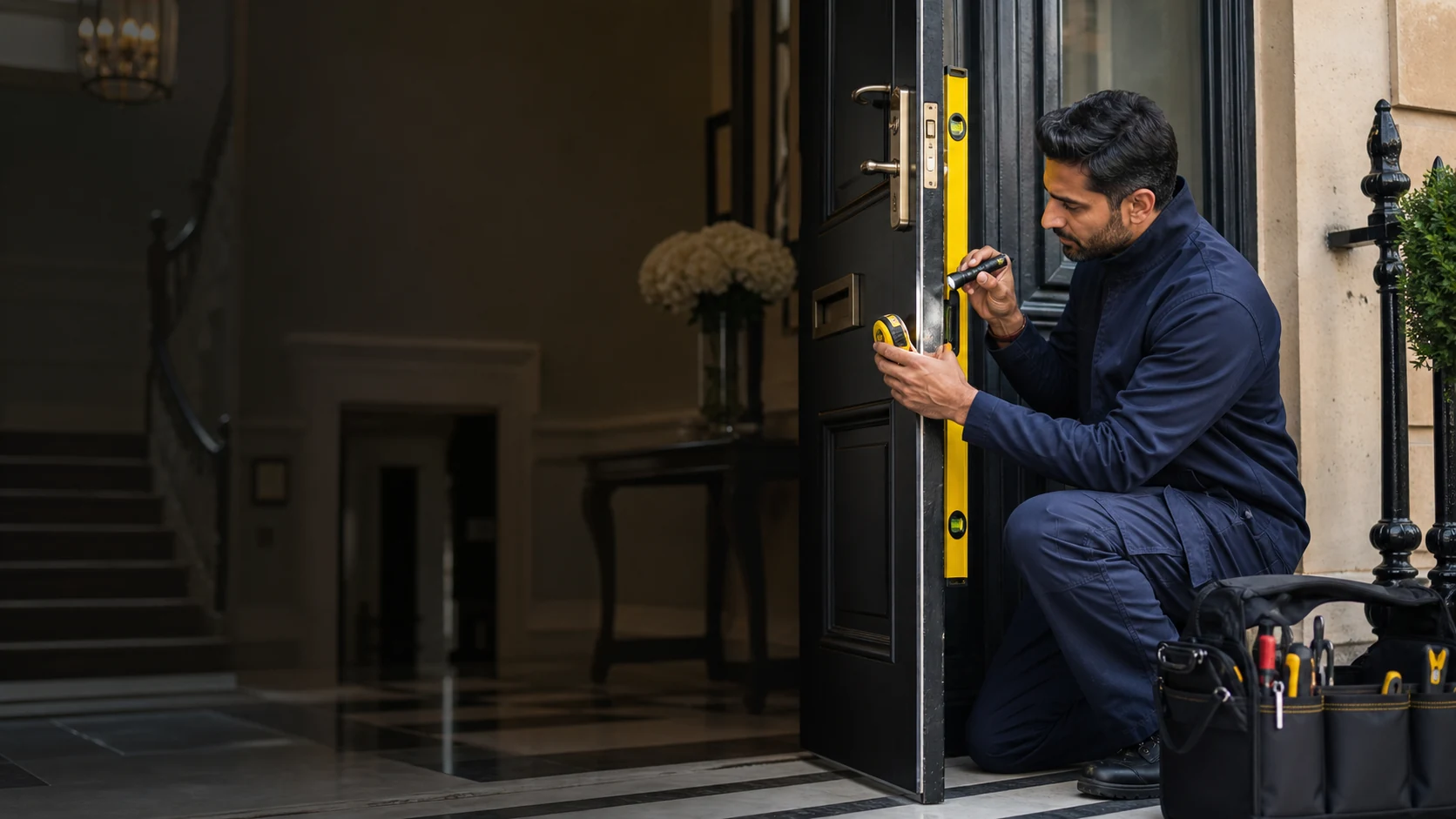
The locksmith verifies authority, identifies the private door and considers an appropriate opening method. Work on the communal route requires its own permission.
Street door · trading space · upper floors · clear authority
A Soho address can present several doors to the same building. Tell the locksmith whether the problem is at a shopfront, a residential side entrance, an upper-floor flat or a shared stair door, then identify who controls that exact entrance.
Mixed-use access starts with a map
A building number is not enough when a commercial unit faces the street and homes are reached through another door. The shop tenant may control the trading entrance but have no authority over the shared residential stair. A flat occupier may be able to admit a locksmith upstairs while the freeholder controls the external door. A rear delivery entrance can offer a practical route yet remain unavailable outside agreed hours.
Make a short entrance map before booking. Name the street-facing landmarks without sharing sensitive access codes in an unsecured message. Say where the locksmith will meet an authorised person and which other doors form the route to the fault. If keys are involved, explain whether they belong to the business, an individual dwelling or a common part. This prevents a request for “the front lock” from turning into an argument about the wrong entrance after arrival.
| Entrance or zone | Person to identify | Fact to confirm before attendance |
|---|---|---|
| Customer-facing shop or venue door | Business owner, manager or authorised key holder | Trading status, safe working space and whether the door can be taken out of use |
| Residential street door | Freeholder, managing agent or authorised resident contact | Communal authority and access arrangements for all affected occupiers |
| Upper-floor flat | Occupier, owner or letting representative | Evidence of lawful access and route through shared stairs |
| Rear or delivery entrance | Site or business contact controlling the yard | Permitted hours and whether the route is suitable for tools |
| Powered or intercom-controlled door | Building access-control contact | Mechanical behaviour separated from fob, release or intercom behaviour |
Describe operations, not assumptions
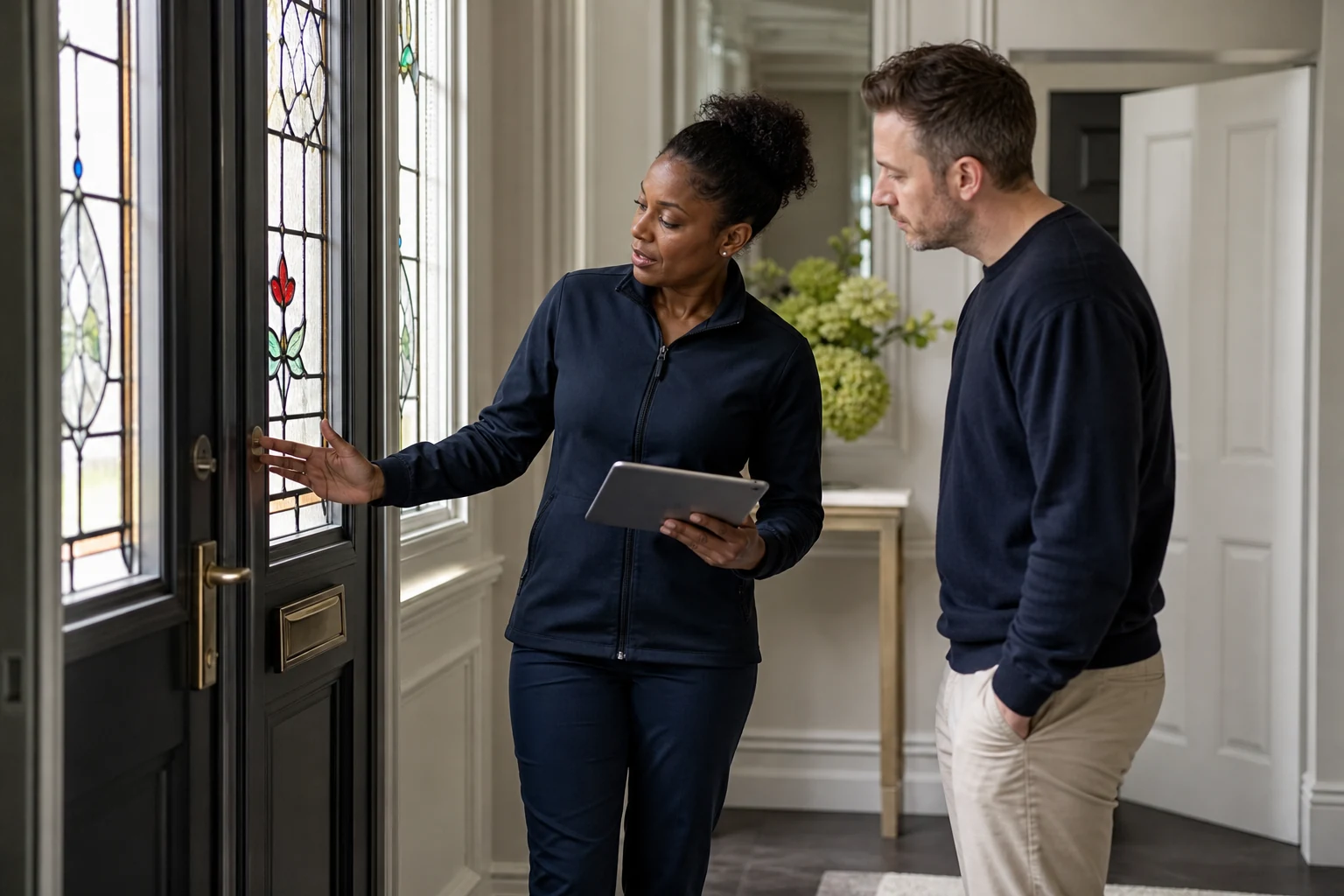
For a commercial entrance, explain whether the premises can trade safely, whether customers or staff are being redirected and whether the door can be isolated from use. For a residential entrance, say whether residents can still enter and leave by an authorised route. Do not wedge open a security or fire door as a convenience while waiting for help.
Describe the key, handle, latch and door separately. A key that turns while the latch remains extended is different from a key that will not enter. A door that locks when open but not in the frame gives useful information about operation, although only an inspection can establish the cause. Powered releases, shutters and alarms can involve equipment beyond a locksmith’s mechanical scope; name what you see and hear rather than attributing the failure.
Problem and immediate organisation
| Observed issue | Action before the locksmith arrives | Scope question to resolve |
|---|---|---|
| Business door will not secure at closing time | Keep an authorised person present and prevent unapproved use of the entrance | Temporary securing versus repair or replacement during the same attendance |
| Resident is locked out above commercial premises | Confirm the residential entrance and prepare evidence of occupancy or authority | Private flat opening versus any shared-door issue |
| Communal latch fails during trading hours | Contact the building manager and avoid informal adjustments by shop staff | Shared mechanical hardware, fire-door responsibility and powered access |
| Key snaps in a staff entrance | Keep both pieces, stop using the cylinder and identify alternative authorised access | Extraction, opening and later key-control change |
| Door is damaged after attempted entry | Follow police or insurer instructions and protect the area from further contact | Evidence, temporary closure, lock work and structural door repair |
| Fob is accepted but latch stays closed | Report lights, sounds and mechanical movement without opening equipment | Access-control engineer, electrician or mechanical locksmith involvement |
Locksmith work by entrance type
The locksmith verifies authority, identifies the private door and considers an appropriate opening method. Work on the communal route requires its own permission.
A failing lock, latch or cylinder can be assessed around the permitted operating window. The condition of the door and frame remains relevant to reliable locking.
A broken fragment may be removed without changing every component. The lock is then checked to understand why the key failed and whether further work is sensible.
Staff departures, tenancy changes or missing keys require a list of authorised users and affected entrances. Residential and business copies should not be mixed casually.
Where damage prevents normal closure, a defined temporary measure may protect the premises. Permanent joinery, glazing or decorative work can follow separately.
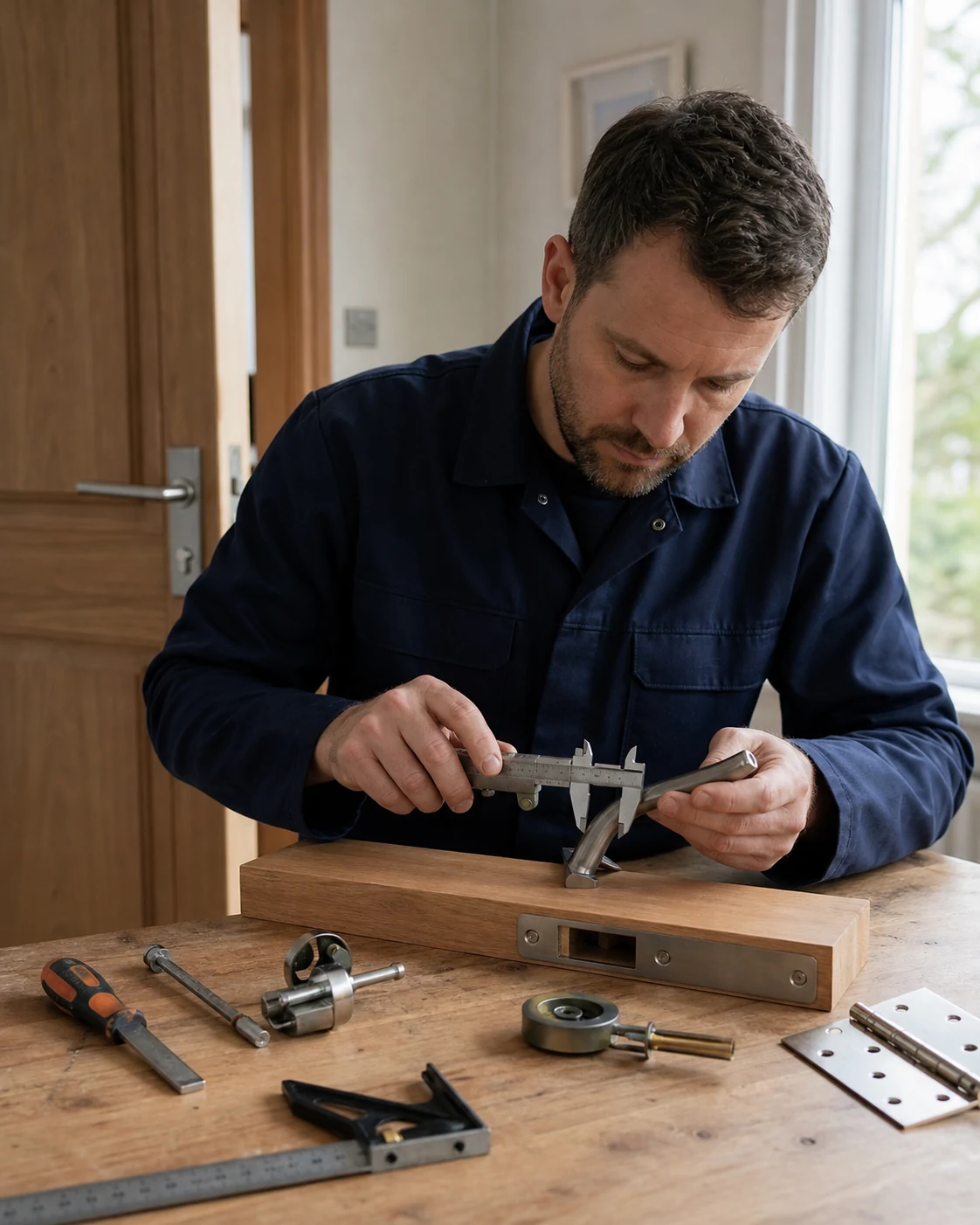
Measurements, duty, user volume, visible finish and existing preparation all inform a replacement. The busiest-looking door does not automatically need the most complex hardware.
Quote around the operating window
A Soho postcode cannot determine the price. The actual quote depends on timing, door condition, method, labour, parts and access. For a mixed-use property, the period when the entrance can be worked on safely is a material input rather than a footnote.
| Quote factor | Information to provide | Boundary to confirm |
|---|---|---|
| Operating window | Trading hours, resident access, deliveries and permitted contractor time | Whether the door can be unavailable and who manages people meanwhile |
| Authority | Business, resident, landlord and managing-party contacts | Who approves the exact entrance and receives the completed work |
| Opening method | Door state, lock symptoms, damage and known hardware | Approval process if a destructive approach becomes necessary |
| Parts | Measurements, markings, required keys, use and compatible finish | What is supplied, fitted and retained |
| Associated systems | Intercom, powered release, closer, alarm or shutter observations | Which specialist is responsible for each non-locksmith element |
| Reinstatement | Door, frame, glazing, decoration and temporary protection needs | Difference between secure closure and complete cosmetic repair |
Ask whether parking, loading restrictions or time spent waiting for a building contact sits within the attendance terms. The answer should be explicit. Do not accept a vague price that leaves opening, parts and final security as unspoken assumptions.
Soho property context
Upper-floor homes may use a discreet street entrance beside a restaurant, shop or office. Give the door colour, number position and bell name so the locksmith does not queue at the commercial entrance. Where a shared stair begins inside another occupier’s controlled space, arrange permission and a meeting contact rather than assuming access during opening hours.
Busy trading periods can make front-door work impractical or unsafe. Agree whether an authorised person will manage customers and deliveries while tools are in use. For residential doors, consider quiet access through the common parts and do not leave equipment where it obstructs stairs. A useful plan respects both uses without claiming that one automatically takes priority.
Some entrances combine mechanical locks with intercoms, electric releases or shutters. Keep the fault report divided by component. The locksmith can assess authorised mechanical work, while the building’s chosen access-control, electrical or shutter provider may need to handle the remainder. A joined-up plan does not mean one person silently accepts every trade.
Handover across shifts and households
Test normal locking and unlocking with the authorised representative. For a business, decide who receives the keys and how the next shift is informed. For a residence, confirm the occupants who need copies and whether the landlord requires a record. Communal changes should be communicated through the managing party, not by leaving keys with the nearest open premises.
Record any temporary measure and the follow-on owner. If the locksmith found an unrelated powered fault, state what mechanical elements were tested. Clear handover prevents a partial repair from being described as a complete building solution.
Soho locksmith FAQ
Send the full address plus a safe street-view description or photograph, bell name and whether the door serves a business, home or shared stair.
Only if they have formal authority from the owner or manager responsible for that entrance. Being present in the same building is not enough.
It depends on safe space, the door’s role and the agreed method. The business should manage customers and deliveries so nobody enters the work area.
Prepare reasonable evidence of occupancy, ownership or management authority. Explain in advance if identification is inside the locked home.
Describe the electrical response and mechanical door behaviour separately. The building may need an access-control engineer or electrician alongside or instead of a locksmith.
Not necessarily. Temporary closure, lock repair, door or frame work, glazing and decoration should each be stated in the accepted scope.
Map which key belongs to which door and who is authorised. Separate systems and responsibilities should not be merged merely because the keys disappeared together.
Name an authorised contact who can receive the finding, proposed change and revised price. If nobody can approve it, the work should remain within the accepted boundary.
Nearby central areas
Use the local page matching the actual entrance, especially where a single building sits near an area boundary.
Point to the exact entrance
Send the Soho door location, observed behaviour, operating window and the name of the person authorised to approve and receive the work.
